

Returns management with RFID is becoming a strategic priority for retailers, fashion brands, and e-commerce businesses looking to improve operational efficiency and inventory accuracy. As return volumes continue to grow, so do the challenges associated with reverse logistics, stock visibility, processing costs, and product availability.
However, many organizations still rely on manual workflows or barcode-based processes that slow operations and increase the risk of errors. By leveraging RFID technology, businesses can automate product identification, gain real-time visibility, and accelerate the reintegration of returned items into available inventory. As a result, they can improve operational performance while reducing costs.
At Clustag, we help companies transform reverse logistics through RFID solutions that streamline every stage of the returns process, from reception to inventory replenishment.
The true value of RFID in returns management is not just processing products faster. It is recovering sellable inventory sooner, reducing operational costs, and improving visibility across the entire reverse supply chain.
What returns management is and why it is an operational challenge
Returns management includes all activities that take place after a customer sends a product back. The returned item must be received, identified, inspected, classified, and either returned to inventory, repaired, refurbished, or removed from circulation.
For businesses handling high volumes of returns, these processes can quickly become resource-intensive. Without the right technology, delays and inaccuracies can impact inventory reliability, operational efficiency, and customer satisfaction.
The growing impact of returns in retail and e-commerce
Returns are now a standard part of the customer journey. While they help improve customer confidence in online purchases, they also place significant pressure on warehouse operations.
Common challenges include:
- Processing large volumes of returns quickly
- Maintaining accurate inventory records
- Reducing product downtime
- Avoiding classification errors
- Ensuring end-to-end traceability
Common reverse logistics challenges
Traditional return workflows often create operational bottlenecks due to their dependence on manual handling and barcode scanning. Consequently, organizations struggle to maintain inventory accuracy and process high return volumes efficiently.
Companies frequently face:
- Limited visibility into returned inventory
- Delays in stock replenishment
- Inventory discrepancies
- Labor-intensive processes
- Increased operational costs
As a result, more organizations are adopting RFID as a key technology for reverse logistics optimization.
How RFID transforms returns management
RRFID technology uses radio frequency identification to automatically capture data from tagged products without requiring direct line of sight. Unlike barcodes, multiple items can be identified simultaneously, even when they are packed inside boxes or containers.
This capability allows organizations to process returns faster, improve inventory visibility, and maintain complete product traceability. Furthermore, it creates a more connected and data-driven operation.
Automated reception of returned products
One of the biggest pain points in reverse logistics is the time required to receive and validate returned goods.
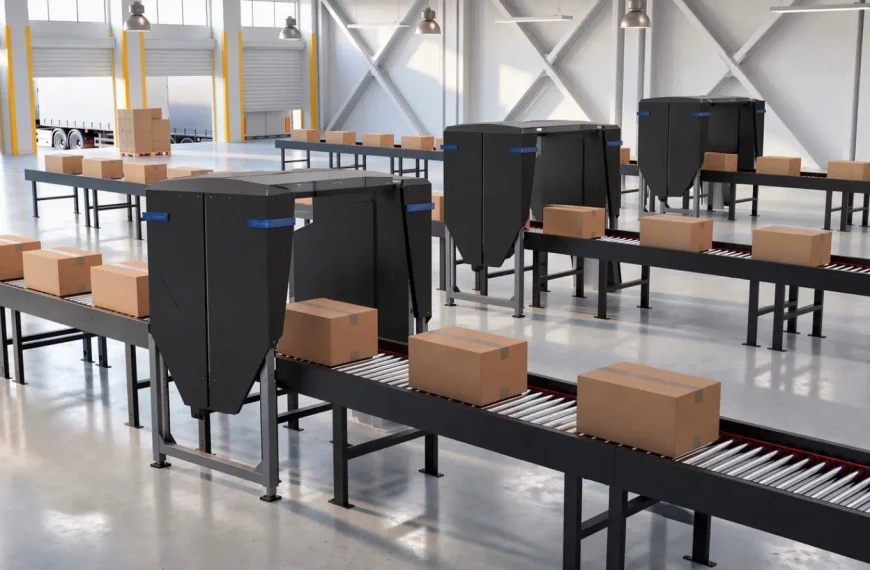
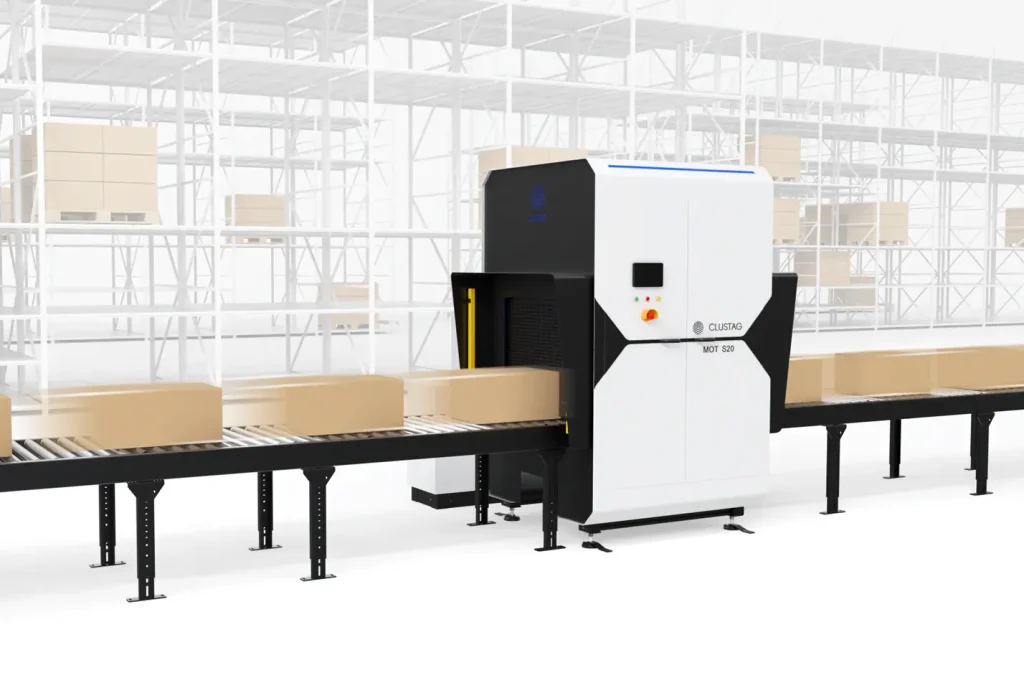
Solutions such as Clustag’s Bulk Station enable the mass reading of RFID-tagged items, dramatically reducing processing times while increasing operational accuracy. Furthermore, teams can process larger volumes without adding extra manual effort.
Benefits include:
- Faster receiving operations
- Reduced manual handling
- Improved productivity
- Greater inventory accuracy
Intelligent classification and full traceability
Once the system identifies returned products, RFID automatically routes and classifies them according to predefined business rules. As a result, companies can reduce manual intervention and improve operational consistency.
Returned items can be automatically assigned to workflows such as:
- Restock and resale
- Refurbishment
- Repair
- Disposal
Furthermore, the system records every movement digitally, providing complete visibility throughout the product lifecycle and improving traceability.
Real-time inventory updates
RFID delivers value beyond identification. Through integration with ERP and WMS platforms, every RFID event can automatically update inventory records and product status.
Therefore, inventory data remains accurate and available in real time, helping businesses make faster and more informed decisions.
To learn more about this process, visit our article on RFID returns processing.
Comparing traditional returns processes and RFID-enabled operations
The difference between a manual process and an RFID-enabled operation extends far beyond reading speed.
| Process stage | Traditional workflow | RFID-enabled workflow |
|---|---|---|
| Product reception | Individual barcode scans | Simultaneous bulk reading |
| Product identification | Operator dependent | Automatic identification |
| Classification | Manual process | Automated according to predefined rules |
| Inventory updates | Delayed or manual | Real-time synchronization |
| Product location | Limited visibility | End-to-end traceability |
| Restocking | Slower processing | Immediate stock reintegration |
| Operational visibility | Partial | Real-time visibility |
As the table shows, RFID transforms returns from a reactive process into a connected and data-driven operation where every item can be identified, tracked, and managed automatically.
Clustag RFID solutions for returns management
At Clustag, we develop RFID solutions designed to eliminate manual tasks, improve inventory reliability, and provide complete operational visibility.
Immediate replenishment and inventory accuracy
Our RFID intralogistics solutions allow returned products to be validated and reintegrated into available inventory almost immediately.
This helps businesses reduce downtime and maximize product availability.
High-performance bulk reading
Returns operations often require the processing of large product volumes within very short timeframes.
Clustag solutions support mass RFID reading with high accuracy rates, reducing bottlenecks and ensuring reliable validation. In addition, they help operations scale without increasing complexity.
RFID Shield Technology for read-zone control
Although RFID delivers exceptional visibility, one of the most common challenges in RFID environments is unwanted tag detection from nearby products.
Our RFID Shield Technology helps create controlled reading zones that eliminate stray reads and improve data accuracy, even in dense inventory environments.
Integration with ERP and WMS platforms
Capturing data is only part of the process. In reality, the greatest value comes from transforming RFID events into actionable business information.
Clustag solutions integrate seamlessly with warehouse management and enterprise systems, while Zentup provides the intelligence layer that converts RFID data into real-time operational insights.
Measurable business benefits of RFID in returns management
Organizations that implement RFID often see improvements across multiple operational KPIs.
| Business objective | Common challenge | RFID advantage |
|---|---|---|
| Improve inventory accuracy | Stock discrepancies | Automated inventory updates |
| Reduce operational costs | Manual processing requirements | Workflow automation |
| Accelerate restocking | Delayed product availability | Faster validation and reintegration |
| Improve customer experience | Slow return processing | Faster and more transparent operations |
| Increase visibility | Fragmented information | Real-time traceability |
In addition, organizations benefit from:
- Higher warehouse productivity
- Fewer operational errors
- Reduced labor requirements
- Improved inventory visibility
- Better scalability for growing operations
Frequently asked questions about RFID returns management
Start optimizing your returns process with RFID
Returns should not become a bottleneck in your operation. Instead, they should provide an opportunity to improve inventory visibility, reduce operational costs, and increase product availability.
With Clustag RFID solutions, you can automate returns processing, improve inventory accuracy, and gain complete visibility across your reverse logistics operation. Furthermore, our solutions integrate seamlessly with ERP and WMS platforms, ensuring that inventory information remains accurate and up to date throughout the entire process.
If you would like to see these solutions in action, visit our Customer Experience Center and test RFID technology using your own products and processes. In addition, our team can help you identify optimization opportunities and design a returns management strategy tailored to your operational requirements.
By combining RFID technology, real-time data intelligence, and automated workflows, organizations can transform returns management from a costly operational challenge into a competitive advantage.