

Pallet tracking is essential for companies that need greater visibility, accuracy, and control across their logistics operations. As pallet volumes increase, so does the risk of losses, inventory discrepancies, delayed returns, and manual processes that consume time and resources.
Without a reliable tracking system, pallets can move through warehouses, transportation networks, and customer facilities without a clear record of where they are or when they were last handled. The result is unnecessary costs, reduced efficiency, and limited operational visibility.
Manual goods receipt is no longer sustainable for high-volume operations. Transitioning to automated pallet tracking reduces processing time by up to 90% while ensuring 99%+ data accuracy.
The real challenge behind pallet visibility
Every day, pallets move through receiving docks, storage areas, shipping zones, and customer locations. Each transfer point introduces the possibility of losing visibility over the asset.
This challenge is particularly relevant for:
- Euro pallets managed through exchange systems.
- Plastic pallets with higher replacement costs.
- Pooling pallets that require strict return control.
The cost of poor pallet tracking
When pallet movements are not properly tracked, organizations often face:
- Lost or unrecovered pallets.
- Inventory inaccuracies.
- Manual counting and reconciliation.
- Shipping and receiving discrepancies.
- Disputes with customers and logistics partners.
- Increased administrative costs.
As operations grow, these issues become more frequent and more difficult to manage using traditional methods.
Why traditional tracking methods struggle to scale
Many companies still rely on paperwork, spreadsheets, or barcode systems to manage pallet movements. While these methods may work in smaller operations, they become increasingly inefficient as throughput grows.
Barcode technology improved pallet identification, but it still requires manual scanning and operator involvement. This creates delays, increases the risk of missed scans, and limits real-time visibility.
The next step for companies looking to improve efficiency is automated data capture.
Why RFID is the preferred technology for pallet tracking
RFID provides a practical balance between automation, accuracy, and scalability.
Unlike barcodes, RFID does not require direct line of sight and can identify multiple pallets simultaneously. This allows logistics teams to capture movements automatically without interrupting operational flow.
How RFID pallet tracking works
A typical RFID solution combines:
- RFID tags attached to pallets.
- Fixed or mobile readers.
- Antennas positioned at key control points.
- Software that processes and distributes data.
Each time a tagged pallet passes through a reading zone, the system automatically records:
- The pallet’s unique identifier.
- Date and time of the movement.
- Reading location.
- Entry or exit event.
- Associated order or shipment information.
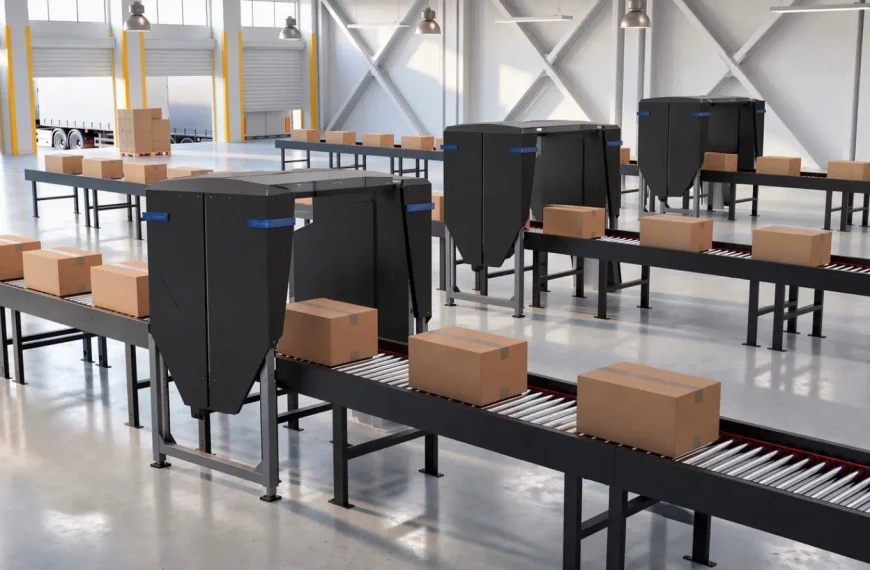
Solutions such as RFID Receiving Verification automate these processes and eliminate manual validation tasks at receiving docks.
How automated receiving improves warehouse performance
Receiving is often one of the most labor-intensive areas of warehouse operations. Manual barcode scanning slows down inbound flows and increases the likelihood of errors.
The impact of automation becomes clear when comparing traditional barcode processes with RFID-based tracking.
| Operational Phase | Manual Barcode Tracking | Clustag RFID Tracking |
| Check-in Speed | 2–5 minutes per pallet | < 15 seconds per pallet |
| Data Integrity | Prone to missed scans | 99.9% Read Accuracy |
| Labor Intensity | High (1 operator per dock) | Low (Automated flow) |
| Visibility | Delayed (batch updates) | Instant (Real-time) |
By eliminating paperwork and manual scans, warehouses can maintain a continuous inbound flow while keeping inventory records updated in real time.
For high-volume operations, solutions such as the Bulk Station help maximize throughput while maintaining complete traceability.
How we prevent RFID cross reads
One of the biggest technical challenges in dense warehouse environments is ensuring that the system reads the correct pallet at the correct location.
When multiple forklifts or pallet loads move near an RFID portal simultaneously, poorly designed systems can generate unwanted reads or create so-called ghost inventory.
To eliminate these issues, we combine:
- RFID Shield Technology, which confines radio frequency signals within a controlled reading area and prevents unwanted reads from adjacent docks.
- Directional logic, which detects the movement direction of the pallet and determines whether it is entering or leaving the facility.
Turning pallet data into operational intelligence
Capturing pallet movements is only the first step. The real value comes from transforming operational data into business intelligence.
How Zentup enhances pallet tracking
Through Zentup, RFID data is connected with ERP and WMS environments, providing visibility across receiving, inventory, and shipping operations.
Organizations gain access to:
- Real-time dashboards.
- Automated alerts.
- Inventory visibility.
- Shipment validation.
- Exception management.
Zentup doesn’t just collect data; it orchestrates your inbound flow, flagging discrepancies before the pallet even reaches the racking system.
By combining RFID with advanced data intelligence, we transform pallet tracking from an administrative task into a strategic operational capability.
Benefits of RFID pallet tracking
Companies implementing RFID typically achieve measurable improvements across their supply chain operations.
Key benefits include:
- Reduced pallet losses.
- Faster receiving and shipping processes.
- Improved inventory accuracy.
- Greater control over pallet return cycles.
- Fewer manual tasks and data-entry errors.
- Better decision-making through real-time visibility.
- Increased operational efficiency and scalability.

Frequently asked questions about pallet tracking
Ready to improve pallet visibility?
At Clustag, we help manufacturers, logistics providers, and distribution centers automate pallet tracking through RFID technology, RFID Shield Technology, and data intelligence powered by Zentup.
Visit our Customer Experience Center to test our solutions with your own products and processes, or contact our team to discover how we can help you achieve complete visibility across your supply chain.