

Achieving RFID chargeback reduction is one of the most effective ways to protect margins in high‑volume distribution. Improving outbound accuracy remains critical in sectors where retailer compliance is strict. In the fashion and apparel industry, even small mismatches generate substantial deductions.
In this post, we explore how Perry Ellis achieved measurable savings by implementing high‑accuracy RFID validation reinforced with our Smart RFID Solutions. From real‑time control to automated discrepancy detection, we share how this transformation works for any fast‑paced distribution operation.
The Financial Drain: Why Accuracy Matters
Improving outbound validation does more than enhance operational quality. It directly protects profitability and stabilizes revenue streams. Before diving into the transformation, it is essential to understand why financial leakage occurs so frequently in B2B distribution.
“Retailers apply automatic deductions that can reach up to 20% of the invoice value, eroding margins month after month.”
The Core Challenges
- Manual Bottlenecks: Manual validation steps often remain the final barrier before shipping.
- Outbound Velocity: Even with strong picking processes, the last validation point is typically the weakest.
- Compliance Friction: Recurring financial losses due to strict retailer requirements.
The Transformation: From Manual to Automated
Perry Ellis operates a 600,000 square‑foot distribution center in Dublin, Georgia. While their pick‑to‑light system performed well, the post‑picking validation process needed a robust, automated alternative.
| Feature | Legacy Manual Process | Clustag Smart RFID Solutions |
| Speed | Slow / Dependent on staff | High-speed (Conveyor speed) |
| Accuracy | Prone to human error | Item-level EPC validation |
| Visibility | Limited to barcode scans | Real-time item-level visibility |
| Financial Risk | High (Frequent chargebacks) | Low (Automated discrepancy detection) |
The Technology Stack
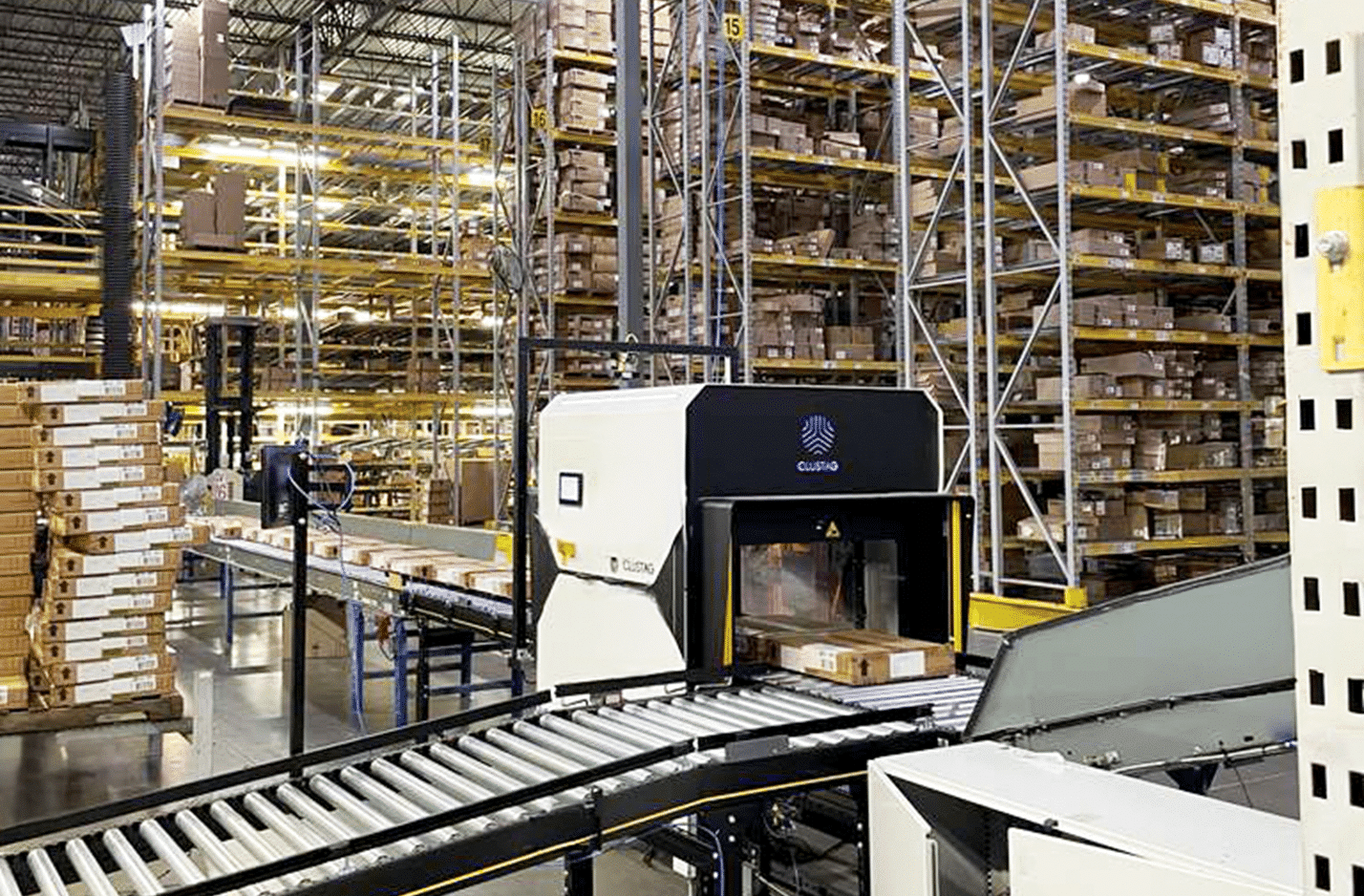
To address the issue, Perry Ellis deployed a fully integrated RAIN RFID validation system built on our Smart RFID Solutions ecosystem:
- Hardware: RFID tunnels and automated rejection lines.
- Software: Zentup middleware integrated with Manhattan WMS.
- Process: Real-time verification of every box before shipping.
Quantifiable Success: The Financial Outcomes
The power of the system lies in the seamless integration between hardware, software, and operational flow. With Zentup acting as the central intelligence layer, Perry Ellis gained real‑time visibility that directly protects financial performance.
Key Performance Indicators (KPIs)
- 17% Reduction in shipping discrepancies from day one.
- Thousands of dollars saved every single month.
- Immediate ROI through the elimination of retail penalties.
Strategic Advantage: Once accuracy stabilizes, the savings compound, freeing up capital for further automation. Improved accuracy also enhances the perception of reliability among retail partners.
Ready to Protect Your Margins?
If you want to see firsthand how Clustag RFID Solutions and our high‑accuracy validation tunnels can help your operation eliminate shipping errors and unlock measurable monthly savings, we are ready to help.
- Visit our Customer Experience Center: Test the technology with your own products.
- Get a Custom Assessment: Fill out our contact form to start your transformation.