
Inventory management is one of the factors with the greatest impact on a company’s profitability. Stock inaccuracies, out-of-stock situations, excess inventory and limited visibility into product locations create hidden costs that directly affect sales, customer service and cash flow.
In the food industry, where product availability, traceability and expiration date control are critical, these inefficiencies can lead to significant financial losses. As supply chains become more complex and consumer expectations continue to rise, having accurate, real-time inventory information has become a strategic necessity.
From increasing inventory accuracy from 85% to 99.9% to reducing stock counts from 80 minutes to just a few seconds, the food industry is entering a new operational era. At Clustag, we see first-hand how RFID technology has evolved from an emerging innovation into a proven strategic tool that helps retailers and food manufacturers reduce costs, minimize waste and improve product availability.
The Main Challenges of Traditional Inventory Management
Many organizations still rely on manual processes, spreadsheets or barcode-based systems to manage inventory. While these methods have supported operations for years, they become increasingly difficult to scale as product portfolios expand, logistics networks grow and traceability requirements become more demanding.
Inventory Count Errors and Stock Discrepancies
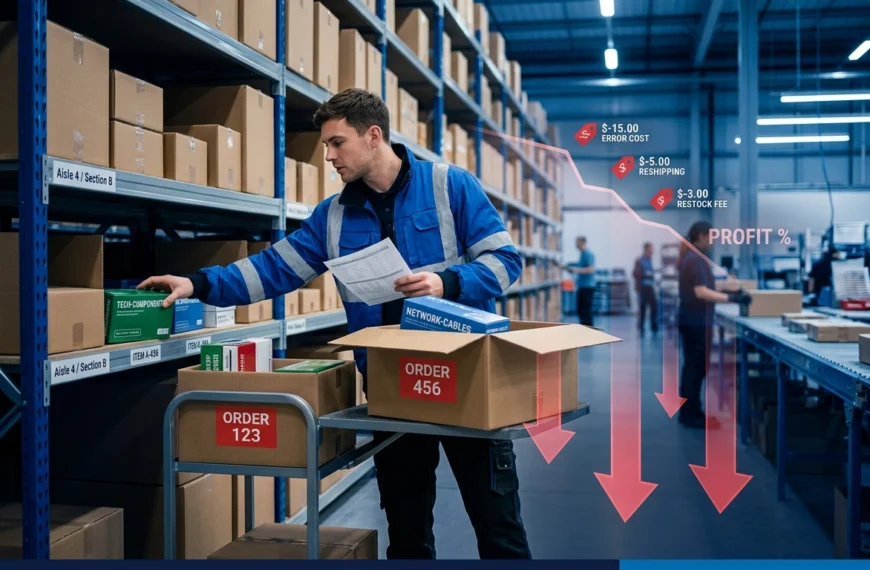
One of the most common challenges is the mismatch between physical inventory and system records. These discrepancies are often caused by:
- Human errors during stock counts.
- Unrecorded product movements.
- Incomplete scans.
- Delayed data updates.
- Time-consuming operational processes.
When inventory data becomes unreliable, purchasing, replenishment, order fulfillment and production planning decisions are affected.
Lack of Visibility Into Product Locations
Not knowing exactly where products are located leads to unnecessary searches, replenishment delays and operational inefficiencies. In the food sector, where product availability directly impacts sales and customer satisfaction, limited visibility can quickly translate into financial losses.
Slow Inventory Processes
Traditional inventory counts often require significant time and labor. Companies frequently dedicate valuable resources to counting, auditing and reconciling inventory data, only to end up working with information that may already be outdated.
Stockouts and Excess Inventory
Poor inventory management typically creates two costly scenarios: products are unavailable when customers need them, or excess inventory ties up working capital and increases storage costs.
What Companies Need to Keep Inventory Under Control
Modern inventory management requires much more than knowing how many items are stored in a warehouse. Businesses need complete visibility into product location, movement and status at any given time.
An effective inventory management strategy should provide:
- Real-time visibility
- Item-level traceability
- Automated data capture
- ERP and WMS integration
- Reliable information for decision-making
- Scalability without increasing operational workload
This is precisely where RFID delivers a significant advantage.
RFID as a Real Cost-Saving Driver
RFID-based inventory management has evolved far beyond basic process automation. According to GlobalData’s Food in the Digital Age report, large food companies managing inventories valued at approximately €93 million can achieve annual savings of up to €32.5 million through RFID-enabled inventory systems.
These savings are driven by two key factors. First, RFID dramatically reduces the labor and time required for inventory counts. Second, it helps lower working capital requirements by improving stock turnover and product availability throughout the supply chain.
RFID-enabled processes can shorten inventory holding cycles from four weeks to just three. That one-week reduction is particularly valuable for fresh and perishable goods, helping companies free up cash flow while improving shelf availability.
“With the growth of ecommerce, the expansion of convenience retail and the increasing demand for inventory transparency, more food companies are viewing RFID as a strategic investment that directly strengthens competitiveness and consumer trust,” says Manolo Reguart from Clustag.
Why Traditional Methods No Longer Work
As ecommerce and convenience retail continue to grow, manual inventory systems and barcode-based processes are reaching their limits. These methods struggle to deliver the speed, detail and transparency required by today’s food supply chains.
RFID changes this by providing automated, continuous visibility across warehouses, distribution centers and stores. At Clustag, we combine RFID Solutions with the data intelligence capabilities of Zentup to transform raw inventory data into actionable operational insights.
| Aspect | Traditional Inventory Management | RFID-Based Inventory Management |
|---|---|---|
| Data capture | Manual or barcode-based | Automated and continuous |
| Stock visibility | Limited and periodic | Real-time |
| Inventory accuracy | Around 85% | Up to 99.9% |
| Inventory count time | Approximately 80 minutes | Just a few seconds |
| Traceability | Partial | End-to-end item-level |
| Decision-making | Reactive | Data-driven and proactive |
The difference extends far beyond reading speed. While traditional methods rely on periodic inventory counts, RFID provides continuous visibility into product location and availability.
This is not simply an operational improvement. It represents a completely different approach to inventory management built on accurate, real-time information.
Reducing Food Waste with RFID
Food waste remains one of the industry’s biggest challenges. According to industry research, food waste costs the grocery retail sector billions of dollars every year.
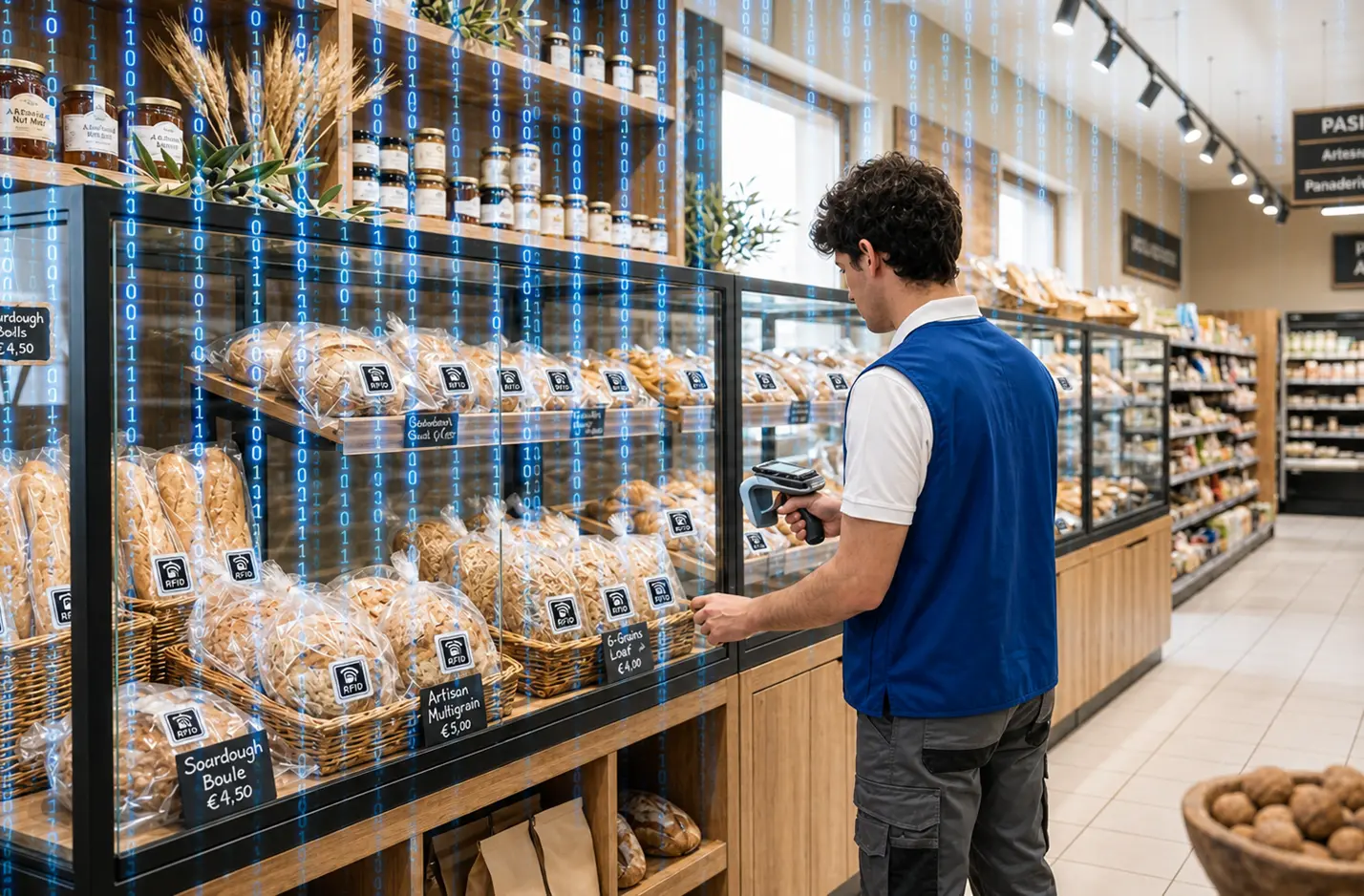
RFID-based inventory management helps address this challenge by providing real-time visibility into both product location and product status.
Retailers can:
- Identify products approaching their expiration date
- Automate discount and promotional strategies
- Prioritize redistribution or donations
- Remove products before they become unsellable
The impact goes beyond cost reduction. Better control over shelf life also contributes to sustainability goals and helps companies optimize inventory turnover.
At Clustag, we reinforce this capability with RFID Shield Technology, specifically designed to minimize inaccurate reads in dense retail and warehouse environments. This ensures that decisions are based on reliable data, even in challenging food industry scenarios.
For organizations operating in the food industry, this level of visibility can significantly reduce waste while improving product availability.
Complete Traceability from Source to Point of Sale
Food safety regulations and consumer expectations have made end-to-end traceability a business requirement.
RFID enables item-level tracking throughout the entire product journey:
Receiving → Storage → Picking → Shipping → Point of Sale
Unlike traditional systems, RFID makes it possible to identify and locate individual products across the supply chain within seconds. This capability is particularly valuable during recalls, food safety incidents and compliance audits.
With Clustag RFID Solutions, organizations can achieve:
- Faster and more accurate recalls.
- Reduced financial and reputational risk.
- Greater compliance with food safety regulations.
- Increased transparency for consumers and partners.
By integrating RFID information into business processes, companies can transform traceability from a regulatory obligation into a strategic advantage.
Product Location Without Manual Searches
Beyond inventory accuracy, RFID enables rapid location of products within warehouses and retail stores.
This capability is especially valuable for:
- Order picking
- Inventory audits
- Returns processing
- Lost product identification
- Zone-specific inventory control
Reducing time spent searching for inventory increases productivity and streamlines logistics operations. Warehouse teams can focus on higher-value activities rather than manually locating products.
From Data to Intelligent Decisions
RFID alone is already powerful, but its real value emerges when collected data becomes actionable intelligence.
By combining RFID with advanced analytics, businesses can:
- Anticipate stock shortages before they occur
- Optimize replenishment strategies
- Measure shrinkage and losses more accurately
- Align inventory decisions with sustainability goals
By integrating RFID data into Zentup, organizations can transform millions of inventory reads into meaningful operational decisions based on real-time information.
The result is a more agile, resilient and efficient supply chain capable of responding quickly to changing customer demand.
Integration with ERP and WMS: Turning Data into Action
Automated data capture is only one part of the equation. The real value of RFID emerges when inventory data is seamlessly integrated with ERP and WMS systems.
At Clustag, we combine our RFID Solutions with the data intelligence capabilities of Zentup to transform millions of RFID reads into actionable operational insights.
By connecting RFID data with ERP and WMS platforms, organizations can:
- Maintain accurate inventory records in real time.
- Improve replenishment and allocation decisions.
- Detect inventory discrepancies immediately.
- Reduce stock shortages and overstock situations.
- Improve planning across the entire supply chain.
This integration enables companies to move from reactive inventory management to proactive decision-making based on reliable, up-to-date information.
RFID: Efficiency, Control and Confidence
The evidence is clear. RFID delivers measurable improvements in inventory accuracy, operational efficiency, cost reduction and sustainability.
More importantly, it provides businesses with the confidence that comes from having complete visibility into their inventory and supply chain operations. Teams can make faster, more informed decisions, while customers benefit from better product availability, improved traceability and greater transparency.
At Clustag, we design and implement RFID ecosystems built for real-world complexity, from high-density retail environments to multi-site food supply chains. We do more than deploy technology. We help organizations rethink how inventory management can drive long-term growth, operational excellence and customer trust.
If you would like to discover how RFID-based inventory management can be applied to your products, facilities and processes, we invite you to contact our team or visit our Customer Experience Center.
By transforming inventory visibility into actionable intelligence, RFID is helping food industry organizations build more efficient, resilient and profitable operations for the future.