
Fresh food management has become one of the biggest challenges facing retailers, distributors, and food producers. Product spoilage, inventory inaccuracies, limited traceability, and cold-chain disruptions can quickly erode margins while putting customer satisfaction and food safety at risk.
As supermarkets and food supply chains become increasingly data-driven, organizations need greater visibility across every stage of their operations. This trend helps explain why major retailers such as Walmart are accelerating the adoption of RFID technology for fresh products and investing in smarter ways to improve traceability, inventory accuracy, and sustainability.
At Clustag, we see this evolution as a natural step toward more automated, efficient, and resilient food supply chains.
Discover our solutions for the Food Industry.
Companies that achieve real-time visibility of fresh products gain a significant advantage in efficiency, sustainability, and customer experience.
Why fresh-food management remains a major challenge
Fresh products are among the most difficult categories to manage. Unlike apparel, electronics, or consumer goods, they are highly sensitive to time, temperature, handling conditions, and inventory rotation.
Every stock discrepancy, delayed shipment, or traceability gap can generate unnecessary waste and additional operational costs.
Why fresh products are difficult to manage
Several factors make fresh-food operations particularly complex:
- Short shelf life
- Temperature-sensitive handling requirements
- High SKU turnover
- Variable weights and packaging formats
- Strict food safety regulations
- Multiple storage and distribution points
- Continuous replenishment needs
Together, these challenges create a level of operational complexity that often exceeds the capabilities of traditional inventory systems.
The operational impact of poor visibility and traceability
Limited visibility can have serious consequences throughout the supply chain.
| Challenge | Business impact |
|---|---|
| Product spoilage | Reduced margins |
| Inventory inaccuracies | Lost sales opportunities |
| Lack of traceability | Compliance risks |
| Manual processes | Higher labour costs |
| Poor demand visibility | Forecasting errors |
Without accurate real-time information, organizations struggle to make informed decisions regarding stock levels, replenishment, and product rotation.
Why retailers are adopting RFID for fresh food
The implementation of RFID technology in fresh-food categories such as meat, bakery, and deli products represents one of the most significant developments in the retail industry.
Retailers are no longer focusing solely on inventory visibility. They are investing in technologies that simultaneously improve traceability, sustainability, and operational performance.
The business drivers behind RFID adoption
RFID is gaining momentum because it directly addresses some of the biggest challenges in fresh-food management.
Key benefits include:
- Improved inventory accuracy
- Better shelf-life management
- Reduced food waste
- Greater supply-chain visibility
- Faster operational processes
- Enhanced customer experience
As we explained in our article about RFID in the food industry, real-time inventory intelligence is becoming a critical requirement for food retailers seeking to improve operational efficiency.
RFID in refrigerated and perishable environments
Historically, refrigerated environments have been challenging for RFID deployments due to factors such as:
- High humidity
- Condensation
- Metal packaging
- Products with high water content
However, advances in RFID tag design and reading technologies now allow organizations to achieve highly reliable performance across cold-chain operations, from distribution centres to retail stores.
How RFID improves traceability across the cold chain
RFID enables organizations to move beyond periodic inventory updates and gain real-time visibility into the movement and status of products throughout the supply chain.
This capability is particularly valuable when managing products with limited shelf lives and strict traceability requirements.
RFID versus barcode technology
The differences between RFID and barcode technology are especially relevant in fresh-food environments.
| Capability | Barcode | RFID |
|---|---|---|
| Line of sight required | Yes | No |
| Simultaneous reading | No | Yes |
| Inventory speed | Medium | Very high |
| Automation level | Limited | Advanced |
| Real-time visibility | Partial | End-to-end |
| Traceability | Limited | Complete |
This ability to automate data capture reduces manual effort while significantly improving data quality.
Managing expiration dates and food safety
One of the most valuable applications of RFID in fresh-food operations is the ability to improve expiration-date control.
RFID helps organizations:
- Monitor shelf life more accurately
- Improve inventory rotation
- Identify products approaching expiration
- Prioritize distribution based on freshness
As a result, retailers can reduce waste while improving product availability for consumers.
Overcoming humidity and refrigeration challenges
Fresh-food environments create unique technical challenges because moisture and liquids can affect radio-frequency signals.
Successful RFID projects require careful consideration of:
- Tag placement
- Packaging materials
- Reading infrastructure
- Environmental conditions
Clustag addresses these challenges through tailored RFID architectures and our proprietary RFID Shield Technology, which minimizes stray reads and improves reading reliability in demanding logistics environments.
How RFID helps reduce food waste
Food waste remains one of the most important economic and sustainability challenges facing the industry.
The ability to monitor products in real time gives retailers greater control over inventory and enables proactive decision-making.
Real-time inventory visibility
Accurate inventory data allows companies to:
- Reduce overstock situations
- Improve replenishment decisions
- Increase product availability
- Improve demand forecasting
Real-time visibility reduces uncertainty and supports better operational planning.
Better stock rotation
Fresh-food operations depend on effective rotation strategies.
RFID supports:
- FEFO (First Expired First Out) processes
- Automated inventory monitoring
- Faster identification of slow-moving products
- Improved control of expiration dates
These capabilities help reduce losses while maximizing product freshness.
Reduced manual processes
Traditional inventory management requires significant human effort.
RFID automation helps organizations:
- Reduce manual counting activities
- Eliminate repetitive verification tasks
- Improve workforce productivity
- Reallocate resources to higher-value activities
Reducing waste starts with improving visibility.
How Clustag helps supermarkets automate fresh-food logistics
While RFID adoption in retail stores is important, the greatest operational gains are often achieved in distribution centres and logistics operations.
This is where Clustag solutions create measurable business value.
RFID tunnels for fresh-food distribution centres
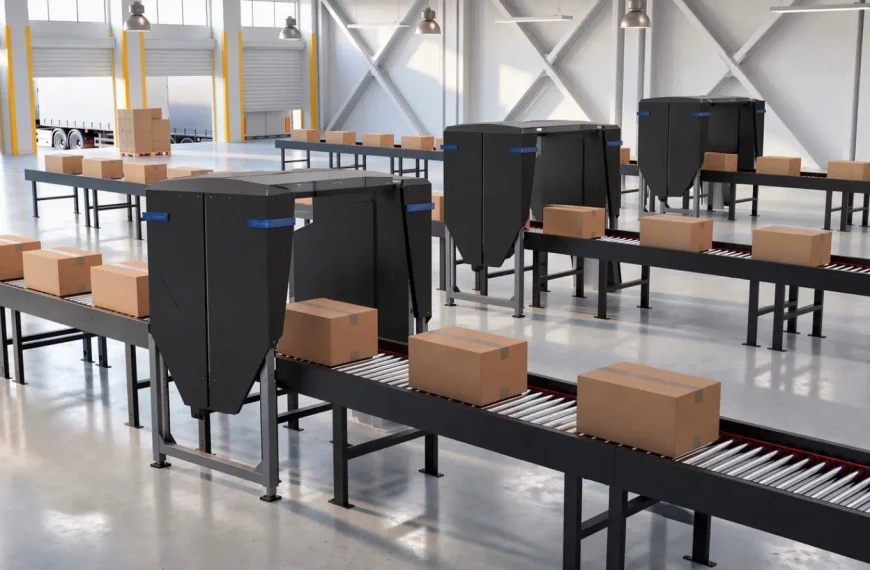
Clustag’s RFID tunnel solutions are designed to process complete cases and logistics units automatically, even in demanding environments with high volumes and complex packaging configurations.
Our solutions help organizations:
- Automate inbound and outbound verification
- Improve inventory accuracy
- Reduce order preparation errors
- Increase operational throughput
- Strengthen traceability
Learn how to select the right RFID tunnel solution.
Real-time visibility with Zentup
Technology alone does not create value unless the data can be transformed into operational intelligence.
This is where Zentup plays a critical role.
Zentup connects RFID devices with WMS and ERP systems, enabling:
- Real-time operational visibility
- Workflow automation
- Inventory intelligence
- Traceability management
- Data-driven decision-making
Benefits for retailers and distributors
| Operational challenge | Clustag solution |
|---|---|
| Inventory inaccuracies | RFID verification |
| Picking errors | Automated RFID validation |
| Lack of visibility | Zentup intelligence platform |
| Manual processes | Warehouse automation |
| Traceability limitations | End-to-end RFID tracking |
The future of supermarket automation with RFID
Industry experts increasingly agree that RFID is becoming a strategic requirement rather than a competitive advantage.
Retailers face growing pressure to improve sustainability, reduce waste, increase inventory accuracy, and maintain product availability despite increasingly complex supply chains.
The combination of RFID technology, automation, and data intelligence is transforming how fresh products are managed from production to point of sale.
Organizations that invest early will be better positioned to improve operational performance, strengthen traceability, and meet future consumer expectations.
Frequently asked questions about RFID in fresh-food operations
See Clustag solutions in action
If you want to understand how RFID can improve traceability, reduce waste, and optimize cold-chain operations, visit our Customer Experience Center.
You can test our solutions using your own products, packaging formats, and operational processes.
For a personalized assessment, complete our contact form and one of our specialists will help you identify the most effective RFID strategy for your fresh-food operation.