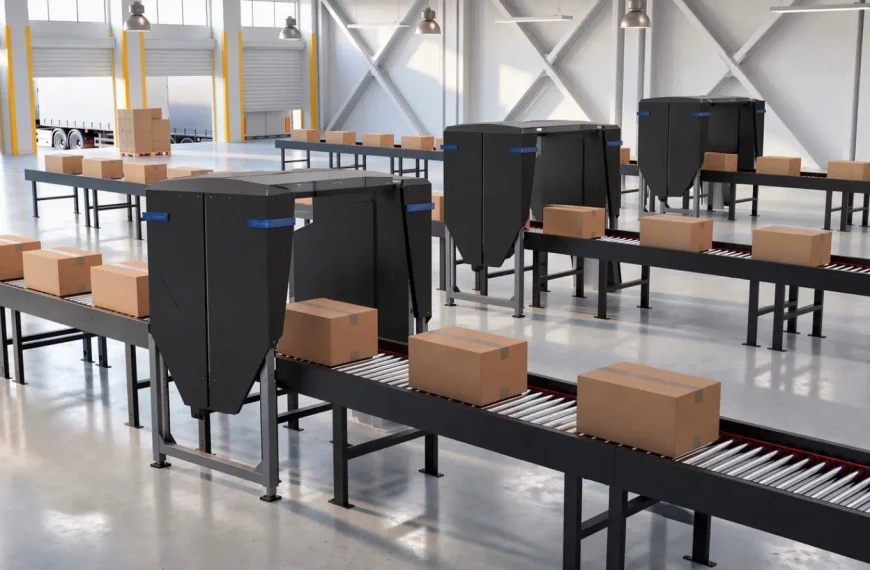

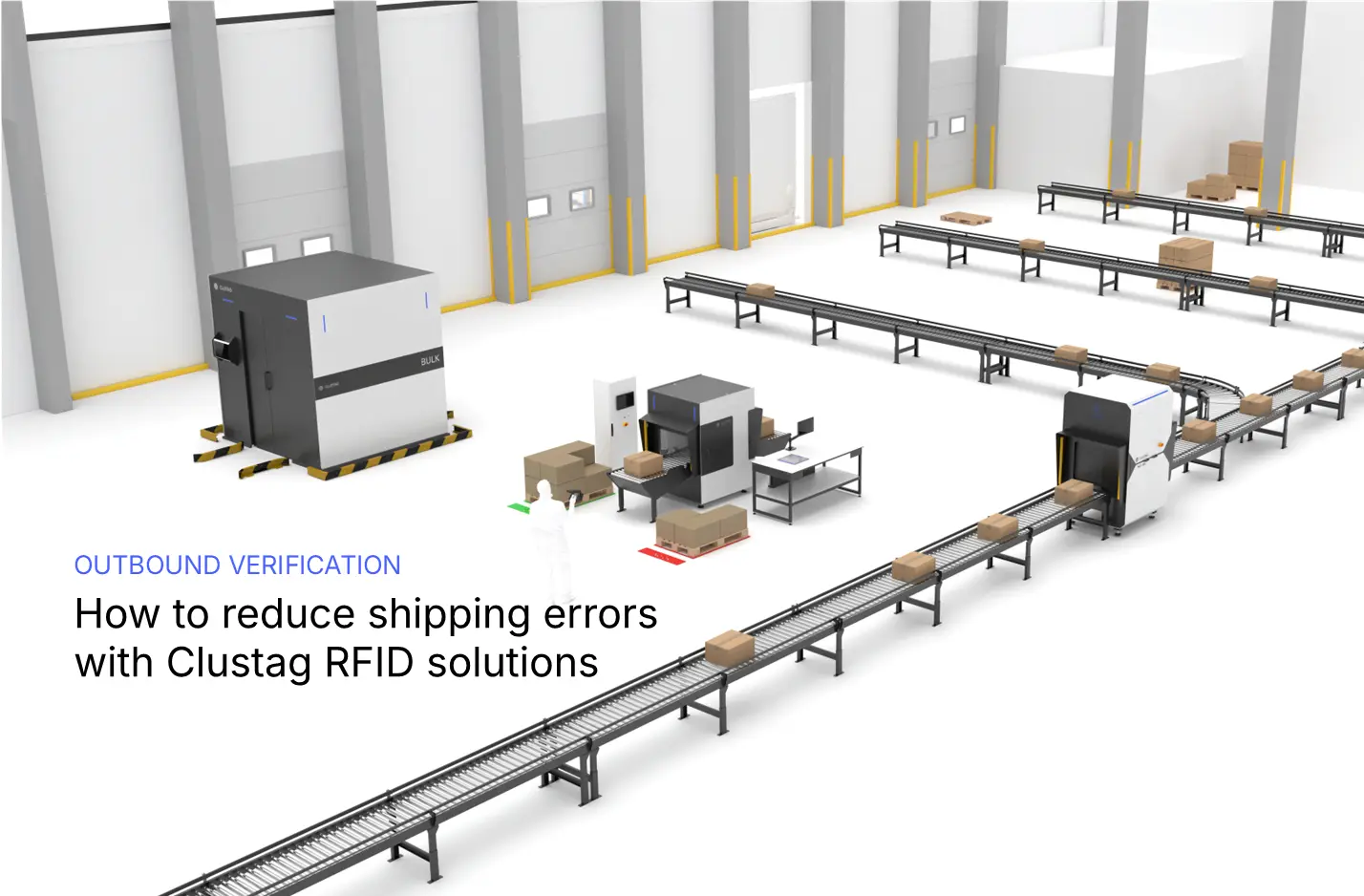
Reduce shipping errors with RFID technology and improve outbound accuracy, traceability, and operational efficiency. In modern logistics environments, even a small discrepancy can generate returns, additional transport costs, customer complaints, and lost revenue. At Clustag, we help companies identify and correct these issues before products leave the warehouse through RFID-enabled verification and intelligent workflows.
Our solutions combine advanced RFID hardware, RFID Shield Technology, and the data intelligence capabilities of Zentup to increase shipment accuracy while maintaining warehouse productivity.
The most cost-effective shipping error is the one that never leaves the warehouse.
To learn more about our outbound validation capabilities, visit our Outbound Verification Solution.
Why shipping errors remain a critical logistics challenge
As order volumes grow and delivery expectations become more demanding, maintaining accuracy becomes increasingly difficult. Shipping errors affect operational efficiency, increase costs, and damage customer trust.
Even warehouses with mature processes continue to experience discrepancies caused by manual interventions, limited visibility, and insufficient verification systems.
What is considered a shipping error
A shipping error occurs whenever the contents of a shipment do not match the expected order information.
The most common examples include:
- Incorrect product shipped
- Wrong SKU
- Incorrect quantity
- Missing items
- Unexpected items
- Incorrect labeling
- Missing RFID tags
- Duplicated shipments
Although some discrepancies appear minor, they often create significant operational consequences.
Industries most affected by shipping errors
Certain sectors are particularly exposed due to the complexity of their operations and the importance of traceability.
- Retail & Fashion. Wrong sizes, colours, and SKUs.
- Pharmaceuticals. Compliance and traceability requirements.
- Food & Beverage. Product integrity and expiry management.
- E-commerce. Returns and customer complaints.
- Manufacturing. Inventory and production disruptions.
Main causes of shipping errors in warehouses
Most shipping errors originate from a combination of manual processes, poor product identification, and limited visibility across warehouse operations.
Understanding these root causes is the first step towards improving shipment accuracy.
Human errors during picking and packing
Warehouse teams often work under pressure to meet demanding service levels.
Common causes of human error include:
- Selecting the wrong product
- Picking incorrect quantities
- Manual data entry mistakes
- Misplacing items during packing
- Fatigue during repetitive tasks
Traditional verification processes can reduce errors, but they rarely eliminate them completely.
Identification and labeling issues
Accurate identification is essential for successful order fulfillment.
Common problems include:
- Damaged labels
- Missing labels
- Duplicate identifiers
- Incorrect product registration
- Unreadable barcodes
When identification fails, discrepancies frequently remain undetected until after dispatch.
Lack of real-time traceability
Without continuous visibility, errors can move through the operation unnoticed.
This often results in:
- Inventory inconsistencies
- Delayed issue detection
- Additional manual investigations
- Increased customer complaints
This is where Zentup helps organizations gain real-time visibility and improve decision-making across their logistics processes.
Consequences of shipping errors for companies and customers
Shipping errors have a direct impact on profitability, customer satisfaction, and warehouse productivity.
The longer an error remains undetected, the more expensive it becomes to resolve.
Direct financial impact
Every incorrect shipment can generate multiple additional costs.
| Incident | Business impact |
|---|---|
| Product returns | Additional transport costs |
| Re-shipment | Double handling effort |
| Customer complaints | Administrative overhead |
| Inventory corrections | Reduced stock accuracy |
| Service credits | Lower profit margins |
Impact on customer satisfaction
Customers increasingly expect perfect order accuracy.
Shipping errors often result in:
- Lower customer confidence
- Increased returns
- Negative reviews
- Reduced loyalty
- Lost future business
Internal operational inefficiencies
Errors do not only affect customers. They also generate friction inside the warehouse.
Typical consequences include:
- Rework activities
- Logistics bottlenecks
- Additional audits
- Delayed shipments
- Reduced productivity
Why RFID is the most effective technology for reducing shipping errors
Traditional verification methods rely heavily on manual scanning and visual inspections. As order volumes increase, these approaches become increasingly difficult to scale.
RFID enables automated verification, real-time traceability, and significantly higher shipment accuracy.
RFID versus barcode technology
The differences between both technologies are substantial.
| Capability | Barcode | RFID |
|---|---|---|
| Line of sight required | Yes | No |
| Simultaneous reading | No | Yes |
| Bulk verification | Limited | Yes |
| Automation level | Medium | High |
| Operational speed | Medium | Very High |
| Traceability | Limited | Real-time |
How RFID works in a warehouse environment
A typical RFID process includes:
- Products are tagged with RFID labels.
- Readers automatically capture item data.
- Information is compared against expected order data.
- Discrepancies are detected immediately.
- Issues are corrected before shipment.
This approach significantly reduces dependence on manual verification.
Benefits of RFID for shipment verification
RFID solutions provide several operational advantages:
- Real-time discrepancy detection
- Faster verification processes
- Reduced manual intervention
- Improved inventory accuracy
- Enhanced traceability
- Greater scalability
You can also discover the operational advantages explained in our article about outbound verification benefits.
How Clustag RFID solutions reduce shipping errors
At Clustag, we combine RFID hardware, data intelligence, and workflow automation to ensure shipment accuracy throughout the logistics process.
Automatic verification during picking
RFID helps validate products during picking, reducing the likelihood of selecting the wrong item or quantity.
This provides an additional layer of quality control without slowing operations.
Content reconciliation with AUDIT, AUDIT PLUS and MASSIVE PLUS
Our content reconciliation process compares actual RFID data with expected shipment information.
The system identifies:
- Missing products
- Excess products
- Incorrect items
- Faulty RFID tags
Operators are then guided to resolve discrepancies before dispatch.
Traceability and exception management with Zentup Workflow
Zentup acts as the intelligence layer connecting RFID devices with WMS and ERP systems.
Key capabilities include:
- Real-time visibility
- Workflow orchestration
- Discrepancy management
- Full traceability
- Operational reporting
Combined with RFID verification, Zentup helps businesses maintain control over every shipment before it leaves the facility.
Results achieved through RFID implementation
RFID-based verification generates measurable operational improvements across industries.
Companies gain greater visibility, faster verification, and fewer shipping discrepancies.
Operational benefits
The most common improvements include:
- Higher shipping accuracy
- Faster validation processes
- Reduced manual audits
- Lower return volumes
- Increased warehouse productivity
- Better customer satisfaction
A real-world example from a Nordic retailer
A recent Clustag project with a leading Nordic retailer showed how RFID-based verification can improve outbound accuracy.
Using Zentup Workflow, the retailer was able to audit shipments in real time, identify discrepancies, and correct issues before dispatch. This reduced costly rework while strengthening customer confidence and operational performance.
Visibility, traceability, and automated verification create measurable value by preventing errors before they become customer problems.
Frequently asked questions about RFID and shipping errors
Eliminate shipping errors before they reach your customers
At Clustag, we help companies achieve near-perfect shipment accuracy through RFID solutions designed specifically for intralogistics operations. By combining RFID technology, automated verification, RFID Shield Technology, and Zentup’s intelligence capabilities, we enable businesses to prevent discrepancies before they become costly incidents.
If you would like to analyse your current operation, contact our experts or visit our Customer Experience Center to test our solutions using your own products and processes.