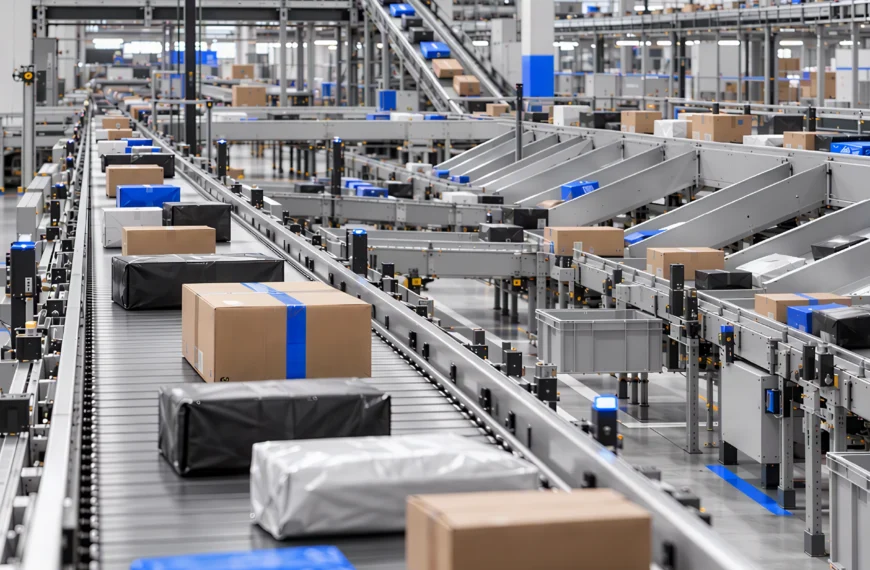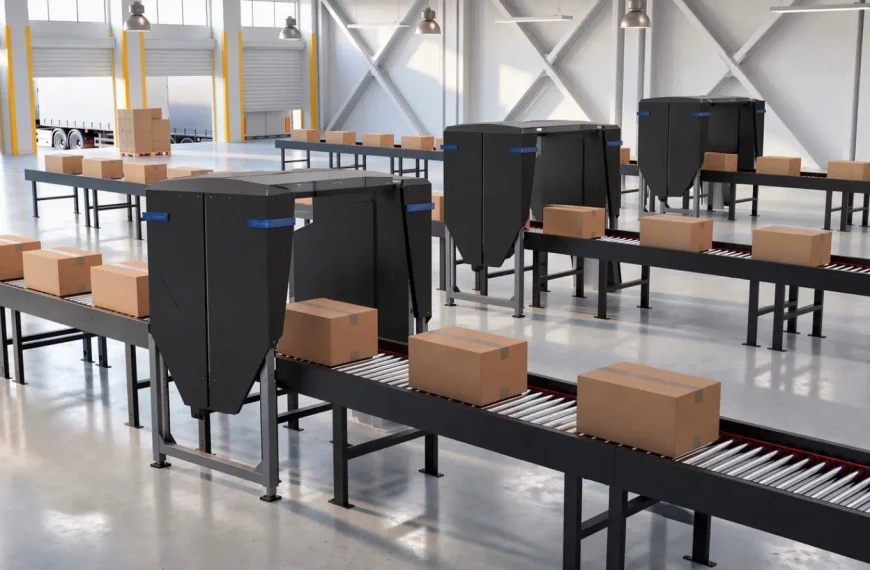

Warehouse process synchronization is essential for maintaining inventory accuracy, improving productivity and ensuring on-time deliveries. When receiving, storage, picking and shipping operate with different or outdated information, errors spread quickly across the warehouse, creating delays, additional costs and customer dissatisfaction.
As logistics operations become more complex, real-time visibility is no longer a competitive advantage. It is a necessity. Instead, it has become a necessity. Every product movement, inventory update and operational task must be synchronized across people, processes and systems.
The most efficient warehouses are not the ones that move products faster. Rather, they are the ones where every process works with the same information at the same time.
By combining RFID technology, data intelligence and operational workflows, we help organizations create a connected warehouse ecosystem where decisions are based on accurate, real-time information through Zentup.
What warehouse process synchronization means
Warehouse process synchronization refers to the real-time alignment of inventory data, operational activities and warehouse management systems. Whenever a product moves inside the facility, that information should be immediately reflected across the entire operation.
Without synchronization, warehouse teams often rely on incomplete or outdated information. Conversely, with synchronized processes, inventory records, product locations and operational priorities remain continuously updated.
Why warehouse process synchronization matters
Every warehouse activity depends on information generated elsewhere in the operation. For this reason, maintaining synchronization across every warehouse workflow is essential for operational efficiency and inventory accuracy.
For example:
- Receiving updates inventory availability.
- Storage determines product location.
- Picking depends on accurate stock information.
- Shipping relies on successful order preparation.
- Inventory management requires reliable movement data.
As a result, a single error can affect multiple downstream processes if systems are not connected.
Which processes need to stay synchronized
The most critical workflows include:
- Goods receiving
- Put-away and storage
- Replenishment
- Picking
- Inventory control
- Shipping
- Returns management
The more aligned these processes are, the easier it becomes to maintain operational control, inventory accuracy and customer satisfaction.
Why warehouses lose synchronization
Most synchronization issues are caused by delays or inaccuracies in data capture rather than the systems themselves.
Manual processes, disconnected applications and limited visibility often create gaps between the physical movement of goods and the information available to operators and decision-makers. Consequantly, warehouse teams may struggle to maintain operational consistency.
Common causes of warehouse desynchronization
The most common challenges include:
- Manual inventory updates.
- Disconnected ERP and WMS systems.
- Lack of real-time visibility.
- Human errors during data capture.
- Operational silos between departments.
The operational impact of poor synchronization
| Challenge | Operational impact | Business impact |
|---|---|---|
| Inventory inaccuracies | Teams work with incorrect stock information and locations | Stock shortages, excess inventory and lower service levels |
| Missing location updates | More time spent searching for products | Reduced productivity and slower operations |
| Picking errors | Wrong products or quantities prepared | Returns, claims and customer dissatisfaction |
| Shipping mistakes | Incorrect deliveries and dispatch issues | Increased costs and reputational damage |
| Delayed information | Slower response to operational events | Reduced efficiency and weaker decision-making |
Even a small discrepancy during receiving can eventually affect inventory management, order preparation and shipping performance.
Why RFID improves warehouse process synchronization
Maintaining synchronization requires reliable real-time data. RFID enables warehouses to automatically capture inventory events as products move through the operation.
Instead of depending entirely on manual scans and data entry, RFID continuously records information and shares it across business systems in real time. As a result, inventory and operational data remain synchronized throughout the warehouse.
How RFID supports warehouse process synchronization
RFID automatically captures key operational events such as:
- Goods receipts
- Product movements
- Storage locations
- Picking validations
- Shipping confirmations
- Inventory counts
Consequently, organizations benefit from a continuous flow of accurate information that supports better visibility and faster decision-making.
The role of RAIN RFID interoperability
A fundamental element of process synchronization is technological interoperability.
By supporting RAIN RFID standards, our RFID Solutions ensure that readers, antennas, tags and software platforms work together seamlessly, regardless of the infrastructure deployed.
Therefore, organizations benefit from:
- Real-time item-level visibility
- Reliable operational data
- Easier integration with ERP and WMS platforms
- Scalability for future growth
Better synchronization starts with better data. RFID makes that data available automatically and in real time.
How Zentup synchronizes warehouse operations
Capturing RFID events is only the first step. However, the real value comes from transforming operational data into actionable intelligence.
This is precisely where Zentup helps organizations turn RFID data into synchronized warehouse operations.
Zentup Core for data synchronization
Zentup Core acts as the intelligence layer that collects, filters and distributes RFID events across ERP, WMS, WES and automation systems.
By creating a single source of operational truth, every system works with the same information thereby reducing data silos and improving visibility.
Zentup Go for item-level operations
Many warehouse activities happen away from fixed RFID reading points and require direct interaction with products.
Zentup Go enables operators to perform RFID-enabled tasks directly from handheld devices, including:
- Inventory counting
- Product identification
- Stock verification
- Item validation
As a result, operational accuracy improves while inventory information remains synchronized in real time.
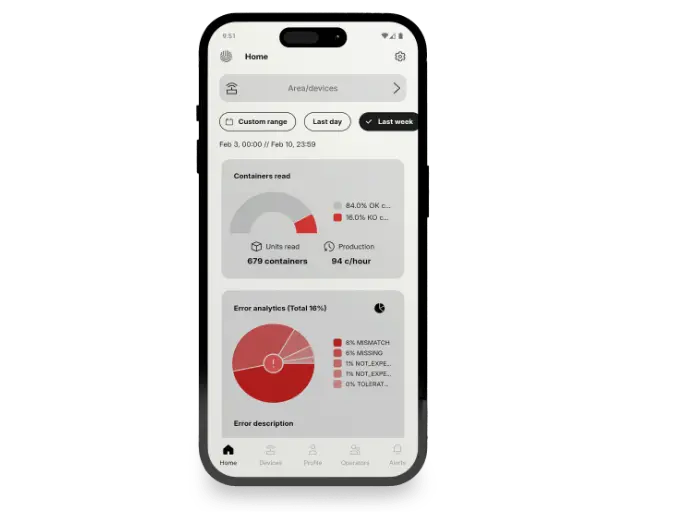
Zentup Workflow for exception management
Warehouse operations inevitably generate exceptions such as missing products, faulty tags or coding inconsistencies.
Zentup Workflow guides operators through structured processes to resolve discrepancies quickly while maintaining synchronization throughout the warehouse.
Zentup Pulse for visibility and monitoring
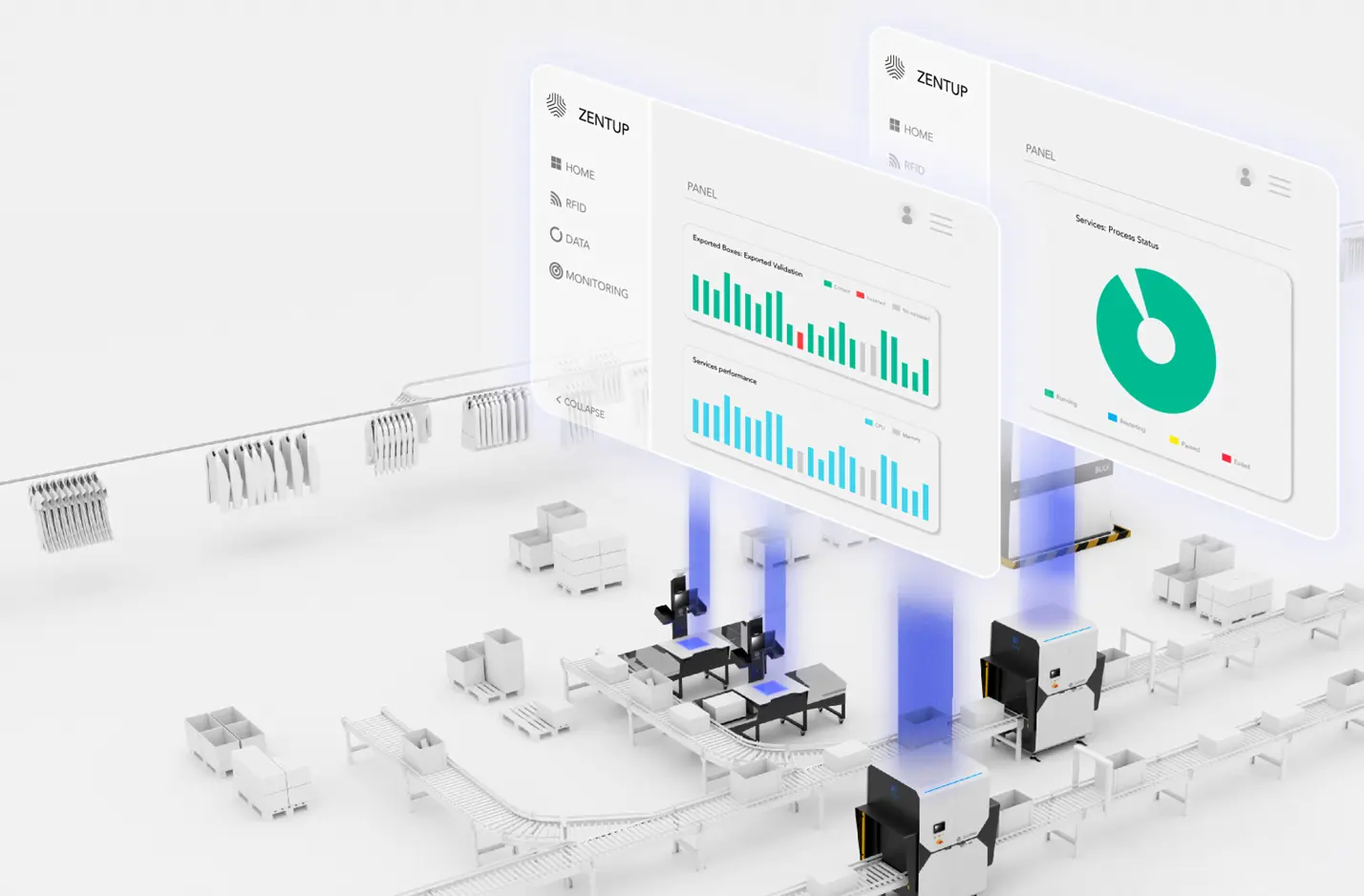
Zentup Pulse consolidates RFID infrastructure monitoring, operational events and key performance indicators into a single dashboard.
In addition, technical and operational teams gain the visibility needed to identify issues proactively and maintain peak performance.
| Zentup solution | Primary function | Synchronization benefit |
|---|---|---|
| Zentup Core | RFID data orchestration | Creates a single source of operational truth across systems |
| Zentup Go | Mobile RFID execution | Improves accuracy during item-level operations |
| Zentup Workflow | Exception management | Speeds up discrepancy resolution and process consistency |
| Zentup Pulse | Monitoring and analytics | Provides continuous operational and infrastructure visibility |
Furthermore, in environments where stray reads can affect data quality, RFID Shield Technology helps improve reading accuracy and strengthen process synchronization.
Which warehouse processes benefit most from synchronization
Real-time synchronization improves visibility and accuracy throughout the entire warehouse lifecycle.
Receiving goods
RFID automatically verifies incoming products against expected deliveries, reducing manual checks and accelerating receiving operations.
Benefits include:
- Faster receiving
- Fewer validation errors
- Improved inventory accuracy
- Earlier detection of discrepancies
Inventory management
Continuous updates improve stock accuracy and provide greater confidence in inventory levels and product locations.
This helps eliminate blind inventory situations and supports more reliable decision-making.
Picking operations
Warehouse teams can validate products more efficiently, reducing errors and improving order accuracy.
Benefits include:
- Faster order preparation
- Reduced picking errors
- Better inventory visibility
- Increased productivity
Shipping verification
RFID helps confirm that the correct products leave the warehouse by validating shipments before dispatch.
This complements solutions such as outbound verification and helps reduce costly shipping mistakes.

Frequently asked questions about warehouse process synchronization
Ready to synchronize your warehouse operations?
Warehouse process synchronization is no longer optional for organizations that want greater visibility, improved inventory accuracy and higher operational efficiency.
By combining RFID technology, intelligent workflows and real-time data management through Zentup, RFID Solutions and RFID Shield Technology, we help transform disconnected warehouse activities into a fully synchronized operational environment.
If you would like to discover how these solutions can support your warehouse strategy, contact our team through our contact page or visit our Customer Experience Center to test the technology using your own products and operational workflows.n, contact our team or visit our Customer Experience Center to test our solutions using your own products and workflows.