

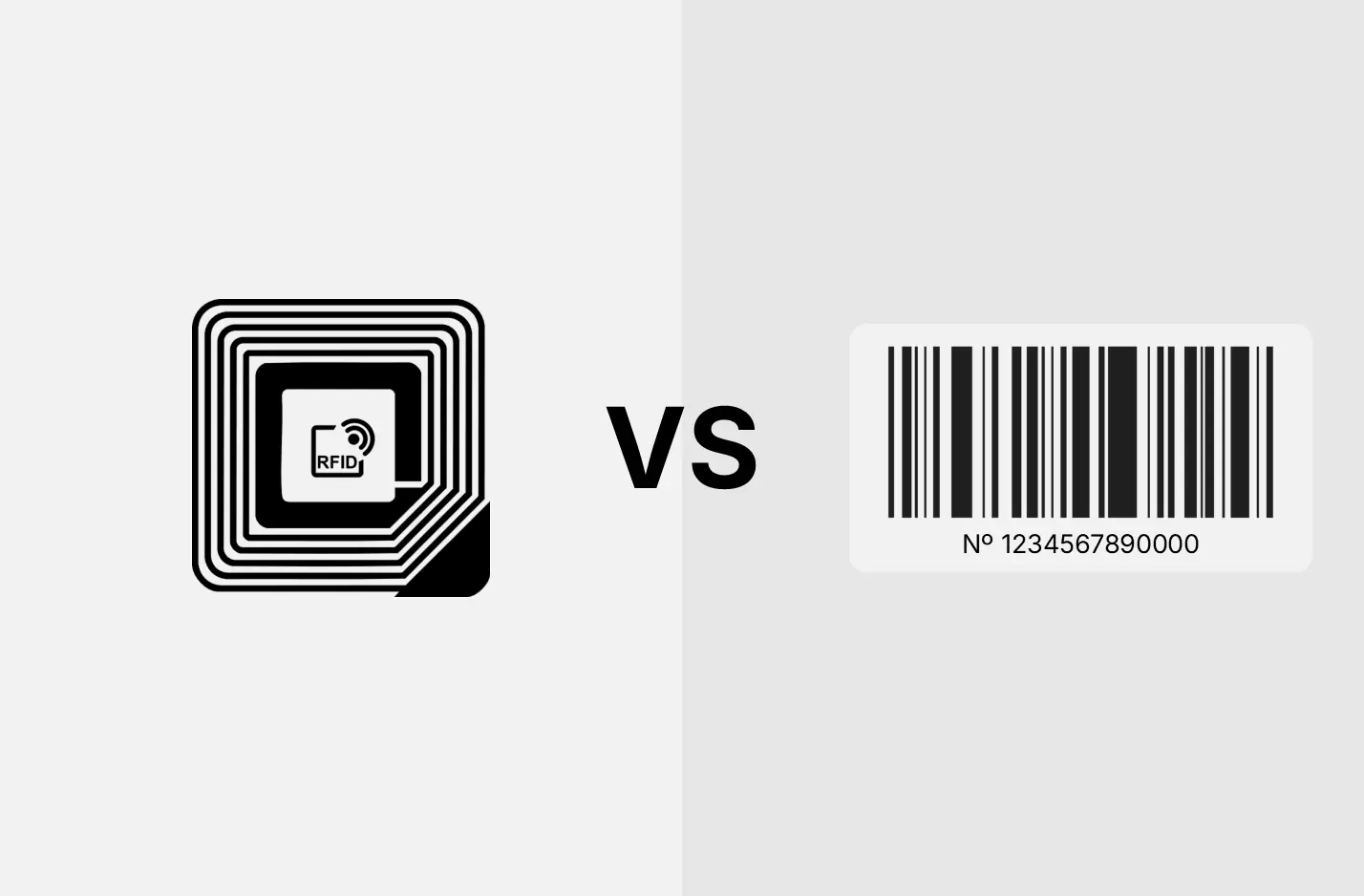
RFID vs barcode technology is one of the most common comparisons for companies looking to improve inventory accuracy, reduce operational errors, and gain better visibility into their supply chain. While both technologies are designed to identify and track products, they offer very different levels of speed, automation, and traceability.
The right identification technology is not just about reading labels. It is about creating reliable data that supports faster and more informed business decisions.
The challenge of maintaining inventory accuracy
Inventory discrepancies remain a major challenge across retail, logistics, and manufacturing. When stock records do not match reality, businesses face unnecessary costs, delays, and lost opportunities.
Common consequences include:
- Stockouts and lost sales
- Shipping and picking errors
- Excess inventory
- Reduced operational efficiency
- Limited visibility into product movements
As operations become more complex, companies need identification systems that can deliver accurate data quickly and consistently.
What is barcode technology and how does it work
Barcode technology relies on printed labels that must be scanned visually to capture information. Its simplicity and low implementation cost have made it the most widely used identification system worldwide.
Advantages of barcode technology
- Low initial investment
- Easy to print and replace labels
- Compatible with almost any business system
- Familiar and widely adopted across industries
Limitations of barcode technology
As inventory volumes increase, several limitations become more noticeable:
- Requires a direct line of sight
- Scans one item at a time
- Relies heavily on manual processes
- Labels can become damaged or unreadable
These factors can affect inventory accuracy and slow down operations in high-volume environments.
What is RFID and how does it work
RFID (Radio Frequency Identification) uses radio waves to identify products without requiring direct visual contact.
A typical RFID system includes:
- RFID tags
- Antennas
- RFID readers
- Middleware
- ERP or WMS systems
Because RFID can read multiple items simultaneously, it enables faster data capture and greater automation throughout the supply chain.
Benefits of RFID for inventory management
Organizations implementing RFID often achieve:
- Faster inventory counts
- Improved inventory accuracy
- Reduced human error
- Better product traceability
- Greater operational automation
Clustag RFID Solutions are designed to help retailers, logistics providers, and manufacturers achieve these benefits in demanding operational environments.
RFID vs barcode technology for inventory management
The key difference between RFID and barcodes lies in how information is captured and processed.
| Operational need | RFID | Barcode |
|---|---|---|
| Inventory counting | Multiple items read simultaneously | One item scanned at a time |
| Stock visibility | Automatic updates | Depends on manual scans |
| Error reduction | High | Moderate |
| High-volume operations | Highly efficient | Less efficient |
| Automation potential | High | Limited |
When inventory accuracy and operational efficiency are strategic priorities, RFID often provides capabilities that traditional barcode systems cannot match.
Practical considerations when choosing RFID or barcodes
Beyond technical specifications, the right decision depends on how each technology fits your operational requirements.
Reading environment and performance
Barcode labels require proper positioning and visibility to be scanned successfully. RFID eliminates this requirement, allowing products to be identified even when they are not directly visible.
Certain materials such as metals and liquids can influence RFID performance. However, modern RFID solutions are specifically designed to address these challenges. You can learn more in our article about RFID for sporting goods.
Integration with operational workflows
Barcodes are often easy to deploy in basic identification processes.
RFID becomes particularly valuable when businesses want to automate workflows such as:
- Goods receiving
- Shipping verification
- Packing stations
- Conveyor-based operations
- Automated validation systems
Investment and return on investment
Barcodes typically require a lower upfront investment. RFID systems involve higher initial costs but can generate significant long-term value through:
- Faster inventory processes
- Lower labor requirements
- Fewer operational errors
- Increased productivity
How Clustag improves inventory accuracy with RFID
At Clustag, we develop RFID solutions focused on maximizing accuracy, traceability, and operational efficiency.
Our approach combines:
- Advanced RFID hardware
- Intelligent software solutions
- Data intelligence through Zentup
- RFID Shield Technology to reduce stray reads and improve reading precision
This combination helps organizations gain more reliable inventory data while supporting scalable automation initiatives.
RFID or barcode technology Which should you choose
Barcode technology remains a practical choice for businesses with moderate inventory volumes and relatively simple processes.
RFID provides greater value when:
- Inventory accuracy is critical
- Large product volumes must be managed
- Real-time visibility is required
- Automation is a strategic objective
- Traceability requirements are increasing
The best solution depends on your operational goals, growth plans, and the level of visibility you need across your supply chain.
Frequently asked questions
Want to see RFID solutions in action?
Visit our Customer Experience Center and discover how Clustag RFID solutions improve inventory accuracy, automate processes, and increase traceability across real-world retail, logistics, and manufacturing environments.
Ready to take the next step? Contact our team and find out how RFID can help transform your operations.