

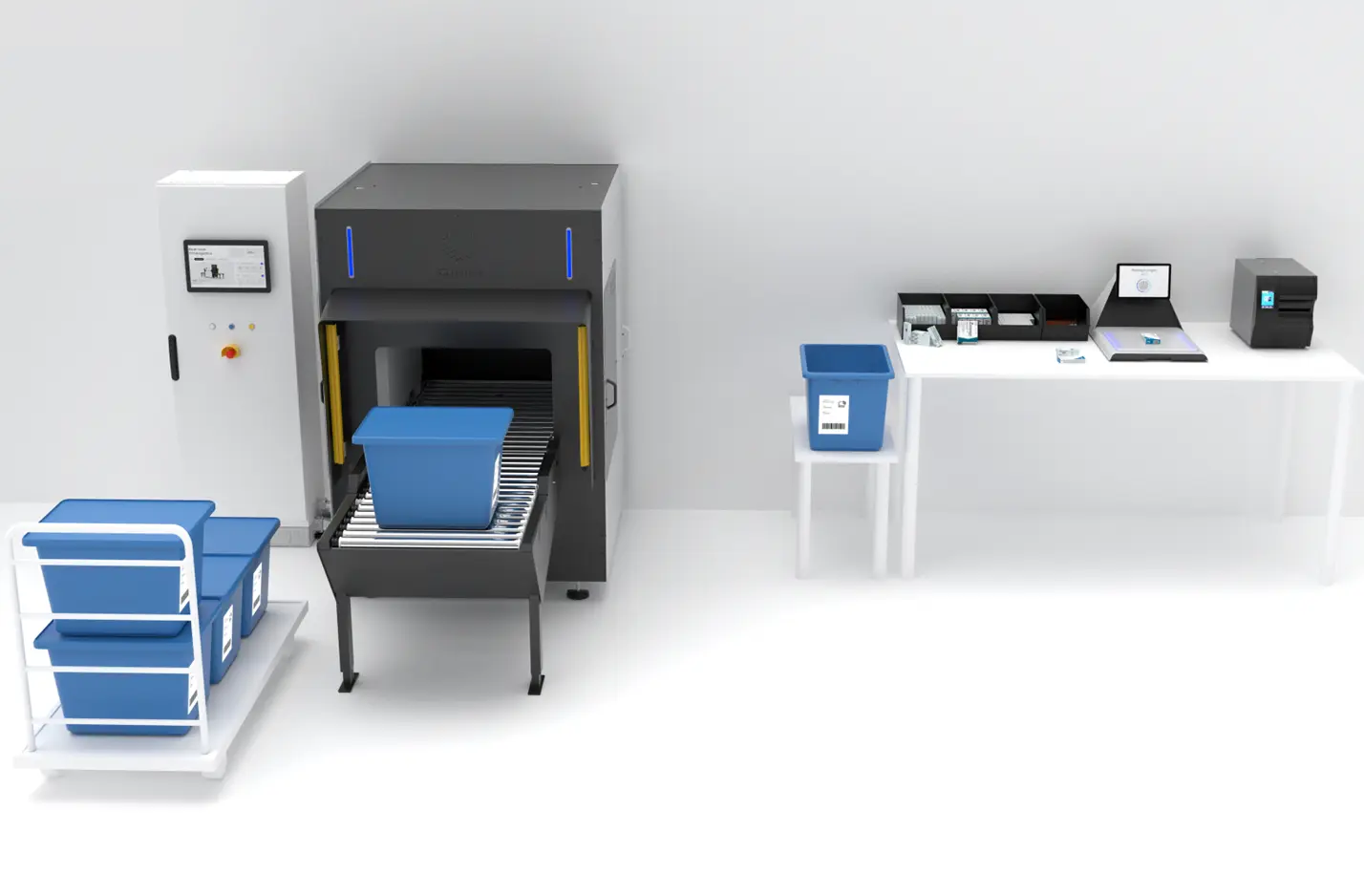
Efficient management of patients, medical equipment, medications, and biological samples is one of the biggest challenges facing hospitals and healthcare facilities. Limited visibility into available resources, identification errors, and manual processes can impact both operational efficiency and patient safety.
In this context, RFID healthcare solutions have become a key technology for improving traceability, automating workflows, and providing real-time visibility into assets, inventory, and critical healthcare resources.
Healthcare Management Challenges and the Need for RFID Technology
Healthcare organizations manage thousands of assets, consumables, medications, and patient records every day. Without an effective tracking system, equipment loss, inventory inaccuracies, and identification errors can affect both operational performance and quality of care.
Loss and Location of Medical Equipment
Infusion pumps, monitors, defibrillators, and wheelchairs continuously move throughout different hospital departments. Locating these assets quickly is essential to ensure efficient patient care and avoid unnecessary delays.
Patient and Sample Identification Errors
Incorrect patient or sample identification can lead to medication errors, laboratory mix-ups, and clinical incidents that directly impact patient safety.
Limited Control Over Hospital Inventory
Inefficient inventory management can result in:
- Increased operational costs.
- Expired products.
- Overstock situations.
- Stock shortages.
- Emergency purchases.

Why Traditional Healthcare Tracking Methods Are No Longer Enough
Today’s hospitals require accurate and real-time information about patients, medical equipment, and supplies. However, traditional methods often lack the speed and visibility needed in modern healthcare environments.
| Key Aspect | Manual Inventory | Barcode | RFID Healthcare |
|---|---|---|---|
| Inventory Control | Periodic stock counts | Item-by-item scanning | Automated real-time updates |
| Medical Equipment Tracking | Manual search | Individual lookup | Real-time asset visibility |
| Healthcare Traceability | Limited | Partial | End-to-end traceability |
| Reading Speed | Low | Medium | High |
| Staff Involvement | High | Moderate | Minimal |
| Automation Level | Low | Medium | High |
What Is RFID Healthcare Technology and How Does It Work?
RFID (Radio Frequency Identification) technology uses radio waves to identify and track people, assets, and products without requiring direct line of sight between the tag and the reader. This enables automatic data capture and real-time monitoring across healthcare operations.
HF and UHF RFID in Healthcare
- HF RFID (High Frequency) is commonly used for patient identification, access control, and applications that require short-range reading.
- UHF RFID (Ultra High Frequency) is particularly suited for healthcare asset tracking, hospital inventory management, and medical equipment traceability. Its ability to read multiple tags simultaneously over longer distances helps automate processes and improve operational visibility.

RFID Applications in Hospitals and Healthcare Facilities
Patient Identification and Tracking
RFID wristbands enable accurate patient identification throughout the entire care journey, reducing errors and improving patient safety.
Medical Equipment Tracking with RFID
Healthcare providers can track the real-time location of critical assets, optimize equipment utilization, and significantly reduce search times.
RFID for Hospital Inventory Management and Medication Control
RFID helps automate inventory tracking, monitor expiration dates, and improve medication management in hospital pharmacies and storage areas.
Surgical Instrument and Sample Traceability
The technology provides complete traceability for surgical instruments and biological samples, helping healthcare organizations reduce errors and improve compliance.
Access Control for Restricted Areas
RFID can also be used to manage access to operating rooms, laboratories, pharmacies, and other restricted healthcare environments.
Benefits of RFID Healthcare Solutions
| Operational Challenge | How RFID Helps |
|---|---|
| Lost medical equipment | Provides real-time asset tracking |
| Inventory shortages | Enables continuous inventory visibility |
| Expired products | Supports expiration date control |
| Identification errors | Improves patient and sample traceability |
| Manual processes | Automates data collection and reduces human errors |
| Limited operational visibility | Delivers real-time insights across facilities |
By implementing RFID healthcare solutions, hospitals can improve patient safety, optimize resources, reduce operational costs, and increase overall efficiency.
The future of RFID in the healthcare industry
The growing demand for healthcare asset tracking, hospital inventory management, and patient safety is driving RFID adoption across healthcare facilities worldwide.
From patient identification and medication control to real-time equipment tracking, RFID healthcare technology is becoming a critical component of digital transformation in the healthcare sector.
At Clustag Pharma, we help hospitals and healthcare organizations improve traceability, operational efficiency, and patient safety through RFID solutions tailored to their specific needs. Learn more at Clustag Pharma.
As a leading provider of RFID technology, Clustag supports healthcare organizations in optimizing asset management, inventory control, and operational processes. Visit the Clustag website to explore our solutions and discover how RFID can transform healthcare operations.
Ready to improve traceability and efficiency in your healthcare facility?
Contact our experts to discuss your project and find the RFID solution that best fits your needs.