
RFID garment on hanger is transforming how fashion distribution centers manage hanging garments at scale. In GOH environments, thousands of items move every hour through conveyors and sorters. When visibility is limited, even small errors in receiving or size distribution quickly escalate into rework, stock imbalances, and hidden shrinkage.
We design Smart RFID intralogistics solutions that connect physical GOH flows with real‑time data. We help operations teams turn GOH lines into reliable, measurable, and scalable processes.
RFID garment on hanger turns GOH operations from a fragile bottleneck into a controlled, data‑driven flow.
Why GOH flows remain a bottleneck in fashion logistics
Hanging garments are often the least controlled flow in otherwise automated distribution centers. Conveyors move fast, but identification and verification still rely on people, sampling, or partial scans.
This gap between automation and data accuracy is where most operational issues begin.
Manual inbound limits RFID garment on hanger performance
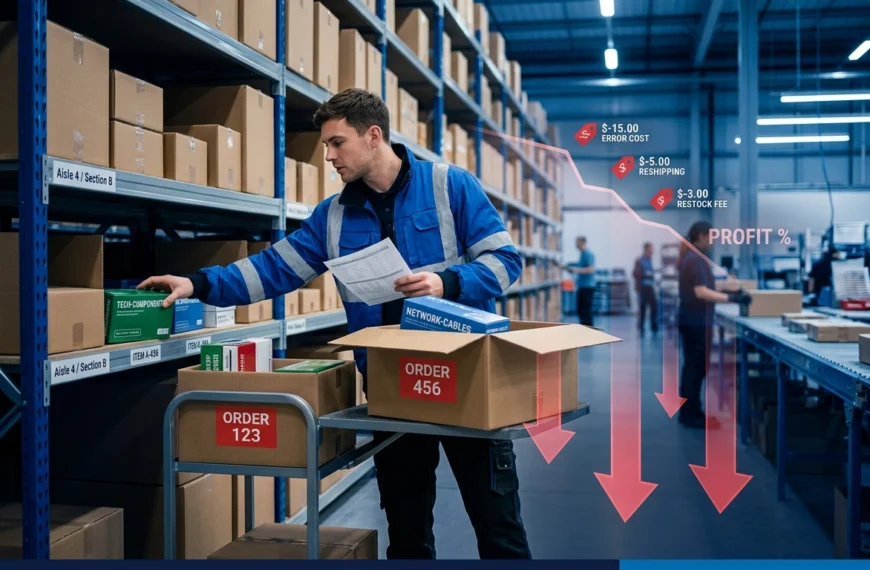
Inbound GOH shipments frequently arrive mixed by size, store, and collection. Without automated RFID garment on hanger validation, teams must trust packing lists or perform manual checks that only cover a fraction of the volume.
Errors detected at this stage usually surface too late:
- Incorrect size curves reach stores
- Vendor discrepancies are discovered after dispatch
- Rework and urgent transport become unavoidable
RFID garment on hanger transforms inbound into a true control point by validating every garment as it enters the facility.
Partial identification slows down GOH operations
Some GOH lines still rely on barcodes or incomplete identification. When mismatches occur, conveyors must stop and operators intervene. Productivity drops, and flow stability disappears during peak periods.
Without continuous RFID garment on hanger reading, scaling volume often means scaling labor.
Lack of traceability increases shrinkage risk
When garments are not identified at item level, discrepancies are difficult to explain. Missing items and incomplete deliveries require manual investigation, often without clear conclusions.
RFID garment on hanger creates a digital footprint for each garment, enabling objective analysis and measurable shrinkage control.
What RFID garment on hanger brings to operations
RFID garment on hanger enables automatic identification without stopping conveyors. Garments are read in motion and validated in real time, with data synchronized instantly through Zentup.
This is not only about speed. It is about accuracy, predictability, and control.
Faster receiving with RFID garment on hanger
Inbound verification becomes continuous and complete. Entire blocks or individual garments are read automatically and compared with expected data in real time.
Operational benefits include:
- Immediate detection of inbound errors
- Elimination of manual scanning
- Accurate inventory data from the first read
Accurate size distribution and pre‑sorting
With item‑level identification, size distribution is validated before garments leave the warehouse. This prevents incorrect assortments and reduces emergency replenishments.
Merchandising rules are applied consistently, even at high throughput.
Item‑level traceability and shrinkage control
Every RFID read captured by Zentup builds a traceable history for each garment. When discrepancies occur, teams can quickly identify where they happened.
Shrinkage stops being an accepted cost and becomes a controllable operational variable.
Clustag RFID solutions for garment on hanger operations
We offer a complete portfolio of RFID garment on hanger stations designed for both automatic and manual GOH flows. All solutions operate within controlled RFID environments using RFID Shield Technology to eliminate stray reads and ensure accuracy.
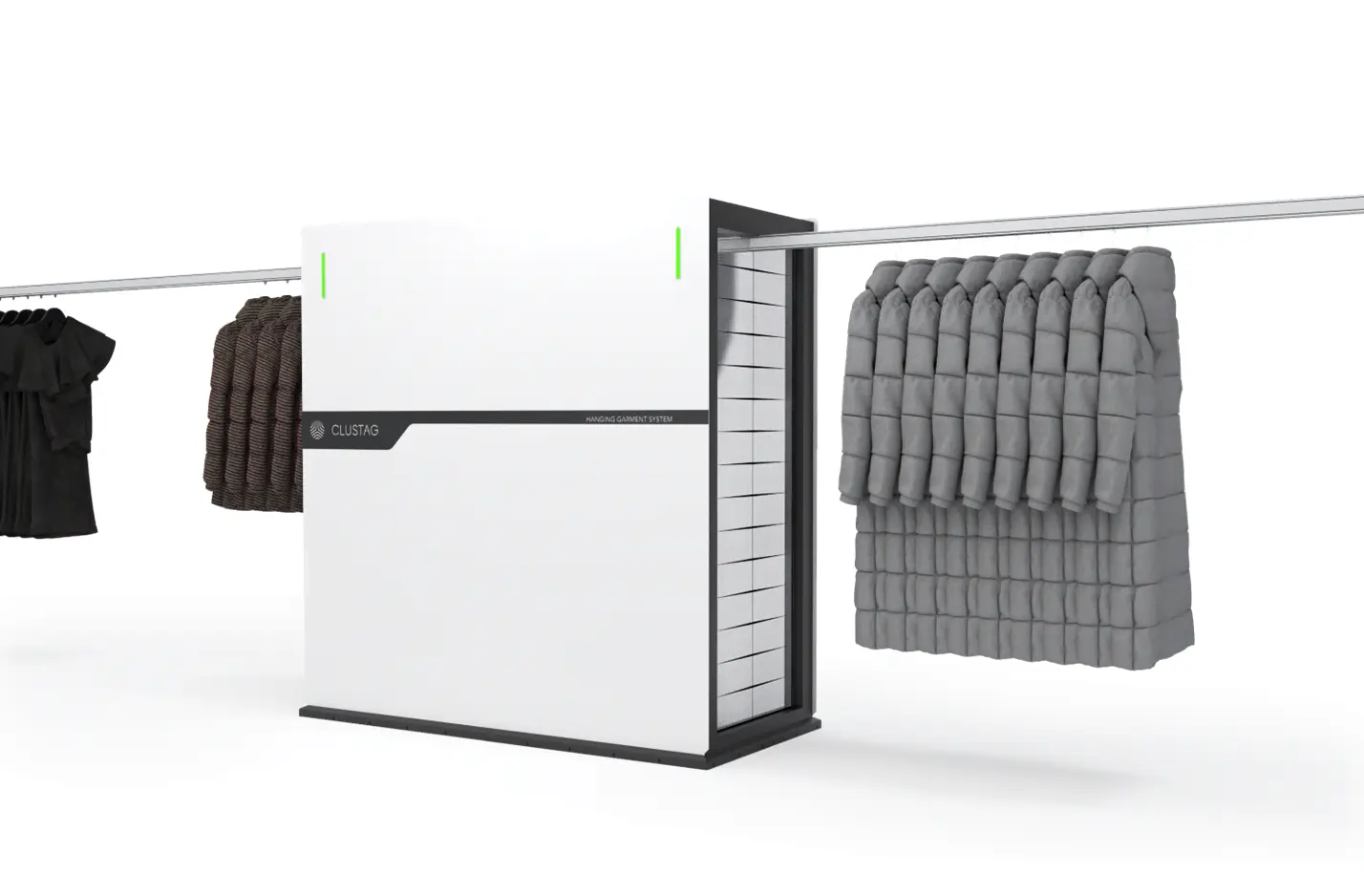
GOHT Station for block‑level validation

The GOHT Station is designed for automated GOH lines that need to validate entire blocks of hanging garments at speed. Garments are read in batches while each RFID tag is individually captured and validated.
This enables fast inbound and outbound verification without disrupting conveyor flow.
GOHTi Station for individual garment control
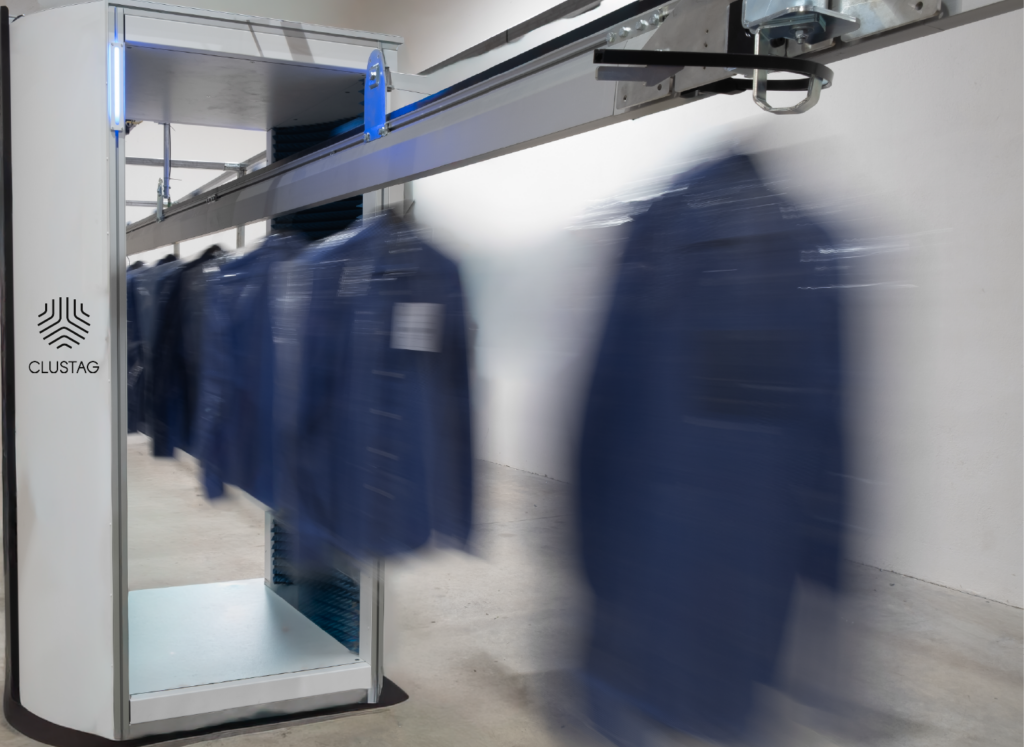
The GOHTi Station reads garments one by one as they move through automated lines. This approach is ideal for complex assortments, mixed destinations, and pre‑sorting before automated sorters.
Each garment is validated in real time and routed correctly, ensuring maximum accuracy.
RFID control for manual GOH processes
For wheeled racks, returns, or quality control, controlled RFID environments extend garment on hanger visibility beyond automated lines, without slowing down operators.
Operational challenges and RFID garment on hanger solutions
| GOH challenge | Operational impact | Clustag solution |
|---|---|---|
| Manual inbound checks | Late error detection | Automated inbound validation |
| Partial identification | Conveyor stops | Continuous in‑motion RFID reading |
| Stray RFID reads | Data inaccuracies | RFID Shield Technology |
| Limited traceability | Uncontrolled shrinkage | Item‑level traceability with Zentup |
Ready to optimize your GOH operations?
If you want to improve accuracy, speed, and traceability in your hanging garment flows, RFID garment on hanger can turn GOH operations into a strategic advantage. Contact us via the contact form or visit our Customer Experience Center to test our Smart RFID intralogistics solutions with your own products.