
RFID trends 2027 point toward a fundamental shift in how companies identify, verify and manage products across increasingly automated supply chains. RFID is moving beyond identification to become a critical source of real-time item-level data for automation, traceability and smarter operational decisions.
For operations and logistics leaders, the question is therefore changing. It is no longer simply Where can we use RFID? but How can RFID become part of the infrastructure that makes our operation more autonomous, accurate and scalable?
At Clustag, we see this evolution firsthand. As RFID becomes more deeply integrated into intralogistics processes, reading systems must do more than detect tags. They must capture the right items, at the right moment, within the right process, and transform those reads into reliable operational events.
The next generation of RFID will not simply identify products. It will give automated systems a reliable view of what is happening in the physical world.
Why RFID trends 2027 are moving from identification to automation
RFID adoption has traditionally focused on visibility. Companies implemented the technology to perform inventory counts faster, identify individual items or improve traceability.
That value remains, but the next stage goes further. RFID data is increasingly being connected with WMS, ERP, warehouse automation, robotics and AI-driven systems.
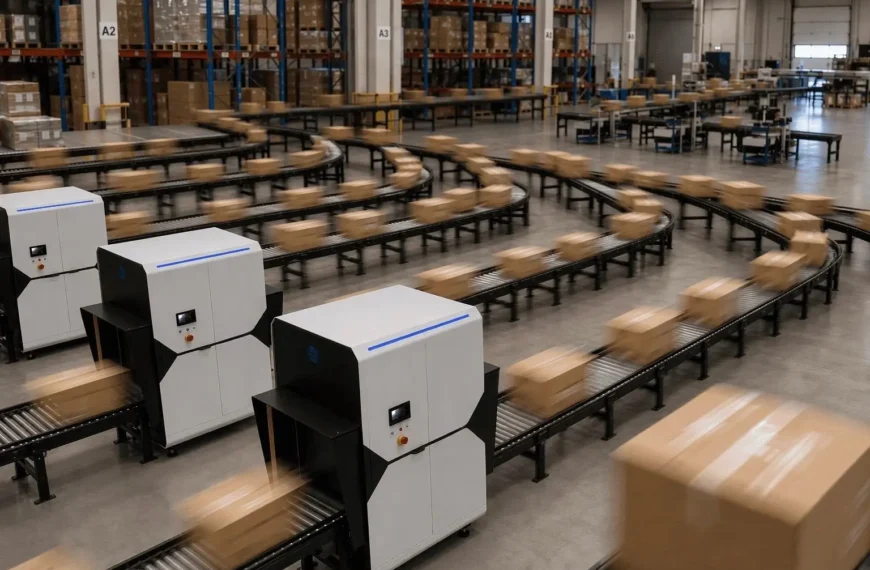
Instead of requiring an operator to scan each product individually, RFID reading points can automatically capture hundreds of tagged items as goods move through a process.
From RFID readings to automated processes
A modern RFID architecture usually connects several layers:
- RAIN RFID tags provide a unique digital identity to individual products.
- Readers and antennas detect tagged items without requiring line of sight.
- RFID systems filter and validate the readings generated within the process.
- Business systems consume the resulting data and associate it with inventory, orders, shipments or other operational events.
- Automation and AI systems can use that information to trigger workflows or support operational decisions.
This changes the role of RFID.
In an outbound process, for example, the objective is not simply to read 200 tags. The system needs to determine whether those 200 items correspond to the expected shipment and detect missing, unexpected or incorrect products automatically.
The business value comes from turning an RFID read into a trusted operational event.
Item-level data will become increasingly important
The ability to identify individual items at scale is one of RAIN RFID’s biggest advantages.
Unlike barcode-based processes, RFID does not require each identifier to be individually aligned with a scanner. Multiple tags can be read simultaneously and without direct line of sight.
That makes item-level identification particularly valuable for:
- Inventory management
- Inbound verification
- Outbound verification
- Pick and pack
- E-commerce fulfillment
- Returns and reverse logistics
- Inventory transfers
- Automated shipment verification
As operations become more automated, accurate item-level information becomes increasingly important because software cannot make reliable decisions about physical inventory that it cannot accurately see.
RFID and AI will create a new operational data layer
One of the most important RFID trends 2027 will be the relationship between RFID and artificial intelligence.
AI can optimize replenishment, detect anomalies, prioritize orders or orchestrate automated workflows. But these systems depend on accurate information about what is actually happening in warehouses, distribution centers and production environments.
This is where RFID provides something extremely valuable: trusted information from the physical operation.
Why AI needs physical data
A WMS may indicate that an item is inside a warehouse.
RFID can confirm whether that item actually passed through a specific checkpoint.
That difference becomes increasingly important when decisions are automated.
RFID infrastructure can create events such as:
- Item received
- Item packed
- Order verified
- Box completed
- Product transferred
- Shipment dispatched
- Item returned
AI systems can then analyze those events together with information from ERP, WMS, OMS or other operational platforms.
The result is a much richer understanding of the physical operation.
AI can optimize a process only when it has reliable data about the physical reality behind that process.
RFID solutions will need to deliver cleaner data
More RFID data does not automatically mean better information.
In industrial environments, antennas can detect tags outside the intended reading area. Products nearby, adjacent conveyors or inventory waiting for another process can generate unwanted readings.
These stray reads become particularly problematic when RFID data automatically triggers another system.
For example, identifying the wrong item inside a shipment verification process could generate a false discrepancy or an incorrect confirmation.
This is why RFID architecture increasingly needs controlled reading environments, filtering logic and technologies designed to isolate the intended reading zone.
RFID Shield Technology used in Clustag solutions helps mitigate stray reads by controlling the RF environment around the reading area, allowing the system to distinguish the products participating in the process from RFID tags located nearby.
Autonomous RFID reading will expand
Another major shift is the move from operator-driven RFID toward autonomous RFID reading.
Handheld readers remain useful for processes such as inventory counts or item search. However, warehouse automation increasingly requires RFID systems that operate continuously without depending on a person initiating every reading.
RFID checkpoints will become embedded in material flow
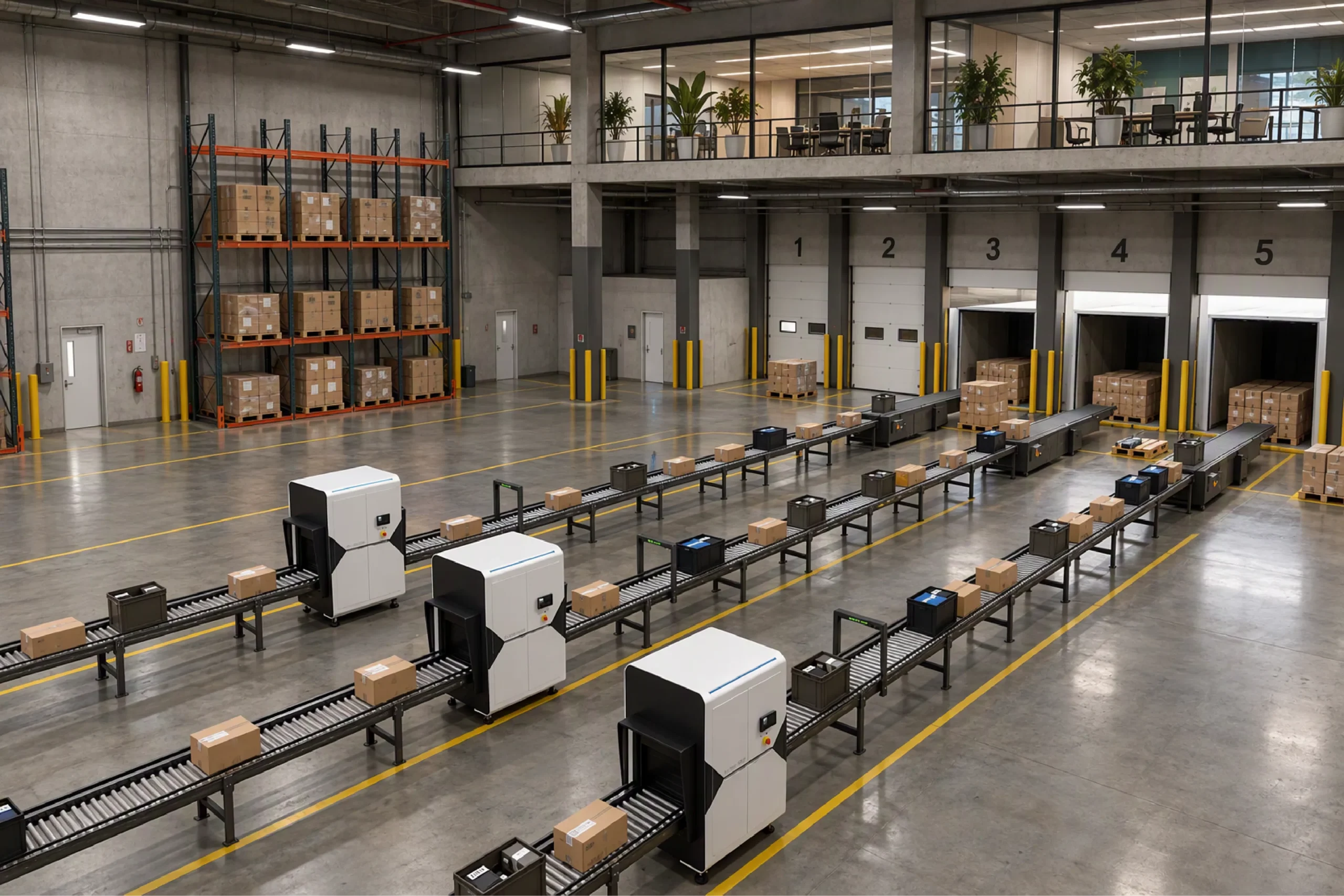
Fixed RFID systems can capture information while products move naturally through an operation.
Typical integration points include:
- Conveyor lines
- Packing stations
- Warehouse entrances and exits
- Dock doors
- Automated sorting systems
- Goods-to-person environments
- Distribution center outbound areas
In each case, the objective is similar: capture product information without adding another manual step to the process.
This is particularly relevant in high-throughput environments.
Opening a box and scanning every product individually introduces time and labor into the process. Reading the entire box automatically with RFID can make verification part of the material flow itself.
Accuracy will matter more than raw reading power
An RFID system that reads everything around it is not necessarily a good RFID system.
For automated processes, read-zone precision becomes critical.
The objective is not maximum detection range. It is obtaining the correct identification within a clearly defined operational context.
| Operational challenge | Traditional approach | RFID-driven approach |
|---|---|---|
| Shipment verification | Manual barcode scanning | Automatic bulk RFID verification |
| Packed-box control | Opening and checking boxes | Contactless RFID verification |
| Inventory movement | Manual confirmation | Automatic event capture |
| High tag density | Sequential identification | Simultaneous item-level reading |
| Nearby tagged products | Potential reading interference | Controlled RFID reading zone |
| Process integration | Separate verification task | RFID embedded into material flow |
Clustag RFID solutions are designed around this process-oriented approach, combining RFID hardware, antenna architecture, RF control and software integration to create reliable reading points inside automated operations.
Gen2X and higher RFID performance will expand possible use cases
RFID performance continues to evolve.
One important development heading into 2027 is the expansion of technologies such as Impinj Gen2X, designed to improve RAIN RFID performance while maintaining interoperability with existing Gen2 infrastructure.
These advances are particularly relevant as RFID expands beyond relatively simple apparel applications into more challenging products and environments.
Better performance with difficult products
RFID performance can be affected by multiple factors:
- Product density
- Tag size
- Tag orientation
- Liquids
- Metals
- Packaging configuration
- Conveyor speed
- Distance between products and antennas
Historically, some of these conditions limited the reliability of RFID deployment.
New generations of RFID endpoints, readers and antenna architectures are helping reduce those limitations.
The result is not simply better technical performance. It expands the number of processes where RFID can realistically replace or complement manual verification.
RFID engineering will remain essential
Better chip technology does not eliminate the need for good RFID engineering.
Successful deployments still require evaluating:
- Tag selection and positioning
- Reader configuration
- Antenna geometry
- Product behavior
- RF interference
- Reading-zone isolation
- Throughput
- Software integration
A tag performing perfectly on an isolated product may behave differently when hundreds of items are packed inside a box.
This is why RFID projects should be validated using real products, real packaging and realistic operational conditions before moving into production.
Digital Product Passports will increase demand for persistent product identity
The Digital Product Passport will be another important driver of RFID adoption in Europe.
Under the European regulatory framework, Digital Product Passports progressively connect physical products with structured digital information covering their origin, materials, lifecycle, sustainability and end-of-life processes.
RAIN RFID is increasingly positioned as one of the technologies capable of supporting that link between physical products and digital information.
From supply chain identification to lifecycle identity
Traditionally, an RFID tag may have been introduced to optimize a particular logistics process.
The same product identity can now potentially remain useful across multiple stages:
Manufacturing → Distribution → Warehouse → Retail → Consumer → Returns → Recommerce → Recycling
This creates an important strategic opportunity.
Companies implementing item-level identification for logistical efficiency can build infrastructure that may also support future traceability and circular-economy requirements.
RFID can create value beyond compliance
Digital Product Passports should therefore not be viewed exclusively as a regulatory requirement.
Persistent item identification can support:
- Traceability
- Product authentication
- Returns management
- Recommerce
- Warranty processes
- Recycling
- Circular supply chains
For organizations already adopting RFID, the objective should be to avoid creating isolated systems for each new requirement.
A scalable RFID infrastructure allows the same digital identity to support multiple operational use cases throughout the product lifecycle.
RFID will become part of hybrid automation ecosystems
The future of identification is unlikely to belong to a single technology.
RFID, computer vision, barcode systems, sensors, robotics and AI each provide different types of information.
The most advanced operations will combine them.
RFID and computer vision solve different problems
Computer vision is particularly strong at understanding visual characteristics and context.
RFID is particularly strong at identifying individual tagged objects quickly and at scale without requiring direct line of sight.
Combined, the two technologies can answer different questions.
Computer vision can help determine
- What type of object is present?
- Where is it located?
- What is happening around it?
RFID can help determine
- Which exact item is this?
- Which items are inside this box?
- Which serialized products crossed this reading point?
- Does this physical group of items match the expected order?
This is why RFID should increasingly be considered part of a broader automation architecture rather than an isolated identification technology.
RFID can become the identity layer of automated logistics
Robots, sorting systems and automated conveyors move physical products.
RFID provides those products with a machine-readable identity.
This creates a natural connection between identification and automation.
For companies increasing their level of warehouse automation, integrating RFID at key process points can help ensure that physical movements and digital systems remain synchronized.
RFID sensing will expand what a tag can tell us
Identification is also beginning to converge with sensing.
RAIN RFID sensing technology can combine the identity of an item with information about its physical condition or environment.
This opens additional possibilities for applications involving temperature, humidity, moisture or condition monitoring.
From knowing what an item is to knowing its condition
Traditional RFID answers a fundamental question:
What item is this?
RFID sensing can potentially add another:
What has happened to this item?
That creates opportunities in industries such as:
- Healthcare
- Pharmaceuticals
- Food
- Industrial manufacturing
- Automotive
- Cold-chain logistics
The challenge will be transforming additional sensor information into useful operational events rather than simply generating more data.
What companies should prioritize in their 2027 RFID strategy
The companies that extract the most value from RFID will not necessarily be those deploying the largest number of readers.
They will be those integrating RFID into the processes where reliable item-level information can eliminate manual verification, reduce uncertainty or enable automation.
Five questions to ask before deploying RFID
Before implementing a new RFID solution, we recommend asking:
- Which physical process are we trying to improve?
- Which items need to be identified within that process?
- Where should the RFID event be captured?
- How will we prevent unwanted or ambiguous readings?
- Which system will consume the resulting data?
These questions move the discussion away from RFID hardware and toward operational outcomes.
Build around the process, not the reader
An effective RFID project starts with the workflow.
Readers, antennas, tags and software should then be selected and configured around the requirements of that workflow.
At Clustag, this is the principle behind our approach to RFID intralogistics. Our solutions are designed to integrate RFID identification directly into processes such as inbound verification, outbound verification, packing, e-commerce fulfillment and automated material flow.
The objective is not to introduce another system operators must manage.
It is to make identification part of the process itself.
Preparing your operation for the next generation of RFID
The direction of RFID in 2027 is clear. Identification is becoming increasingly connected with automation, AI, traceability and lifecycle data.
What was once primarily a tool for counting and locating products is becoming part of the digital infrastructure that connects physical operations with enterprise systems.
For logistics and operations leaders, this creates an opportunity to rethink where identification occurs and how it can remove manual verification from critical workflows.
The starting point should not be the technology.
It should be the process.
Identify the moments where physical reality needs to be translated into reliable digital information and evaluate whether RFID can automate that transition.
Want to test RFID with your own products?
Contact our team or visit the Clustag Customer Experience Center, where we can reproduce real operational conditions and test RFID performance using your products, packaging and workflows before taking the solution into production.
Frequently asked questions about RFID trends 2027
What are the main RFID trends in 2027?
The main trends include autonomous RFID reading, integration with AI and automation systems, Digital Product Passports, improved RAIN RFID performance, hybrid RFID and computer-vision architectures, RFID sensing and greater use of item-level data throughout the supply chain.
Is RFID becoming more important for warehouse automation?
Yes. RFID allows automated systems to identify many products simultaneously without direct line of sight. This makes it particularly useful at conveyor lines, packing stations, warehouse checkpoints, dock doors and other automated material-flow points.
How will AI change RFID applications?
AI increases the value of accurate real-world data. RFID can provide AI systems with item-level events showing what products are present or moving through an operation. AI can then use this information to optimize workflows, detect anomalies and support automated decisions.
What is the difference between RFID and barcode identification?
Barcode systems normally require line of sight and individual scanning. RAIN RFID allows multiple tagged products to be identified simultaneously without requiring each label to be individually presented to a scanner.
The right technology depends on the process, and many operations will continue using both.
Why are stray reads important in automated RFID systems?
A stray read occurs when an RFID system detects a tag that is not participating in the intended process.
When RFID data triggers automatic workflows, these incorrect reads can generate false events. Controlling the RF environment and clearly defining the reading zone therefore becomes essential.
How can RFID support Digital Product Passports?
RFID can provide persistent item-level identification that connects a physical product with its digital identity. The same identity can potentially support traceability, logistics, authentication, returns, recommerce and recycling processes throughout the product lifecycle.
What is RFID Shield Technology?
RFID Shield Technology is used in Clustag solutions to control the RF environment and mitigate stray reads from tagged products outside the intended reading area.
This is particularly valuable in dense logistics environments where multiple RFID-tagged products may be located close to the reading point.
What RFID processes should companies automate first?
High-volume processes involving repetitive manual verification are often strong candidates.
Outbound verification, packing, e-commerce fulfillment, inbound verification and automated product movements can provide particularly clear opportunities because RFID can remove individual scanning steps while maintaining item-level identification.
How should a company test an RFID solution?
Testing should use the actual products, tags, packaging configurations and operating conditions expected in production.
Read accuracy should also be evaluated at realistic throughput and product density. This is why we recommend validating RFID applications under controlled but realistic conditions before full deployment.