
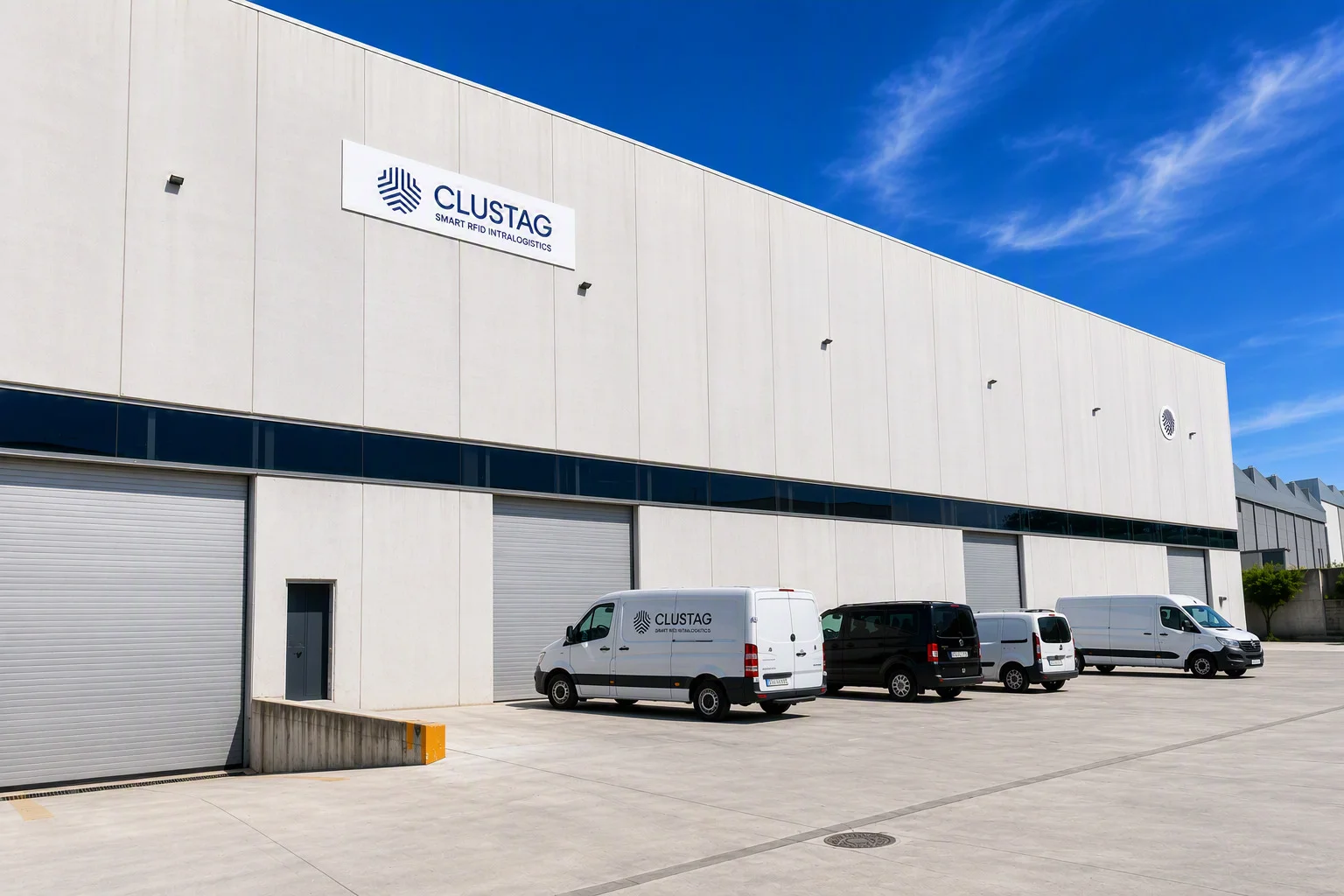
A unified production hub is one of the most effective ways to improve operational efficiency, strengthen collaboration, and build a scalable foundation for future growth. One year ago, we took a major step in that direction by bringing our operations together in a purpose-built 10,000 m² facility, creating a single operational hub where teams, processes, and workflows are more connected than ever.
What made this project truly significant was not the relocation itself, but the opportunity to redesign how our operation works. By consolidating production, assembly, quality, warehouse management, logistics, shipping, purchasing, spare parts, and health & safety under one roof, we created an environment where communication flows faster, coordination is simpler, and every department contributes to a shared operational vision.
Bringing teams together in a single location is not just about sharing a building. It is about creating a connected operation that enables greater efficiency, stronger collaboration, and continuous improvement.
Why a unified manufacturing hub matters
As organizations grow, operational complexity increases. Different departments often become separated, creating communication gaps, duplicated efforts, and inefficiencies. A unified manufacturing hub helps overcome these challenges by creating a more integrated environment where departments can work together more effectively.
Strengthening collaboration across teams
When operational functions are located in the same facility, collaboration becomes part of daily routines rather than a structured process.
Key benefits include:
- Faster communication between departments
- Improved visibility of operational priorities
- Better alignment across teams
- Faster problem-solving
- More agile decision-making
The result is a more responsive organization capable of adapting quickly to changing operational requirements.
Building a shared operational culture with unified manufacturing hub
Physical proximity plays a critical role in creating stronger relationships between teams. By working side by side, employees gain a better understanding of how their responsibilities impact the broader operation. This creates a stronger sense of ownership, accountability, and teamwork. As collaboration improves, organizations benefit from greater alignment around common goals and long-term objectives.
Designing a unified manufacturing hub around operational flow
The new facility was designed with one objective in mind: creating a seamless operational flow that connects every area of the business. Rather than focusing on individual departments, the project focused on how people, materials, and processes move throughout the entire operation.
Creating a connected workflow
Every area within the facility was strategically organized to improve coordination and ensure materials are available when needed.
The new operational layout includes:
| Area | Surface |
|---|---|
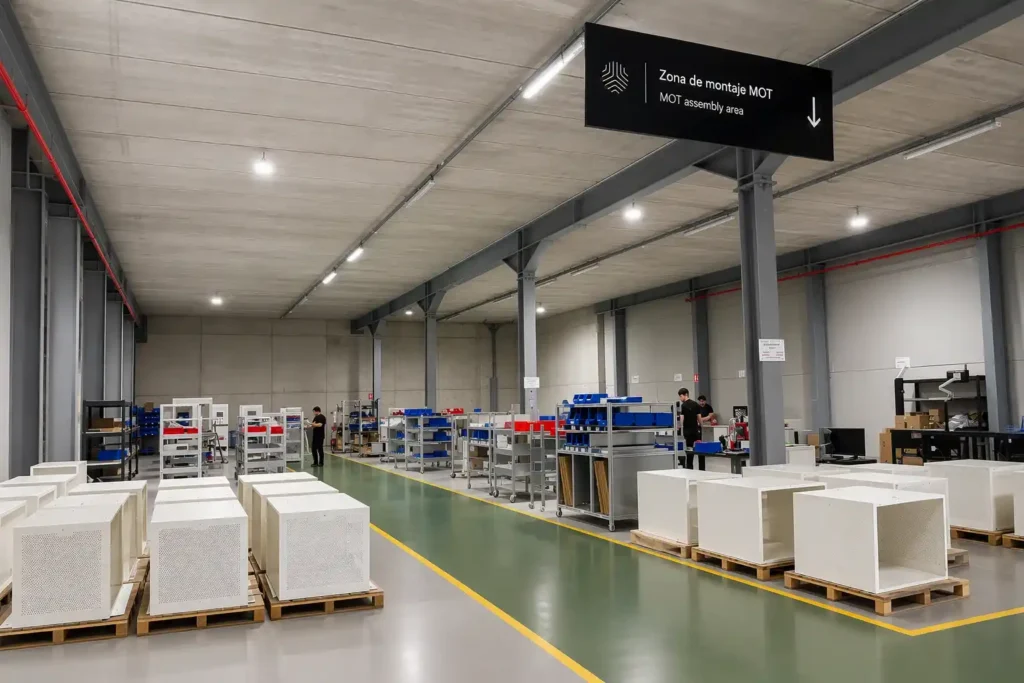
| Manufacturing, Assembly & Quality | 7,100 m² |
| Bulk Material Warehouse | 800 m² |
| Logistics & Shipping | 1,300 m² |
| Purchasing, Spare Parts & Health & Safety | 800 m² |
This configuration allows departments to interact more efficiently while maintaining clear visibility across operations.
Reducing barriers between departments
One of the greatest advantages of centralization is the elimination of unnecessary barriers between teams. Information can be exchanged more quickly, issues can be resolved faster, and decisions can be made with greater confidence because all stakeholders are working within the same operational environment.
The impact of a unified manufacturing hub after one year
The benefits of the new hub extend far beyond the physical facility itself. After twelve months of operation, one of the most noticeable improvements has been the stronger connection between teams and the creation of a more agile operational structure.
Improved coordination and production alignment
The centralization of key functions has helped create a smoother and more coordinated operation.
“Bringing our operations together in a single facility has transformed the way we work. Having manufacturing, warehouse, logistics, quality teams operating side by side has improved communication, reduced internal movements and created a much more connected workflow. Beyond the facility itself, the biggest achievement has been the collaboration and agility we have gained as a team.”
Pau Micó, DAP Manager
This enhanced coordination has strengthened day-to-day operations and helped create a more efficient working environment across all departments.
A more integrated approach to operations
The project was designed not only to centralize teams but also to rethink how departments interact and how workflows can be optimized.
“The objective was not simply to bring departments together, but to create a more integrated and efficient flow across all activities. One year later, we can clearly see the benefits in terms of collaboration, visibility and operational alignment.”
Juan Vicente, COO Clustag
The result is an operation that is better connected, more agile, and better equipped to support future requirements.
Building the foundation for future growth
A unified manufacturing hub is not only an operational improvement. It is also a strategic investment in the future. As organizations continue to evolve, centralized operations provide the flexibility and scalability needed to support expansion while maintaining efficiency.
Scalability through integration
By connecting departments within a single operational framework, organizations can:
- Improve resource allocation
- Increase operational visibility
- Facilitate future growth
- Enhance organizational agility
- Support continuous improvement initiatives
This creates a stronger foundation for sustained development over the long term.
A strategic vision beyond the facility
The new hub reflects a broader commitment to operational excellence and continuous improvement.
“This facility represents much more than additional space. It reflects our commitment to continuous improvement, operational excellence and long-term growth. By bringing our teams together under one roof, we have built a stronger foundation to support the next stage of our development.”
Luis Rius, Founder & CEO Clustag
The facility may have been the starting point, but its greatest value lies in the collaboration, efficiency, and shared vision it has enabled throughout the organization.
Benefits of a unified manufacturing hub at a glance
| Operational challenge | Benefit of a unified hub |
|---|---|
| Departments working in separate locations | Improved collaboration and communication |
| Limited operational visibility | Greater transparency across workflows |
| Slower decision-making | Faster coordination and response times |
| Fragmented processes | More integrated operations |
| Challenges supporting growth | Scalable foundation for future expansion |
Visit our Customer Experience Center
Visit Clustag’s Customer Experience Center and discover how connected operations, RFID technology, and real-time visibility help organizations improve efficiency, collaboration, and scalability.