

The food industry faces unique challenges when it comes to inventory management, product traceability and food safety. From managing perishable products with limited shelf life to ensuring regulatory compliance and responding quickly to recalls, manufacturers, distributors and retailers need greater visibility across their operations.
Traditional identification technologies often struggle to provide the speed and accuracy required in modern food supply chains. As a result, RFID technology is becoming a key enabler for food companies seeking to improve traceability, reduce waste and gain real-time inventory visibility.
Challenges in the Food Industry
Food Waste and Expiration Management
Food waste remains one of the biggest challenges across the food supply chain. Products with short shelf lives require accurate inventory management to ensure proper stock rotation and prevent unnecessary losses.
Common causes of waste include poor FIFO execution, lack of real-time inventory visibility and delayed identification of products approaching expiration. Without accurate inventory data, companies often react too late, leading to avoidable spoilage and increased operational costs.
Product Traceability and Food Recalls
Consumers and regulators increasingly demand complete visibility into product origins and handling processes. When a quality issue arises, organizations must be able to identify impacted products quickly and accurately.
Without end-to-end traceability, product recalls can become costly, time-consuming and damaging to brand reputation. Companies need systems capable of identifying affected batches and tracking their movement across the supply chain.
Limited Supply Chain Visibility
Food products move through multiple stages, from production and packaging to transportation, warehousing and retail. Every handoff creates potential information gaps that reduce visibility and make decision-making more difficult.

What Is RFID and How Does It Work?
RFID is a technology that uses radio waves to identify and track products automatically.
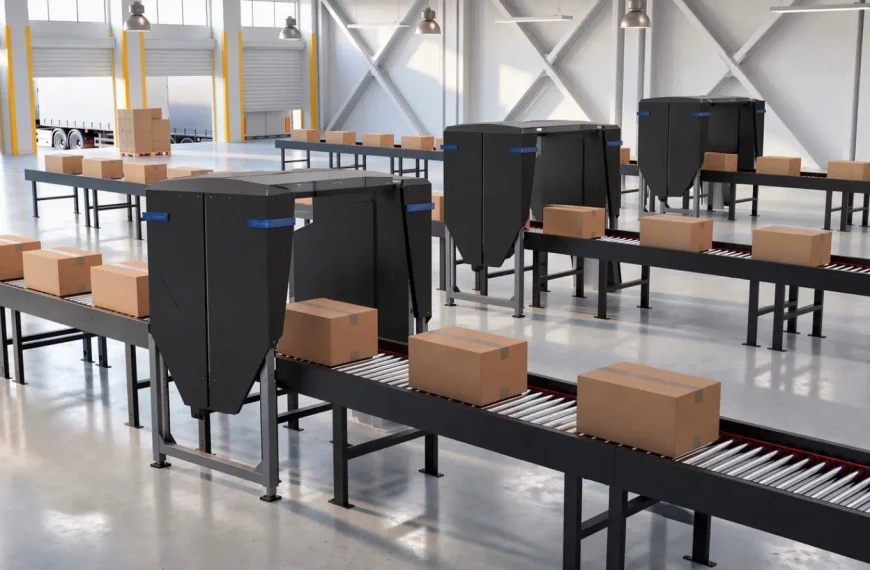
Each item, case or pallet is equipped with an RFID tag containing a unique identifier. RFID readers capture this information without requiring direct line of sight, allowing organizations to monitor inventory and product movements in real time.
A typical RFID system consists of:
- RFID tags
- Antennas
- Readers
- Management software
Together, these components create a digital record of product movements throughout the supply chain.
RFID vs Barcode
While barcode systems remain widely used, they present limitations in environments where speed and automation are critical.
| Barcode | RFID |
|---|---|
| Requires individual scanning | Reads multiple items simultaneously |
| Needs line of sight | No line of sight required |
| Manual inventory updates | Automated, real-time inventory tracking |
| Slower data capture | High-speed bulk reading |
| Limited traceability | Full product traceability |
| Higher labour dependency | Greater operational efficiency |
These advantages make RFID particularly valuable for food operations handling large volumes of products and frequent inventory movements.
RFID Applications in the Food Industry
Inventory Management for Perishable Products
One of the most common uses of RFID in the food industry is inventory management.
RFID enables automatic stock counts and provides real-time visibility into inventory levels and product locations. Instead of manually scanning products one by one, companies can read multiple items simultaneously, significantly reducing inventory time while improving accuracy.
This helps businesses:
- Improve stock visibility
- Automate inventory counts
- Reduce out-of-stocks
- Optimize replenishment
- Improve FIFO management

End-to-End Traceability
RFID allows organizations to create a complete digital history of every product movement.
From production and packaging to distribution and retail, each event can be automatically recorded. This provides much greater visibility than traditional identification methods and helps organizations respond more effectively to quality incidents or recalls. Learn more about Clustag RFID Solutions.
Cold Chain Monitoring and Food Safety
Many food products require strict temperature control throughout storage and transportation.
RFID can support cold-chain management by providing visibility into product handling conditions and helping organizations detect deviations before product quality is affected. Improved monitoring contributes to food safety, reduces spoilage and supports compliance with industry requirements.
Reusable Asset Tracking
Food supply chains rely heavily on reusable assets such as pallets, crates, containers and transport cages.
RFID helps organizations track these assets more efficiently, reducing losses and improving return management. By maintaining visibility over their asset pool, companies can increase utilization and reduce replacement costs.
Production Tracking and Lot Control
RFID can also improve visibility within manufacturing facilities.
By tracking raw materials, ingredients and production batches, organizations gain greater control over production processes and strengthen traceability from the manufacturing floor to the final customer.
Benefits of RFID in Food Operations
- Improved Inventory Accuracy. Real-time visibility allows food companies to maintain more accurate inventory records and make better operational decisions.
- Reduced Food Waste. By improving stock control and expiration management, RFID helps organizations reduce spoilage and minimize product losses.
- Faster Product Recalls. When a recall occurs, RFID enables businesses to identify affected products quickly and accurately, reducing response times and limiting disruption.
- Better Regulatory Compliance. Automated traceability records support audits, inspections and food safety requirements while reducing manual paperwork.
- Greater Customer Trust. Consumers increasingly expect transparency. RFID helps companies provide reliable information about product origin, handling and authenticity, improving confidence in the brand.
RFID Integration with ERP and WMS Systems
Modern RFID solutions integrate seamlessly with ERP and WMS platforms, including SAP, Oracle and Microsoft Dynamics.
This enables inventory movements, batch information and shipping events to be synchronized automatically across the business, creating a single source of truth and improving operational visibility.
Companies can combine RFID with warehouse automation solutions from Clustag to further optimize efficiency and traceability.
Real RFID Use Cases in the Food Industry
Meat Processing
RFID helps meat processors maintain traceability from production to retail, ensuring compliance and improving recall readiness.
Fresh Produce
Fruit and vegetable producers use RFID to improve stock rotation, reduce waste and gain better visibility into inventory movements.
Beverage and Packaged Goods
RFID supports inventory automation, shipment verification and product tracking throughout distribution networks.
RFID technology is transforming the food industry by providing the visibility, accuracy and traceability required in today’s complex supply chains.
From inventory management and cold-chain monitoring to automated traceability and faster recall response, RFID enables food companies to operate more efficiently, reduce waste and improve food safety. As the industry continues to pursue greater transparency and automation, RFID is becoming an essential tool for building smarter and more resilient food operations.
Contact us to learn how our RFID business intelligence solutions can improve efficiency in your operations!