
Author: Marketing Clustag

  • Walmart and Avery Dennison bet on RFID in fresh food: how can Clustag lead supermarket automation? 

    Walmart and Avery Dennison bet on RFID in fresh food: how can Clustag lead supermarket automation? 

    Fresh food management has become one of the biggest challenges facing retailers, distributors, and food producers. Product spoilage, inventory inaccuracies, limited traceability, and cold-chain disruptions can quickly erode margins while putting customer satisfaction and food safety at risk.

    As supermarkets and food supply chains become increasingly data-driven, organizations need greater visibility across every stage of their operations. This trend helps explain why major retailers such as Walmart are accelerating the adoption of RFID technology for fresh products and investing in smarter ways to improve traceability, inventory accuracy, and sustainability.

    At Clustag, we see this evolution as a natural step toward more automated, efficient, and resilient food supply chains.

    Discover our solutions for the Food Industry.

    Companies that achieve real-time visibility of fresh products gain a significant advantage in efficiency, sustainability, and customer experience.

    Why fresh-food management remains a major challenge

    Fresh products are among the most difficult categories to manage. Unlike apparel, electronics, or consumer goods, they are highly sensitive to time, temperature, handling conditions, and inventory rotation.

    Every stock discrepancy, delayed shipment, or traceability gap can generate unnecessary waste and additional operational costs.

    Why fresh products are difficult to manage

    Several factors make fresh-food operations particularly complex:

    • Short shelf life
    • Temperature-sensitive handling requirements
    • High SKU turnover
    • Variable weights and packaging formats
    • Strict food safety regulations
    • Multiple storage and distribution points
    • Continuous replenishment needs

    Together, these challenges create a level of operational complexity that often exceeds the capabilities of traditional inventory systems.

    The operational impact of poor visibility and traceability

    Limited visibility can have serious consequences throughout the supply chain.

    ChallengeBusiness impact
    Product spoilageReduced margins
    Inventory inaccuraciesLost sales opportunities
    Lack of traceabilityCompliance risks
    Manual processesHigher labour costs
    Poor demand visibilityForecasting errors

    Without accurate real-time information, organizations struggle to make informed decisions regarding stock levels, replenishment, and product rotation.

    Why retailers are adopting RFID for fresh food

    The implementation of RFID technology in fresh-food categories such as meat, bakery, and deli products represents one of the most significant developments in the retail industry.

    Retailers are no longer focusing solely on inventory visibility. They are investing in technologies that simultaneously improve traceability, sustainability, and operational performance.

    The business drivers behind RFID adoption

    RFID is gaining momentum because it directly addresses some of the biggest challenges in fresh-food management.

    Key benefits include:

    • Improved inventory accuracy
    • Better shelf-life management
    • Reduced food waste
    • Greater supply-chain visibility
    • Faster operational processes
    • Enhanced customer experience

    As we explained in our article about RFID in the food industry, real-time inventory intelligence is becoming a critical requirement for food retailers seeking to improve operational efficiency.

    RFID in refrigerated and perishable environments

    Historically, refrigerated environments have been challenging for RFID deployments due to factors such as:

    • High humidity
    • Condensation
    • Metal packaging
    • Products with high water content

    However, advances in RFID tag design and reading technologies now allow organizations to achieve highly reliable performance across cold-chain operations, from distribution centres to retail stores.

    How RFID improves traceability across the cold chain

    RFID enables organizations to move beyond periodic inventory updates and gain real-time visibility into the movement and status of products throughout the supply chain.

    This capability is particularly valuable when managing products with limited shelf lives and strict traceability requirements.

    RFID versus barcode technology

    The differences between RFID and barcode technology are especially relevant in fresh-food environments.

    CapabilityBarcodeRFID
    Line of sight requiredYesNo
    Simultaneous readingNoYes
    Inventory speedMediumVery high
    Automation levelLimitedAdvanced
    Real-time visibilityPartialEnd-to-end
    TraceabilityLimitedComplete

    This ability to automate data capture reduces manual effort while significantly improving data quality.

    Managing expiration dates and food safety

    One of the most valuable applications of RFID in fresh-food operations is the ability to improve expiration-date control.

    RFID helps organizations:

    • Monitor shelf life more accurately
    • Improve inventory rotation
    • Identify products approaching expiration
    • Prioritize distribution based on freshness

    As a result, retailers can reduce waste while improving product availability for consumers.

    Overcoming humidity and refrigeration challenges

    Fresh-food environments create unique technical challenges because moisture and liquids can affect radio-frequency signals.

    Successful RFID projects require careful consideration of:

    • Tag placement
    • Packaging materials
    • Reading infrastructure
    • Environmental conditions

    Clustag addresses these challenges through tailored RFID architectures and our proprietary RFID Shield Technology, which minimizes stray reads and improves reading reliability in demanding logistics environments.

    How RFID helps reduce food waste

    Food waste remains one of the most important economic and sustainability challenges facing the industry.

    The ability to monitor products in real time gives retailers greater control over inventory and enables proactive decision-making.

    Real-time inventory visibility

    Accurate inventory data allows companies to:

    • Reduce overstock situations
    • Improve replenishment decisions
    • Increase product availability
    • Improve demand forecasting

    Real-time visibility reduces uncertainty and supports better operational planning.

    Better stock rotation

    Fresh-food operations depend on effective rotation strategies.

    RFID supports:

    • FEFO (First Expired First Out) processes
    • Automated inventory monitoring
    • Faster identification of slow-moving products
    • Improved control of expiration dates

    These capabilities help reduce losses while maximizing product freshness.

    Reduced manual processes

    Traditional inventory management requires significant human effort.

    RFID automation helps organizations:

    • Reduce manual counting activities
    • Eliminate repetitive verification tasks
    • Improve workforce productivity
    • Reallocate resources to higher-value activities

    Reducing waste starts with improving visibility.

    How Clustag helps supermarkets automate fresh-food logistics

    While RFID adoption in retail stores is important, the greatest operational gains are often achieved in distribution centres and logistics operations.

    This is where Clustag solutions create measurable business value.

    RFID tunnels for fresh-food distribution centres

    Clustag’s RFID tunnel solutions are designed to process complete cases and logistics units automatically, even in demanding environments with high volumes and complex packaging configurations.

    Our solutions help organizations:

    • Automate inbound and outbound verification
    • Improve inventory accuracy
    • Reduce order preparation errors
    • Increase operational throughput
    • Strengthen traceability

    Learn how to select the right RFID tunnel solution.

    Real-time visibility with Zentup

    Technology alone does not create value unless the data can be transformed into operational intelligence.

    This is where Zentup plays a critical role.

    Zentup connects RFID devices with WMS and ERP systems, enabling:

    • Real-time operational visibility
    • Workflow automation
    • Inventory intelligence
    • Traceability management
    • Data-driven decision-making

    Benefits for retailers and distributors

    Operational challengeClustag solution
    Inventory inaccuraciesRFID verification
    Picking errorsAutomated RFID validation
    Lack of visibilityZentup intelligence platform
    Manual processesWarehouse automation
    Traceability limitationsEnd-to-end RFID tracking

    The future of supermarket automation with RFID

    Industry experts increasingly agree that RFID is becoming a strategic requirement rather than a competitive advantage.

    Retailers face growing pressure to improve sustainability, reduce waste, increase inventory accuracy, and maintain product availability despite increasingly complex supply chains.

    The combination of RFID technology, automation, and data intelligence is transforming how fresh products are managed from production to point of sale.

    Organizations that invest early will be better positioned to improve operational performance, strengthen traceability, and meet future consumer expectations.

    See Clustag solutions in action

    If you want to understand how RFID can improve traceability, reduce waste, and optimize cold-chain operations, visit our Customer Experience Center.

    You can test our solutions using your own products, packaging formats, and operational processes.

    For a personalized assessment, complete our contact form and one of our specialists will help you identify the most effective RFID strategy for your fresh-food operation.
    Frequently asked questions about RFID in fresh-food operations

    Does RFID work with products that contain high levels of water?

    Yes. Modern RFID tags are specifically designed to operate in challenging environments, including products with high moisture content and refrigerated conditions.

    Can RFID replace barcode systems completely?

    In some operations it can, while in others both technologies coexist. The best approach depends on operational requirements and investment objectives.

    How much does an RFID solution for fresh-food traceability cost?

    Costs vary depending on volume, infrastructure, integration requirements, and the level of automation required.

    Can RFID provide item-level traceability?

    Yes. RFID supports both batch-level and item-level traceability, depending on the operational objectives and tagging strategy.

    Is RFID suitable for refrigerated and frozen products?

    Yes. Modern RFID solutions are successfully used in refrigerated and frozen supply-chain environments worldwide.

  • Shelf-to-person systems for faster and more accurate warehouse operations

    Shelf-to-person systems for faster and more accurate warehouse operations

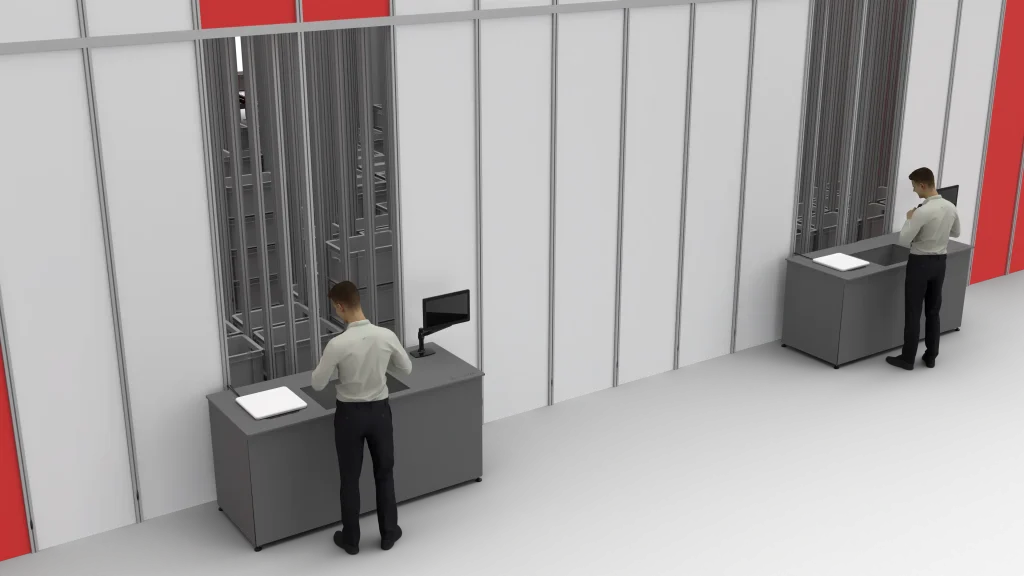
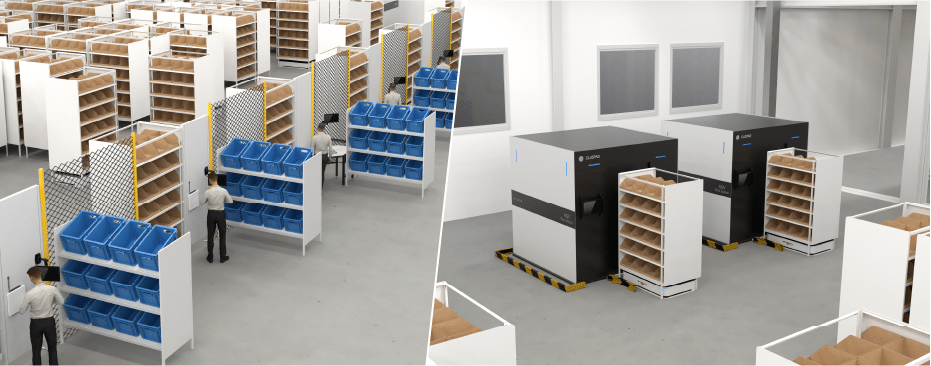
    Efficiency in warehouse is no longer just about speed; it’s about smart automation. Traditional “Person-to-Good” picking models slow down operations and increase the risk of errors as employees move across the facility to collect items. The shelf-to-person system changes everything by delivering inventory directly to the operator, optimizing workflows and improving accuracy. With Clustag solutions, businesses can streamline cycle counting and order picking using advanced RFID technology.

    The shift from manual picking to automated systems is not just about speed. It also transforms operational reliability, reduces labor costs, and creates a safer work environment. By combining AGVs, WMS, and RFID technology, shelf-to-person systems ensure that warehouses can handle higher order volumes without increasing human error.

    What is the shelf-to-person system?

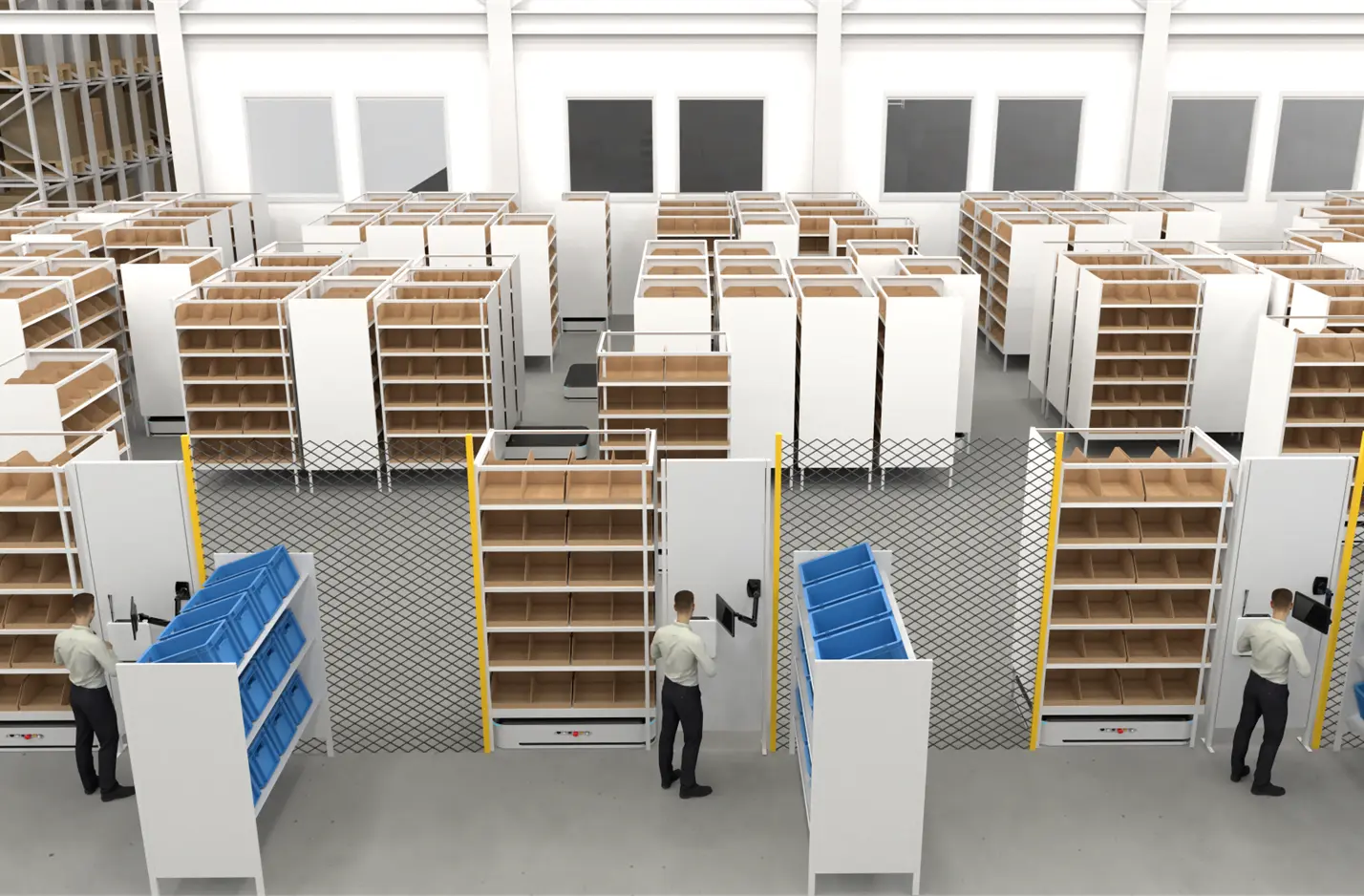
    The shelf-to-person system is a modern warehouse automation solution designed to replace the conventional method of picking items manually. Instead of employees walking the aisles to locate products, items are stored on mobile shelves and transported to picking stations via a fleet of Autonomous Guided Vehicles (AGVs).

    At the picking station, operators receive the shelves and pick items as indicated by the Warehouse Management System (WMS). This approach minimizes movement, reduces picking item, and ensures that operators can focus on accurate item selection.

    These systems are particularly beneficial in warehouses with high SKU counts and dense storage layouts, where manual picking would be slow and error prone. By automating shelf delivery, warehouses can maintain high throughput while reducing fatigue-related mistakes.

    What types of software controls the shelf-to-person system?

    The efficiency of a shelf-to-person system depends heavily on software integration. At the core, the Warehouse Management System (WMS) or Enterprise Resource Planning (ERP) system directs AGVs, tracks inventory and ensures that items are delivered to the corrects picking station.

    Clustag enhances this process by integrating its RFID solutions through its ZENTUP data-capture layer, providing:

    • Real-time inventory visibility
    • Seamless communication between AGVs and WMS
    • Accurate RFID-based item identification
    • Instant synchronization with ERP, SAP, or other business systems

    This combination of hardware and software guarantees that warehouse operations remain fast, accurate, and scalable. The software layer also allows warehouse managers to monitor AGV paths, predict bottlenecks, and optimize the placement of high-demand products near picking stations, further improving efficiency.

    How does the shelf-to-person system work?

    The operation of a shelf-to-person system streamlined and highly automated:

    1. RFID-tagged products: Every item is labelled with an RFID tag for precise tracking.
    2. AGV Shelf delivery: AGVs transport shelves containing the request items to the picking station.
    3. Operator picking: The operator picks items guided by the WMS and real-time data.
    4. RFID reading and validation: Clustag RFID Read Points verify items to prevent errors.
    5. Data synchronization: All information is instantly shared with client systems (ERP, WMS, SAP) with 99.96% reliability.

    Ensuring safety and accuracy

    AGVs operate on predetermined paths with sensors to avoid collisions, ensuring a safe environment for operators. Clustag solutions integrate seamlessly with the FMS (Fleet Management System) to manage traffic, monitor AGV health, and schedule maintenance without interrupting operations.

    Handling different warehouse layouts

    Shelf-to-person systems can adapt to various warehouse layouts, including multi-level mezzanines and high-density shelving. Clustag’s RFID-enabled workstations and AGV rack stations make it possible to manage even complex inventories, ensuring that every item is correctly identified and delivered to the operator in the shortest possible time.

    What are the advantages of the shelf-to-person system?

    Implementing a shelf-to-person system delivers multiple benefits for modern warehouses:

    • Reduced operator movement: less physical strain and faster picking times.
    • Improved accuracy: RFID validation ensures 100% reliable item identification.
    • Continuous operation: AGVs work around the clock, allowing for uninterrupted inventory processes.
    • Rapid ROI: Automation reduces labor costs and speeds up inventor management, often with ROI achieved in less than a year.
    • Scalable solution: Easly adaptable to warehouses of all sizes and inventory volume.
    • Enhanced data analytics: Real-time tracking of inventory movement allows managers to forecast demand and optimize stock placement
    • Reduced stock discrepances: automated counting and RFID reading drastically reduce errors and prevent stockouts.

    By integrating Clustag solutions, warehouses can further improve order accuracy and cycle counting while freeing human operators to focus on higher-value tasks.

    Innovative picking with the shelf-to-person system

    Clustag takes the shelf-to-person system to the next level by integrating advanced RFID technology into both cycle counting and order preparation:

    Cycle count with Clustag solutions

    Maintaining an up-to-date inventory is essential. Traditional counting can be slow and error-prone, especially with large volumes. Clustag enables:

    • Fully automated cycle counting
    • 24/7 inventory updates
    • 100% stock accuracy with RFID Shielding Technology
    • Integration with AGVs and Fleet Management Systems (FMS) for seamless operation

    Automating cycle counts not only saves time but also ensures that inventory discrepances are detected immediately, reducing lost sales or misallocated products.

    Order picking enhanced with Clustag workstations

    Order preparation is faster and more reliable with Clustag’s RFID-enabled workstations. Operators receive real time guidance via ZENTUP Workflow, ensuring:

    • Faster item identification
    • Reduced human error
    • Instant EPC-level validation
    • Real-time stock updates synchronized with ERP/WMS/SAP systems

    Clustag’s solutions can adapt to various warehouse environments, from high-density e-commerce fulfilment centres to large industrial warehouses, offering flexibility and consistent accuracy.

    Trends in shelf-to-person automation

    The future of warehouse automation is increasingly data-driven. Shelf-to-person systems are evolving to include:

    • AI-powered demand forecasting pre-positions high-demand items near picking stations
    • Predictive maintenance of AGVs for zero downtime
    • Advanced RFID analytics to identify slow-moving stock and optimize warehouse layouts
    • Integration with robotic picking arms for fully automated order fulfilment

    Clustag is at the forefront of these trends, helping warehouses leverage the latest technology to maximize efficiency and reduce operational costs.

    Optimize your warehouse today

    The shelf-to-person system is transforming warehouse operations, making inventory handling faster, more accurate, and more efficient. With Clustag solutions, warehouses can enhance every aspect every aspect of this system. From automatic cycle counting to error-free order picking. Unlocking a new level of operational efficiency.

    By leveraging advanced RFID technology and seamless software integration, Clustag is revolutionizing warehouse workflows and helping businesses achieve rapid ROI while maintaining precise stock management.

    Visit our Customer Experience Centre to see our solutions in action and experience the speed, accuracy, and traceability that Clustag can bring to your warehouse. To explore how our RFID solutions can be tailored to your specific needs, fill out our contact form and one of our experts will guide you through a personalized demonstration. Don’t miss the opportunity to optimize your warehouse processes and take your order preparation to the next level.

  • Clustag and STC integrate their RFID solutions for a complete retail ecosystem

    Clustag and STC integrate their RFID solutions for a complete retail ecosystem

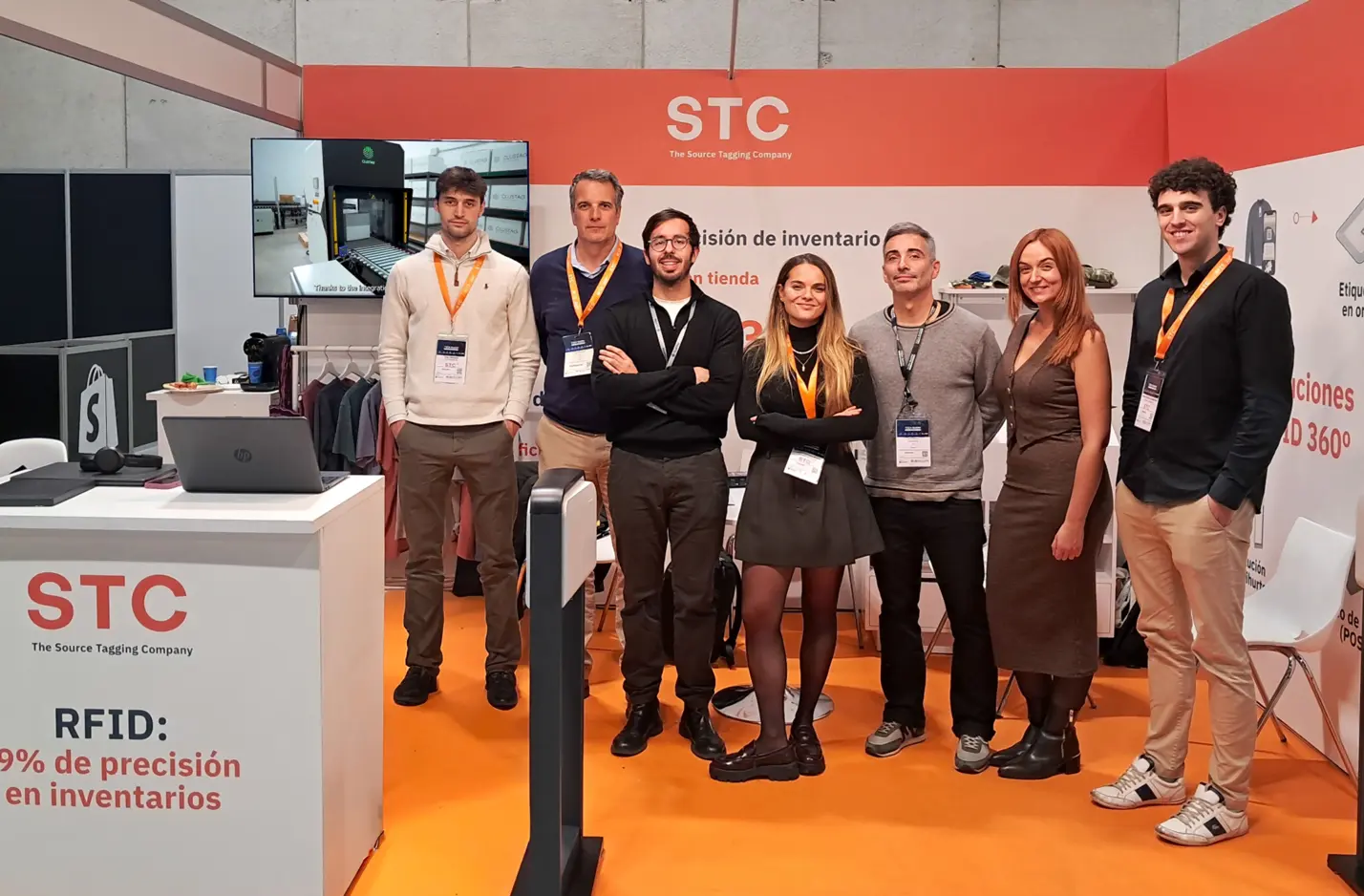
    Inventory management and traceability in retail sector are undergoing a transformation thanks to RFID technology. Clustag and STC integrate their RFID solutions, providing mid-segment retailers a complete ecosystem for rapid adoption. This partnership helps retailers manage stock and operate efficiently in increasingly demanding omnichannel environments.

    This collaboration enables Clustag’ solutions to be integrated into STC’s 360º concept, offering a complete RFID ecosystem for rapid adoption, that connects all processes across the supply chain: from tagging at origin and in-store management to point-of-sale, anti-theft systems and phygital experiences. The result is a connected, scalable and easy-to-implement solution that offers data in real time, reduces errors and optimizes processes, enhancing the purchase experience both in physical stores and online.

    A strategic alliance that democratizes RFID

    The collaboration between Clustag and STC not only brings together technology and expertise but also democratizes the access to advanced RFID solutions mid-segments retailers and brands. With this alliance, companies can implement systems that were previously reserved for large corporations, adapting them to their specific needs.

    In the words of Xavi García, CEO of STC:

    “We were looking for a partner with technology capability and real experience in RFID automation and integration in warehouses. Clustag allows us to offer our clients state-of-the-art RFID solutions that are scalable and reliable, were previously only available to large companies”.

    For his part, Manolo Reguart, Director of business development, strategic and partnership at Clustag adds:

    “It was important to find a parter with proven experience in implementing RFID in stores for a wide range of clients, and STC provides exactly that point-of-sale knowledge, as well as the ability to adapt the technology to any stores format, especially in SMEs.”

    Efficient inventory management during high-demand campaigns

    Retailers face special challenges during high-demand campaigns, such as sales, Black Friday, Cyber Monday or Christmas period. Accurate inventory and returns management are key to maintaining operatiional efficiency and customer satisfaction.

    Technology integration such as Clustag’s RFID tunnel, capable of reading mass-tagged items without manual intervention, together with STC’s store ecosystem, enable retailers to:

    • Validate returns real-time
    • Update inventory instantly
    • Make agile decisions based on accurate data

    “The combination of our RFID systems enables retailers to have total control of their inventory, from warehouse to store or e-commerce, with a visibility and traceability that were previously only available to large multinational companies” says Reguart.

    Accessible for all type of retailers

    Beyond advanced technology, one of the greatest achievements of this alliance is the accessibility. Clustag and STC’s integrated solutions allow any retailer, regardless of size or level of automatization, to implement an RFID system without large initial investment, setting a standard of efficiency previously reserved for major brands.

    A connected and efficient future for retail

    Thanks to this alliance, Clustag and STC integrate their RFID solutions, so that any retailer, large or small, can access technologies that transform inventory management, optimize processes and enhance the customer experience. This collaboration not only mars a milestone in retail digitalization, but also sets a new standard efficiency, traceability and competitive for modern retail.

    About STC

    STC is specialist in technological solutions for retail. With 13 years of experience, the company started with anti-theft systems and has evolved to a leader in RFID for retail. STC works with companies in fashion, grocery or electronics sectors, collaborating with large national and international brands as well as medium, small, and digital-native businesses entering the physical retail space.

  • Clustag appoints Clint Tennill as VP of Customer Success & Product Innovation

    Clustag appoints Clint Tennill as VP of Customer Success & Product Innovation

    Clustag appoints Clint Tennill as Vice President of Customer Success & Product Innovation. This marks a major milestone in the company’s U.S. expansion. Based in Miami, Tennill will focus on strengthening client partnerships, ensuring measurable business outcomes, and guiding the evolution of Clustag’s Zentup platform. The goal is to deliver smarter, data-driven supply chain solutions.

    Bringing Experience and Leadership to Clustag

    Tennill brings over 20 years of experience in technology and RFID solutions. He has a proven record of leadership and deep industry expertise. Previously, he served as Vice President of Product Development at SML IIS. There, he led technology and product strategy for retail inventory management. His career also includes senior roles at Xterprise, Ericsson, and Emergisoft. Tennil has extensive experience in software architecture, supply chain systems, and enterprise technology.

    Tennill holds a Master’s in Computer Science from The University of Texas at Dallas. He also earned a Bachelor’s in Business Administration from The University of Kansas.

    “I’m thrilled to join Clustag at such an exciting time. Our goal is to help businesses unlock efficiency and visibility through RFID, data, and intelligent automation,” Tennill said.

    Strengthening Clustag’s U.S. Presence

    Clustag operates in more than 25 countries. It has deployed over 3,000 RFID solutions across 200+ distribution centers, processing billions of RFID tags annually. With growing U.S. demand for warehouse automation and real-time inventory visibility, Miami serves as a strategic hub. It supports large-scale deployments and strengthens relationships with enterprise customers.

    “Clint’s industry knowledge and proven leadership will be instrumental in strengthening our U.S. presence and delivering exceptional customer outcomes,” said Jorge Robledillo, Director of Clustag North America.

    Driving Innovation with AI and Machine Learning

    In his new role, Tennill will lead initiatives to integrate AI and machine learning into Clustag’s Zentup platform, enabling predictive analytics, intelligent decision-making, and next-generation automation. These initiatives align with Clustag’s vision to combine RFID technology with data intelligence, creating more agile, responsive, and efficient supply chains.

    “Clint’s appointment is a significant milestone in Clustag’s evolution. His unique combination of customer-facing expertise and product vision will be invaluable in delivering on our commitment to innovation and customer success,” said Manolo Reguart, Director of Strategy and Business Development at Clustag.

    Looking Ahead

    With Tennill at the helm of Customer Success & Product Innovation, Clustag is set to accelerate its U.S. growth and help businesses unlock the full potential of RFID-enabled operations. Companies seeking to enhance visibility, efficiency, and operational intelligence in their supply chains now have a powerful partner in Clustag.

    Discover how Clustag’s Zentup platform and RFID solutions can transform your supply chain operations.

  • Clustag celebrates its first family day and 10 years of logistics innovation

    Clustag celebrates its first family day and 10 years of logistics innovation

    On Saturday 25th October, Clustag opened the doors of its Ontinyent headquarters for the first time to celebrate its first Clustag Family Day, bringing together employees and their families. The event marked ten years of international growth from the Vall d’Albaida. It also offered visitors a closer look at how teamwork, talent and daily innovation shape the company’s success in advanced logistics and traceability solutions. Furthermore, it served as a recognition of the people who make Clustag’s global impact possible every day.

    A look inside Clustag technology hub

    The Clustag Family Day gave families the chance to explore the spaces where innovation takes shape every day. They discovered areas where smart tags are designed, manufactured, and tested, as well as the R&D labs where new logistics solutions are developed to optimize supply chains worldwide. Families could see how technology and teamwork combine to keep logistics efficient, flexible, and continuously improving.

    Local talent and strong roots

    Since its foundation, Clustag has invested consistently in local talent from the Valld’Albaida, convinced that technological excellence can grow, and expand from anywhere in the world. This long-term commitment has positioned Clustag as an international benchmark in RFID traceability and logistics innovation. Moreover, the company’s success is deeply rooted in the community, where local knowledge and global vision work hand in hand.

    Ten years of evolution and a new brand renewal

    The first family day coincided with a milestone. Ten years of teamwork, innovation, and growth. By opening its doors to families allowed employees could proudly share how their daily work drives global logistics efficiency and strengthens Clustag’s reputation.

    In addition, the event served as a gesture of gratitude and recognition for collective effort that fuels the company’s success and for the deep connection to its local roots, which continue to inspire creativity and innovation.

    People, trust, and logistics excellence

    This celebration reaffirms Clustag’s commitment to people, teamwork, and continuous improvement in logistics performance. After a decade of steady growth, the company remains guided by the same values that shaped its beginnings: trust collaboration, and the belief that great innovation starts with local talent. As a result, Clustag continues to drive logistics transformation through technology, creativity, and a strong human connection.

    Learn more about how Clustag drives logistics transformation.

  • Order preparation AS/RS for faster and more accurate warehouse picking

    Order preparation AS/RS for faster and more accurate warehouse picking

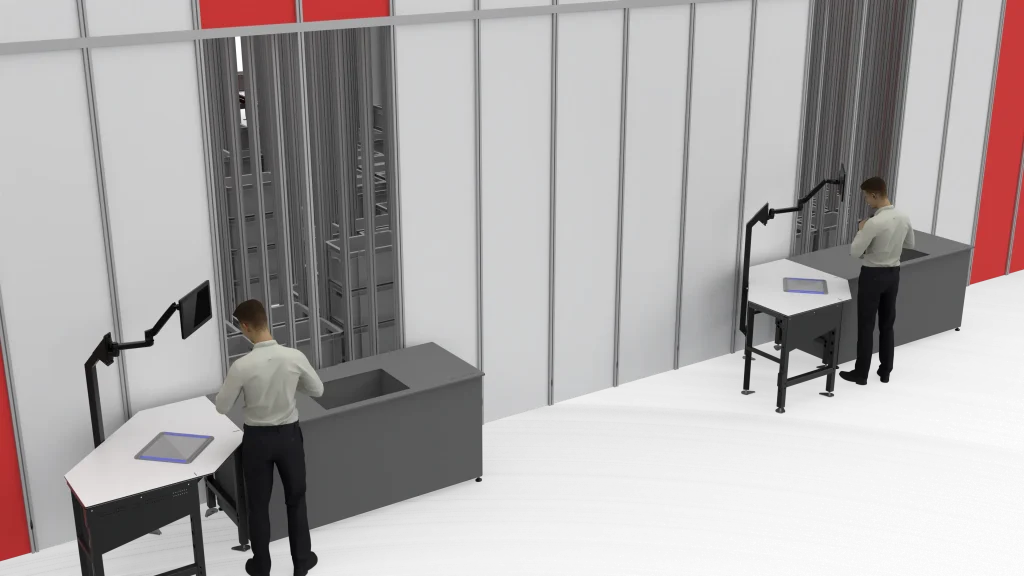
    Efficient order fulfilment is one of the biggest challenges in modern automated warehouses. Companies rely on Automated Storage and Retrieval systems to optimize space utilization and accelerate the movement of goods. Order preparation AS/RS systems deliver precision, speed, and automation throughout the picking process. Even the most advanced setups benefit from smart verification tools. That’s where RFID technology makes the difference. By integrating RAIN RFID-based verification into order preparation AS/RS, warehouses can achieve complete accuracy, real-time visibility, and smooth operator workflow that eliminate costly errors and inefficiencies.

    With warehouses managing thousands of SKUs and hundreds of orders per hour, every second counts. rfid solutions such as those developed by Clustag bring intelligence and automation to the picking stage, ensuring that every item is correctly identified, validated, and tracked in real time. The result is a fully reliable and efficient order preparation process that enhances both productivity and accuracy.

    What is order preparation in AS/RS systems?

    Order preparation is a crucial part of warehouse operations, especially in Automated Storage and Retrieval Systems (AS/RS). In these environments, orders are fulfilled from storage bins automatically delivered to picking stations, where operators select the items required for each order. Autostore systems often serve as the backbone of such setups, ensuring seamless bin delivery.

    While AS/RS systems automate the transport and retrieval of goods, manual unit picking can still be prone to errors if verification is not automated. Misplaces, missing, or incorrect items can compromise both inventory accuracy and customer satisfaction.

    Adding RFID verification during order preparation AS/RS eliminates this weak point. Each item is identified instantly and validated against the digital order, preventing discrepancies and ensuring that the right product reaches the right customer every time.

    How RFID enhances order preparation AS/RS

    RFID technology seamlessly integrates with AS/RS picking stations to bring full transparency and automation to the process. By using RAIN RFID tags for unit-level identification, warehouses can improve speed, accuracy, and visibility at every stage of order preparation.

    Operator no longer need to rely solely on manual barcode scanning or visual checks. RFID-enabled workstations automatically recognize items, confirm correct solutions, and send real-time updates to warehouse management systems. This results in fasters workflows and dramatically fewer picking errors.

    Key benefits of RFID in order preparation AS/RS

    Integrating RFID into order preparation AS/RS delivers measurable operational improvements that go far beyond speed alone. From minimizing errors to empowering operators with real-time insights, RFID technology transforms the picking process into a smarter, more efficient, and fully traceability workflow. Autostore integration further streamlines order fulfillment by reducing manual handling.

    AS/RS delivers bins automatically

    The system retrieves the bins containing required SKUs and brings them to the picking station, eliminating unnecessary operator movement.

    Operator picks items at the RFID workbench

    The operator removes the indicated items and places them on a RFID-enabled workbench for automatic validation.

    Automatic RFID verification

    The workbench instantly verifies that all items correspond to the digital order, ensuring perfect accuracy before proceeding.

    Real-time feedback and confirmation

    The system provides instant confirmation or alerts, allowing operators to correct errors immediately and maintain workflow continuity

    Continuous and traceable process

    Every item picked is logged in real time, creating a fully traceable and auditable process that supports quality control and performance tracking

    This streamlined workflow not only improves productivity but also enables warehouses to maintain precise inventory data and ensure customer satisfaction through perfect order execution

    Flexible and scalable solutions

    One of the key advantages of RFID technology is its flexibility. It can be adapted to any order preparation AS/RS environment, whether upgrading existing infrastructure or designing a new warehouse. RFID-enabled workbenches and readpoints can be customized to fit each client’s operational layout, allowing seamless integration with AS/RS ports and business systems like ERP, SAP or WMS. Autostore solutions are particularly effective in multi-level setups for high-density storage.

    This adaptability makes it possible for warehouses across industries; retail, fashion, healthcare, and manufacturing, to benefit from the same level of automation, accuracy, and efficiency.

    Real-time operator support with workflow integration

    The Zentup Workflow, part of the Zentup suite, provides operators with real-time guidance during order preparation AS/RS, helping reduce human error and streamline picking operations. Keyfeatures include:

    • Instant EPC-level validation of every item picked
    • Real-time visualization of order progress, showing:
      • Expected items
      • Missing items
      • Unexpected items
      • Excess items
    • User-friendly UI/UX for intuitive operation
    • Seamless integration with client systems such as ERP, SAP, or WMS

    By combining RFID verification with Zentup Workflows, operators receiv step-by-step assistance and real-time feedback, ensuring every order is accurate, traceable, and efficiency processed. This integration maximizes speed, reliability, and overall operational confidence.

    Measurable impact on warehouse operations

    Integrating RFID into order preparation AS/RS has a tangible impact on warehouse efficiency and reliability:

    • Faster picking: reduce preparation time per order and increase throughput
    • Fewer errors: minimize returns and rework due to picking mistakes
    • Full traceability: track every item in real time for improved inventory accuracy
    • Optimized workforce: let operators focus on higher-value tasks while RFID handle validation

    With these advantages, RFID transform order preparation AS/RS into a streamlined, data-driven process that enhances speed, accuracy, and operational confidence. Warehouses adopting this technology position themselves to meet growing customer demands with efficiency and reliability.

    Discover firsthand how RFID technology can transform your order preparation AS/RS operations. Visit our Customer Experience Centre to see our solutions in action and experience the speed, accuracy, and traceability that Clustag can bring to your warehouse. To explore how our RFID solutions can be tailored to your specific needs, fill out our contact form and one of our experts will guide you through a personalized demonstration. Don’t miss the opportunity to optimize your warehouse processes and take your order preparation to the next level.

  • How to optimize inventory with cycle count AS/RS

    How to optimize inventory with cycle count AS/RS

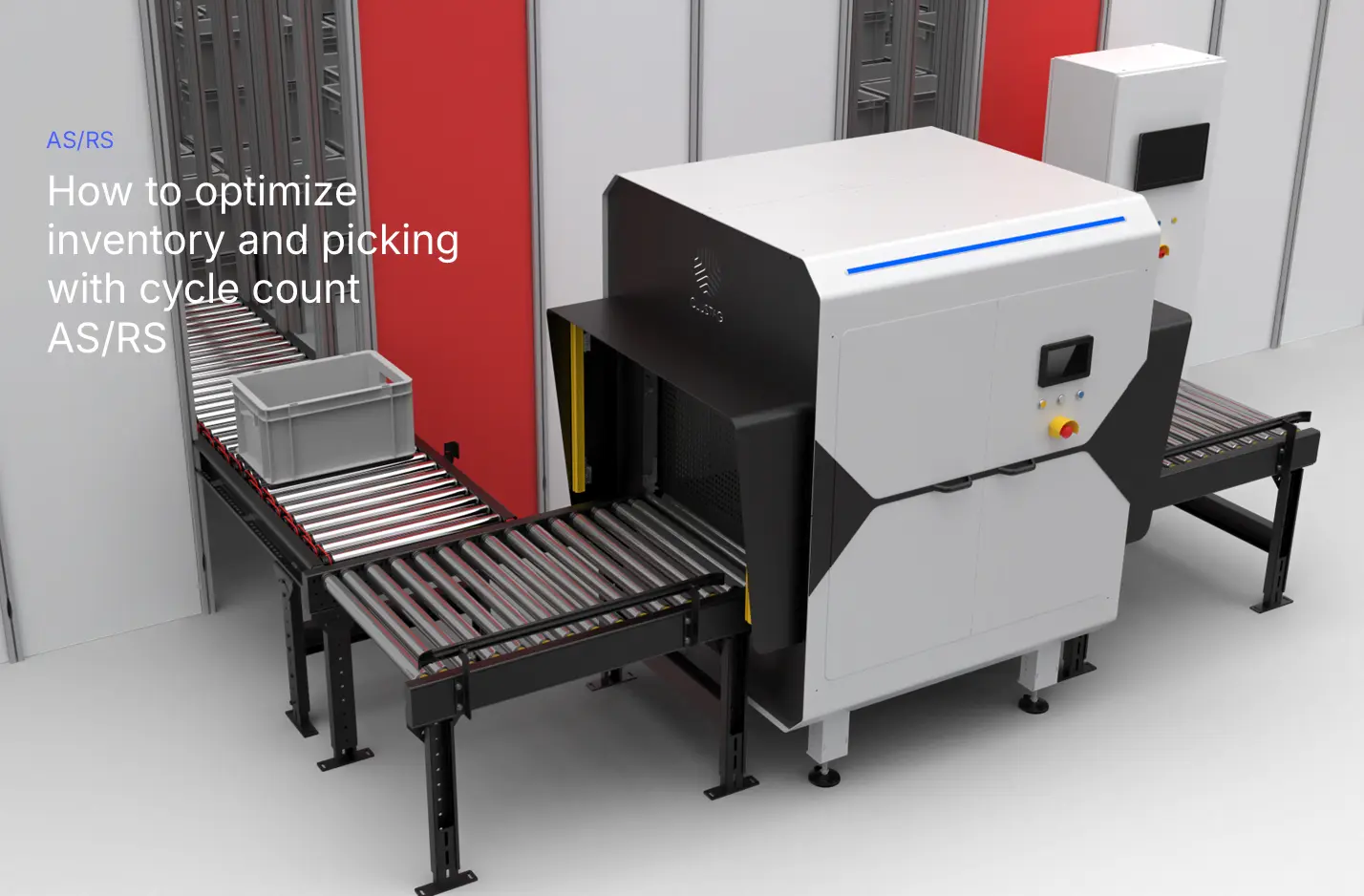
    In highly automated intralogistics environments, automated storage and retrieval systems (AS/RS) operate continuously. Consequently maintaining accurate inventory, traceability, and operational efficiency becomes a major challenge. To address this, companies implement a Cycle Count AS/RS process using Clustag’s RFID technology. This solution not only ensures real-time inventory control but also eliminates manual workloads and minimizes human errors.

    By combining AS/RS systems with Clustag’s RFID solutions, companies can enhace warehouse efficiency, achieve seamless traceability , and optimize storage process across complex operations.

    Understanding cycle count in AS/RS environments

    Cycle counting is a method of auditing inventory on a continual basis, rather than performing full physical inventories. In automated warehouses, this process must be fully integrated with AS/RS systems to avoid disrupting the flow of goods.

    Key principles

    A Cycle count AS/RS ensures that selected bins or totes are counted at regular intervals without halting warehouse operations. By using RFID technology, each unit within a bin can be read instantly and automatically, guaranteeing precision and reliability. This main principles include:

    Common challenges in manual cycle counting

    Without automation, cycle counting is prone to errors caused by human handling, mislabeling, and misplacement. These errors can lead to inaccurate stock levels, delayed shipments, and increased operational costs. By automating the process within an AS/RS, these challenges are minimized. Autostore solutions can further reduce these errors by automating bin handling and transport.

    How Clustag enhances cycle count in AS/RS

    Clustag integrates the MOT S24 Slim RFID station directly into the AS/RS conveyor system. As a result, Cycle Counting occurs without interrupting operations and maintains maximum reliability.

    Step 1: Bin selection and transport

    The AS/RS system identifies bins scheduled for auditing based on a predefined cycle count schedule. These bins are automatically transported to the MOT S24 Slim Station, ensuring smooth and continuous workflow.

    Step 2: Automated RFID readings

    Once the bins arrive at the station, the system instantly scans all items using Clustag’s RFID technology. Thanks to patented shielding technology, it avoids cross-reading errors and eliminates the need for manual handling.

    Step 3: Real-time synchronization

    RFID data captured by the MOT S24 Slim is transmitted via Zentup. Clustag’s middleware platform. Zentup ensures seamless integration with ERP and WMS systems, providing real-time updates and full inventory traceability.

    Step4: Continuous operation

    The system operates 27/, including off-hours. This ensures that cycle counting is performed continuously without impacting other warehouse processes.

    Key benefits of cycle count AS/RS with Clustag

    Implementing a cycle count AS/RS with Clustag provides measurable operational advantages:

    Automated inventory management

    The system performs inventory counts automatically, which reduces the need for manual labor and minimizes human errors.

    Continuous warehouse operation

    By integrating RFID scanning into the AS/RS, the system conducts inventory audits without stopping workflows, thus maintaining productivity and efficiency

    High accuracy and reliability

    Clustag solutions achieve up to 99,96% RFID reading rates, ensuring accurate stock levels at all times.

    Rapid ROI

    Automation reduces labor costs and optimizes inventory management, delivering a fast return on investment.

    Scalable and flexible

    The system, can handle up to 1000 boxes per hour and accommodates various bin sizes, making it suitable for warehouses of all sizes. Autostore setups in particular allow scaling to very high-density storage environments.

    Best practices for implementing cycle count AS/RS

    To maximize the benefits of cycle counting with an AS/RS, consider the following strategies:

    Process standardization

    First establish clear schedules and procedures for cycle counting. Then, automate bin selection, transport, and data capture to maintain consistency.

    Staff training and oversight

    Even in automated environments, trained staff should monitor processes to address exceptions and ensure system efficiency.

    Continuous monitoring

    Use Clustag’s Zentup to track cycle count results in real-time. This enables rapid reponse to discrepancies and ensures continuous process improvement.

    Integration with enterprise systems

    Connect RFID data to your WMS and ERP for synchronized stock updates, accurate reporting, and comprehensive inventory traceability.

    Real-world results with Clustag

    Clustag’s Cycle Count AS/RS implementations have shown significant results across various industries

    Integrating Clustag’s RFID solutions into AS/RS systems tranforms cycle counting into a fast, accurate, and fully automated process. Companies gain operational visibility, minimize human errors, and optimize warehouse performance while ensuring complete inventory traceability

    Discover how Clustag can help your warehouse implement Cycle Count AS/RS with efficiency and precision. Contact our experts to design a solution tailored to your operations and to visit our customer experience centre to see in action.

  • How to reduce human errors in warehouse operations

    How to reduce human errors in warehouse operations

    Human errors in warehouse operations continue to be one of the biggest causes of inventory discrepancies, shipping mistakes and customer complaints. A misplaced item or an incorrect shipment may seem like a minor issue, but when multiplied across thousands of orders, the operational and financial impact becomes significant.

    Human error is not usually a people problem. It is often the result of processes, systems and tools that make mistakes more likely.

    Why human errors remain a major warehouse challenge

    Warehouse errors can occur at any stage of the operation and often go unnoticed until they affect inventory accuracy or customer deliveries.

    Most common warehouse errors

    Error typeExampleBusiness impact
    Receiving errorsWrong quantity registeredInventory discrepancies
    Picking errorsIncorrect item selectedReturns and complaints
    Inventory errorsStock mismatchStockouts and overstock
    Shipping errorsIncorrect order dispatchedCustomer dissatisfaction

    Why these errors happen

    The most common causes include:

    • Manual processes and paper-based workflows.
    • Lack of real-time visibility.
    • Operational pressure and employee fatigue.
    • High SKU volumes.
    • Poorly integrated ERP and WMS systems.

    A receiving error that goes undetected can eventually become a picking mistake, a shipping issue and ultimately a customer complaint.

    The real business impact of warehouse errors

    Warehouse errors affect much more than operational accuracy.

    ConsequenceBusiness impact
    Rework activitiesIncreased labour costs
    Shipping mistakesAdditional logistics costs
    Inventory inaccuraciesPoor planning decisions
    Customer complaintsReduced satisfaction and loyalty

    Beyond direct costs, errors reduce productivity and limit a warehouse’s ability to scale efficiently.

    Strategies to reduce human errors

    Reducing errors requires a combination of process improvement, employee support and technology.

    Standardize warehouse workflows

    Simpler and more standardized processes make operations easier to execute correctly.

    Key actions include:

    1. Mapping current workflows.
    2. Eliminating unnecessary steps.
    3. Defining clear operational procedures.
    4. Monitoring process performance.

    Improve training and verification

    Warehouse teams benefit from:

    • Continuous training.
    • Operational checklists.
    • Standard verification procedures.
    • Clearly defined responsibilities.

    Automate repetitive tasks

    Tasks that depend heavily on manual data entry are often the most error-prone.

    Automating these activities reduces variability and improves consistency across the operation.

    Why RFID reduces human errors more effectively

    Traditional identification methods rely heavily on operator intervention. RFID reduces this dependency by automatically capturing and validating inventory information in real time.

    How RFID helps eliminate common errors

    Root causeHow RFID helps
    Manual data entryAutomatic data capture
    Picking mistakesItem-level verification
    Inventory discrepanciesContinuous inventory visibility
    Shipping errorsAutomatic shipment validation
    Lack of traceabilityReal-time tracking

    Unlike barcode systems, RFID can identify multiple items simultaneously without requiring line of sight, making verification faster and more reliable.

    Our RFID Solutions integrate with ERP and WMS environments to improve operational visibility and reduce manual intervention.

    RFID applications that reduce warehouse errors

    Receiving verification

    RFID automatically checks incoming goods against expected deliveries, reducing manual validation and receiving errors.

    Picking and shipping validation

    Our Picking and Packing Solutions verify that the correct products are picked, packed and shipped.

    Real-time inventory visibility

    By providing continuous inventory updates, RFID reduces discrepancies between physical and digital stock records.

    End-to-end traceability

    Every product movement can be recorded automatically, making it easier to identify and resolve operational issues.

    Real-world success: Nike’s RFID transformation in Eastern Europe

    Nike’s exclusive distributor in the Balkans, Sport Time, faced major challenges managing high-volume, diverse inventory across eight countries. Manual post-pick controls, slow item verification, and lack of real-time visibility were leading to frequent errors, shipment mismatches, and operational inefficiencies.

    Sport time implemented a fully integrated RFID solutions thanks to Clustag covering:

    “With RFID, we’re not just talking about process improvement, but about complete transformation. Instead of lengthy and manual receiving processes, we now how have the ability to accurately verify hundreds of items in just a few seconds” – Bojan Djordjevic, Regional MPO and logistics director, Sport-Time

    Measurable results

    The impact was immediate and transformative:

    This success story demonstrates how to reduce human errors in a warehouse through digital transformation, combining automation, traceability, and human-centered process design.

    Key takeaways

    This case highlights how RFID technology can dramatically reduce human error in pick & pack operations, accelerate fulfilment, and provide real-time inventory visibility. Sport Time’s experience demonstrates that implementing advanced digital solutions not only improves accuracy but also transforms operational efficiency and scalability across multi-country logistics networks.

    Frequently asked questions

    Can RFID eliminate all warehouse errors?

    No technology removes every error, but RFID significantly reduces the most common causes of operational mistakes.

    Does RFID work with existing ERP and WMS systems?

    Yes. Modern RFID solutions are designed to integrate with existing business platforms.

    How quickly can results be achieved?

    Many organizations see improvements in inventory visibility and operational accuracy shortly after deployment.

    Does RFID work with all product types?

    Most products can be identified using RFID, although some environments require specific configurations.

    Do I need to redesign my warehouse processes before implementing RFID?

    Not necessarily, but reviewing key workflows helps maximize the benefits of the technology.

    Ready to reduce warehouse errors?

    Reducing warehouse errors is not just about avoiding mistakes. It is about increasing productivity, improving inventory accuracy and delivering a better customer experience.

    With RFID Solutions, Zentup and RFID Shield Technology, we help organizations build more reliable and efficient warehouse operations.

    Visit our Customer Experience Center or complete our contact form to discover how we can help reduce errors across your warehouse operation.

  • How to Reduce Shipping Errors in the Supply Chain with RFID Technology

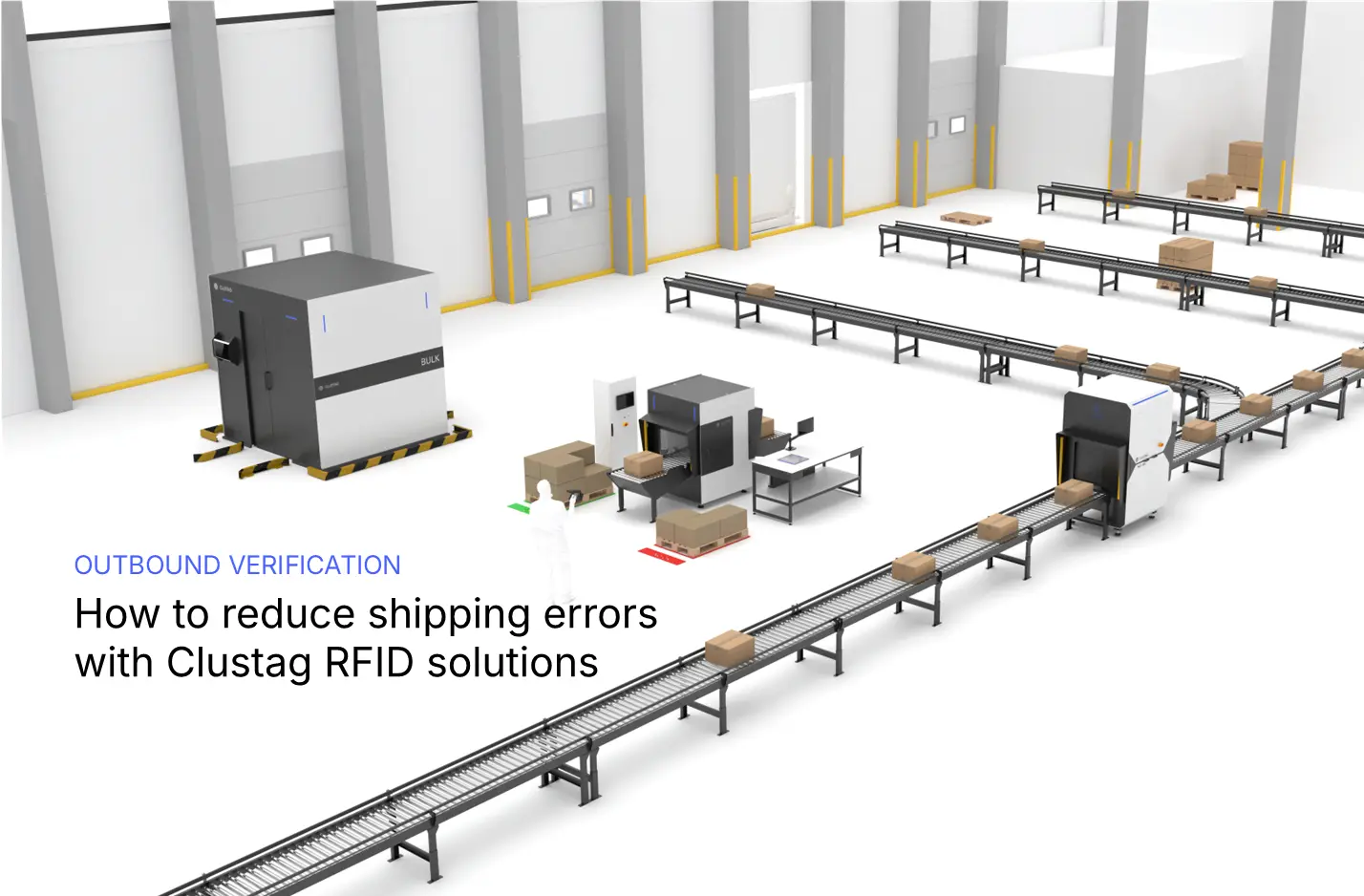
    How to Reduce Shipping Errors in the Supply Chain with RFID Technology

    Reduce shipping errors with RFID technology and improve outbound accuracy, traceability, and operational efficiency. In modern logistics environments, even a small discrepancy can generate returns, additional transport costs, customer complaints, and lost revenue. At Clustag, we help companies identify and correct these issues before products leave the warehouse through RFID-enabled verification and intelligent workflows.

    Our solutions combine advanced RFID hardware, RFID Shield Technology, and the data intelligence capabilities of Zentup to increase shipment accuracy while maintaining warehouse productivity.

    The most cost-effective shipping error is the one that never leaves the warehouse.

    To learn more about our outbound validation capabilities, visit our Outbound Verification Solution.

    Why shipping errors remain a critical logistics challenge

    As order volumes grow and delivery expectations become more demanding, maintaining accuracy becomes increasingly difficult. Shipping errors affect operational efficiency, increase costs, and damage customer trust.

    Even warehouses with mature processes continue to experience discrepancies caused by manual interventions, limited visibility, and insufficient verification systems.

    What is considered a shipping error

    A shipping error occurs whenever the contents of a shipment do not match the expected order information.

    The most common examples include:

    • Incorrect product shipped
    • Wrong SKU
    • Incorrect quantity
    • Missing items
    • Unexpected items
    • Incorrect labeling
    • Missing RFID tags
    • Duplicated shipments

    Although some discrepancies appear minor, they often create significant operational consequences.

    Industries most affected by shipping errors

    Certain sectors are particularly exposed due to the complexity of their operations and the importance of traceability.

    • Retail & Fashion. Wrong sizes, colours, and SKUs.
    • Pharmaceuticals. Compliance and traceability requirements.
    • Food & Beverage. Product integrity and expiry management.
    • E-commerce. Returns and customer complaints.
    • Manufacturing. Inventory and production disruptions.

    Main causes of shipping errors in warehouses

    Most shipping errors originate from a combination of manual processes, poor product identification, and limited visibility across warehouse operations.

    Understanding these root causes is the first step towards improving shipment accuracy.

    Human errors during picking and packing

    Warehouse teams often work under pressure to meet demanding service levels.

    Common causes of human error include:

    • Selecting the wrong product
    • Picking incorrect quantities
    • Manual data entry mistakes
    • Misplacing items during packing
    • Fatigue during repetitive tasks

    Traditional verification processes can reduce errors, but they rarely eliminate them completely.

    Identification and labeling issues

    Accurate identification is essential for successful order fulfillment.

    Common problems include:

    • Damaged labels
    • Missing labels
    • Duplicate identifiers
    • Incorrect product registration
    • Unreadable barcodes

    When identification fails, discrepancies frequently remain undetected until after dispatch.

    Lack of real-time traceability

    Without continuous visibility, errors can move through the operation unnoticed.

    This often results in:

    • Inventory inconsistencies
    • Delayed issue detection
    • Additional manual investigations
    • Increased customer complaints

    This is where Zentup helps organizations gain real-time visibility and improve decision-making across their logistics processes.

    Consequences of shipping errors for companies and customers

    Shipping errors have a direct impact on profitability, customer satisfaction, and warehouse productivity.

    The longer an error remains undetected, the more expensive it becomes to resolve.

    Direct financial impact

    Every incorrect shipment can generate multiple additional costs.

    IncidentBusiness impact
    Product returnsAdditional transport costs
    Re-shipmentDouble handling effort
    Customer complaintsAdministrative overhead
    Inventory correctionsReduced stock accuracy
    Service creditsLower profit margins

    Impact on customer satisfaction

    Customers increasingly expect perfect order accuracy.

    Shipping errors often result in:

    • Lower customer confidence
    • Increased returns
    • Negative reviews
    • Reduced loyalty
    • Lost future business

    Internal operational inefficiencies

    Errors do not only affect customers. They also generate friction inside the warehouse.

    Typical consequences include:

    • Rework activities
    • Logistics bottlenecks
    • Additional audits
    • Delayed shipments
    • Reduced productivity

    Why RFID is the most effective technology for reducing shipping errors

    Traditional verification methods rely heavily on manual scanning and visual inspections. As order volumes increase, these approaches become increasingly difficult to scale.

    RFID enables automated verification, real-time traceability, and significantly higher shipment accuracy.

    RFID versus barcode technology

    The differences between both technologies are substantial.

    CapabilityBarcodeRFID
    Line of sight requiredYesNo
    Simultaneous readingNoYes
    Bulk verificationLimitedYes
    Automation levelMediumHigh
    Operational speedMediumVery High
    TraceabilityLimitedReal-time

    How RFID works in a warehouse environment

    A typical RFID process includes:

    1. Products are tagged with RFID labels.
    2. Readers automatically capture item data.
    3. Information is compared against expected order data.
    4. Discrepancies are detected immediately.
    5. Issues are corrected before shipment.

    This approach significantly reduces dependence on manual verification.

    Benefits of RFID for shipment verification

    RFID solutions provide several operational advantages:

    • Real-time discrepancy detection
    • Faster verification processes
    • Reduced manual intervention
    • Improved inventory accuracy
    • Enhanced traceability
    • Greater scalability

    You can also discover the operational advantages explained in our article about outbound verification benefits.

    How Clustag RFID solutions reduce shipping errors

    At Clustag, we combine RFID hardware, data intelligence, and workflow automation to ensure shipment accuracy throughout the logistics process.

    Automatic verification during picking

    RFID helps validate products during picking, reducing the likelihood of selecting the wrong item or quantity.

    This provides an additional layer of quality control without slowing operations.

    Content reconciliation with AUDIT, AUDIT PLUS and MASSIVE PLUS

    Our content reconciliation process compares actual RFID data with expected shipment information.

    The system identifies:

    • Missing products
    • Excess products
    • Incorrect items
    • Faulty RFID tags

    Operators are then guided to resolve discrepancies before dispatch.

    Traceability and exception management with Zentup Workflow

    Zentup acts as the intelligence layer connecting RFID devices with WMS and ERP systems.

    Key capabilities include:

    • Real-time visibility
    • Workflow orchestration
    • Discrepancy management
    • Full traceability
    • Operational reporting

    Combined with RFID verification, Zentup helps businesses maintain control over every shipment before it leaves the facility.

    Results achieved through RFID implementation

    RFID-based verification generates measurable operational improvements across industries.

    Companies gain greater visibility, faster verification, and fewer shipping discrepancies.

    Operational benefits

    The most common improvements include:

    • Higher shipping accuracy
    • Faster validation processes
    • Reduced manual audits
    • Lower return volumes
    • Increased warehouse productivity
    • Better customer satisfaction

    A real-world example from a Nordic retailer

    A recent Clustag project with a leading Nordic retailer showed how RFID-based verification can improve outbound accuracy.

    Using Zentup Workflow, the retailer was able to audit shipments in real time, identify discrepancies, and correct issues before dispatch. This reduced costly rework while strengthening customer confidence and operational performance.

    Visibility, traceability, and automated verification create measurable value by preventing errors before they become customer problems.

    Frequently asked questions about RFID and shipping errors

    What percentage of shipping errors can RFID reduce?

    Results vary depending on the operation, but RFID significantly improves accuracy by automating verification and reducing manual controls.

    Can RFID replace barcode systems?

    In many cases, RFID complements existing barcode infrastructures while providing additional speed, automation, and visibility.

    Can RFID integrate with our existing WMS?

    Yes. RFID solutions can integrate with warehouse management systems, ERP platforms, and transport management systems through middleware such as Zentup.

    Which industries benefit the most from RFID verification?

    Retail, fashion, pharmaceuticals, manufacturing, food distribution, and e-commerce operations typically achieve the greatest benefits.

    How quickly can companies achieve results?

    Many organisations experience immediate improvements in verification speed, traceability, and shipment accuracy once RFID processes are implemented.

    Eliminate shipping errors before they reach your customers

    At Clustag, we help companies achieve near-perfect shipment accuracy through RFID solutions designed specifically for intralogistics operations. By combining RFID technology, automated verification, RFID Shield Technology, and Zentup’s intelligence capabilities, we enable businesses to prevent discrepancies before they become costly incidents.

    If you would like to analyse your current operation, contact our experts or visit our Customer Experience Center to test our solutions using your own products and processes.

  • Benefits of outbound verification in warehouse operations

    Benefits of outbound verification in warehouse operations

    At Clustag, we work to ensure that every warehouse outbound operation is accurate, efficient and fully traceable. Implementing outbound verification in shipping processes guarantee that each order leaves the warehouse correctly and is recorded with complete real time visibility. The benefits of outbound verification not only improve shipment accuracy but also optimize inventory management and reduce errors that can affect supply chain.

    With our RFID solutions and seamless integration with ERP and WMS systems, our Clustag’s team of experts provides full control over the outbound flow, from picking to final delivery, enhancing operational efficiency while minimizing costs associated with errors and returns.

    Improved shipment accuracy

    Ensuring every order is dispatched accurately is critical to maintaining customer satisfaction and operational efficiency. Outbound verification plays a vital role in minimizing errors before items leave the warehouse

    Enhace shipment accuracy

    At Clustag, we work to make outbound verification a reliable and automate process. Each pallet, box or item is validated through RFID before leaving the warehouse, ensuring that the shipment exactly matches the customer order

    Reducing errors with RFID

    Our RFID solutions automatically identify and cross-check each unit against ERP/WMS records, eliminating manual checks and significantly reducing human error.

    In a retail logistical center, our team implemented RFID technology to verify thousands of daily shipments. Shipment accuracy increased to 99,8%, while inventory control was updated in real time without disruption operations.

    Enhanced visibility and traceability

    Real-time visibility of every in the outbound process is essential for effective warehouse management. Complete traceability enables, logistic teams to monitor operations and respond to issues immediately.

    Real time tracking

    At Clustag, we work to offer complete visibility over the outbound process. By automatically reading RFID tags at strategic points, logistics managers can track pallets, cartons and individual items in real time through the ERP o WMS.

    Item-level records

    Our RFID middleware generates detailed item-level records, offering complete traceability throughout the outbound process. This facilitates audits, achievement analysis and immediate identification of operational issues.

    Our team supported an international logistics operator in monitoring of 100.000 daily items, achieving complete item-level traceability and reducing inventory discrepancies by 95%

    Time and efficiency optimization

    Optimizing outbound operations saves time, reduces bottlenecks and allows warehouse staff to focus on higher-value tasks. Implementing technology-based verification is key to speeding up processes.

    Speeding up the outbound process

    With our solutions, Clustag works to speed up the outbound process through mass RFID readings, eliminating manual steps and enabling operators to handle larger order volumes in less time.

    Reducing downtime and bottlenecks

    Automating outbound verification with RFID prevents interruptions caused by human errors, reducing bottleneck in critical areas such as consolidation a shipping.

    Integration with ERP and WMS systems

    Seamless integration between outbound verification and ERP/WMS platforms ensures that data flows with not interruptions, improving inventory accuracy and operational decision-making.

    Verification automation and inventory update

    At Clustag, we work to integrate outbound verification with existing ERP/WMS systems, so that each RFID read automatically updates inventory and confirms dispatched orders.

    Real time data synchronization

    This ensures a single, accurate view of stock, facilitates planning of routes, replenishments and deliveries. Reduce discrepances between systems, optimizing the entire supply chain.

    Our experts team ensures seamless and scalable integration, maintaining operational efficiency without interrupting daily warehouse activities.

    Scalability and adaptability

    Warehouse operations must adapt to growing volumes and changing business requirements. RFID solutions provide the flexibility to scale efficiently while maintaining control.

    Adapting to growing volumes

    At Clustag, we work to make our RFID solutions scalable, capable of handling hundreds to thousands of units per minute, adapting to increasing demand or network expansion.

    Suitable for manual and automated environments

    Our solutions are flexible: they can be deployed in manual processes with RFID portals or handheld readers, as well as in fully automate systems with conveyors and fixed readers. This enables warehouses to gradually increase automation while always maintaining traceability and control.

    RFID specific benefits

    Leveraging RFID technology in outbound logistics provides measurable advantages in accuracy, efficiency and traceability:

    These improvements help maintain high OTIF compliance rates and optimize overall warehouse efficiency.

    The Benefits of outbound verification are clear: higher accuracy, complete traceability, and optimized time in outbound operations. At Clustag, we work to ensure every outbound process is managed efficiently, reducing errors and enhancing visibility throughout the supply chain.

    Would you like to explore how to enhace outbound verification and traceability in your warehouse?

    Contact our team of experts and discover how Clustag can help you optimize your operations with a fully customized approach to your processes.