
Author: Marketing Clustag

  • RFID’s Role in the Circular Economy and Sustainability Journey

    RFID’s Role in the Circular Economy and Sustainability Journey

    Organizations across global supply chains are accelerating their transition toward more responsible operations. As expectations around efficiency, transparency, and environmental performance rise, technology becomes essential to enable smarter decisions and reduce waste. Our Smart RFID Solutions help companies strengthen RFID circular economy by increasing visibility, improving accuracy, and enabling better control of product lifecycles. These capabilities empower teams to adopt more sustainable practices and build future‑ready operations. We invite you to explore how they support progress across RFID circular economy strategies and resource‑efficient logistics.

    Enhancing circular practices with item‑level intelligence

    A circular approach requires understanding how products move, return, and reenter the value stream. Traceability plays a central role by ensuring organizations can follow each asset through every stage of its lifecycle. Our Smart RFID Solutions provide the foundation for this visibility while enabling more consistent and scalable circular workflows.

    How RFID circular economy practices improve lifecycle visibility

    With reliable item identification, teams can monitor usage, history, and condition with far greater precision. This clarity helps organizations extend product life through controlled maintenance cycles, timely inspections, and more efficient rotation of assets. The result is a reduction in resource consumption and more responsible utilization of materials.

    Improving reverse logistics efficiency

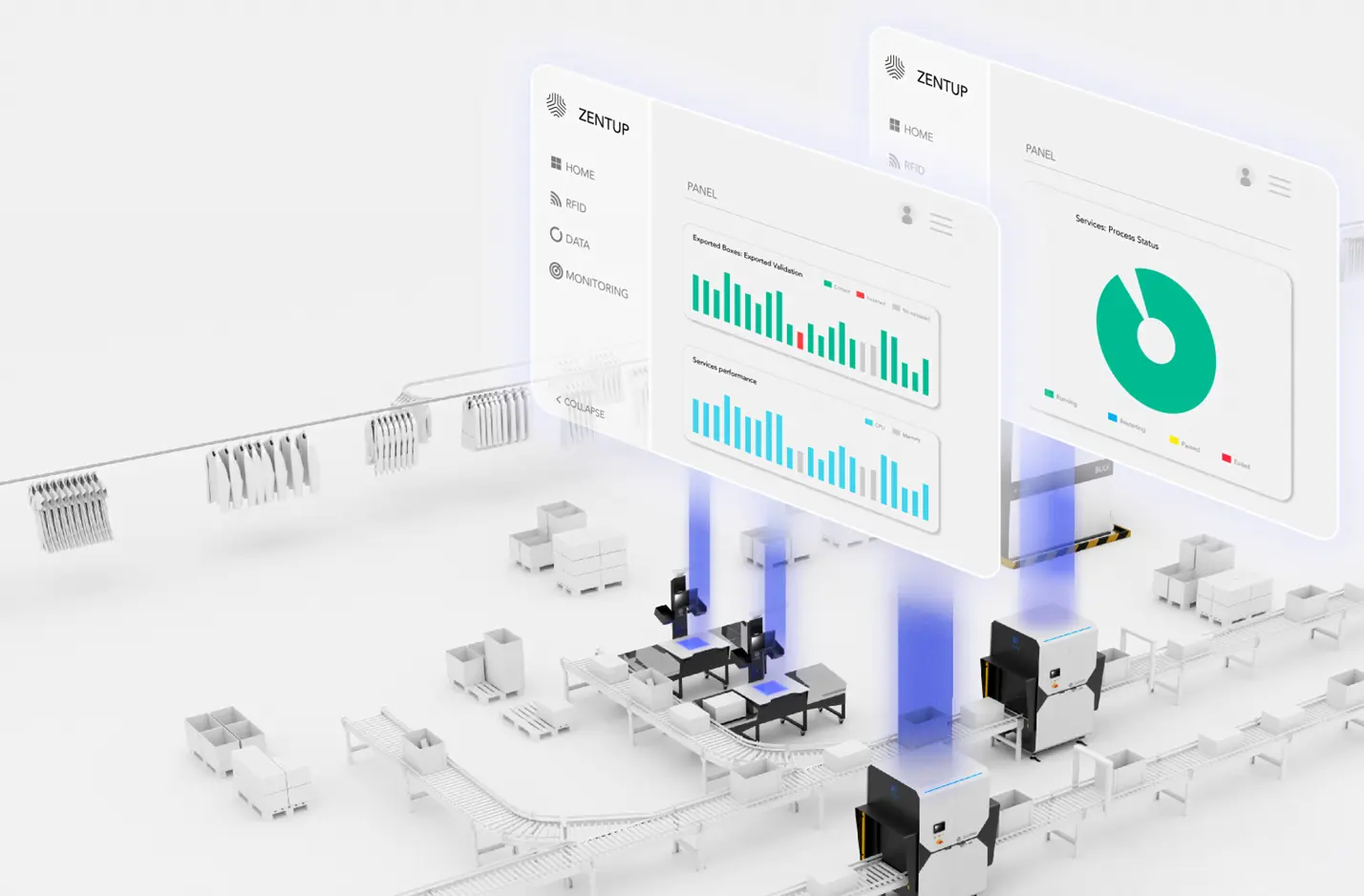
    Returns often introduce complexity, delays, and waste. Mass reading accuracy simplifies product triage, allowing teams to classify and reassign items more effectively. By accelerating these workflows, organizations can reintegrate products into inventory or recycling streams with less manual intervention and fewer errors. In selected locations, Zentup reinforces this process by highlighting anomalies and surfacing performance trends that help prevent bottlenecks and support continuous improvement.

    Enabling reuse, refurbishing, and secondary markets

    Circular operations depend on trustworthy data about origin and item condition. RFID makes this information accessible, helping companies determine which goods can be repaired, reused, or repurposed with confidence. With clear lifecycle records, teams can scale refurbishing programs and support secondary product channels that reduce environmental impact while improving cost efficiency.

    Reducing environmental impact through smarter logistics

    Sustainability does not rely solely on circularity. Operational efficiency also plays a fundamental role in minimizing emissions, reducing waste, and optimizing energy use. Our Smart RFID Solutions help organizations eliminate unnecessary movements, prevent rework, and streamline high‑volume processes.

    Reducing errors that lead to unnecessary shipments

    Incorrect orders and inaccurate dispatches increase transportation emissions and packaging use. By significantly improving picking accuracy and shipment validation, RFID eliminates many of the root causes of rehandling and returns. This directly contributes to greener operations and better resource management across distribution networks.

    Optimizing energy consumption in warehouses

    Efficient intralogistics reduce the time equipment must remain powered and the distance assets need to travel. Real‑time visibility supports faster decision‑making, helping teams minimize idle time and optimize workflow planning. In environments where exceptions occur frequently, Zentup adds value by providing analytical insights that help managers identify inefficiencies and refine process behaviors for more sustainable performance.

    Accelerating throughput across complex operations

    Large distribution centers and manufacturing sites require fast and reliable data capture to avoid slowdowns. High‑throughput reading capabilities ensure that items are verified instantly, reducing manual interventions and preventing downstream corrections. This efficiency helps minimize energy‑intensive activities and keeps operations running predictably even during peak periods.

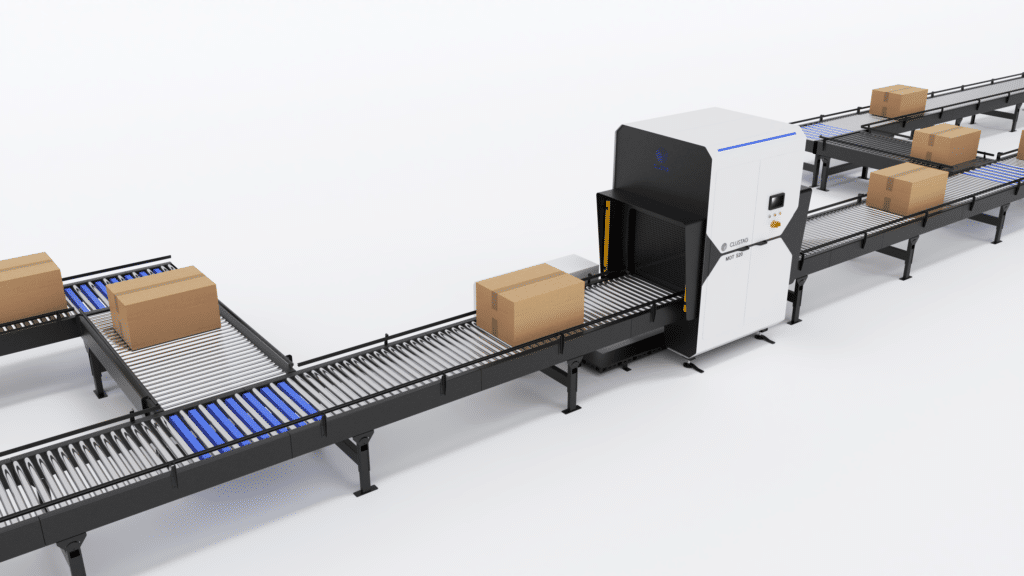
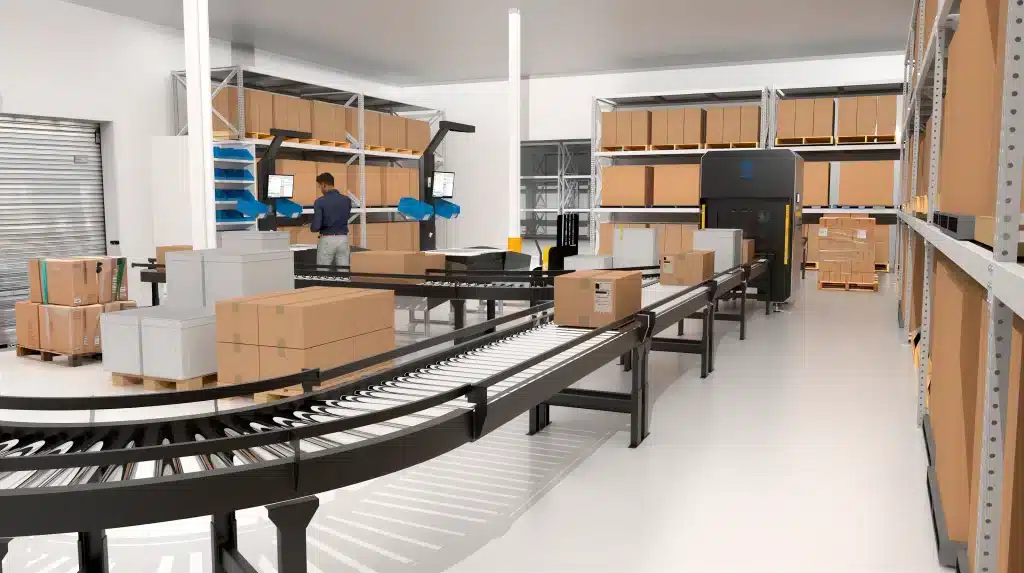
    mot station with conveyors and boxes in a wharehouse

    Supporting transparency and responsible decision‑making

    By applying RFID circular economy principles, we help teams capture lifecycle insights that support repair, reuse, and smarter material recovery. As environmental expectations grow, organizations must demonstrate the integrity of their operations. Traceability enables them to meet emerging requirements, validate responsible sourcing practices, and communicate accurate sustainability metrics. RFID strengthens these capabilities by providing consistent, verifiable information that supports strategic planning.

    Improving accountability across supply networks

    From raw materials to product end‑of‑life, reliable identification helps confirm that each step of the supply chain meets responsible standards. This visibility builds stronger partnerships and positions companies as trustworthy contributors within their sectors. It also supports long‑term efforts to measure and reduce environmental impact.

    Facilitating compliance with evolving regulations

    Many industries face new rules requiring product‑level information, lifecycle documentation, or environmental reporting. Automating data capture helps teams meet these obligations without increasing administrative workload. RFID ensures accuracy and consistency so organizations can respond confidently to audits, certifications, and market expectations.

    Strengthening RFID circular economy sustainability analytics

    Data‑driven planning requires more than visibility. Organizations must also interpret trends that influence waste reduction and resource efficiency. In selected processes, Zentup provides this analytical support by highlighting operational deviations and identifying areas where sustainability gains can be achieved. This helps leadership teams prioritize high‑impact initiatives and drive measurable improvements.

    Enabling future‑ready intralogistics through Clustag Smart RFID Solutions

    A resilient sustainability strategy requires adaptable technology that can scale with operational needs. Our portfolio combines high‑precision hardware with robust software and seamless integration to support the evolution toward more circular, efficient, and transparent operations. By giving every product a digital identity and enabling real‑time insight, our solutions help organizations operate more responsibly while strengthening competitiveness in increasingly demanding markets.

    If your company is ready to accelerate its sustainability journey and explore how circular practices can deliver measurable value, we would be glad to assist you. Connect with our team through our contact page or visit our Customer Experience Center to discover how our Smart RFID Solutions can support your long‑term goals.

  • 5 Intralogistics Trends Defining 2026

    5 Intralogistics Trends Defining 2026

    Intralogistics trends 2026 are reshaping the way organizations strengthen agility, accuracy, and real‑time control inside their distribution centers, driving a new era of smarter, faster, and more connected warehouse operations. As intralogistics environments evolve rapidly, companies are adopting technologies that help us anticipate bottlenecks, accelerate workflows, and reduce friction across daily operations. These movements highlight the growing role of automation, data intelligence, and scalable systems designed to support modern warehouse performance. Understanding these shifts is essential for any organization looking to stay competitive and build resilient, high‑performing operations.

    1. Automation ecosystems expand beyond equipment

    Automation is becoming one of the strongest intralogistics trends 2026. Warehouses are moving from isolated machines to connected ecosystems designed to operate with precision and consistency.

    Interconnected automation gains relevance

    Devices, sensors, and digital platforms now work together to streamline warehouse flows. This reduces variability and increases throughput in high‑volume areas, supporting more predictable performance.

    Autonomous workstations become essential

    High‑speed RFID tunnels, conveyor‑integrated devices, and automated audit stations help maintain accuracy during peak periods. They reduce manual checks and minimize errors, enabling teams to work faster and with greater confidence.

    Hardware and software integration strengthens operations

    Smart RFID solutions connect read points, sensors, and platforms like Zentup to create a continuous flow of information. This enables automated validations, immediate anomaly detection, and clear operational visibility, allowing teams to take action quickly and effectively.

    2. Real time visibility becomes a strategic asset

    Visibility is now one of the most important advantages inside a warehouse. Real‑time data helps us manage complexity and react to operational changes faster.

    RFID adoption continues to accelerate

    More companies are turning to RFID for precise and reliable traceability. Improvements in reading accuracy and tag encoding support stable performance even in dense or complex environments, giving us a dependable, real‑time view of inventory.

    Monitoring strengthens every warehouse zone

    Equipping receiving docks, storage areas, picking zones, and outbound lines with connected devices gives teams clearer oversight. With improved visibility, we detect discrepancies earlier, reduce investigation time, and coordinate better across shifts.

    3. Flexibility and resilience shape warehouse strategy

    Warehouses must adapt quickly as demand, supply conditions, and staffing fluctuate. Flexibility is becoming as valuable as efficiency.

    Dynamic resource allocation gains importance

    Real‑time data reveals bottlenecks and capacity gaps as they happen. Smart RFID solutions help us adjust labor, storage space, and equipment use based on current needs, allowing teams to focus where they create the most value.

    Scenario‑based planning becomes more common

    The combination of real‑time insights and predictive modeling helps organizations prepare for sudden shifts in volume, timing, or replenishment. This approach builds long‑term resilience and reduces the impact of operational uncertainty.

    4. Sustainability integrates into operational design

    Sustainability is now part of daily warehouse operations. Companies are adopting long‑term practices that reduce waste and support more responsible resource use.

    Reusable asset management becomes smarter

    RFID‑enabled tracking supports better control of totes, pallets, and containers. This reduces losses, lowers replacement costs, and improves rotation efficiency, all while supporting environmental goals.

    Flow optimization reduces resource waste

    Accurate, real‑time insights help eliminate unnecessary movements and prevent process inconsistencies. As operations become smoother, organizations reduce energy use and improve overall sustainability performance.

    5. Digital and physical environments continue to converge

    Digital intelligence is now central to intralogistics. The combination of physical workflows and real‑time data unlocks new levels of efficiency and predictability.

    Unified operational data improves decision‑making

    RFID‑driven accuracy ensures all teams work from a single, reliable source of truth. This improves coordination across receiving, storage, picking, and outbound processes and reduces errors caused by outdated information.

    Smart ecosystems enhance daily execution

    Connected read points, sensing technologies, and scalable Smart RFID intralogistics solutions help teams troubleshoot faster and maintain consistent throughput. These environments support more autonomous execution, even under demanding conditions.

    How Clustag empowers the future of intralogistics

    As companies adopt the advancements shaping the new intralogistics landscape, the need for reliable and scalable technology becomes even more essential. Modern operations demand visibility, accuracy, and flow consistency, and these capabilities depend on solutions designed to perform at high speed and in high‑volume environments.

    Smart RFID Solutions built for modern distribution centers

    We help organizations build stronger, more adaptable, and data‑driven logistics networks through Smart RFID Solutions engineered to enhance performance across every operational stage. Our ecosystem supports real‑time visibility, automated validations, optimized workflows, and more reliable decision‑making. With high‑precision read environments, stable RFID encoding, and seamless integration through Zentup, we enable teams to operate with confidence and maintain consistent quality even under demanding conditions.

    By embracing these advancements, organizations can unlock new levels of efficiency and strengthen the flow of their intralogistics processes. If you are exploring how these innovations can elevate your logistics strategy, we invite you to connect with us through our contact form or visit our Customer Experience Centre to see our solutions in action and experience the speed, accuracy, and traceability that Clustag can bring to your warehouse.

  • How an automated infeed elevates AS/RS performance

    How an automated infeed elevates AS/RS performance

    An automated infeed for AS/RS performance is the foundation of fast, predictable and error-free warehouse operations. While shuttles, cranes and high-density storage systems are essential, their real efficiency depends on the quality of inbound data. When identification, weight or volume information is incomplete, even the most advanced AS/RS struggles to perform at scale.

    By automating the inbound entry point and capturing accurate data in a single step, warehouses can improve flow, reduce exceptions and unlock full inventory visibility from the very first meter of the process.

    Why automated infeed is critical for AS/RS performance?

    Automated Storage and Retrieval Systems depend entirely on the reliability of inbound information. The infeed area generates, validates, and distributes operational data across the entire warehouse ecosystem.

    An automated infeed for AS/RS performance ensures that every item enters the system with verified identification, dimensions and weight. This structured data foundation enables automated decisions downstream and prevents disruptions that are difficult to correct later in the process.

    Ensuring data consistency from the entry point

    When people capture inbound data manually or in multiple steps, they almost inevitably introduce inconsistencies. Automated infeed solutions eliminate these gaps by standardizing data capture at the source.

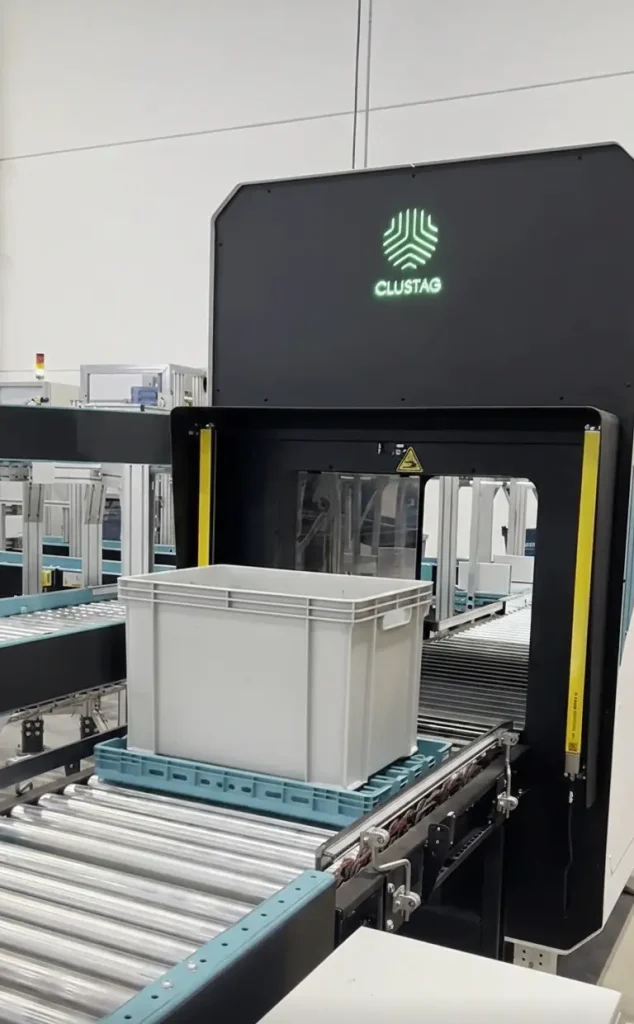
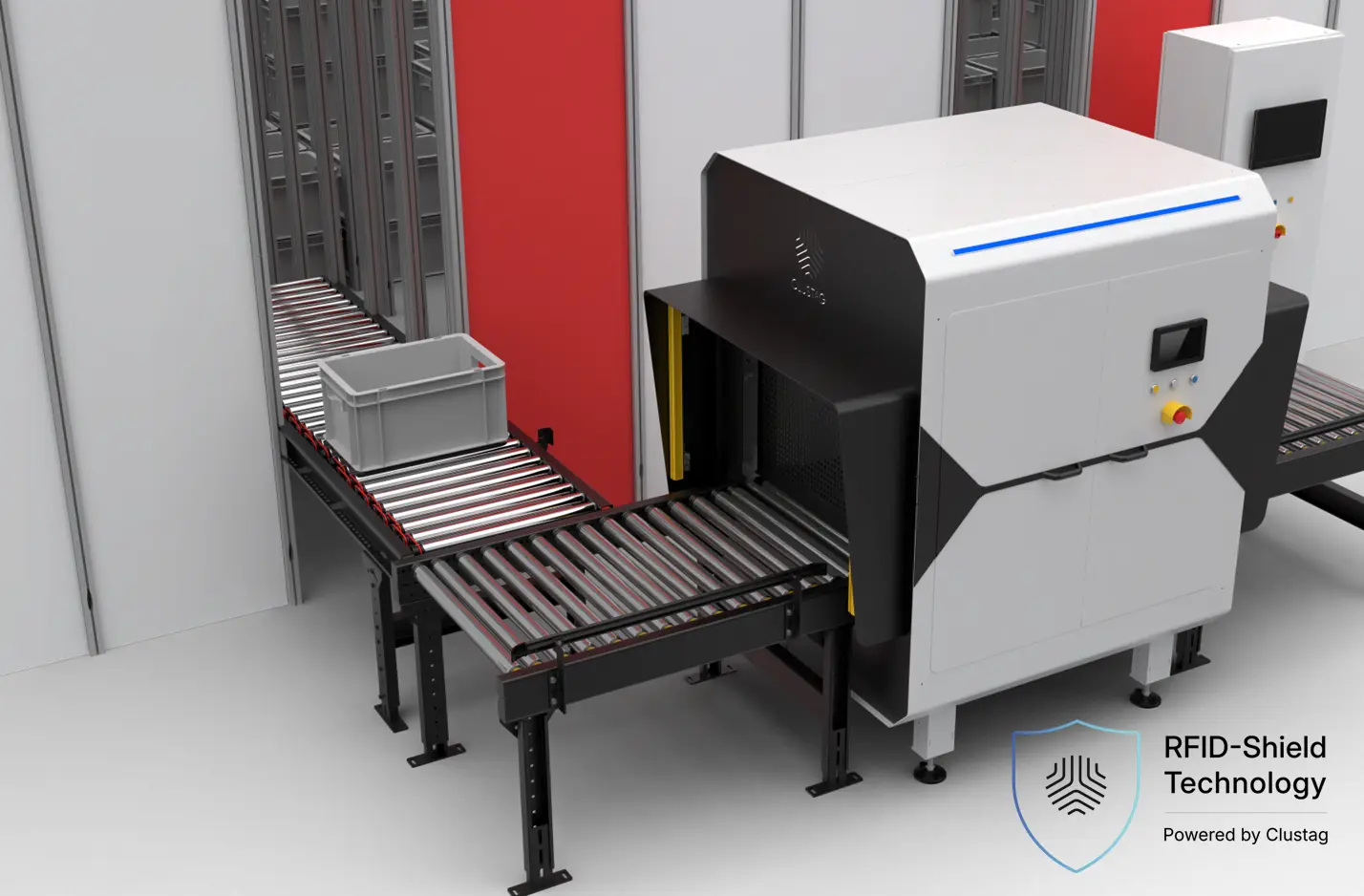
    Automated RFID infeed station by Clustag scanning a plastic tote on a conveyor inside a warehouse.

    Capturing inbound data in a single automated step

    One of the main advantages of an automated infeed is the ability to consolidate multiple validation tasks into a single, continuous flow. This reduces handling, accelerates inbound throughput and minimizes operational friction.

    By integrating identification, weighing and volume measurement, warehouses gain a reliable and repeatable process that supports AS/RS performance at scale.

    RFID, weight and volume capture at infeed

    Modern automated infeed systems combine RFID reading, dynamic weighing and volumetric measurement in motion. This approach removes manual checks and validates every carton, tote, or parcel before it enters automated storage.

    Improving data accuracy with Zentup from day one

    Accurate inbound data supports better inventory control, faster storage decisions and fewer exceptions. For high-volume warehouses, this level of precision is critical to maintain stable performance over time.

    Optimizing storage slotting with automated infeed for AS/RS data

    Storage slotting decisions are only as good as the data that feeds them. When AS/RS systems receive incomplete or incorrect dimensions, space utilization and system efficiency suffer.

    An automated infeed provides the dimensional intelligence required to allocate storage locations correctly from the outset.

    Enabling smart slotting decisions in AS/RS

    With verified item dimensions and identification, shuttles and cranes can automatically select the optimal storage position. This improves space utilization, reduces congestion and minimizes unnecessary relocation cycles.

    Reducing exceptions in automated storage systems

    Exceptions are one of the biggest threats to AS/RS performance. Even minor discrepancies can force automated systems to stop, reroute or require manual intervention.

    Automated infeed solutions act as a control gate, detecting inconsistencies before items enter the automated core of the warehouse.

    Preventing disruptions before they enter the AS/RS

    The system identifies issues such as unreadable tags, incorrect carton sizes, or unexpected weights early. The system diverts items that do not meet validation criteria to exception lanes, keeping automated flows uninterrupted.

    Stopping error propagation across warehouse processes

    By validating data at the source, warehouses prevent errors from cascading into storage, picking and outbound operations, where corrections are significantly more costly.

    Enhancing traceability with smart RFID intralogistics

    Beyond operational efficiency, automated infeed plays a critical role in traceability and quality assurance. Capturing item-level data at entry creates a digital record that follows each unit through the warehouse.

    This level of visibility supports compliance, auditing and service transparency across supply chains.

    Improving inventory visibility and accountability

    Smart RFID intralogistics solutions enable accurate inventory reconciliation, reduce disputes and improve accountability in both B2B and B2C environments.

    Maximizing AS/RS ROI with a reliable infeed process

    AS/RS systems represent a significant investment, and their performance depends heavily on inbound data quality. Strengthening the infeed process is one of the most effective ways to increase return on investment without major infrastructure changes.

    Supporting Scalable and Future-Ready Operations

    A robust automated infeed allows warehouses to adapt to changing product mixes, seasonal peaks and business growth while maintaining consistent AS/RS performance.

    At Clustag, we design automated infeed solutions that enhance AS/RS performance through precise data capture, Smart RFID technology and seamless system integration. Visit our Customer Experience Centre to see our solutions in action and experience the speed, accuracy, and traceability that Clustag can bring to your warehouse. To explore how our RFID solutions can be tailored to your specific needs, fill out our contact form and one of our experts will guide you through a personalized demonstration.


    What is an automated infeed in AS/RS systems?

    An automated infeed in AS/RS systems is the process where inbound items are automatically identified, weighed and measured before entering automated storage. It ensures accurate data capture at the entry point, enabling efficient storage, sequencing and retrieval operations.

    Why is automated infeed important for AS/RS performance?

    Automated infeed is critical for AS/RS performance because automated storage systems rely on precise inbound data. Accurate identification, weight and volume information reduce exceptions, prevent disruptions and allow AS/RS equipment to operate at full capacity.

    How does automated infeed reduce exceptions in AS/RS environments?

    Automated infeed reduces exceptions by validating inbound items before they enter the AS/RS. Incorrect dimensions, unreadable tags or unexpected weights are detected early and diverted to exception handling areas, preventing system interruptions.

    What data is captured during an automated inbound process?

    During an automated inbound process, systems typically capture item identification using RFID, along with accurate weight and volume measurements. This data is used to optimize storage allocation and improve overall warehouse efficiency.

    Can automated infeed improve ROI on existing AS/RS systems?

    Yes, automated infeed improves ROI on existing AS/RS systems by enhancing data quality without major infrastructure changes. Better inbound data increases throughput, reduces downtime and extends the operational lifespan of automation assets.

  • How RFID Garment On Hanger transforms  operations in fashion distribution

    How RFID Garment On Hanger transforms operations in fashion distribution

    RFID garment on hanger technology is transforming how fashion distribution centers manage hanging garments at scale. In GOH environments, thousands of items move every hour. When visibility is limited, even a small error in receiving, size distribution or traceability can quickly escalate into stock-outs, rework and hidden shrinkage.

    Traditional GOH processes are fragile. They depend on manual checks, partial scans and delayed corrections. RFID Garment On Hanger solutions replace that fragility with continuous data capture. Receiving becomes faster. Distribution becomes accurate. Shrinkage becomes visible and controllable. This shift turns GOH lines from operational risk into a reliable, data-driven flow.

    Why GOH flows remain a bottleneck in fashion logistics

    Even in highly automated warehouses, hanging garments often remain the least controlled flow. Automation may exist at conveyor level, but identification and verification still rely heavily on people. At the same time, pressure for speed and accuracy keeps increasing.

    Manual inbound limits RFID garment on hanger performance

    Inbound GOH shipments frequently arrive mixed by size, store and collection. When verification is manual, teams can only sample or trust packing lists. This creates blind spots that are hard to correct later.

    Errors at this stage usually surface too late. Size curves do not match store demand. Quantities are wrong. Vendor issues are discovered only after stores complain. By then, rework and urgent transport are already unavoidable.

    Partial identification slows down GOH operations

    Some GOH lines use automation but still rely on barcodes or incomplete identification. When mismatches appear, conveyors must stop and operators intervene. Productivity drops and flow stability disappears.

    This stop-and-fix mode creates bottlenecks at peak hours. Labor requirements increase just to keep service levels stable. Scaling volumes becomes difficult without adding headcount.

    Lack of traceability increases shrinkage risk

    Without item-level visibility, every discrepancy becomes hard to explain. Missing garments, incomplete deliveries or unexplained losses require manual investigation. Results are often inconclusive. Operations teams lack clear evidence of where losses occur. Claims with vendors or carriers become complex. Shrinkage remains a cost that is accepted rather than controlled.

    What RFID garment on hanger brings to operations

    When every hanging garment carries an RFID tag, identification becomes automatic. Read points capture data in motion, without stopping conveyors. Verification is continuous and complete.

    Clustag designs Smart RFID intralogistics solutions that connect physical GOH flows with real-time data across the warehouse.

    Faster receiving with RFID Garment On Hanger

    RFID transforms GOH inbound into a true control point. Entire blocks or individual garments are read automatically and compared with expected data in real time.

    Receiving becomes faster because manual scanning disappears. Errors are detected immediately at the dock, not days later. Inventory data is accurate from the first moment and can be directly synchronized with WMS and ERP systems.

    Accurate size distribution and pre-sorting

    With unique identification, size distribution stops being a manual exercise. Each block can be validated before it leaves the warehouse, ensuring that the correct size curve is assigned to each store.

    This prevents incorrect assortments from reaching stores. Emergency replenishments are significantly reduced. Distribution follows merchandising rules consistently and predictably.

    Item-level traceability and shrinkage control

    Every RFID read creates a digital footprint. Each garment builds a trace from inbound to outbound. This visibility is essential to control losses.

    When discrepancies occur, teams can quickly identify where they happened. Investigations are faster and more objective. Shrinkage stops being a mystery and becomes a measurable operational variable.

    Clustag’s RFID tunnels for Garment‑on‑Hanger operations 

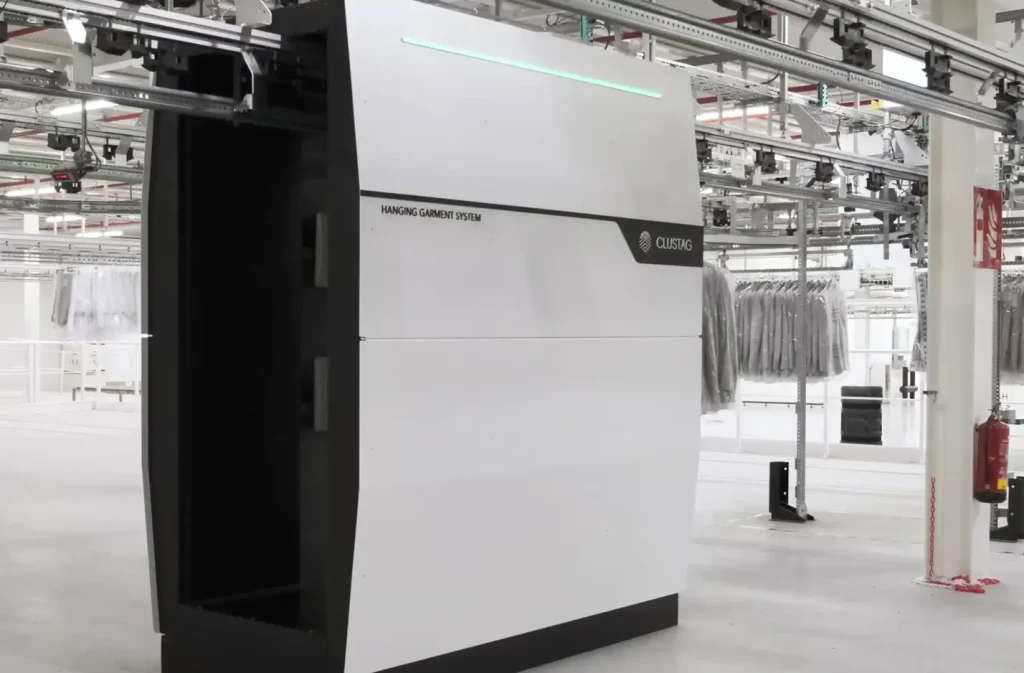
    Clustag offers a complete portfolio of GOH RFID devices designed for both automatic and manual operations. All solutions are part of the same Smart RFID intralogistics ecosystem, including Zentup to combine hardware, embedded control and software.

    GOHT Station for automatic block reading

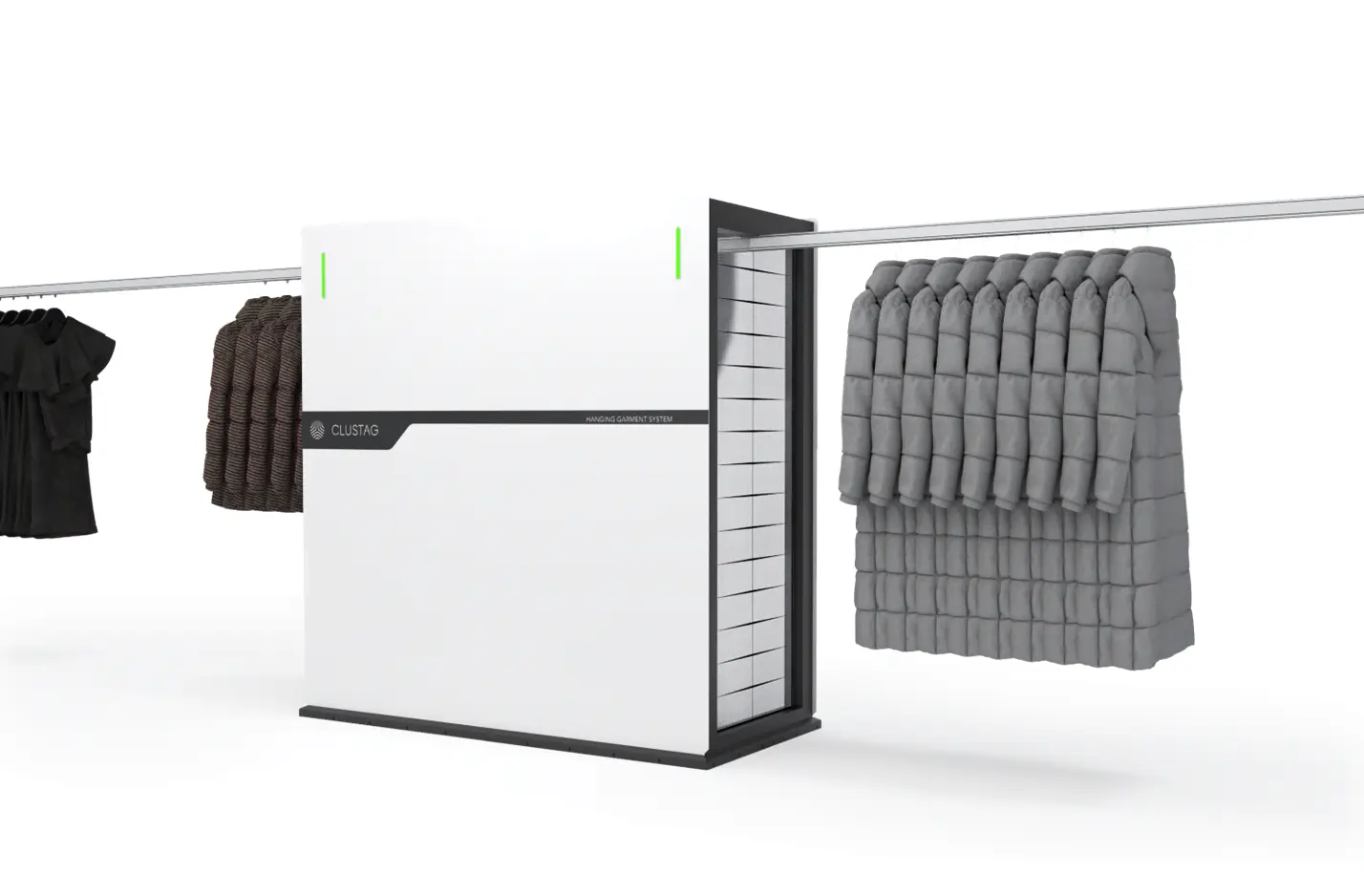
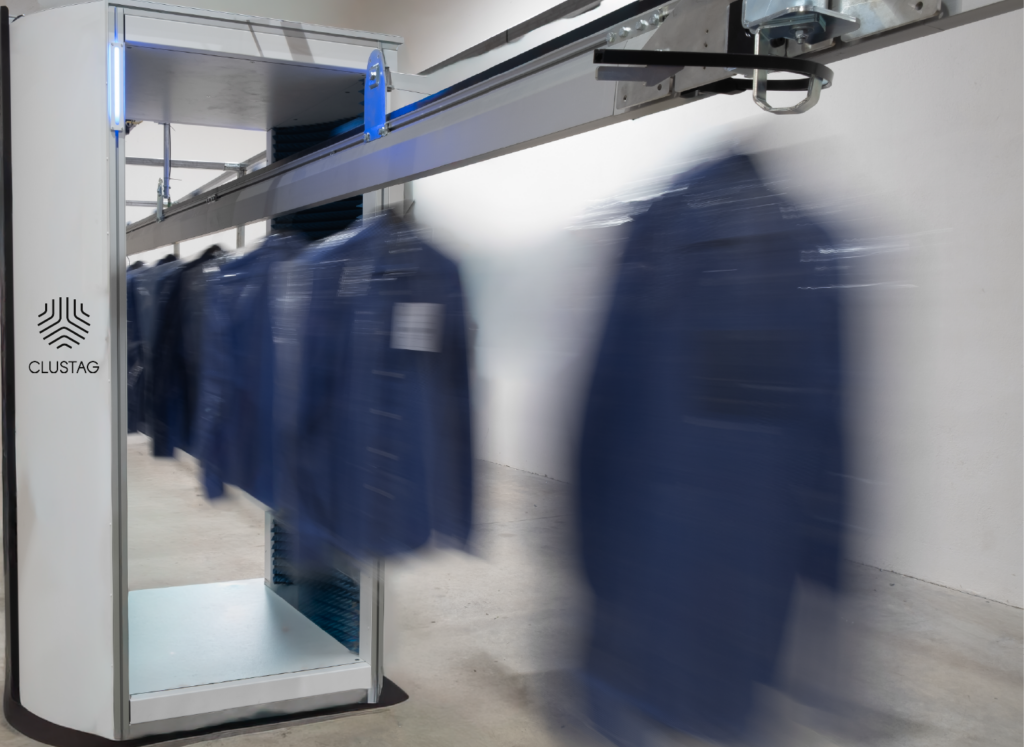
    The GOHT Station is designed for automatic GOH lines that need to verify entire blocks of hanging garments at speed. It performs full shipment checks while conveyors keep moving, without disrupting flow.

    It integrates easily into existing infrastructures and adapts to different block sizes, speeds and layouts.

    GOTHI Station for single-garment control

    For operations that require individual validation, the GOHTi Station performs item-by-item RFID reading at high throughput. This level of control is especially relevant for complex assortments, mixed destinations or high-value garments where every SKU must be verified before dispatch.

    Hanging Rack Station for manual GOH processes

    Not all GOH flows are automated. Wheeled racks are often used for inbound, quality control or returns. The Hanging Rack Station brings RFID control to these manual processes. It enables fast verification without slowing operators and prevents unwanted external readings thanks to controlled RFID environments.

    Scaling RFID Garment On Hanger across the network

    Implementing RFID in GOH flows is not only a technology upgrade. It is an operational transformation. The most successful projects start with the most painful touchpoints, such as inbound errors or incorrect size distribution.

    Once processes and interfaces are validated in one site, solutions can be replicated across distribution centers and markets. Over time, the collected data supports continuous improvement in vendor management, assortment planning and network design.

    Ready to optimize your GOH operations?

    If you want to improve accuracy, speed and traceability in your hanging garment flows, RFID Garment On Hanger can turn GOH operations into a strategic advantage. Contact Clustag via the website form or visit the Customer Experience Center to see Smart RFID intralogistics solutions in action.

  • A day in the warehouse: how Zentup enables seamless warehouse process synchronization

    A day in the warehouse: how Zentup enables seamless warehouse process synchronization

    Modern warehouse operations rely on one critical capability: warehouse process synchronization. When inventory data, operational workflows, and warehouse systems are aligned in real time, organizations gain speed, accuracy, and control throughout the entire day.

    From the first inbound scan to the final outbound shipment, Zentup enables warehouses to operate as a connected ecosystem, where every movement is visible, validated, and coordinated. By combining real-time RFID data capture, mobile applications, and operational intelligence, Zentup transforms complex logistics environments into predictable, high-performance operations.

    What is warehouse process synchronization?

    Warehouse process synchronization refers to the real-time alignment of inventory data, operational tasks, and warehouse management systems to ensure continuous, accurate execution across all workflows. It allows teams to react instantly to changes, eliminate information gaps, and maintain operational consistency throughout the day.

    Zentup enables this synchronization by acting as a unified layer that connects RFID infrastructure, mobile execution tools, and enterprise platforms into a single operational flow.

    The Role of RAIN RFID Compatibility in Process Synchronization

    A fundamental pillar of warehouse process synchronization is technological interoperability. In this context, RAIN RFID compatibility plays a key role in ensuring that data flows consistently across devices, systems, and applications.

    RAIN RFID is a global standard that enables fast, accurate identification and tracking of large volumes of items. By supporting RAIN RFID standards, the Zentup ecosystem ensures that readers, antennas, tags, and software systems work seamlessly together, regardless of manufacturer or operational environment.

    This compatibility enables:

    • Real-time item-level data capture
    • Seamless integration with ERP, WMS, WES, and automation platforms
    • Scalable operations without vendor lock-in
    • Consistent data quality across the entire supply chain

    By leveraging RAIN RFID standards, Clustag’s Smart RFID Solutions reinforce process synchronization from data capture to operational execution, ensuring information remains reliable, reusable, and accessible at every stage of warehouse workflows.

    Enabling early visibility across the warehouse

    The success of a warehouse shift is often determined in its first hours. Operators and supervisors need immediate access to accurate, real-time information to define priorities and avoid downstream disruptions.

    Strengthening the start of the day with unified data

    All RFID readings are centralized through Zentup Core, the middleware that organizes, decodes, and synchronizes item-level data with enterprise systems such as ERP, WMS, WES, and AGV platforms. This unified data foundation provides instant visibility into inbound goods, product locations, and operational priorities.

    By starting the day with synchronized information, teams reduce uncertainty, minimize manual checks, and accelerate execution from the very first task.

    Adjusting tasks with continuous operational insight

    As operations progress, Zentup Core refreshes every movement in real time. Supervisors can immediately detect anomalies, such as missing items or incorrect placements, and rebalance workloads before minor issues become operational bottlenecks.

    How Zentup improves midday warehouse coordination

    Midday is when warehouse complexity peaks. Picking, replenishment, packing, and verification processes run simultaneously, requiring precise coordination and uninterrupted data flow.

    Supporting item-level tasks with mobile tools

    Zentup Go supports operators using handheld RFID devices for stock counting, product identification, and inventory control. Its plug-and-play design enables fast adoption while capturing item-level data in motion, eliminating manual entries and reducing transcription errors.

    Improving accuracy during complex checks

    For auditing and exception handling, Zentup Workflow guides users through structured verification processes. Whether managing faulty tags, missing items, or coding inconsistencies, its intuitive interface ensures discrepancies are resolved quickly and accurately, reinforcing end-to-end warehouse process synchronization.

    Key advantages of this synchronized approach include:

    • Faster task execution through real-time visibility of item movements
    • Reduced manual data entry and fewer operational errors
    • Better resource allocation based on live operational insights
    • Smoother handovers between teams with synchronized priorities

    Why real-time synchronization matters for outbound operations

    As outbound volumes increase, synchronized data becomes essential to meeting delivery commitments without compromising accuracy.

    Accelerating picking and packing performance

    Zentup Core works seamlessly with warehouse management systems to validate every action in real time. From confirming box contents to detecting replenishment discrepancies, each RFID-enabled interaction delivers immediate feedback that keeps workflows moving efficiently.

    Ensuring shipment readiness with continuous verification

    By the time items reach packing and shipping zones, serial numbers, lot information, and item status have already been verified. This reduces misloads, minimizes returns, and reinforces trust in outbound shipment accuracy.

    Closing the day with operational intelligence

    End-of-day activities are not just about closing tasks, they prepare the warehouse for the next operational cycle.

    Visualizing system performance and alerts

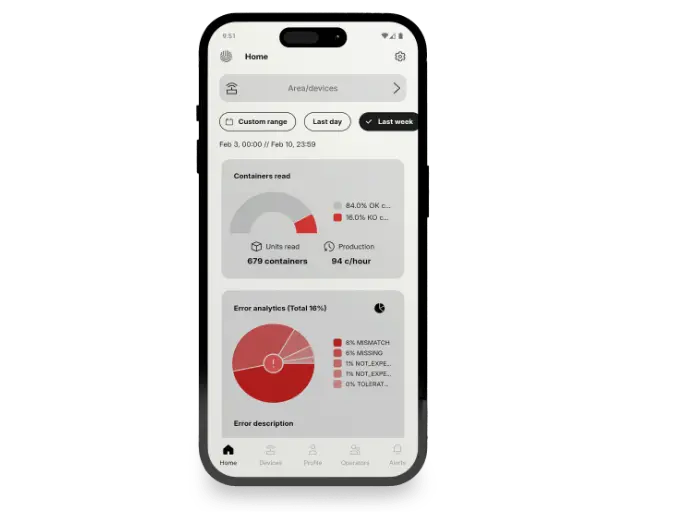
    Zentup Pulse consolidates system alerts, RFID reader performance, and operational KPIs into a single dashboard. Technical and operational teams gain immediate visibility into system health, enabling proactive issue resolution before the next shift begins.

    Preparing upcoming workflows with synchronized information

    With all RFID data synchronized and validated, supervisors can identify pending tasks, restocking needs, and process adjustments required for the following day. This level of readiness ensures a smooth, efficient start to the next shift.

    Elevating warehouse performance through synchronization

    By enabling real-time alignment between data, workflows, and systems, Zentup strengthens warehouse performance at every stage of the day. Warehouse process synchronization allows teams to operate with confidence, adapt faster to change, and deliver consistent, accurate results across all operations.

    If you want to discover how real-time RFID data, mobile execution tools, and synchronized workflows can elevate your warehouse operations, we invite you to get in touch through our contact page and explore how Zentup can support your logistics strategy from end to end.

  • RFID in sporting goods total visibility and efficiency in the era of mixed materials

    RFID in sporting goods total visibility and efficiency in the era of mixed materials

    The sporting goods sector is undergoing a transformation driven by innovation, sustainability, and consumer expectations for speed and personalization. This evolution brings new challenges, particularly the widespread use of mixed materials in products. From advanced fabrics to composite structures, these combinations complicate identification, inventory control, and traceability. Traditional methods fail to deliver the accuracy and efficiency required in today’s competitive environment. RFID technology is the answer, and at Clustag, we’ve developed solutions that not only overcome these obstacles but also deliver unmatched visibility and operational excellence. Keep reading to learn how we make this possible and why it matters for your business.

    The growing complexity of RFID in sporting goods

    Sporting goods are no longer simple products. They are engineered for performance, sustainability, and style, often combining multiple materials in a single item. While this enhances functionality, it creates significant challenges for supply chain management.

    Why mixed materials complicate RFID in sporting goods?

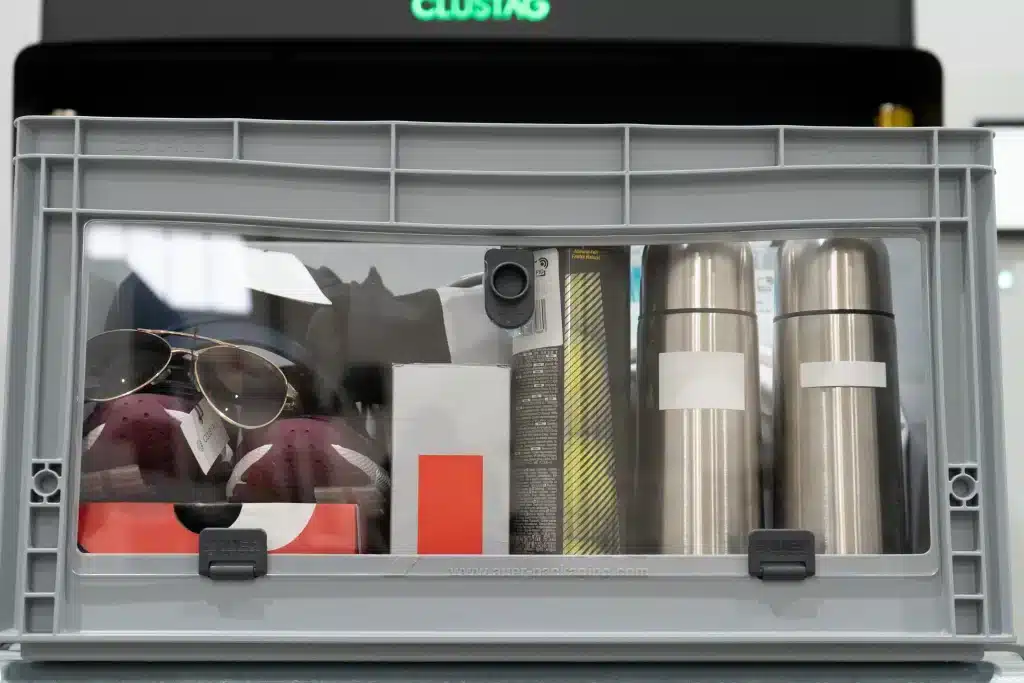
    Items such as running shoes, ski boots, or tennis rackets often include textiles, rubber, metal, and carbon fiber. These materials can interfere with RFID signal propagation, reducing read accuracy and reliability. For brands managing thousands of SKUs across global networks, this is a critical issue.

    rfid mixed material in sporting goods

    Sustainability and compliance pressures

    Consumers demand transparency, and regulators enforce strict sustainability standards. Mixed materials complicate recycling and require precise traceability to validate eco-friendly claims. Without accurate data, brands risk reputational damage and compliance failures.

    Operational inefficiencies

    Inventory counts become error-prone when identification is unreliable. Stock discrepancies lead to delayed replenishment, missed sales, and dissatisfied customers. In an industry where seasonal demand spikes are common, these inefficiencies can severely impact profitability.

    How does Clustag overcome the problem of mixed materials?

    At Clustag, we’ve invested years of research and development to create RFID solutions that adapt to the complexity of mixed materials without compromising performance.

    Advanced tag engineering

    Our RFID tags are designed to maintain optimal performance even when attached to products with challenging compositions. We use innovative antenna structures and RFID Shield Technology that ensure signal integrity across diverse material combinations.

    Smart encoding and data management

    Hardware alone isn’t enough. Our software ecosystem enables precise encoding and real-time data synchronization, ensuring every item is accurately tracked from production to point of sale. This integration eliminates blind spots and empowers brands with actionable insights.

    Rigorous testing and validation

    We conduct extensive testing in simulated retail and warehouse environments to validate read rates, tag durability, and overall system performance, even under demanding conditions. In addition, our Customer Experience Center allows brands to test their own products, including mixed‑material items, in real operational scenarios. This dedicated space enables us to replicate real workflows, fine‑tune configurations, and ensure every RFID solution meets the highest reliability standards before deployment.

    Practical benefits for sporting goods brands

    Implementing Clustag RFID solutions delivers measurable advantages across the entire value chain.

    Total Inventory visibility

    Accurate item-level tracking eliminates stock discrepancies and optimizes replenishment cycles. Brands can respond faster to demand fluctuations, reduce safety stock, and improve customer satisfaction.

    Enhanced sustainability reporting

    Our technology supports transparent reporting on material origins and recycling pathways. This helps brands meet sustainability commitments, comply with regulations, and build consumer trust through verifiable data.

    Scalability and flexibility

    Whether managing a global supply chain or a specialized product line, our solutions scale effortlessly. They adapt to diverse operational needs, from high-volume distribution centers to boutique retail environments.

    Beyond visibility driving operational excellence

    RFID is more than a tracking tool; it’s a catalyst for operational transformation. By integrating RFID with advanced analytics, brands can unlock predictive insights, optimize labor allocation, and streamline returns management. For sporting goods retailers, this means fewer lost sales, faster omnichannel fulfillment, and a superior customer experience.

    Supporting omnichannel strategies

    Consumers expect seamless shopping experiences across physical and digital channels. RFID enables real-time inventory accuracy, making services like buy-online-pick-up-in-store (BOPIS) and same-day delivery achievable without costly errors.

    Reducing shrinkage and loss

    Sporting goods stores often carry high-value items vulnerable to theft. RFID provides an additional layer of security by enabling real-time monitoring and automated alerts, reducing shrinkage and protecting margins.

    Why choose Clustag for RFID in sporting goods in 2026

    Our expertise goes beyond technology. We understand the unique challenges of the sporting goods industry and design solutions tailored to your operational realities. From initial assessment to full-scale deployment, we partner with you every step of the way to ensure success.

    Ready to transform your sporting goods operations? Fill out our contact form and one of our experts will guide you to find a solution tailored to your needs.

  • Clustag at Euroshop 2026: Retail innovation in action

    Clustag at Euroshop 2026: Retail innovation in action

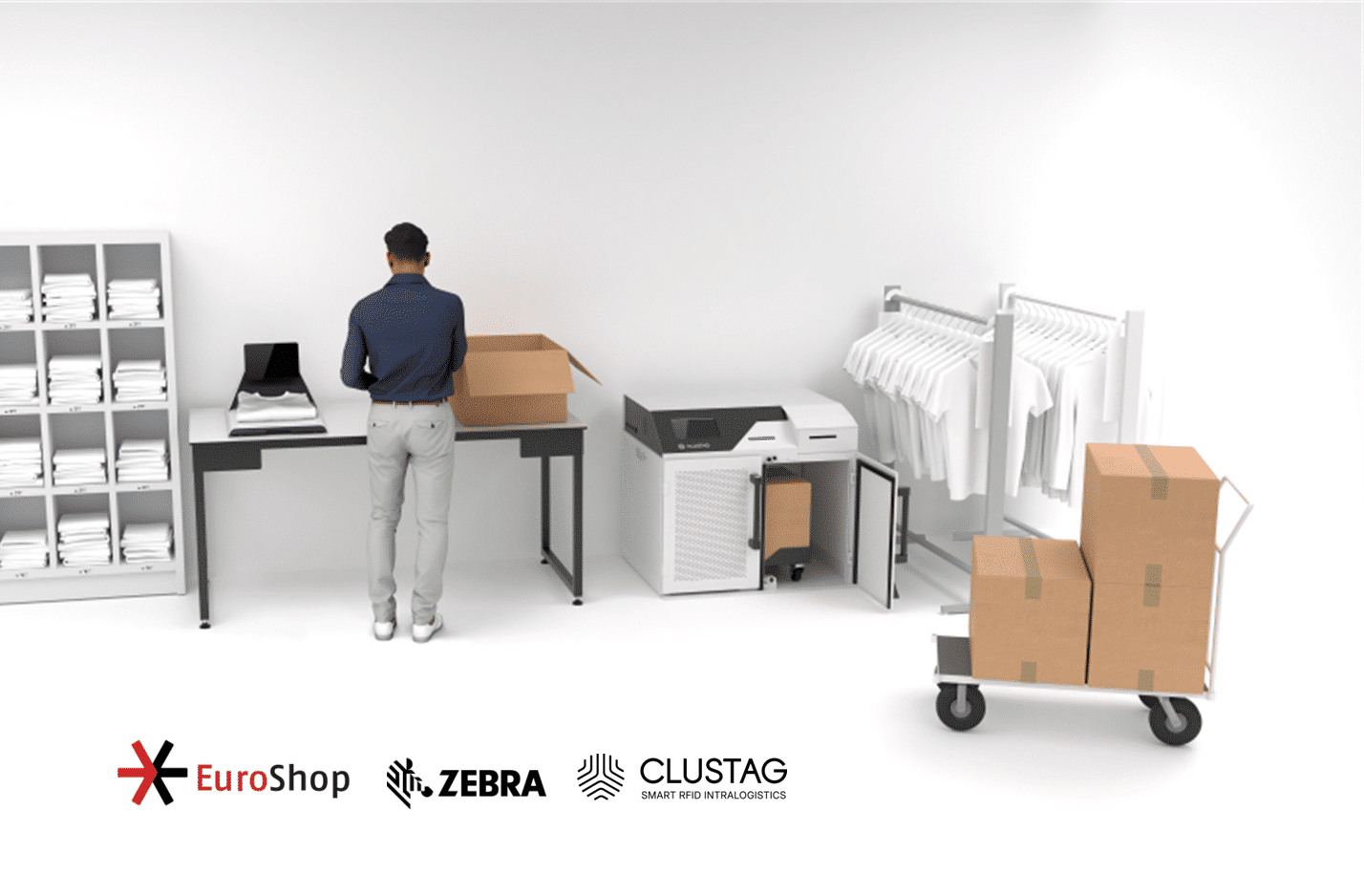
    We’re excited to announce that Clustag will be present at EuroShop 2026, taking place February 22–26 in Düsseldorf, the world’s leading retail trade fair for innovation, technology, and operational excellence. You will find us at the Zebra Technologies booth (Hall 6, A79), together with key strategic partners, showcasing how RFID is shaping the next generation of efficient, connected in‑store operations.

    Why Euroshop 2026 matters

    EuroShop is the global benchmark event for retailers, tech providers, and industry leaders looking to explore the future of store operations, automation, and customer experience.
    This year’s edition places a strong emphasis on:

    • Operational efficiency
    • Automation and smart processes
    • Real-time visibility across the supply chain
    • Customer-centric retail environments

    These pillars align perfectly with Clustag’s mission: bringing precision, intelligence, and simplicity to store-level operations through RFID‑enabled solutions.

    A powerful ecosystem: Clustag at EuroShop 2026 with Zebra

    Our presence at EuroShop is built on collaboration. Together with Zebra Technologies, we will demonstrate how RFID can simplify daily store workflows, reduce manual tasks, and unlock item‑level visibility that supports more agile and error‑free retail operations.

    This collaboration enables us to present a fully connected approach, combining hardware, software, and data intelligence, to deliver measurable improvements in accuracy, speed, and productivity.

    Together, these partnerships create a powerful ecosystem for retailers seeking to boost efficiency, accuracy, and scalability.

    Live RFID solutions for modern retail

    At EuroShop 2026, visitors will be able to see firsthand how Clustag’s RFID technology helps retailers manage key processes with reliability and speed.
    Live demonstrations will focus on practical, high‑impact use cases, including:

    • Accurate receiving: Validate inbound goods in minutes with near‑perfect read reliability.
    • In‑store inventory workflows: Ensure precise stock movement between backroom and sales floor.
    • Returns processing: Accelerate reverse logistics with item‑level authentication.
    • Omnichannel execution: Support BOPIS, BORIS, e‑reserve, and ship‑from‑store with real‑time accuracy.

    Our RFID innovation is designed to simplify complex workflows through intuitive interfaces, error‑free reads, and seamless integration with partner solutions.

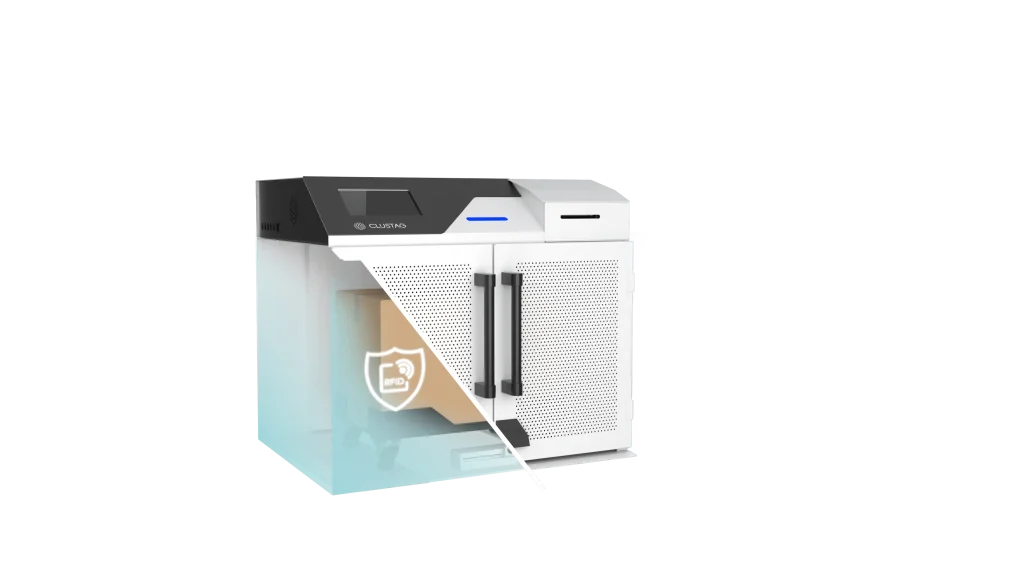
    Its integrated display, optional label printer, and compact design make SABI a perfect fit for modern retail environments.

    Why accuracy matters: RFID Shield Technology

    Reliability is at the core of every RFID‑enabled workflow. Clustag’s shielding and read‑control technology ensures:

    • Zero stray or cross‑reads
    • High‑precision item identification
    • Trusted data for operational decision‑making

    This level of accuracy empowers retailers to reduce shrink, prevent return fraud, and maintain consistency across omnichannel processes.

    Clustag SABI Station showing RFID Shield Technology

    A connected ecosystem for smarter operations

    Beyond individual devices or workflows, Clustag’s value lies in ecosystem integration. Through collaboration with software partners and Zebra hardware, retailers can benefit from:

    • Real‑time, item‑level visibility
    • Automated validations for receiving, picking, and shipping
    • Seamless omnichannel enablement
    • Improved staff efficiency through guided workflows

    The result: a faster, smarter, and more sustainable store operation that supports modern retail demands.

    See RFID innovation live at EuroShop 2026

    If you’re attending EuroShop, we invite you to visit us at the Zebra Technologies booth (Hall 6, A79).
    Discover how RFID‑powered retail can enhance accuracy, simplify store tasks, and accelerate operational efficiency across every corner of the store.

    Want to schedule a meeting or learn more before the event?
    Reach out to the Clustag team, we’d love to connect, or fill in our contact form to get in touch with us.

  • Avoid Stray Reads with Clustag RFID Shield Technology

    Avoid Stray Reads with Clustag RFID Shield Technology

    In environments where RFID is the backbone of item-level visibility, accuracy is critical. Unintended tag captures, commonly known as stray reads, can disrupt inventory integrity, slow down operations, and increase reconciliation In In modern supply chains and automated environments, precision is a strategic advantage. When RFID systems capture stray reads the consequences can ripple across inventory accuracy, compliance, and operational efficiency. These errors often occur in dense environments such as conveyor tunnels, picking zones, and automated storage systems. To overcome this challenge, we combine advanced shielding solutions with Smart RFID strategies that deliver reliable data and seamless integration. Keep reading to discover how Clustag RFID Shield Technology works and why it is essential for high-performance operations.

    What causes Stray Reads in RFID systems?

    Stray reads happen when antennas detect tags outside their intended zone. This issue is amplified in environments with overlapping RF fields or reflective surfaces that extend signal reach. Understanding the root causes is key to designing effective solutions.

    Main causes of interference

    • Overlapping read zones due to antenna misalignment
    • High tag density in confined spaces
    • Signal reflections from metallic or structural surfaces
    • Excessive antenna power settings creating uncontrolled coverage

    Operational impact

    Uncontrolled reads lead to inaccurate stock counts, flawed traceability, and compliance risks. In pharma and healthcare, this can compromise safety standards and regulatory adherence. In retail, it results in stock discrepancies that affect customer experience and profitability. For industrial environments, stray reads can disrupt automated workflows and increase manual verification costs.

    How does Clustag RFID Shield Technology work?

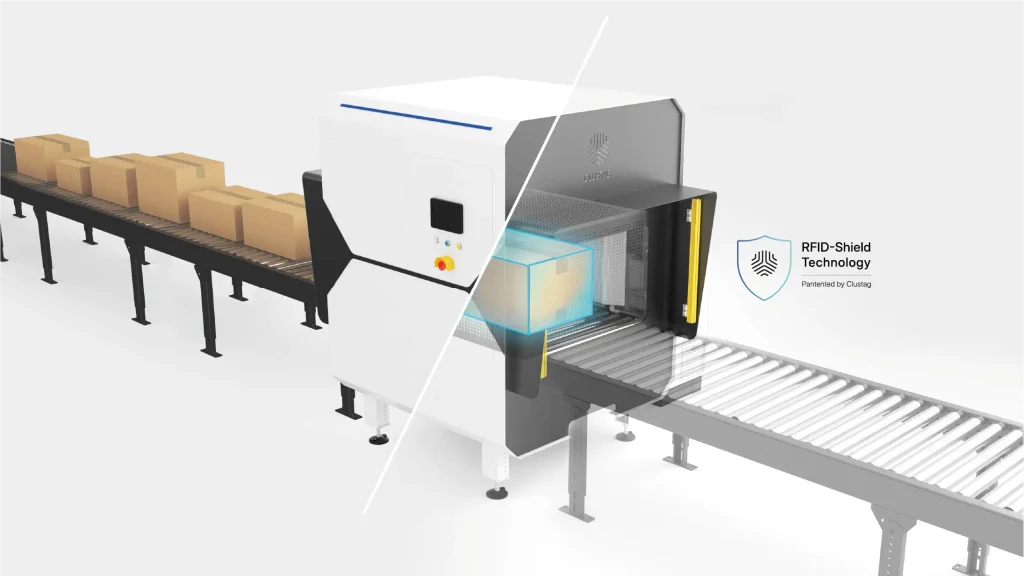
    Clustag RFID Shield Technology introduces a physical and electromagnetic barrier that isolates read zones, preventing interference from adjacent areas. Unlike software filtering, which acts after the read event, shielding eliminates the problem at its source, ensuring clean data capture from the start.

    Clustag RFID Shield: Technical design and materials

    • Electromagnetic isolation to absorb or redirect RF signals
    • Custom configurations for conveyors, cabinets, and racks
    • High-performance materials ensuring durability and minimal leakage
    • Modular design for easy integration into existing RFID infrastructures
    Clustag RFID Shield Technology tunnel integrated into a conveyor system with shielding panels and roller track, designed for controlled RFID reading and prevention of stray tag detection

    Performance metrics and impact on operations

    Field tests show shielding reduces unintended reads by up to 95%, improving data reliability and operational speed. When combined with directional antennas and optimized power settings, the effect is even greater, creating a controlled and predictable reading environment.

    Integration with Smart RFID Solutions

    Shielding works best when paired with intelligent software and hardware strategies. At Clustag, we integrate Clustag RFID Shield Technology with Smart RFID Solutions to deliver end-to-end accuracy and efficiency.

    Synergy between hardware and software

    • Dynamic zone control adjusting antenna power in real time
    • Data validation algorithms complementing physical shielding
    • IoT connectivity ensuring clean data flows into WMS and ERP systems
    • Predictive analytics to monitor performance and prevent anomalies

    What are the benefits for different industries?

    • Retail and fashion: Accurate item-level visibility during high-speed sorting
    • Healthcare and pharma: Secure tracking of sensitive products in controlled environments
    • Industrial manufacturing: Reliable identification in automated assembly and packaging lines

    Practical deployment scenarios

    Clustag RFID Shield Technology adapts to multiple operational contexts, making it a versatile solution for complex environments.

    Conveyor checkpoints

    Prevent cross-lane reads in high-speed sorting systems, ensuring each item is captured in its correct zone.

    Smart cabinets

    Guarantee that only items inside the cabinet are read, protecting sensitive medication tracking and compliance.

    Automated picking

    Stabilize read zones in densely packed shelves, reducing errors in order preparation and improving fulfillment speed.

    Best practices for implementing Clustag RFID Shield Technology in 2026

    To maximize Clustag RFID Shield Technology benefits, follow these guidelines:

    Site assessment

    Conduct RF surveys to identify interference hotspots and overlapping zones. This analysis informs the design of shielding panels and antenna placement.

    Layered approach

    Combine shielding with directional antennas and power tuning for optimal isolation. Physical barriers handle the bulk of interference, while software fine-tunes accuracy.

    Continuous monitoring

    Deploy analytics dashboards to monitor read performance and detect anomalies. This proactive approach ensures long-term reliability and ROI.

    Ready to eliminate stray reads and achieve flawless RFID performance?
    Let’s design a solution tailored to your needs. Contact us today through our contact form and discover how our advanced RFID Shield Technology and Smart RFID Solutions can transform your logistics. You can also visit our Customer Experience Center to try out our products and see the benefits of RFID Shield Technology

    Frequent Answers and Questions about RFID Shield Technology

  • Inside the Customer Experience Center

    Inside the Customer Experience Center

    Implementing RFID technology successfully requires more than installing hardware. It’s about ensuring that every component works seamlessly under real-world conditions. Factors such as packaging shapes, product materials, and environmental interference can significantly impact performance. That’s why we created the Clustag Customer Experience Center, a space where innovation meets validation and where we help businesses adopt RFID with confidence.

    Why testing RFID solutions matters

    RFID is not always plug-and-play. Variations in product composition or interference can lead to inconsistent results and operational risks. At our Experience Center, we replicate real-world environments to validate solutions before they go live. This proactive approach minimizes errors, reduces costs, and guarantees that systems perform reliably from day one.

    Simulating operational scenarios

    We don’t just test devices, we simulate workflows. By recreating the conditions of logistics and retail operations, we ensure that RFID solutions meet the highest standards of accuracy and efficiency. This hands-on validation process is essential for companies looking to scale without compromising quality.

    What we evaluate during RFID validation

    Our testing process focuses on three critical aspects that define RFID performance:

    Processing speed

    Efficiency is key in any supply chain. We measure processing speed by scanning consecutive items and calculating the time between the first and last read. This test ensures that systems can handle real-world throughput demands and maintain productivity under pressure.

    Reading consistency and reliability

    Accuracy matters. We perform repeated reads to confirm that data matches theoretical expectations, even when scanning the same item multiple times. This guarantees stability and eliminates discrepancies that could disrupt inventory management.

    Stray-reading prevention

    False positives can lead to costly errors. We verify that only items within the designated zone are read, ensuring precision and preventing stray reads that could compromise data integrity.

    Clustag Smart RFID intralogistics setup featuring conveyor systems, RFID tunnel, and control stations for warehouse automation and operational efficiency in the Customer Experience Center

    How clients benefit from our Customer Experience Center

    Before adopting RFID for parcels, hanging garments, or pallets, we invite clients to test their tagged products in our controlled environment. This collaborative approach ensures that solutions are tailored to their needs and ready for future scalability. By validating performance upfront, businesses reduce operational costs, avoid long-term setbacks, and gain confidence in their investment.

    Operational cost optimization

    Transitioning to RFID automation requires thoughtful planning. Our team provides guidance throughout the process, helping companies integrate RFID without unnecessary expenses or disruptions.

    Future-proof technology

    Every test we conduct ensures that our systems are robust, reliable, and prepared to support growth. By partnering with Clustag, companies embrace automation without compromise, unlocking efficiency and resilience for years to come.

    A global network for innovation

    Our Customer Experience Centers are strategically located to serve clients worldwide. Each center is equipped with advanced RFID tunnels, portals, and read points, allowing us to replicate diverse operational environments. This global presence ensures that every client benefits from consistent quality standards and expert support, no matter where they operate.

    Beyond testing: collaborative innovation

    We believe in co-creation. At our Experience Centers, clients can work alongside our engineers to fine-tune solutions, explore new applications, and validate performance under unique conditions. This collaborative approach accelerates deployment and ensures that RFID systems deliver measurable value from day one.

    Ready to experience the difference? Visit our Customer Experience Center and fill out the contact form to start building your RFID future with Clustag.

  • Driving Global Growth in 2025 with Smart RFID Solutions

    Driving Global Growth in 2025 with Smart RFID Solutions

    2025 has been a transformative year for us. We’ve expanded our international footprint, strengthened strategic partnerships, and delivered advanced RFID solutions that redefine intralogistics. RFID solutions for global supply chains are becoming essential in 2025 as businesses seek greater visibility, efficiency, and scalability. This year has been transformative for Clustag, with global expansion, strategic partnerships, and advanced intralogistics innovation.

    Global expansion driving RFID innovation

    In 2025, we accelerated our international strategy to bring RFID closer to businesses worldwide. This expansion is reshaping supply chain visibility and efficiency, enabling companies to operate with greater agility and precision.

    RFID solutions for North America

    Our new corporate office and Customer Experience Center in Miami mark a major step forward. This space allows clients and partners to test RFID solutions under real world conditions, simulating peak operational scenarios for maximum performance.

    Customer experience center in Miami

    Miami is more than a location, it’s a hub for innovation and connectivity. By bringing our technology closer to customers, we enable faster deployments, hands-on testing, and tailored solutions that meet the unique challenges of large-scale logistics.

    Benefits for retail and distribution

    From real-time inventory visibility to error reduction and cost savings, our Smart RFID Solutions deliver measurable impact. Retail businesses gain agility, optimize workflows, and enhance customer experience, all while reducing operational risks.

    RFID adoption in Asia and Oceania

    Our presence in Asia and Oceania ensures RFID implementation at origin, meeting global standards and supporting sustainability initiatives. This proactive approach minimizes disruptions and accelerates time-to-market.

    RFID at source for compliance

    Implementing RFID at the manufacturing stage ensures every item meets global standards before entering the supply chain. This strategy supports mandates like the Digital Product Passport (DPP) and strengthens traceability.

    Strategic partnerships for scalable growth

    Our collaboration model with local integrators allows us to adapt to market specifics, ensuring seamless deployments and long-term success for our clients.

    Digital product passport and industry mandates

    Compliance is no longer optional. RFID technology helps businesses meet evolving regulations while improving operational efficiency and sustainability.

    Quality and operational excellence

    We achieved ISO 9001 certification, consolidating our quality management system and unifying production, purchasing, and logistics processes. All manufacturing takes place in our Ontinyent facilities, enabling faster response times and ensuring excellence in every solution we deliver.

    Why ISO 9001 matters for RFID

    Consistency and reliability are critical for RFID performance. Our unified processes guarantee that every component meets the highest standards, delivering solutions that scale without compromise.

    Smart RFID solutions for industry 4.0

    From tunnels and handheld readers to advanced software platforms, our ecosystem is designed to integrate seamlessly into modern supply chains, supporting automation and data-driven decision-making.

    Unified manufacturing for faster response

    Centralized production ensures agility and responsiveness, allowing us to meet growing demand without sacrificing quality or innovation.

    Looking ahead with data-driven innovation

    With more than 3,500 RFID solutions deployed in over 135 distribution centers worldwide, we continue to lead the way in intralogistics digitalization. Our vision for 2026 is clear: accelerate traction in the U.S. and Asia while delivering measurable value through RFID and data intelligence.

    Accelerating growth in U.S. and Asia

    We’re committed to expanding our reach and supporting businesses in achieving operational excellence through RFID technology.

    RFID ecosystem for future supply chains

    Our solutions are designed to evolve with industry needs, ensuring scalability, flexibility, and long-term success.

    As featured in industry media

    This announcement has been covered by leading industry and business media, highlighting Clustag’s global expansion and innovation in RFID solutions for global supply chains.

    El Referente, Capital Riesgo, Valencia Plaza, El Economista, Expresa Exterior, Web Capital Riesgo, Fashion United, RRHH Digital, C de logística

    How to start your RFID journey today

    “After a decisive year marked by Nazca’s entry, the opening in Miami, and the reinforcement of our international structure, we face 2026 with a clear focus: accelerate traction in the United States and Asia, and continue delivering measurable value with RFID and data intelligence,” says Manolo Reguart.

    Ready to transform your operations? Contact us and let’s explore how our Smart RFID Solutions can help you scale efficiently.