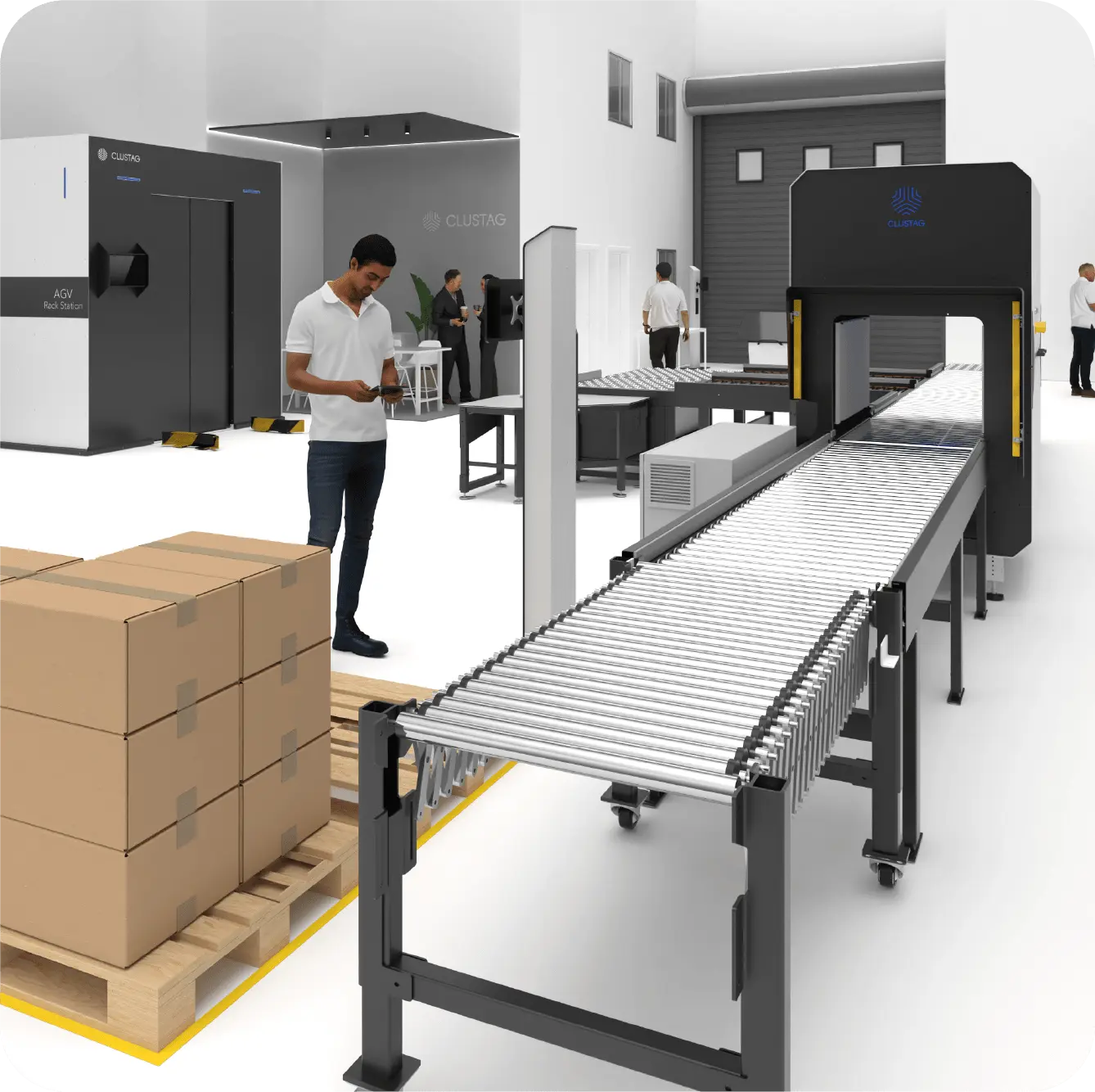
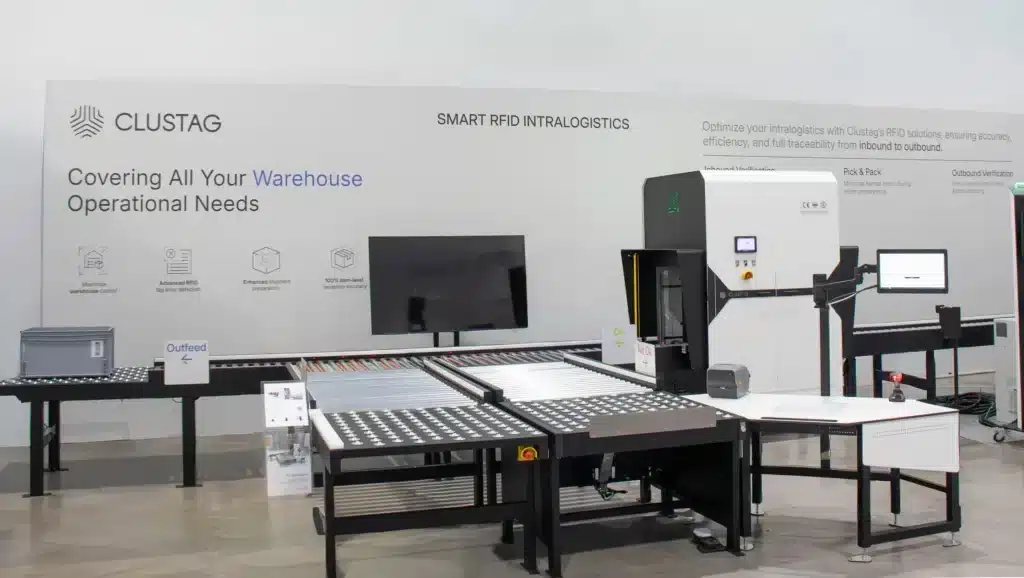
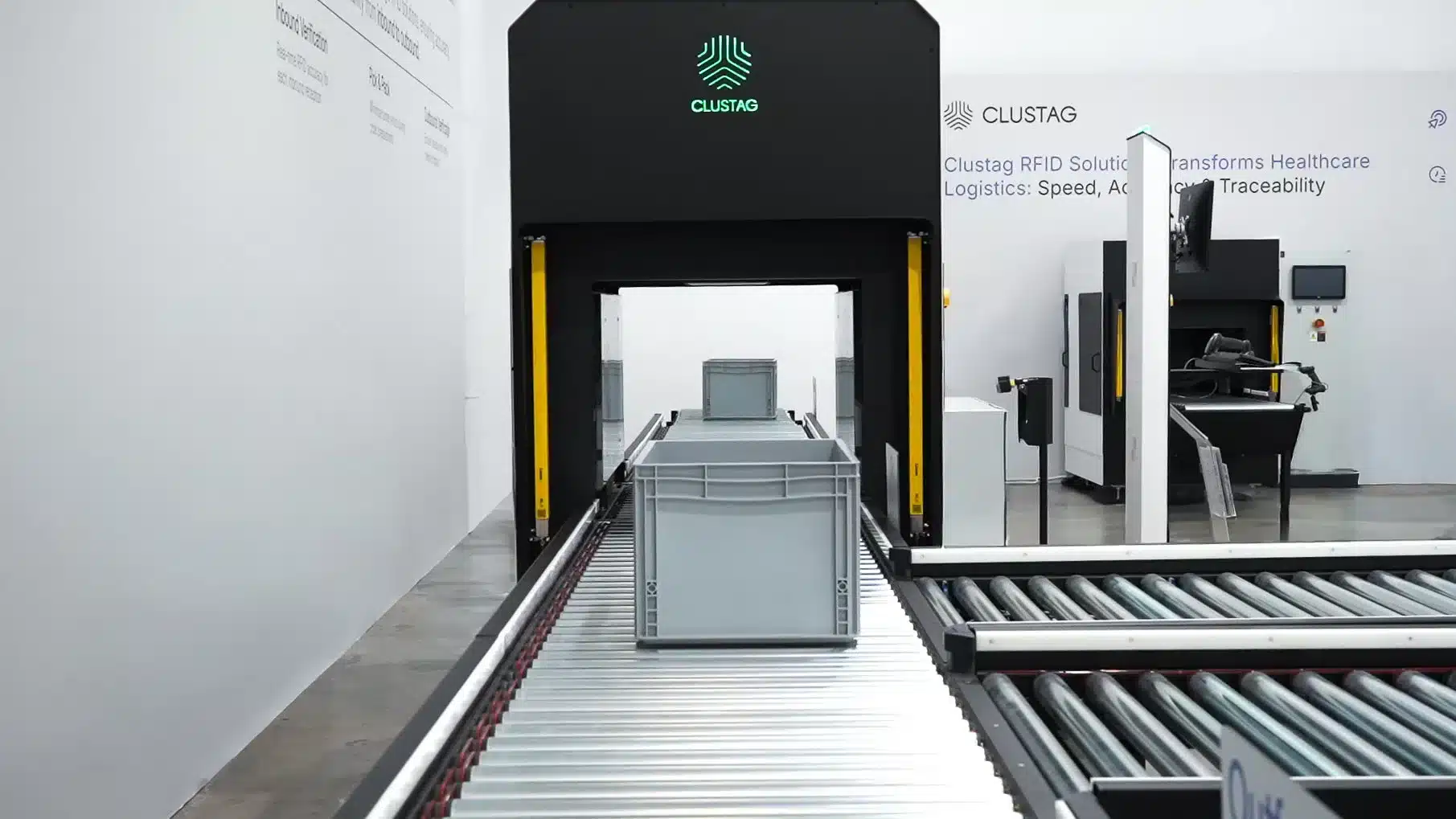
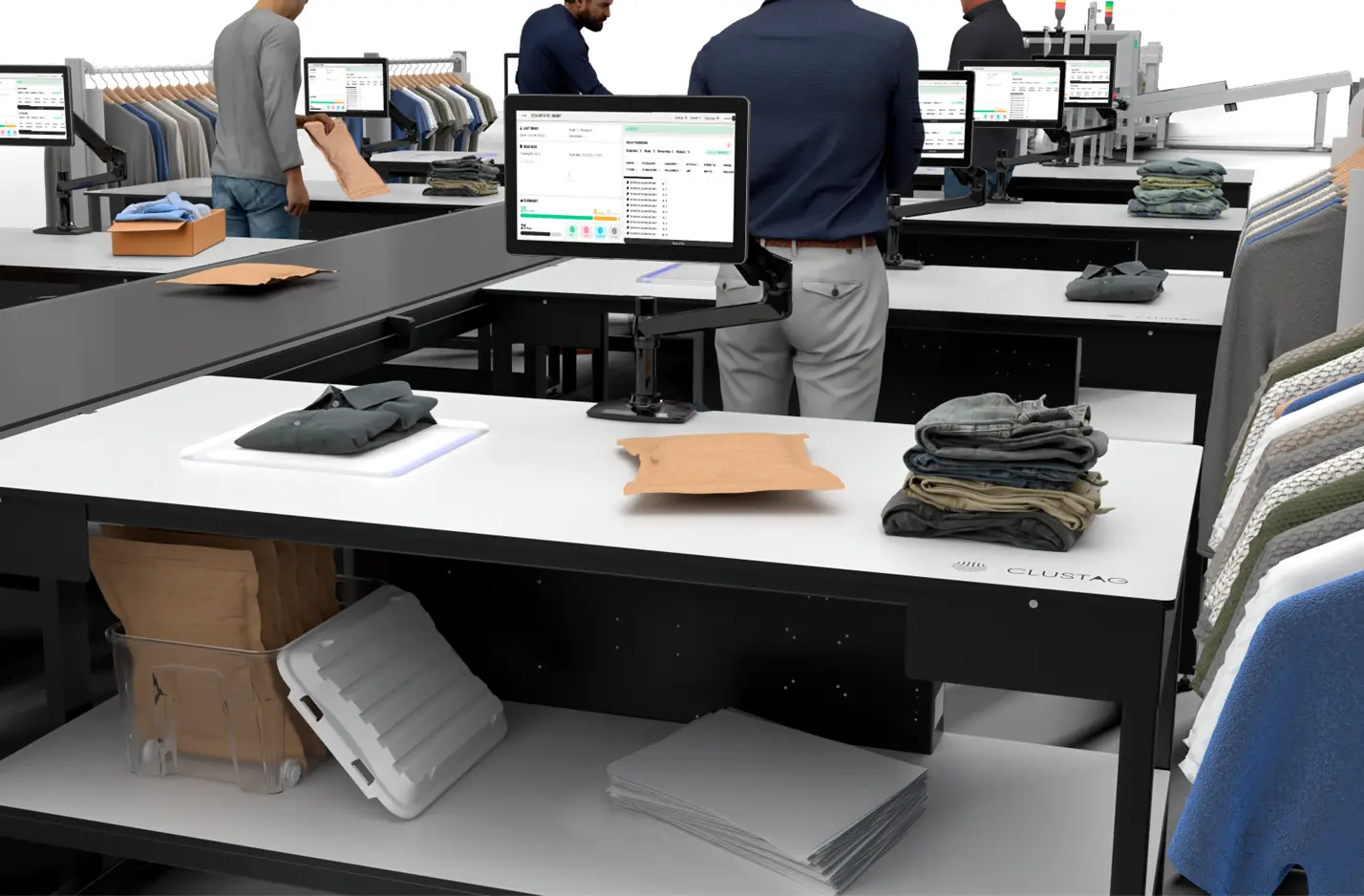
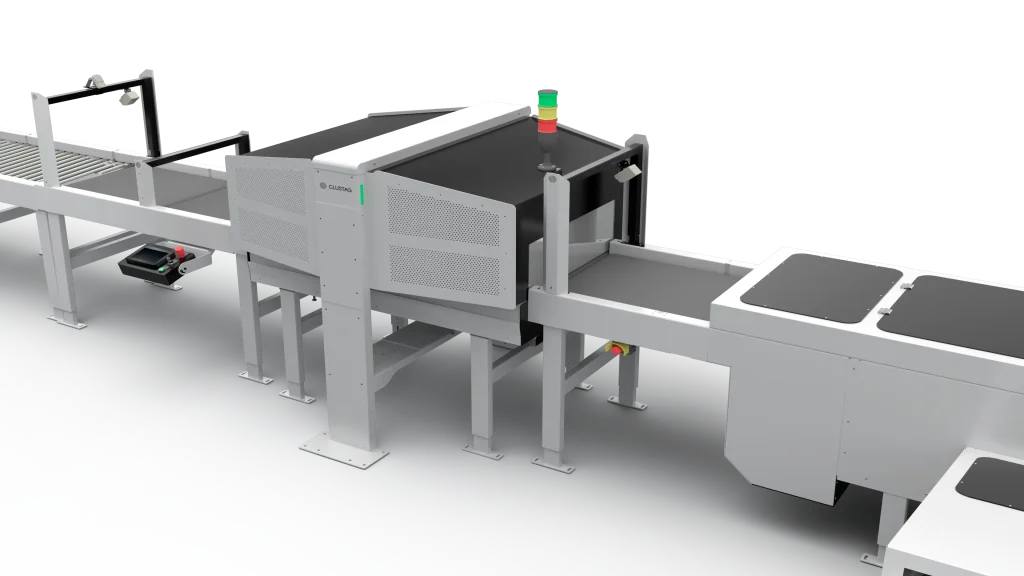
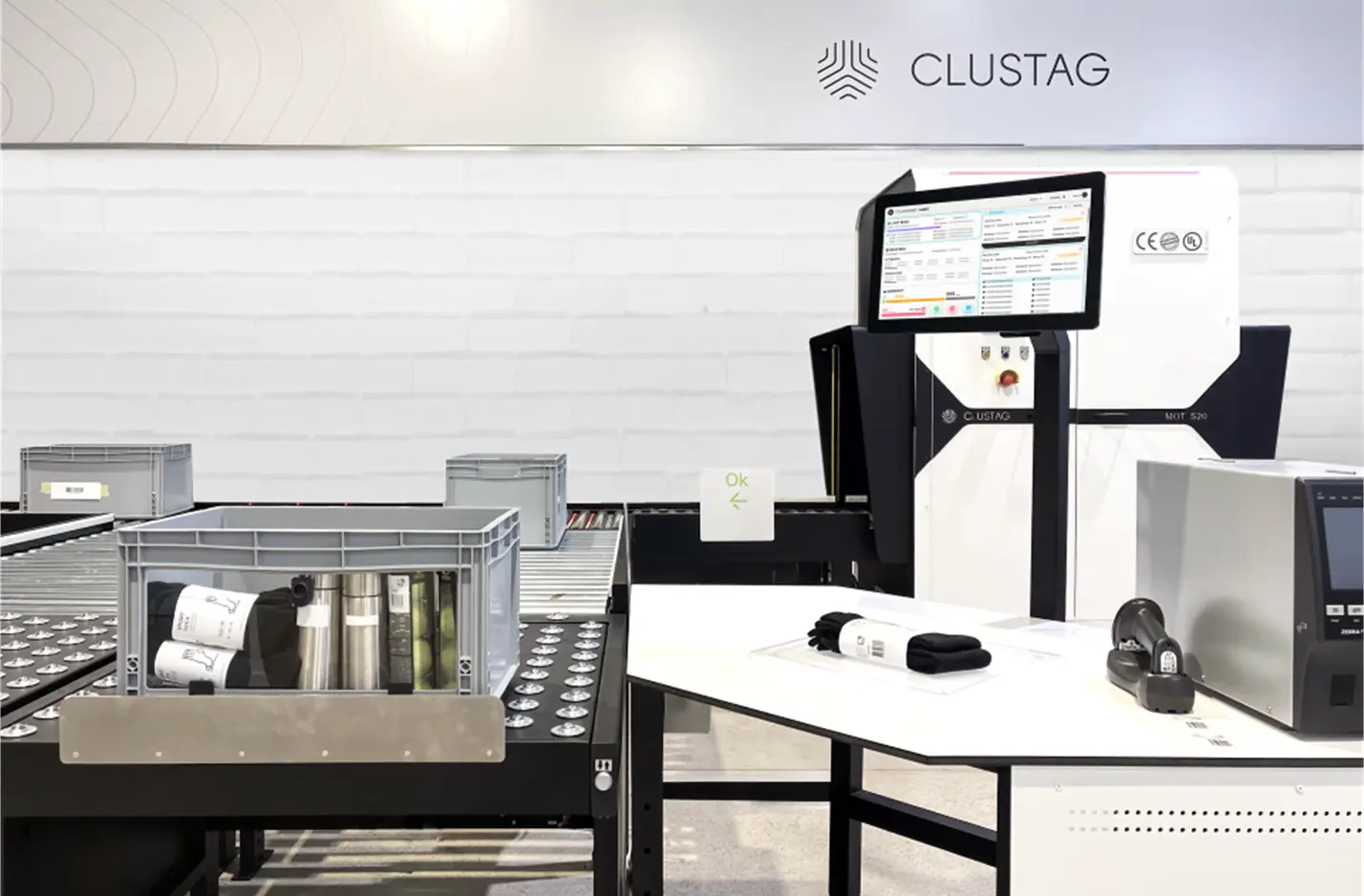
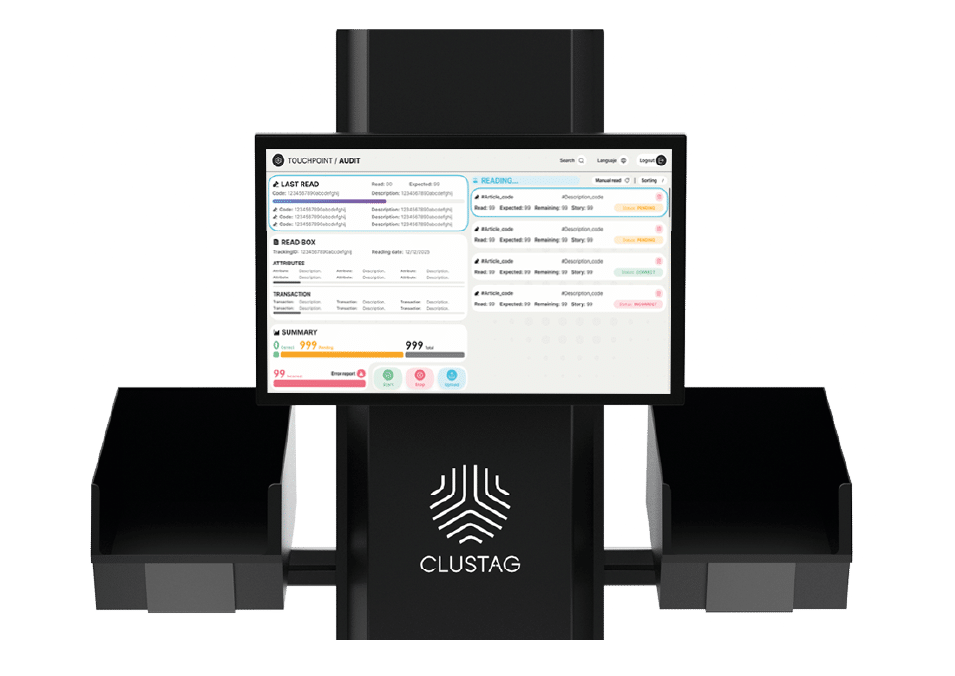
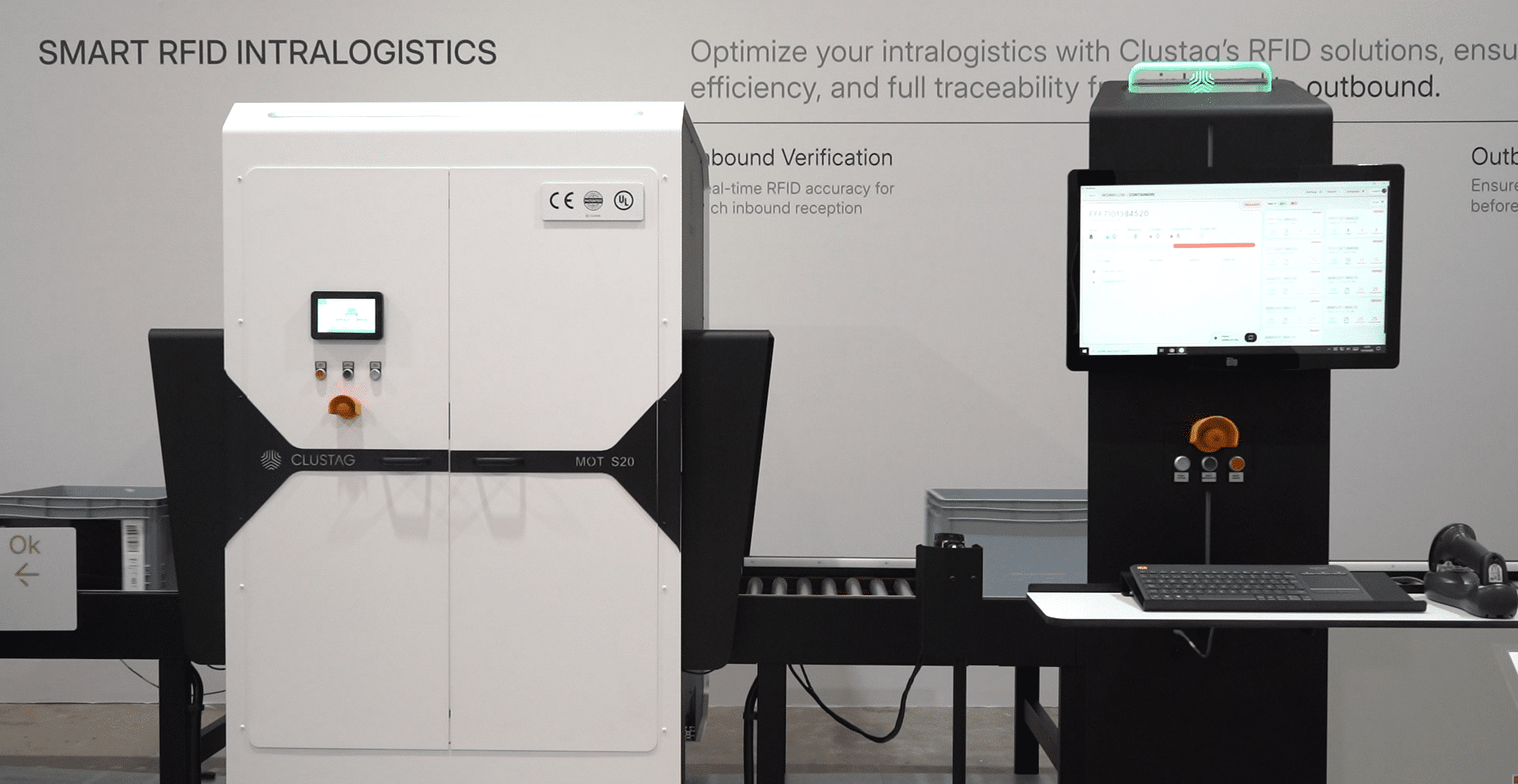
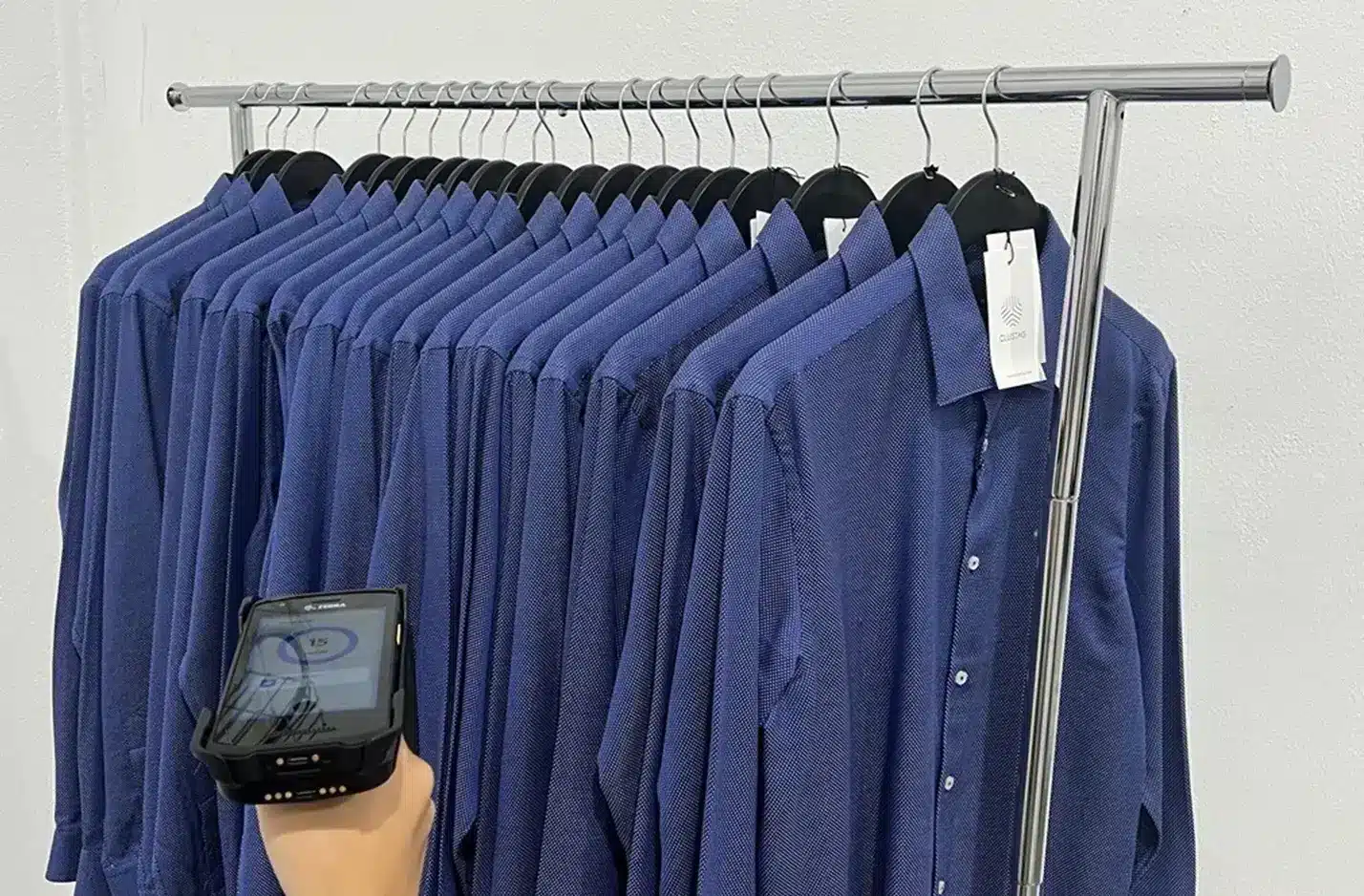
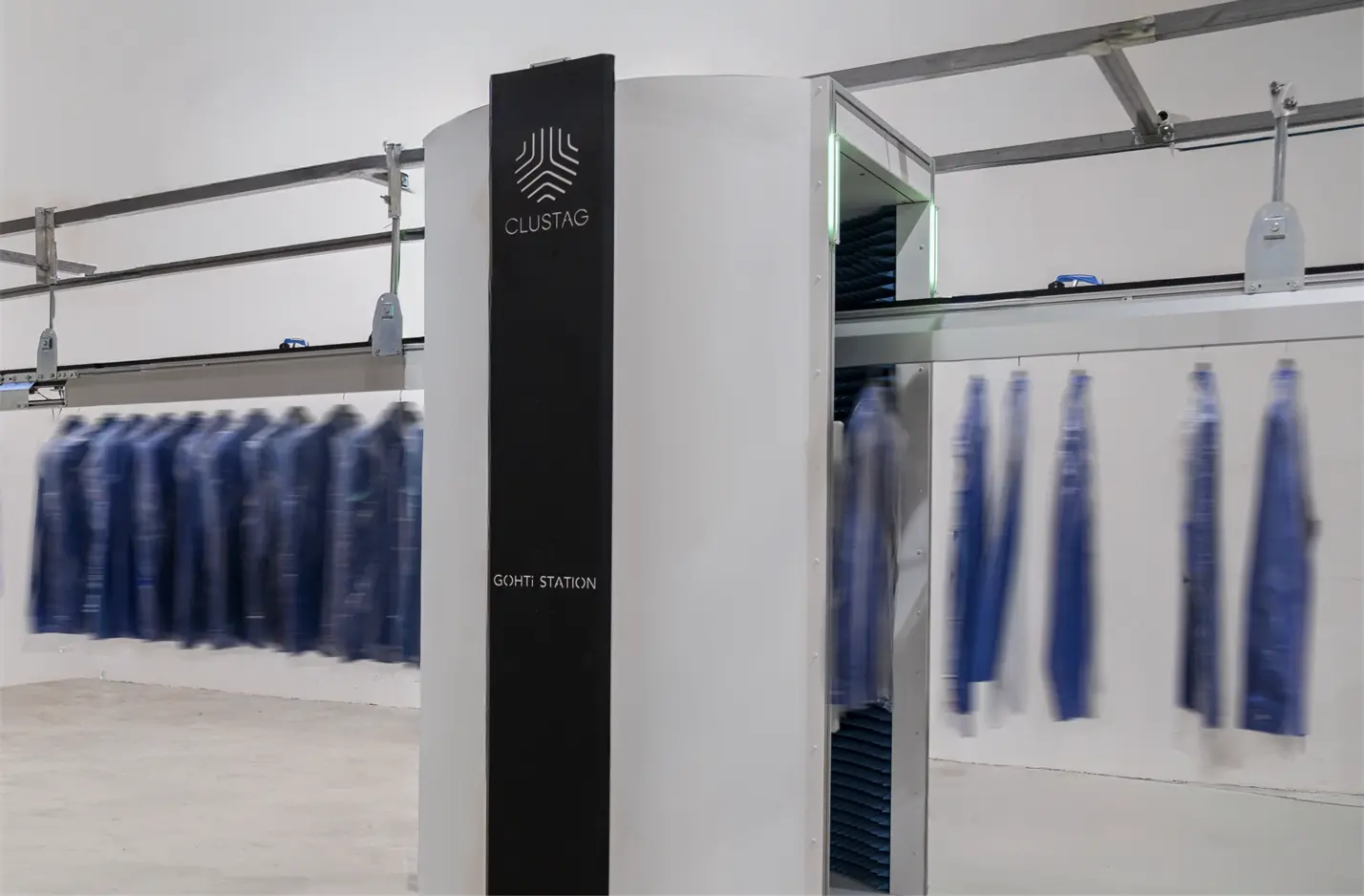
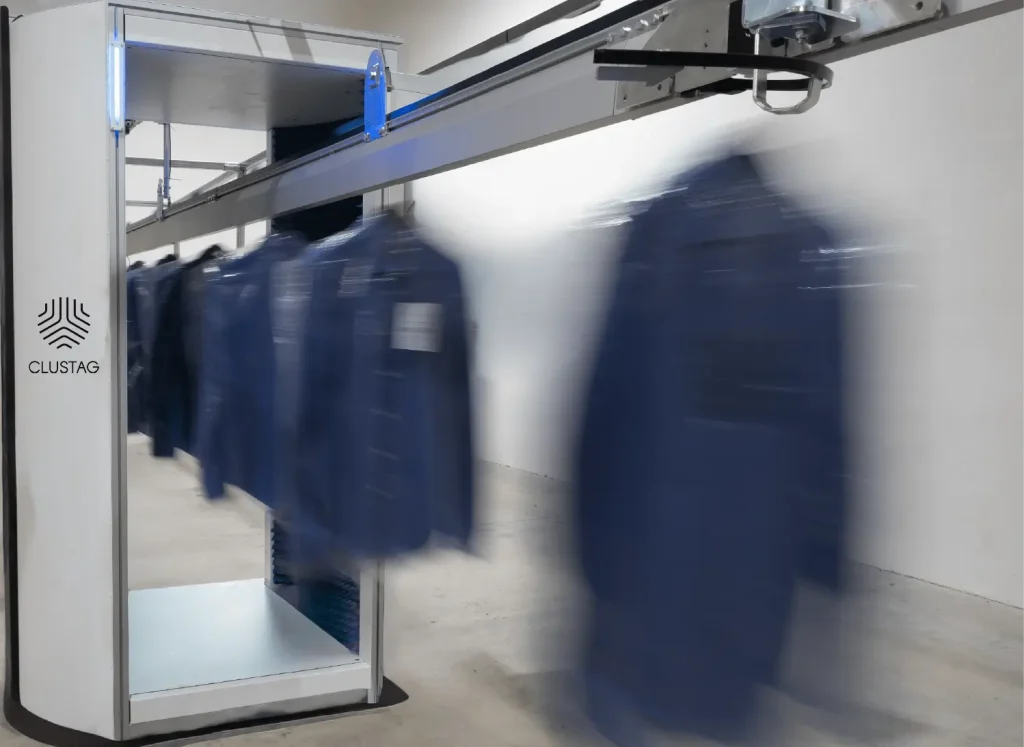
Implementing RFID technology successfully requires more than installing hardware. It’s about ensuring that every component works seamlessly under real-world conditions. Factors such as packaging shapes, product materials, and environmental interference can significantly impact performance. That’s why we created the Clustag Customer Experience Center, a space where innovation meets validation and where we help businesses adopt RFID with confidence.
Why testing RFID solutions matters
RFID is not always plug-and-play. Variations in product composition or interference can lead to inconsistent results and operational risks. At our Experience Center, we replicate real-world environments to validate solutions before they go live. This proactive approach minimizes errors, reduces costs, and guarantees that systems perform reliably from day one.
Simulating operational scenarios
We don’t just test devices, we simulate workflows. By recreating the conditions of logistics and retail operations, we ensure that RFID solutions meet the highest standards of accuracy and efficiency. This hands-on validation process is essential for companies looking to scale without compromising quality.
What we evaluate during RFID validation
Our testing process focuses on three critical aspects that define RFID performance:
Processing speed
Efficiency is key in any supply chain. We measure processing speed by scanning consecutive items and calculating the time between the first and last read. This test ensures that systems can handle real-world throughput demands and maintain productivity under pressure.
Reading consistency and reliability
Accuracy matters. We perform repeated reads to confirm that data matches theoretical expectations, even when scanning the same item multiple times. This guarantees stability and eliminates discrepancies that could disrupt inventory management.
Stray-reading prevention
False positives can lead to costly errors. We verify that only items within the designated zone are read, ensuring precision and preventing stray reads that could compromise data integrity.
How clients benefit from our Customer Experience Center
Before adopting RFID for parcels, hanging garments, or pallets, we invite clients to test their tagged products in our controlled environment. This collaborative approach ensures that solutions are tailored to their needs and ready for future scalability. By validating performance upfront, businesses reduce operational costs, avoid long-term setbacks, and gain confidence in their investment.
Operational cost optimization
Transitioning to RFID automation requires thoughtful planning. Our team provides guidance throughout the process, helping companies integrate RFID without unnecessary expenses or disruptions.
Future-proof technology
Every test we conduct ensures that our systems are robust, reliable, and prepared to support growth. By partnering with Clustag, companies embrace automation without compromise, unlocking efficiency and resilience for years to come.
A global network for innovation
Our Customer Experience Centers are strategically located to serve clients worldwide. Each center is equipped with advanced RFID tunnels, portals, and read points, allowing us to replicate diverse operational environments. This global presence ensures that every client benefits from consistent quality standards and expert support, no matter where they operate.
Beyond testing: collaborative innovation
We believe in co-creation. At our Experience Centers, clients can work alongside our engineers to fine-tune solutions, explore new applications, and validate performance under unique conditions. This collaborative approach accelerates deployment and ensures that RFID systems deliver measurable value from day one.
Ready to experience the difference? Visit our Customer Experience Center and fill out the contact form to start building your RFID future with Clustag.
2025has been a transformative year for us. We’ve expanded our international footprint, strengthened strategic partnerships, and delivered advanced RFID solutions that redefine intralogistics. RFID solutions for global supply chains are becoming essential in 2025 as businesses seek greater visibility, efficiency, and scalability. This year has been transformative for Clustag, with global expansion, strategic partnerships, and advanced intralogistics innovation.
Global expansion driving RFID innovation
In 2025, we accelerated our international strategy to bring RFID closer to businesses worldwide. This expansion is reshaping supply chain visibility and efficiency, enabling companies to operate with greater agility and precision.
RFID solutions for North America
Our new corporate office and Customer Experience Center in Miami mark a major step forward. This space allows clients and partners to test RFID solutions under real world conditions, simulating peak operational scenarios for maximum performance.
Customer experience center in Miami
Miami is more than a location, it’s a hub for innovation and connectivity. By bringing our technology closer to customers, we enable faster deployments, hands-on testing, and tailored solutions that meet the unique challenges of large-scale logistics.
Benefits for retail and distribution
From real-time inventory visibility to error reduction and cost savings, our Smart RFID Solutions deliver measurable impact. Retail businesses gain agility, optimize workflows, and enhance customer experience, all while reducing operational risks.
RFID adoption in Asia and Oceania
Our presence in Asia and Oceania ensures RFID implementation at origin, meeting global standards and supporting sustainability initiatives. This proactive approach minimizes disruptions and accelerates time-to-market.
RFID at source for compliance
Implementing RFID at the manufacturing stage ensures every item meets global standards before entering the supply chain. This strategy supports mandates like the Digital Product Passport (DPP) and strengthens traceability.
Strategic partnerships for scalable growth
Our collaboration model with local integrators allows us to adapt to market specifics, ensuring seamless deployments and long-term success for our clients.
Digital product passport and industry mandates
Compliance is no longer optional. RFID technology helps businesses meet evolving regulations while improving operational efficiency and sustainability.
Quality and operational excellence
We achieved ISO 9001 certification, consolidating our quality management system and unifying production, purchasing, and logistics processes. All manufacturing takes place in our Ontinyent facilities, enabling faster response times and ensuring excellence in every solution we deliver.
Why ISO 9001 matters for RFID
Consistency and reliability are critical for RFID performance. Our unified processes guarantee that every component meets the highest standards, delivering solutions that scale without compromise.
Smart RFID solutions for industry 4.0
From tunnels and handheld readers to advanced software platforms, our ecosystem is designed to integrate seamlessly into modern supply chains, supporting automation and data-driven decision-making.
Unified manufacturing for faster response
Centralized production ensures agility and responsiveness, allowing us to meet growing demand without sacrificing quality or innovation.
Looking ahead with data-driven innovation
With more than 3,500 RFID solutions deployed in over 135 distribution centers worldwide, we continue to lead the way in intralogistics digitalization. Our vision for 2026 is clear: accelerate traction in the U.S. and Asia while delivering measurable value through RFID and data intelligence.
Accelerating growth in U.S. and Asia
We’re committed to expanding our reach and supporting businesses in achieving operational excellence through RFID technology.
RFID ecosystem for future supply chains
Our solutions are designed to evolve with industry needs, ensuring scalability, flexibility, and long-term success.
As featured in industry media
This announcement has been covered by leading industry and business media, highlighting Clustag’s global expansion and innovation in RFID solutions for global supply chains.
“After a decisive year marked by Nazca’s entry, the opening in Miami, and the reinforcement of our international structure, we face 2026 with a clear focus: accelerate traction in the United States and Asia, and continue delivering measurable value with RFID and data intelligence,” says Manolo Reguart.
Ready to transform your operations? Contact us and let’s explore how our Smart RFID Solutions can help you scale efficiently.
Returns management with RFID is becoming a strategic priority for retailers, fashion brands, and e-commerce businesses looking to improve operational efficiency and inventory accuracy. As return volumes continue to grow, so do the challenges associated with reverse logistics, stock visibility, processing costs, and product availability.
However, many organizations still rely on manual workflows or barcode-based processes that slow operations and increase the risk of errors. By leveraging RFID technology, businesses can automate product identification, gain real-time visibility, and accelerate the reintegration of returned items into available inventory. As a result, they can improve operational performance while reducing costs.
At Clustag, we help companies transform reverse logistics through RFID solutions that streamline every stage of the returns process, from reception to inventory replenishment.
The true value of RFID in returns management is not just processing products faster. It is recovering sellable inventory sooner, reducing operational costs, and improving visibility across the entire reverse supply chain.
What returns management is and why it is an operational challenge
Returns management includes all activities that take place after a customer sends a product back. The returned item must be received, identified, inspected, classified, and either returned to inventory, repaired, refurbished, or removed from circulation.
For businesses handling high volumes of returns, these processes can quickly become resource-intensive. Without the right technology, delays and inaccuracies can impact inventory reliability, operational efficiency, and customer satisfaction.
The growing impact of returns in retail and e-commerce
Returns are now a standard part of the customer journey. While they help improve customer confidence in online purchases, they also place significant pressure on warehouse operations.
Common challenges include:
Processing large volumes of returns quickly
Maintaining accurate inventory records
Reducing product downtime
Avoiding classification errors
Ensuring end-to-end traceability
Common reverse logistics challenges
Traditional return workflows often create operational bottlenecks due to their dependence on manual handling and barcode scanning. Consequently, organizations struggle to maintain inventory accuracy and process high return volumes efficiently.
Companies frequently face:
Limited visibility into returned inventory
Delays in stock replenishment
Inventory discrepancies
Labor-intensive processes
Increased operational costs
As a result, more organizations are adopting RFID as a key technology for reverse logistics optimization.
How RFID transforms returns management
RRFID technology uses radio frequency identification to automatically capture data from tagged products without requiring direct line of sight. Unlike barcodes, multiple items can be identified simultaneously, even when they are packed inside boxes or containers.
This capability allows organizations to process returns faster, improve inventory visibility, and maintain complete product traceability. Furthermore, it creates a more connected and data-driven operation.
Automated reception of returned products
One of the biggest pain points in reverse logistics is the time required to receive and validate returned goods.
Solutions such as Clustag’s Bulk Station enable the mass reading of RFID-tagged items, dramatically reducing processing times while increasing operational accuracy. Furthermore, teams can process larger volumes without adding extra manual effort.
Benefits include:
Faster receiving operations
Reduced manual handling
Improved productivity
Greater inventory accuracy
Intelligent classification and full traceability
Once the system identifies returned products, RFID automatically routes and classifies them according to predefined business rules. As a result, companies can reduce manual intervention and improve operational consistency.
Returned items can be automatically assigned to workflows such as:
Restock and resale
Refurbishment
Repair
Disposal
Furthermore, the system records every movement digitally, providing complete visibility throughout the product lifecycle and improving traceability.
Real-time inventory updates
RFID delivers value beyond identification. Through integration with ERP and WMS platforms, every RFID event can automatically update inventory records and product status.
Therefore, inventory data remains accurate and available in real time, helping businesses make faster and more informed decisions.
Comparing traditional returns processes and RFID-enabled operations
The difference between a manual process and an RFID-enabled operation extends far beyond reading speed.
Process stage
Traditional workflow
RFID-enabled workflow
Product reception
Individual barcode scans
Simultaneous bulk reading
Product identification
Operator dependent
Automatic identification
Classification
Manual process
Automated according to predefined rules
Inventory updates
Delayed or manual
Real-time synchronization
Product location
Limited visibility
End-to-end traceability
Restocking
Slower processing
Immediate stock reintegration
Operational visibility
Partial
Real-time visibility
As the table shows, RFID transforms returns from a reactive process into a connected and data-driven operation where every item can be identified, tracked, and managed automatically.
Clustag RFID solutions for returns management
At Clustag, we develop RFID solutions designed to eliminate manual tasks, improve inventory reliability, and provide complete operational visibility.
Immediate replenishment and inventory accuracy
Our RFID intralogistics solutions allow returned products to be validated and reintegrated into available inventory almost immediately.
This helps businesses reduce downtime and maximize product availability.
High-performance bulk reading
Returns operations often require the processing of large product volumes within very short timeframes.
Clustag solutions support mass RFID reading with high accuracy rates, reducing bottlenecks and ensuring reliable validation. In addition, they help operations scale without increasing complexity.
RFID Shield Technology for read-zone control
Although RFID delivers exceptional visibility, one of the most common challenges in RFID environments is unwanted tag detection from nearby products.
Our RFID Shield Technology helps create controlled reading zones that eliminate stray reads and improve data accuracy, even in dense inventory environments.
Integration with ERP and WMS platforms
Capturing data is only part of the process. In reality, the greatest value comes from transforming RFID events into actionable business information.
Clustag solutions integrate seamlessly with warehouse management and enterprise systems, while Zentup provides the intelligence layer that converts RFID data into real-time operational insights.
Measurable business benefits of RFID in returns management
Organizations that implement RFID often see improvements across multiple operational KPIs.
Business objective
Common challenge
RFID advantage
Improve inventory accuracy
Stock discrepancies
Automated inventory updates
Reduce operational costs
Manual processing requirements
Workflow automation
Accelerate restocking
Delayed product availability
Faster validation and reintegration
Improve customer experience
Slow return processing
Faster and more transparent operations
Increase visibility
Fragmented information
Real-time traceability
In addition, organizations benefit from:
Higher warehouse productivity
Fewer operational errors
Reduced labor requirements
Improved inventory visibility
Better scalability for growing operations
Frequently asked questions about RFID returns management
What is RFID returns management?
RFID returns management uses radio frequency identification technology to automatically identify, track, and process returned products throughout the reverse logistics workflow.
How does RFID improve traceability?
Each RFID tag contains a unique identifier that allows every movement of a product to be recorded and tracked from reception through to resale, repair, or disposal.Each RFID tag contains a unique identifier that allows every movement of a product to be recorded and tracked from reception through to resale, repair, or disposal.
Can RFID integrate with existing ERP and WMS systems?
Yes. Modern RFID solutions can integrate with most warehouse and enterprise management platforms, enabling real-time inventory synchronization.Yes. Modern RFID solutions can be integrated with most warehouse and enterprise management platforms, enabling real-time inventory synchronization.
What is the difference between RFID and barcodes?
Barcodes require line-of-sight scanning of each individual item. In contrast, RFID enables the simultaneous reading of multiple products without direct visibility.
How does RFID benefit e-commerce operations?
RFID accelerates returns processing, improves inventory accuracy, and reduces the time required to make returned products available for resale.RFID accelerates returns processing, improves inventory accuracy, and reduces the time required to make returned products available for resale.
Is RFID suitable for high-volume returns operations?
Yes. RFID is particularly valuable in environments where large quantities of products must be processed quickly and accurately. Unlike traditional barcode workflows, RFID can identify multiple products simultaneously. As a result, organizations can increase throughput while maintaining high levels of accuracy.Yes. RFID is particularly valuable in environments where large quantities of products must be processed quickly and accurately.
Start optimizing your returns process with RFID
Returns should not become a bottleneck in your operation. Instead, they should provide an opportunity to improve inventory visibility, reduce operational costs, and increase product availability.
With Clustag RFID solutions, you can automate returns processing, improve inventory accuracy, and gain complete visibility across your reverse logistics operation. Furthermore, our solutions integrate seamlessly with ERP and WMS platforms, ensuring that inventory information remains accurate and up to date throughout the entire process.
If you would like to see these solutions in action, visit our Customer Experience Center and test RFID technology using your own products and processes. In addition, our team can help you identify optimization opportunities and design a returns management strategy tailored to your operational requirements.
By combining RFID technology, real-time data intelligence, and automated workflows, organizations can transform returns management from a costly operational challenge into a competitive advantage.
B2B ecommerce order management is becoming increasingly complex as companies handle larger orders, stricter delivery requirements, and growing customer expectations. Unlike B2C fulfillment, B2B operations demand greater accuracy, complete traceability, and tighter inventory control.
At Clustag, we help businesses optimize fulfillment through RFID-enabled intralogistics solutions. By combining RFID technology, real-time visibility, and intelligent workflows, organizations can reduce errors, accelerate order processing, and improve warehouse performance.
“Our commitment to continuous improvement, excellence, and customer service is stronger than ever. With the effort of our entire team, we will achieve new milestones in ecommerce and consolidate Clustag’s international positioning as a leader in RAIN RFID solutions for complex intralogistics.”
Unlike traditional ecommerce, B2B fulfillment involves larger volumes, customer-specific requirements, and significantly lower tolerance for errors. As a result, warehouse operations require greater visibility and control at every stage of the process.B2B fulfillment involves larger volumes, stricter service-level agreements, and customer-specific conditions. Therefore, warehouse operations require greater control and visibility at every stage of the process.
High volumes and low tolerance for errors
Many B2B orders contain dozens of SKUs and large quantities of products. Consequently, even a small picking error can generate delivery delays, customer complaints, and additional logistics costs.
Customer-specific requirements
In addition, many B2B customers require customized workflows that increase operational complexity, including:
Customized packaging
Specific labeling formats
Batch and lot traceability
Additional documentation
Multiple delivery destinations
Operational factor
B2C ecommerce
B2B ecommerce
Order size
Small
Large and multi-line
Delivery requirements
Standard
Customer-specific
Traceability requirements
Moderate
Critical
Documentation
Basic
Extensive
Error tolerance
Moderate
Very low
Therefore, businesses need technologies that help manage complexity without increasing manual work.
Common challenges in B2B fulfillment
As operations scale, manual workflows often become a bottleneck. Furthermore, growing order volumes make it increasingly difficult to maintain accuracy and efficiency using traditional processes.As operations scale, manual workflows often become a bottleneck. Consequently, many businesses struggle to maintain accuracy and efficiency.
Picking and verification errors
For example, manual picking processes increase the risk of shipping incorrect products or quantities. Consequently, businesses may face customer disputes, re-shipments, and higher operational costs.Manual picking processes increase the risk of shipping the wrong products or quantities. Furthermore, correcting these mistakes consumes valuable operational resources.
Limited inventory visibility
Meanwhile, a lack of real-time inventory data often leads to:
Inventory discrepancies
Stock shortages
Delayed replenishment
Inaccurate stock availability
As a result, planning becomes more difficult and customer service levels may suffer.
Returns and customer disputes
When shipment traceability is limited, validating returns and resolving customer claims becomes slower and more expensive. Therefore, many organizations spend valuable time investigating issues that could have been prevented.
How RFID transforms B2B ecommerce order management
Traditional fulfillment processes depend heavily on barcode scans and manual checks. RFID, however, enables automatic identification and validation throughout the workflow. As a result, businesses can improve speed, accuracy, and visibility simultaneously.RFID enables automatic identification and validation throughout the fulfillment process. As a result, organizations gain greater visibility, accuracy, and operational efficiency.
Automated picking and order verification
When combined with Zentup Workflow, RFID provides operators with real-time guidance during order preparation.When RFID is combined with Zentup Workflow, warehouse operators receive real-time guidance during order preparation.
This helps warehouse teams:
Validate products at EPC level
Detect missing items instantly
Reduce manual verification steps
Improve picking accuracy
Furthermore, operators can identify errors before orders leave the warehouse.
Real-time inventory visibility
In contrast to traditional barcode-based workflows, RFID continuously captures product movements across the warehouse.
Therefore, inventory information remains accurate and up to date. At the same time, businesses gain better control over stock availability and replenishment planning.
Faster shipment validation
Speed is critical in modern B2B fulfillment operations.
Clustag RFID solutions support processes capable of handling up to 2,000 boxes per hour with a 99.96% RFID read rate. Consequently, organizations can validate shipments faster while maintaining exceptional accuracy.
Clustag RFID solutions for B2B fulfillment
At Clustag, we develop RFID solutions specifically designed to improve productivity while maintaining complete operational visibility.
RFID-enabled workstations and automated labeling
RFID-enabled workstations validate products directly at packing stations. As a result, every shipment is prepared with greater accuracy while reducing manual intervention.
Zentup Workflow for operational assistance
Zentup Workflow provides real-time guidance throughout fulfillment operations.
Therefore, warehouse teams can complete tasks faster and with fewer errors.
RFID Shield Technology
Although RFID delivers exceptional visibility, unwanted reads can affect data quality in dense warehouse environments. RFID Shield Technology solves this challenge by creating controlled reading zones. Consequently, businesses achieve more reliable validations and higher operational accuracy.RFID Shield Technology creates controlled reading zones that eliminate unwanted reads and improve data accuracy, even in dense warehouse environments.
Integration with ERP, SAP and WMS
Effective fulfillment requires connected systems. For this reason, Clustag solutions integrate seamlessly with ERP, SAP, and WMS platforms.
The impact of RFID extends beyond faster processing times.
Business objective
Traditional process
RFID-enabled process
Picking accuracy
Manual validation
Automated verification
Inventory visibility
Periodic updates
Real-time visibility
Shipment validation
Manual checks
Automated validation
Order traceability
Partial
Item-level traceability
Scalability
Limited
High
In addition, organizations often achieve:
Higher order accuracy
Faster fulfillment cycles
Better inventory control
Reduced operational costs
Improved customer satisfaction
Ultimately, RFID does not simply accelerate fulfillment. Instead, it creates a connected environment where inventory, orders, and shipments are continuously validated in real time.
Frequently asked questions about RFID in B2B ecommerce
Is RFID cost-effective for medium-sized B2B ecommerce companies?
Yes. In fact, many businesses achieve a strong return on investment by reducing errors, improving inventory accuracy, and increasing productivity.
Can RFID integrate with ERP and WMS platforms?
Yes. Furthermore, modern RFID solutions integrate with ERP, SAP, and WMS platforms through APIs and middleware.
Does RFID replace barcodes?
Not necessarily. However, many companies use both technologies together, combining RFID automation with existing barcode processes.
How long does RFID implementation take?
Implementation timelines vary depending on warehouse size and operational complexity. Typically, organizations begin with a pilot phase before wider deployment.
How does RFID improve order traceability?
RFID provides item-level visibility throughout the fulfillment process. As a result, businesses can verify what was picked, packed, validated, and shipped.
Experience the Clustag difference
B2B ecommerce operations require speed, accuracy, and complete visibility. With Clustag RFID solutions, businesses can automate order validation, improve inventory accuracy, and achieve end-to-end traceability throughout their fulfillment operations.
If you would like to see our technology in action, visit our Customer Experience Center and discover how RFID can help optimize your warehouse operations.
In today’s logistics and supply chain environment, speed and precision are not just competitive advantages they’re essential for survival. Zentup Workflow by Clustag is built on the ability to capture, process, and act on data in real time, empowering operators, streamlining warehouse processes, and driving measurable improvements in logistics efficiency.
Real time data capture: The backbone of modern warehousing
We know that visibility is the foundation of effective supply chain management. Zentup Workflow uses advanced RFID technology to instantly capture item-level data, connecting all warehouse devices through robust middleware. This seamless integration with ERP, WMS, and other enterprise systems ensures continuous tracking and traceability, enabling immediate updates on inventory status.
Centralized management for reliable operations
Our centralized dashboard consolidates all relevant information, reducing the risk of errors and providing operators with actionable insights. By synchronizing data in real time, Zentup Workflow dramatically improves inventory control, order accuracy, and overall process reliability. With Zentup Workflow, operators benefit from intuitive interfaces that make manual checks and issue resolutions fast and straightforward, supporting a culture of continuous improvement.
Enhancing traceability and reducing human error
Manual operations are often the source of costly mistakes. Zentup Workflow transforms these processes by providing real time feedback and guidance to operators. Whether verifying orders, identifying items with faulty tags, or managing discrepancies, our platform ensures that every action is tracked and validated.
RFID tagging for global compatibility
We encode and verify RFID tags according to global standards, such as GS1 EPC Global. As a result, we guarantee interoperability across diverse systems. Furthermore, this approach ensures seamless integration and reliable performance throughout your supply chain. Each tag is assigned a unique identifier, encoding key product details like serial number, lot number, and expiration date. This meticulous approach allow us to track ensures products accurately throughout the supply chain, from receipt to shipment.
Seamless integration and scalable flexibility
Every organization faces unique operational challenges. We designed Zentup Workflow for seamless integration with a wide range of enterprise platforms ERP, WMS, WES, WCS, and AGV systems whether deployed in the cloud or on premises. Our open API architecture enables flexible data exchange and future proof scalability, so your business can evolve without disruption.
Explore all the benefits of Zentup Workflow.Download the brochureand learn how to adapt it to your operations.
Supporting Operators with intuitive interfaces
Operator experience is at the heart of Zentup Workflow. We designed our interface for clarity and speed, making it easy to perform manual checks, resolve issues, and maintain high standards of operational excellence. Real time alerts and notifications keep teams informed, while centralized dashboards provide actionable insights for continuous optimization.
Zentup Workflow is specifically developed for RFID auditing operations, which are crucial on Clustag Audit Stations and Workstations. In these stations, user experience is essential to ensure smooth and accurate processes. Key features include:
Order verification and management of items with faulty tags, coding errors, or missing items.
Accurate and timely order picking, reducing human order errors.
An intuitive interface that assists users with manual product checking operations
This focus on usability and error reduction empowers operators to maintain high standards of operational excellence and reliability throughout the warehouse.
Complementary applications like Zentup Go and Zentup Pulse extend these capabilities. Zentup Go enables mobile RFID data collection for inventory counts and stock taking tasks, while Zentup Pulse provides real time alerts and performance tracking across all RFID devices in the warehouse. Together, these tools create a cohesive ecosystem that empowers both operators and managers.
Optimizing pick and pack operations with Zentup Workflow
Order fulfillment is a critical component of supply chain success. Zentup Workflow streamlines the pick and pack process by integrating with warehouse management systems and providing real time error detection. Operators receive immediate feedback on order accuracy, minimizing the risk of incorrect shipments and reducing the number of returns.
Proactive inventory management
Our platform tracks and compares expected replenishment needs with actual inventory levels, ensuring discrepancies are identified and addressed promptly. This proactive approach improves customer satisfaction and enhances overall warehouse efficiency.
Real world success stories and integration examples
Zentup Workflow has been successfully implemented across a variety of industries, from fashion and sporting goods to pharmaceuticals and healthcare. Our solution enables clients to achieve greater visibility, accuracy, and control over their supply chains.
Seamless integration with leading platforms
Real time tracking of products and detection of status or location changes become possible when working with EPCIS platforms such as KEZZLER and ATTP. Thanks to Zentup Workflow’s compatibility with leading RFID software platforms, including TrueVUE, ItemOptix, Clarity, and iD Cloud Web, organizations gain visibility at every stage of the supply chain.
Our ability to integrate with ERP systems like SAP and WMS platforms such as Manhattan, INCONSO, DXC, DEMATIC IQ, and LOGISCORE provides organizations with the flexibility to manage operational modules and validate purchase orders efficiently. The platform’s support for AGV Fleet Management Systems, exemplified by successful deployments with EXOTEC Skypod System, further highlights its versatility.
Infrastructure and deployment options
We offer flexible deployment models to suit your operational requirements, including cloud-based and on-premises installations. Our expert technicians ensure fast, secure setup whether on your servers or ours, using Docker containers for efficient service deployment. Zentup Workflow processes RFID readings locally to minimize latency and synchronize results in real time or asynchronously, adapting to your network conditions and security policies.
Dedicated support and technical expertise
At Clustag, we back our innovative technology with exceptional support. Our dedicated team of software and PLC specialists is available around the clock to assist you, ensuring uninterrupted operations and rapid issue resolution, no matter your time zone.
Practical advice for implementing Zentup Workflow
Assess your current warehouse processes and identify areas where real-time data capture can drive improvements.
Integrate Zentup Workflow with your existing ERP and WMS systems to enable seamless data flow and centralized management.
Train operators on the intuitive interface to maximize adoption and minimize errors.
Use Zentup Go for mobile inventory counts and Zentup Pulse for real time device monitoring.
Monitor key performance indicators through centralized dashboards to drive continuous optimization.
Ready to see Zentup Workflow in action? Visit our Customer Experience Center and discover firsthand the speed, accuracy, and traceability that Clustag’s RFID solutions bring to modern warehouses. Experience how real time operator assistance can transform your order preparation and inventory management processes.
To explore how our RFID technology can be customized for your unique operational needs, simply fill out our contact form. One of our experts will reach out to guide you through a personalized demonstration, showing you, the tangible benefits Zentup Workflow can deliver.
In modern ecommerce operations, speed is essential, but it means nothing without accuracy. As order volumes grow, even a small percentage of fulfillment errors can generate significant costs through returns, reshipments, customer complaints, and lost customer loyalty.
Wrong items, missing products, incorrect sizes, or mixed orders often stem from the same underlying issue: insufficient validation during picking and packing. While manual checks and barcode-based systems can reduce mistakes, they struggle to deliver the accuracy required in high-volume warehouse environments.
This is why more retailers are turning to RFID order picking and automated outbound verification solutions to ensure every shipment contains exactly what the customer ordered.
Why Ecommerce Warehouses Still Struggle with Picking Accuracy
Barcelona, December 23.
Javier had planned ahead and bought what he thought was the perfect gift: a handbag his sister had wanted for months. He ordered it during Black Friday, confident it would arrive without issues.
The package arrived on time… but inside were boots he had never ordered.
The surprise was ruined.
Javier was not alone. Every day, thousands of ecommerce customers experience similar situations: wrong items, missing products, incorrect variants, or mixed orders. Although the causes may vary, many of these errors share the same underlying problem: a lack of reliable validation before shipment.
This type of situation breaks customer trust. And in ecommerce, rebuilding that trust can take years.
Common fulfillment errors include:
Picking the wrong item
Selecting the wrong size or colour
Shipping fewer units than ordered
Including incorrect products
Mixing orders during packing
These mistakes become even more frequent during peak periods such as Black Friday, Cyber Monday, or Christmas campaigns, when warehouses process thousands of orders under significant time pressure.
The Real Cost of a Picking Error
Every incorrectly prepared order creates both direct and indirect costs.
Direct costs include:
Returns processing
Reverse logistics
Repacking and reshipping
Refunds and compensation
Customer support management
Indirect costs are often even more damaging:
Negative online reviews
Reduced customer loyalty
Lost repeat purchases
Brand reputation damage
For many ecommerce brands, the reputational cost of shipping the wrong product can exceed the value of the order itself.
Why Traditional Verification Methods Are No Longer Enough
Most ecommerce warehouses still rely on barcode scanning and manual checks to validate orders.
While barcode technology remains useful, it presents several limitations:
Items must be scanned individually
Line of sight is required
Labels must be correctly positioned
Verification depends on operator performance
Damaged labels can generate read failures
Visual checks introduce additional risks. Fatigue, repetitive tasks, distractions, and pressure to increase productivity make human error unavoidable, especially in high-volume fulfillment operations.
What Is RFID Order Picking?
RFID order picking uses radio frequency identification technology to automate product identification and validation throughout the fulfillment process.
Each item carries a unique RFID tag that can be read automatically without requiring direct visibility. Unlike barcode systems, RFID readers can identify multiple products simultaneously, even when they are already packed inside totes, cartons, or shipping boxes.
RFID allows warehouses to automatically verify:
Which products have been picked
The quantity of items included
Whether the order is complete
Product movements throughout the warehouse
Inventory status in real time
RFID vs Barcode: What Changes in Practice?
Barcode-based process
RFID-enabled process
Item-by-item verification.
Automated order validation.
Manual checks before shipping.
Instant confirmation of order accuracy.
Time-consuming packing operations.
Faster fulfillment and dispatch.
Greater dependency on human intervention.
Reduced human error through automation.
Limited process visibility.
Real-time tracking and traceability.
Higher likelihood of shipment errors.
Improved customer satisfaction through accurate deliveries.
These capabilities make RFID particularly valuable in fast-paced ecommerce environments where both speed and accuracy are critical.
How RFID Eliminates Picking Errors
The key advantage of RFID order picking is automated validation.
Instead of relying on operators to manually verify every SKU, the system automatically compares the products detected by RFID with the order data stored in the WMS.
With RFID, warehouses can:
Read multiple items simultaneously
Eliminate barcode orientation issues
Detect missing products instantly
Identify extra items before shipment
Prevent order mix-ups
Update inventory automatically
As Javier Martínez, RFID Solutions Manager at Clustag, explains:
“A wrong order is not just a logistics error; it is a broken promise. RFID ensures every box contains exactly what the customer expects.”
RFID Validation Before Shipment
Even when products are picked correctly, mistakes can still occur during packing and dispatch.
Using RFID-based validation, the system automatically confirms:
All expected items are present
No extra products have been added
Contents match the order
Orders have not been mixed
This verification takes place before the shipment leaves the warehouse.
RFID Tunnels and Verification Stations
To automate this process, many ecommerce companies deploy RFID tunnels and verification stations.
Solutions such as Clustag’s RFID tunnels can scan the entire contents of a closed box in seconds and immediately compare the detected products with warehouse management system data.
If a discrepancy is detected, the shipment is stopped and corrected before dispatch, creating a highly reliable outbound verification process and dramatically reducing shipping errors.
The Benefits of RFID Order Picking
When RFID is integrated into picking, packing, and shipping operations, companies typically achieve:
Higher picking accuracy
Lower shipping error rates
Reduced returns
Lower reverse logistics costs
Better inventory visibility
Complete item-level traceability
Improved customer satisfaction
Many operations report error rates falling to below 0.1% after implementing RFID-based verification processes.
RFID Order Picking in Fashion Logistics
Fashion and apparel operations are among the biggest beneficiaries of RFID order picking.
Products often differ only by size, colour, or style reference, making manual verification particularly vulnerable to mistakes. RFID automatically validates every garment before shipment, helping brands improve fulfillment accuracy while maintaining a seamless customer experience.
Frequently Asked Questions
Does RFID work with all products?
Most products can be tagged with RFID. Metal items and liquids may require specialised tag designs or reading configurations.
Can RFID integrate with my current WMS?
Yes. Modern RFID solutions typically integrate with existing warehouse management systems and ERP platforms through APIs and standard connectors.
Can RFID be used beyond order picking?
Absolutely. RFID supports inventory management, receiving, replenishment, picking, packing, shipping, and full item-level traceability throughout the supply chain.
Is RFID Right for Your Warehouse?
Companies evaluating RFID solutions can see these processes in action at Clustag’s Customer Experience Centre, where live demonstrations show how RFID improves picking accuracy, outbound verification, and warehouse efficiency.
Why outbound verification matters for retail compliance
Wholesale operations with major retailers likeNordstrom, Macy’s, and Walmartdemand strict compliance with shipping standards. Any non-conformity,such as incorrect quantities, missing RFID tags, or misaligned labeling , can trigger chargebacks, costly returns, and strained relationships. In a margin‑sensitive market, avoiding these penalties is critical.
Retailers have issued RFID mandates to suppliers, requiring item-level tagging and GS1/EPC compliance to ensure visibility and accuracy across the supply chain. Failure to comply can lead to financial penalties and even loss of vendor status
“Outbound verification is not just a technical step, it’s the last safeguard before goods leave the warehouse. Automating this process with RFID ensures compliance and protects margins.” Manolo Reguart
The Challenge: The risks of skipping outbound verification in wholesale operations
Outbound verification is the final checkpoint before goods leave the distribution center. Manual checks are slow, error‑prone, and incompatible with high‑volume environments.
Operational inefficiencies due to rework and returns
Loss of trust with strategic retail partners
According to GS1 standards, EPC/RFID compliance is essential for traceability and retail mandates.
Meeting retail mandates and GS1 Standards
Clustag delivers an advanced RFID ecosystem designed for automated outbound verification, integrating seamlessly with ERP/WMS systems and supporting both manual and automated workflows.
Item‑Level Accuracy: Reads thousands of RFID tags in seconds, ensuring 100% verification before sealing
RFID‑Shield Technology: Prevents cross‑reading between pallets and boxes
Real‑Time Alerts: Immediate notifications for discrepancies between shipment and order data
Scalable Integration: Works with conveyor systems, AGVs, and manual packing stations
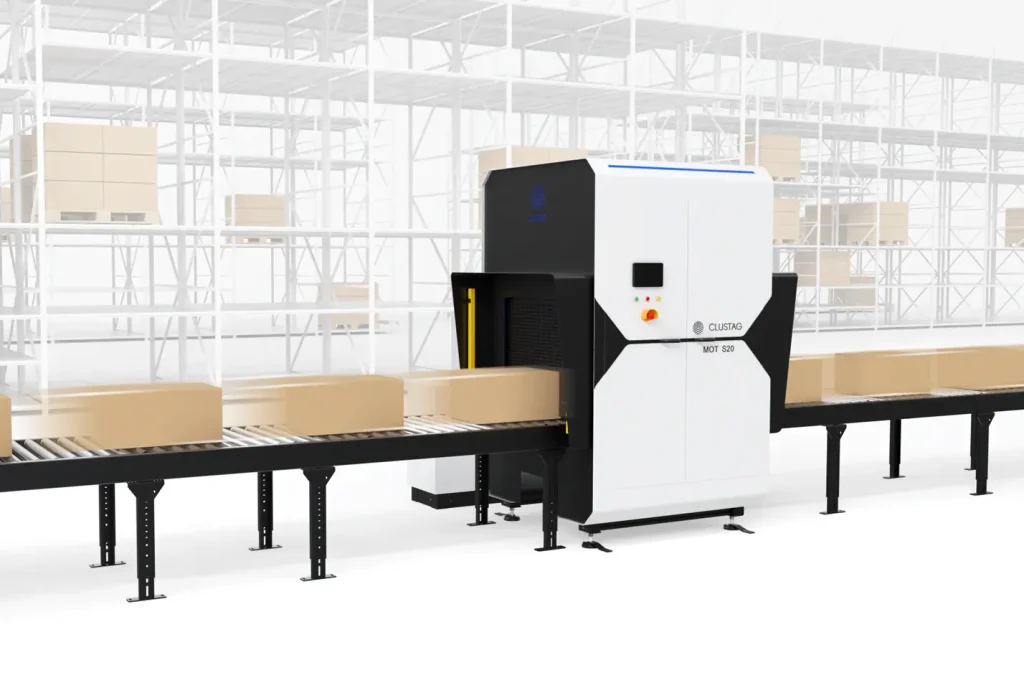
Our flagship device, the Clustag MOT S20 Station, guarantees item‑level accuracy at speed. For high‑volume environments, Bulk Stationsand Audit Plus Stationsprovide flexible options for outbound workflows.
“Our MOT Station proves that precision matters. When the gates close, the system reads only what’s inside, without any stray readings, without errors. That’s how we guarantee item‑level accuracy with our RFID-Shield technology”, Manolo Reguart
The solution: KPIs That Prove Outbound Verification Delivers Results
Clustag solutions align with GS1 EPC standards and meet retail mandates, reducing the risk of non‑compliance and penalties. This ensures shipment conformity and builds trust with strategic retail partners.
Implementing RFID solutions for outbound verification delivers measurable benefits:
For wholesale operations with Nordstrom, Macy’s, Walmart, and similar retailers, Clustag ensures:
Chargeback prevention by guaranteeing shipment conformity
Operational efficiency during peak seasons (e.g., Black Friday, holiday sales)
Global scalability, supporting omnichannel strategies across multiple regions
Experience RFID verification live at the Clustag Experience Center
Outbound verification isn’t optional, it’s a strategic necessity. By adopting Clustag RFID solutions, brands protect margins, maintain compliance, and build stronger relationships with wholesale partners.
Ready to see it in action? Visit the Clustag Experience Centerand discover how we manage outbound verification with real‑time RFID systems.
As companies grow, their operations become more complex. Undefined processes, recurring errors, limited traceability, and customer complaints can directly impact efficiency and long-term business performance.
When processes are not properly standardized, it becomes more difficult to identify deviations, resolve issues, and maintain consistent service quality. This is why more organizations are implementing quality management systems that support structured operations and continuous improvement.
Quality is not just about fixing mistakes. It is about building processes that prevent them from happening in the first place.
What ISO 9001 is and why it matters
At Clustag, we are proud to share an important milestone in our commitment to excellence: we have achieved ISO 9001 certification, awarded by NQA and accredited by UKAS (United Kingdom Accreditation Service).
ISO 9001 is the world’s leading standard for quality management systems. Rather than certifying a specific product, it evaluates an organization’s ability to manage its processes effectively, consistently, and in a way that promotes continuous improvement.
What a quality management system delivers
ISO 9001 provides a framework that helps organizations:
Reduce operational errors
Improve process efficiency
Increase customer satisfaction
Support data-driven decision making
Drive continuous improvement
The standard is based on the well-known PDCA cycle (Plan, Do, Check, Act), which enables organizations to continuously evaluate and improve their operations.
Why ISO 9001 is recognized worldwide
UKAS accreditation ensures our certification is internationally recognized through agreements with organizations such as:
EA (European co-operation for Accreditation)
ILAC (International Laboratory Accreditation Cooperation)
IAF (International Accreditation Forum)
This makes ISO 9001 a globally accepted quality benchmark across industries and markets.
What ISO 9001 means for our customers and partners
For our customers and partners, certification represents far more than a quality badge. It demonstrates that the processes behind our products and services are managed according to internationally recognized standards.
“This is not just a milestone for us. We have been working according to these principles for a long time. What we have done now is standardize and harmonize everything so we can work more efficiently and continue improving.”
He also highlights the practical impact of certification:
“ISO 9001 gives us a clear framework. It reduces errors, improves communication, and makes it easier to integrate future standards such as ISO 14001 or ISO 27001.”
The role of traceability in quality management
One of the foundations of any quality management system is the ability to record, monitor, and demonstrate what happens throughout every stage of a process.
Without proper traceability, it becomes much harder to:
Detect issues
Manage non-conformities
Investigate root causes
Conduct audits
Implement corrective actions effectively
How RFID supports operational excellence
Although ISO 9001 does not require any specific technology, RFID significantly improves data capture and process visibility.
With automated identification, companies can:
Improve product and asset traceability
Reduce manual data entry errors
Access real-time operational information
Generate objective audit evidence
Strengthen process control across logistics and industrial environments
For organizations looking to maximize efficiency and traceability, the Clustag Ecosystem integrates RFID solutions developed under rigorous quality standards and designed for global operations.
What does ISO 9001 certify?
ISO 9001 certifies an organization’s quality management system and its ability to manage processes in a controlled and continuously improving way.
Is ISO 9001 certification mandatory?
No. It is a voluntary certification, although it often provides a competitive advantage and may be required by specific customers or contracts.
How long does ISO 9001 certification last?
The certification is valid for three years and includes periodic surveillance audits to ensure ongoing compliance.
Can small businesses achieve ISO 9001 certification?
Yes. The standard is designed to be applicable to organizations of any size and industry.
Can RFID help support ISO 9001 objectives?
Yes. RFID can improve traceability, process control, and data accuracy, helping organizations strengthen their quality management systems.
Discover how quality drives innovation
ISO 9001 certification strengthens our commitment to operational excellence and continuous improvement. At our Customer Experience Center, you can see firsthand how Clustag RFID solutions help increase traceability, optimize processes, and support more efficient and reliable operations.
Interested in applying these quality standards to your organization? Contact our team and discover how we can help improve the performance and competitiveness of your operations.
Black Friday is no longer just a date on the calendar. It has become the biggest logistics challenge of the year for the apparel and fashion sector. In this context, RFID in fashion during Black Friday helps brands manage inventory more efficiently, optimize Black Friday returns, and recover sales that would otherwise be lost. Every minute counts. Any item missing from stock means a lost sales, and in a competitive market, delays push customers toward competitors.
Retailers face a dual challenge. They must manage high sales volumes while also processing a large number of returns without affecting stock availability. As the holiday season approaches, pressure increase. This makes fashion inventory management with RFID essential for operational success.
The challenge of returns in fashion during Black Friday
Returns are a growing reality in e-commerce, and the fashion industry is particularly affected. According to the 2025 Annual Returns Benchmark Report for Spain, prepared by ZigZag in collaboration with Retail Economics, the value of online returns in Spain is expected to reach €13.3 billion by 2025. During campaigns like Black Friday, consumers may return up to 35% of their purchases, creating a logistical bottleneck for retailers.
A common practice known as bracketing, buying multiple sizes or colors only one, make the situation even more challenging. Over 60% of online fashion shoppers admit to doing this, multiplying the volume of returns and putting pressure on order preparation processes and retail reverse logistics.
The economic impact is significant: in Europe, operational costs associated with returns can reach up to 66% of the product’s value. Any delay in reintegrating a returned item into inventory translates into lost sales that end up in competitor’s hands. In addition, delayed returns can lead to inaccurate stock data, causing issues with online availability and in-store replenishment, ultimately affecting customer satisfaction and brand reputation.
From 72 to 8 hours: the speed of fashion inventory management with RFID
Historically, a returned item could take up to 72 hours to be reintegrated into stock. Thanks to RFID in fashion during Black Friday, brands can reduce this time to less than 8 hours. This technology, based on smart tags that can be read remotely, allows every item to be tracked in real time, even during the return process.
Complete inventory visibility transforms retail reverse logistics: it creases to be an unavoidable cost and becomes an additional sales opportunity. Each item quickly returned to the store or online inventory means satisfied customers and recovered sales. Moreover, RFID helps retailers avoid stock discrepancies, allowing them to plan better promotions, restock efficiently, and make data-driven decisions during peak sales, periods.
By reducing reintegration times, brands can also manage high-demand products more effectively. For example. If a popular jacket is returned in the morning, it can be back online or ins-tore by the afternoon, ready for another customer who might have otherwise missed the opportunity to purchase it.
Clustag recovers sales in record time
The Spanish tech company Clustag has demonstrated how RFID in fashion during Black Friday can make a measurable difference. During the latest European campaign, their solutions allowed the reintegration of 20 million returned items in record time.
The economic outcome was clear: their clients recovered more than €600 million in sales that would have otherwise been lost to competitors.
Luis Rius, CEO of Clustag explains: “During campaigns like Black Friday or Christmas, every minute counts. Our technology allows returns to be processed and available for sale almost immediately, preventing customers from turning to competitors. It’s not just about optimization. It’s about ensuring an impeccable customer experience.”
By combining speed with accuracy, Clustag ensures that retailers can handle even the most complex holiday peaks without compromising service quality or losing revenue.
Optimizing Black Friday returns to improve customer experience
The benefits of RFID go beyond speed. In an omnichannel environment, where consumers expect to buy online and return or pick up products in-store seamlessly, fashion inventory management with RFID becomes a strategic asset. Its advantages include:
Intelligent stock redistribution between physical stores and online channels. Retailers can decide in real time whether returned items should go back to the closest store or to the central warehouse.
Improved product availability, with returns reintegrated almost immediately, ensuring customers find what they want without frustration.
Reduced losses from delayed returns reintegrated almost immediately, ensuring customers find what they want without frustration.
Reduced losses from delayed returns, preventing customers from shopping elsewhere.
Optimized customer experience, increasing loyalty. Consumers are more likely to shop with brands that provide fast, reliable, and transparent return processes.
Thanks to this, optimizing Black Friday returns cases to be a challenge and becomes a competitive advantage for fashion brands. Retailers can even promote their fast return capabilities as part of their marketing campaigns, turning what was traditionally a pain into a selling point.
Why RFID in fashion during Black Friday is key for the future
The fashion market is constantly evolving, and logistics has become a strategic factor. The ability to process returns quickly and keep inventory updated in real time determines the difference between a successful campaign and lost opportunities.
RFID in fashion during Black Friday offers a triple benefit:
Operational efficiency: less time lost on returns, freeing staff to focus on other critical tasks.
Sales recovery: each item reintegrated quickly means recovered revenue and minimized lost opportunities.
Enhances customer experience: fast returns and guaranteed availability increase loyalty and build long-term brand trust.
In a market where consumers are increasingly demanding, RFID becomes an essential tool to maintain relevance and competitiveness. It also supports data-driven decision-making, allowing retailers to anticipate demand trends, prevent stockouts, and optimize inventory across multiple channels.
Make the most of Black Friday with Clustag
Don’t let returns slow down your sales this Black Friday. With RFID in fashion during Black Friday, Clustag helps you optimize Black Friday returns, recover stock, and ensure every item is available to your customers in record time.
Discover how our solutions can transform your retail reverse logistics, improve fashion inventory management with RFID, and turn returns into sales opportunities. This Black Friday, sell more, sell faster, and keep your customers satisfied with Clustag.
Visit Clustag’s customer experience centre
Visit our Customer Experience Centre to see our solutions in action and experience the speed, accuracy, and traceability that Clustag can bring to your warehouse. To explore how our RFID solutions can be tailored to your specific needs, fill out our contact form and one of our experts will guide you through a personalized demonstration. Don’t miss the opportunity to optimize your warehouse processes and take your order preparation to the next level.
Reverse logistics has become one of the biggest black holes in modern ecommerce. While commercial teams push massive campaigns and promotions the reality in the warehouse moves at a different pace: thousands of products are returned every day, and most take too long to be restocked and made available online. Implementing RFID returns processing with Inbound Verification and RFID for returns can help close this gap, ensuring returned items are quicky visible online and reducing lost sales.
This gap is especially critical in premium fashion, where top-selling items have very short sales cycles. Clara’s story illustrates how slow returns processing can turn a physical available product into a lost online sale.
Slow returns processing and delayed restocking
Madrid, December 12th.
Clara knew exactly what to give for Christmas: a limited-edition camel jacket she had seen weeks earlier on her favourite brand’s website. After Black Friday, it appeared as “sold out”. But she trusted that typical December returns would make it available again.
What Clara didn’t know was that the jacket she wanted had already been returned to the warehouse on December 9th. However, it hadn’t been processed yet. The warehouse used a manual returns processing workflow: opening the package, validating the label, checking condition, re-tagging, updating systems. During the post-Black Friday surge, this process took 72 hours.
On December 11th, Clara checked the website again. It was still sold out. With Christmas approaching, she bought an alternative from another brand.
For her, it was just a practical decision. The company, however, lost a sale. Meanwhile, the competition gained a customer.
The impact of stockouts during peak season
These situations are not exceptions; they are constant during peak periods. For a premium fashion brand with a strong online channel, the impact is huge:
Approx. 10.000 returns between Black Friday and Christmas
40% are high-rotation items
Average price €90
Sales that never happen, because the item is in the warehouse but not online, represent €540.000-€720.000 in lost revenue over three weeks.
This is not a commercial failure or poor planning: it is an operational problem. And this is where RFID returns processing and RFID reverse logistics make a difference.
How returns processing affects online stock availability
Before diving into solutions, it is important to understand how the returns process itself affects online stock availability. Most traditional systems create a time gap between what exists physically and what is shown digitally. This gap is the root of “phantom sales” that never happen.
Out of stock due to returns
When a return takes days to be restocked, the e-commerce marks the item as sold out. This hides hundreds of items from customers that are physically in the warehouse. A delay of 48 and 96 hours can make the difference between selling a product or losing it forever to the competition.
Customer frustration is evident, but the economic impact is even greater: an invisible product is an unsellable product.
Inventory visibility issues
Additionally, manual workflows create other critical problems:
Discrepancies between physical and digital inventory
Distorted demand forecasts
Inefficient replenishment
Overproduction to cover perceived “out of stock” that is not real
The result is a less competitive ecommerce and higher operational costs. The solution is not more stock, but better inventory visibility, which RFID returns processing enables.
What RFID brings to reverse logistics and returns processing
To bridge the gap between the warehouse and ecommerce, brands are adopting item-level RFID, especially in the returns workflow known as Inbound Verification. This technology transforms a slow operation into a reliable, fast, and automated process.
RFID returns processing explained
With RFID, each item has a unique identifier. In a return, the system can:
Read the item without handling it
Validate its authenticity
Check category, size, and price
Detect anomalies or fraud
Update stock in seconds
The key difference is that everything happens automatically, reducing errors and accelerating product availability through automated returns processing.
Automated vs manual returns workflows
The contrast between the two approaches is clear:
Manual
3-5 minutes per item
48-72 hours for restocking
Labor-intensive
Frequent errors
Delayed e-commerce updates
RFID with Inbound Verification (Clustag):
Process completed in seconds
Restocking in less than 6 hours
No package opening
No human errors
Stock updated almost in real time
The result is clear: a product is back online the same day it arrives at the warehouse.
RFID tunnel solutions for high-speed returns handling
The use of specialized RFID tunnels enables this speed to become a reality. Solutions like those offered by Clustag automate returns validation and eliminate almost all manual handling.
How RFID tunnel reading accelerates reintegration
The process is simple for warehouse staff but powerful for the brand:
The returned box is placed in the tunnel.
The system reads all RFID tags simultaneously (RFID tunnel reading).
It validates authenticity and SKU matching
It detects any discrepancies.
Stock is updated automatically.
These massive reads, hundreds per minute, reduce restocking time from 72 hours to just 6.
This cuts typica sales losses of 15-20% to 2-3%, potentially recovering up to €600.000 during peak campaigns.
How RFID prevents stockouts in fashion and e-commerce
Availability is key to online performance. An e-commerce that reflects in real time what happens in the warehouse can capture sales that would otherwise be lost.
How item-level RFID prevents stockouts
Full inventory visibility allows:
Returned items to be restocked the same day
Stock balance between stores and online
Prevention of apparent stockouts (stockouts e-commerce)
Maximized ecommerce conversion
Reduced safety stock needs
Reliable inventory equals profitable inventory.
Reducing lost sales with RFID
The most direct benefit of reducing lost sales with RFID is recovered sales:
More availability = more conversion
Fewer OOS (out-of-stock) = fewer lost sales to competitors
Greater accuracy = less overproduction
As Ferran Bodí, Clustag’s RFID manager, summarizes:
“During critical campaigns, every minute counts. RFID turns returns into opportunities, not losses.”
Peak season pressure: Black Friday and Christmas as stress tests
Black Friday and Christmas are the critical weeks when a brand is truly tested. High demand and a surge of returns put reverse logistics to the rest: if return processing fails, lost sales multiply and customer experience suffers.
During these periods, every minute matters. A 48–72-hour delay in restocking can mean returned items are not visible when customers want to purchase them. This not only frustrates customers but directly impacts revenue, diverting sales to competitors.
RFID for Christmas peak season
RFID technology changes the rules. With automated return reading, items can be restocked in hours, not days (RFID for Christmas peak season), keeping them available online even during peak season.
In Clara’s case, the story would have been very different: the jacket she wanted would have returned to stock on December 9th, and she would have seen it available on December 11th. The sale would have been completed, her experience would have been positive, and the competitor would not have gained a customer. This example shows how RFID returns processing ensures that every return can become a sales opportunity rather than a loss.
ROI of RFID in reverse logistics
Beyond improving stock availability and customer experience, implementing RFID reverse logistics delivers clear, measurable financial returns, especially in fashion and e-commerce.
Key benefits include:
Recovered sales because returned items become immediately visible online
Reduced labor in manual verification and restocking processes
Reliable inventory with fewer discrepancies between physical and digital stock
Fraud and grey market prevention, ensuring item-level traceability
Optimized stock across the networks, avoiding overproduction or unnecessary purchases
“Item-level traceability not only prevents errors, but it also stops fraud and the grey market.”
Thanks to these advantages, most implementations achieve ROI in less than 12 months, showing that investing in RFID not only improves operations but protects and increases sales during critical campaigns.
Turning returns into opportunities with Clustag
After implementing RFID and achieving measurable ROI, the next step is turning every return into a real sales opportunity.
With Clustag’s RFID technology, brands can:
Process returns in seconds instead of days (automated returns processing)
Update online inventory almost immediately
Reduce apparent stockouts and lost sales
Improve customer experience by ensuring the product they want is available
Each returned item can become a sales opportunity rather than a loss
Discover how Clustag can transform your returns management and ensure your products are always available to your customers.
Visit our Customer Experience Centre to see our solutions in action and experience the speed, accuracy, and traceability that Clustag can bring to your warehouse. To explore how our RFID solutions can be tailored to your specific needs, fill out our contact form and one of our experts will guide you through a personalized demonstration. Don’t miss the opportunity to optimize your warehouse processes and take your order preparation to the next level.
See how RFID technology speeds up your reverse logistics.