Author: Paula Mora

  • Clustag Strengthens Its Footprint in Mexico Through Strategic RFID Alliance

    Clustag Strengthens Its Footprint in Mexico Through Strategic RFID Alliance

    RFID solutions in Mexico are entering a new phase of acceleration as we reinforce our presence in North America through a strategic alliance with Malipo, a leading retail technology integrator and official Nedap partner in the country.

    From our operational hub in Puebla de Zaragoza, we continue to scale next-generation RAIN RFID projects across retail, intralogistics, and distribution environments, supporting one of the most dynamic and fast-growing RFID markets in Latin America.

    RFID is no longer an optional upgrade. It has become a decisive competitive advantage for retailers and logistics-driven organizations.

    RFID Solutions in Mexico as a Growth Driver

    Mexico has consolidated itself as a strategic hub for RFID innovation, driven by the convergence of retail digitalization, intralogistics automation, and nearshoring dynamics. The demand for real-time visibility, operational efficiency, and inventory accuracy is reshaping how retailers and manufacturers scale their operations.

    This momentum is clearly visible in sectors such as fashion, footwear, sportswear, and optical retail, where RFID has become a foundational layer for omnichannel execution and inventory intelligence.

    The impact of nearshoring on intralogistics

    Nearshoring has significantly increased operational complexity across supply chains. As production and distribution move closer to end markets, organizations require technologies that can scale rapidly without compromising accuracy.

    RAIN RFID enables this transition by providing:

    • End-to-end traceability across inbound and outbound flows
    • Real-time inventory accuracy at item level
    • Faster and more reliable store and warehouse operations

    Events and ecosystem maturity

    Mexico’s growing RFID ecosystem is reinforced by industry events and logistics forums that connect innovation, solution providers, and retail decision-makers. This environment accelerates adoption and positions the country as a reference point for RFID-driven transformation in the region.

    Our mission in North America

    We support retailers from the very first strategic conversation through to full-scale deployment. Our approach focuses on designing RFID strategies that deliver measurable impact from day one.

    Traceability, operational efficiency, and full inventory visibility are no longer optional. They are essential to compete.

    By combining RFID hardware, data intelligence, and intralogistics expertise, we help organizations achieve ROI in less than two years while building scalable foundations for long-term growth.

    From pilot to full-scale deployment

    Our projects are designed to evolve organically, allowing retailers to start small and scale confidently:

    • Pilot projects in stores or distribution centers
    • Progressive rollout across networks
    • Seamless integration with existing systems such as WMS, ERP, and SAP

    The Clustag and Malipo alliance

    Our alliance with Malipo brings together deep local market expertise and internationally proven RFID technology. Malipo’s understanding of operational flows in Mexican retail environments perfectly complements our RFID devices, software platforms, and intralogistics know-how.

    Together, we enable retailers to adopt RFID with confidence and speed.

    What this partnership delivers to retailers

    Operational challengeRFID-driven solution
    Limited inventory visibilityItem-level traceability with RAIN RFID
    Manual and error-prone processesAutomated capture with Clustag RFID Solutions
    Scalability constraintsModular deployments from pilot to mass rollout
    Data silosReal-time insights via Zentup data intelligence
    Stray reads in dense environmentsRFID Shield Technology for controlled reading zones

    Technology that scales with the business

    Our solutions are built to grow alongside operational needs:

    • Clustag RFID Solutions for store, warehouse, and intralogistics automation
    • Zentup as the RFID data intelligence platform, integrating seamlessly with enterprise systems
    • RFID Shield Technology to mitigate stray reads and ensure precision in high-density environments

    This combination ensures accuracy, control, and scalability across every deployment phase.

    Enabling smarter intralogistics and retail operations

    By aligning local expertise with advanced RFID technology, we are accelerating the adoption of RFID solutions in Mexico across retail and intralogistics. The result is smarter operations, better decision-making, and future-ready supply chains.

    If you want to explore how RFID can transform your operations, we invite you to get in touch with our team or visit our Customer Experience Center to test our solutions with your own products.

  • RFID Proof of Concept: Validating Value Before Scaling Your Project

    RFID Proof of Concept: Validating Value Before Scaling Your Project

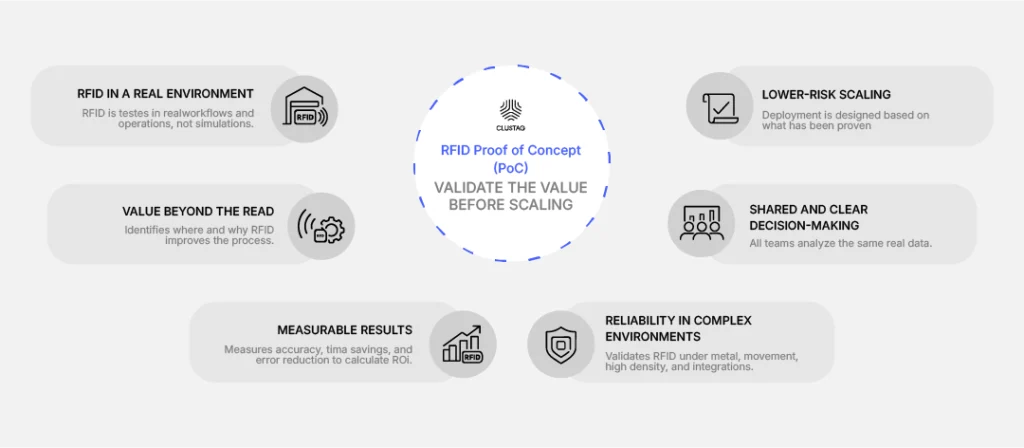
    We believe that any RFID initiative becomes stronger when it begins with a focused and well-structured Proof of Concept (PoC). A solid RFID proof of concept allows us to validate impact early, uncover operational realities, and accelerate decisions with measurable evidence.

    When designed with intention, it goes far beyond verifying that tags can be read. It confirms where, how, and why the technology generates value in real intralogistics and industrial operations. At Clustag RFID Solutions, we rely on this approach to help organizations gain clarity before committing to large-scale deployments.

    Understanding the Real Function of an RFID Proof of Concept

    A proof of concept is a time-bound evaluation phase in a real operating environment, using actual products, flows, and data. It avoids abstract simulations and brings visibility into how the technology behaves under everyday constraints.

    Testing in Real Operational Conditions

    We run tests directly inside the customer’s workflows, ensuring that read rates, antenna behavior, and tag performance can be measured accurately. This reflects real environmental challenges such as:

    • Mixed materials: How signals react to different packaging.
    • Moving assets: Tracking items at operational speeds.
    • Density and Metal: Overcoming interference in high-density or metallic environments.

    Revealing Measurable Operational Improvements

    Instead of validating only technological feasibility, we measure improvements in control, accuracy, processing times, quality checks, and error reduction. These insights allow teams to quantify ROI instead of relying on assumptions.

    Ensuring Alignment Across Stakeholders

    A proof of concept brings clarity to operations, IT, engineering, and management teams. Everyone sees the same data, the same workflow, and the same results, fostering informed decision-making and reducing internal friction.

    When an RFID Proof of Concept Delivers the Greatest Value

    While not every organization requires a PoC, it is often the fastest way to eliminate uncertainty and de-risk major decisions. It is particularly essential in the following scenarios:

    • Complex Reading Environments: Operations with metallic surfaces, liquids, or multiple SKU geometries benefit from optimizing the read setup with Clustag’s RFID Shield Technology and smart antenna configurations.
    • Evolving or Non-Standardized Workflows: If the operation experiences frequent changes, a PoC evaluates how easily RFID integrates without disrupting productivity.
    • Multi-System Architectures: Because Clustag integrates RFID data with ERP, WMS, or custom middleware, validating interoperability early avoids costly surprises later.
    • High-Impact Processes: Where shipping errors or stock discrepancies are costly, targeted testing confirms the economic value of automation.

    What We Evaluate During a Successful RFID Proof of Concept

    A well-designed PoC examines three complementary dimensions. Each one determines whether scaling the system will produce consistent, long-term value.

    1. Technical Validation

    We measure real read rates, stability, interference, tag suitability, and integrity of data flows. Using our Zentup software ecosystem, we adjust parameters to achieve predictable performance.

    2. Operational Validation

    We analyze how the technology fits the actual workflow. Does it reduce manual checks? Does it streamline inbound verification? Does it become intuitive for operators? These insights shape the final deployment blueprint.

    3. Data Validation

    We assess the visibility the system generates. Many organizations find the highest value here, as improved traceability directly supports quality, service levels, and loss reduction.

    Why Unclear Objectives Can Derail an RFID Proof of Concept

    One of the most common errors is starting without a defined question or success criteria. Without KPIs, teams struggle to interpret results, and the evaluation becomes subjective.

    A proof of concept does not slow the project; it accelerates execution by replacing assumptions with real evidence.

    To avoid this, we focus on:

    • Defining a Clear Hypothesis: Aligning on a specific outcome, such as improving shipment accuracy or accelerating inbound checks.
    • Avoiding Unnecessary Complexity: Overengineering can overwhelm the phase with features unrelated to the core goal. We keep the scope tight so results remain actionable and easy to interpret.
    • Capturing the Right Data: Knowing what success looks like helps us capture precise metrics through Zentup, ensuring consistency and comparability throughout the test period.

    Prioritizing Value Validation Over Technology Validation

    The most transformative insight from a PoC often has nothing to do with whether RFID “works.” Instead, it uncovers which part of the operation benefits the most from automation and real-time visibility.

    By validating value early, teams avoid scaling solutions that would not deliver meaningful improvements, saving both budget and time. This process helps discover unexpected areas, high-impact use cases, where the technology creates the most significant operational gains.

    From Targeted Testing to Full RFID Deployment

    Every layout, antenna position, software integration, and workflow is shaped by what we observe during the Proof of Concept. This ensures that the final solution mirrors real operational conditions, not theoretical ones.

    With Clustag’s RFID ecosystem, including rugged read points, controlled-shielding stations, dock validation systems, and Zentup middleware, scaling becomes faster, safer, and fully aligned with your operational needs.

    Take the Next Step

    If you want to validate RFID value in your own environment, we invite you to visit our Customer Experience Center to test your products, your workflows, and your operational challenges.

    Contact our team today to start designing your RFID Proof of Concept with us.

  • Store To Store Transfer As A Strategic Capability For Smarter Retail Operations

    Store To Store Transfer As A Strategic Capability For Smarter Retail Operations

    Store to Store Transfer (STS) is no longer a tactical workaround for inventory imbalances. It has become a strategic capability for retailers aiming to operate faster, leaner, and with full control at item level. When executed correctly, store to store transfer allows organizations to rebalance stock dynamically across the network, reduce stock-outs, and protect margins without relying on centralized redistribution flows. Retailers typically redistribute 10–18% of total inventory volume through store to store transfer, making STS a core operational lever rather than an exception.

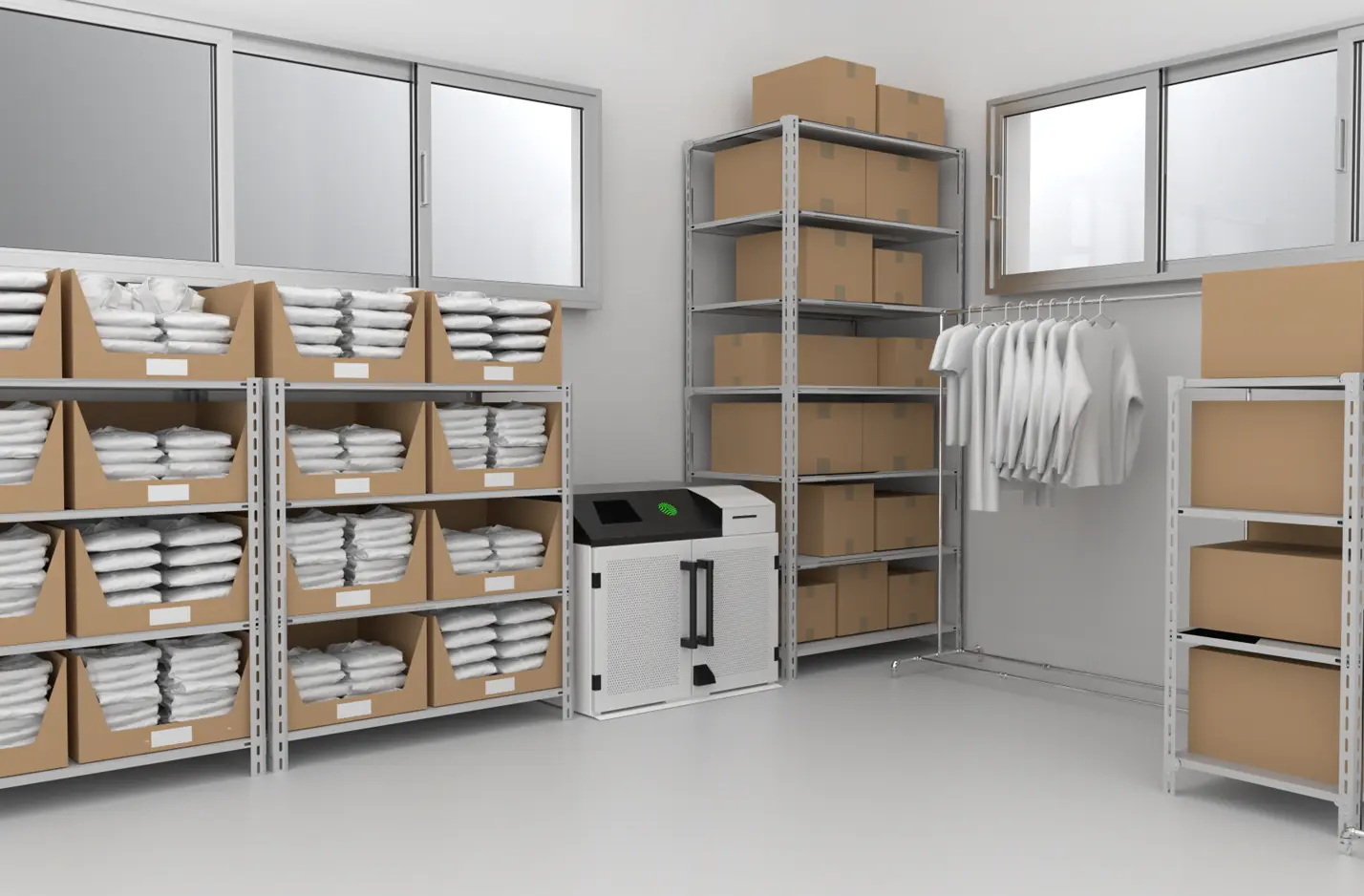
    In a context where demand volatility is the norm, the backstore plays a critical role. With the right Clustag RFID Solution, it evolves from a passive storage area into an active logistics node that enables accurate, scalable, and fully traceable store to transfer operations.

    Store to store transfer only works at scale when inventory data is trusted, real-time, and validated automatically at item level.

    Why Store to Store Transfer Fails in Traditional Backstore Operations

    Before RFID, STS transfer processes have typically been manual, reactive, and difficult to control. Compromised store-level inventory accuracy causes even well-designed allocation strategies to break down.

    Retailers commonly face structural backstore challenges that directly impact STS execution.

    Structural pain points limiting store to store transfer performance

    These issues are recurrent across fashion and sporting goods retail:

    • Phantom inventory at store level that leads to unreliable transfer decisions
    • Manual picking and shipping processes with high error rates
    • Lack of visibility for items in transit between stores
    • Excessive labor time spent on reconciliation and dispute resolution

    Without automation and real-time validation, STS becomes a cost center instead of a value driver.

    How RFID Transforms STS into a Data-Driven Process

    With Clustag RFID Solutions, store to store transfer shifts from a reactive correction mechanism to a proactive, intelligence-led flow. Each item is uniquely identified, and the backstore becomes a reliable, real-time stock pool that feeds transfer decisions with trusted data.

    This transformation is not only technological but also operational. RFID removes manual scanning, accelerates execution, and eliminates uncertainty at every step of the STS lifecycle.

    RFID-enabled STS in practice

    In an RFID-enabled environment, STS follows a predictable and scalable logic:

    • We continuously monitor inventory levels and sales velocity at store level.
    • The system automatically detects imbalances between stores.
    • We generate transfer proposals using real backstore inventory data.
    • Picking and outbound validation are executed automatically via RFID portals or shielded stations
    • Inbound validation at the receiving store occurs without manual scanning

    The result is a closed-loop STS process with full item-level traceability and real-time inventory synchronization across locations.

    Business Impact of STS Powered by RFID

    When accurate, automated data capture supports store‑to‑store transfers, organizations can clearly measure the operational and financial impact. The following table summarizes the typical outcomes observed when RFID is applied to STS scenarios.

    Operational challengeImpact with RFID-enabled store to transfer
    Inventory accuracy gapsInventory accuracy above 98%
    Frequent stock-outsStock-out reduction of up to 50%
    Manual handling effortManual handling time reduced by 70%
    Picking errorsPicking accuracy improved by 80%
    Excess markdownsMarkdown reduction of up to 30%

    These results demonstrate that STS is not just an operational fix, but a margin-protection mechanism when supported by the right technology.

    Accurate store to transfer execution directly translates into fewer markdowns, higher product availability, and lower operational friction.

    Why Clustag is Purpose-Built for Store to Store Transfer at Scale

    Clustag approaches STS as a system-level capability rather than a standalone use case. Through a co-innovation model, we adapt each deployment to the retailer’s layout, operational constraints, and throughput requirements.

    Key enablers include:

    • Clustag RFID Solutions for automatic validation of full boxes without manual scanning
    • RFID Shield Technology to eliminate cross-reads and ensure clean outbound confirmations
    • Seamless integration with ERP, WMS, and OMS ecosystems
    • Zentup data intelligence to turn item-level events into actionable transfer decisions

    This combination ensures that STS remains fast, accurate, and scalable as store networks grow and demand patterns evolve.

    Turning Store to Store Transfer into a Competitive Advantage

    Retailers that master store to store transfer gain a structural advantage. They respond faster to local demand, reduce dependency on safety stock, and unlock hidden inventory already present in the network.

    At Clustag, we help retailers validate these benefits in real operational conditions. We invite you to experience how STS can be executed with precision using your own products at our Customer Experience Center, or to contact our team to explore how RFID can reshape your backstore operations.

  • The 5 Errors That Ruin Your Inventory Accuracy (and how to fix them)

    The 5 Errors That Ruin Your Inventory Accuracy (and how to fix them)

    Inventory accuracy is the backbone of operational efficiency. However, many organizations still operate with unreliable stock data that quietly undermines performance, service levels, and bottom-line decision-making.

    “When teams cannot trust their inventory records, errors ripple through the entire supply chain, disrupting everything from replenishment to customer satisfaction.”

    Based on our experience in complex intralogistics environments, we’ve identified the five most common failures and the technical methodology to eliminate them for good.

    1. Fragmented Visibility: The Enemy of Inventory Accuracy

    Capturing data at isolated checkpoints creates “blind spots.” If your systems don’t communicate in real-time, the gap between physical stock and digital records grows exponentially as you scale.

    • The Problem: Manual updates and delayed synchronization.
    • The Solution: Establish a “Single Source of Truth.”
    • The Result: Total consistency across inbound verification, internal movements, and outbound flows.

    2. Uncontrolled RFID Environments (Stray Reads)

    RFID technology is powerful, but without proper wave containment, systems often capture unintended tags from nearby areas. These “stray reads” artificially inflate stock levels and erode trust in the system.

    Enhancing Inventory Accuracy through Controlled Environments

    ChallengeConsequenceClustag Solution
    Bouncing RF WavesReading tags outside the zoneRFID Shield Technology
    High Stock DensityFalse positivesValidated Read Zones
    Complex LayoutsData unreliabilityReal-world validation in Experience Centers

    3. Inconsistent Operational Processes

    Technology alone cannot guarantee inventory accuracy. When operators rely on manual workarounds or visual checks to resolve exceptions, human error inevitably undermines data reliability.

    • Standardized Workflows: We design RFID-enabled processes that ensure data is captured the same way every time.
    • Reduced Exceptions: Automated verification increases inventory accuracy by removing the need for manual intervention through Smart RFID Intralogistics.

    4. Overlooking RFID Tag Quality

    Not all RFID tags perform equally. A poorly placed or damaged tag is a frequent source of “hidden” inventory errors that gradually distort your records.

    “Inventory accuracy starts with reliable tagging at the source, before the item even hits the warehouse floor.”

    To ensure high-quality data, we recommend:

    1. Pre-deployment Testing: Validating read performance based on product material and packaging.
    2. Supplier Alignment: Ensuring inbound shipments meet your specific inventory accuracy requirements.

    5. Lack of Continuous Inventory Control

    Treating inventory checks as a “once-a-year” event allows discrepancies to accumulate unnoticed. Annual counts are not only disruptive but also incredibly costly.

    • Frequent Cycle Counting: RFID enables fast, non-intrusive inventory checks without stopping operations.
    • Strategic KPIs: With tools like Zentup, inventory reliability shifts from a reactive metric to a controllable performance indicator.

    Mastering Your Inventory Accuracy

    Accuracy isn’t the result of a single tool; it’s the harmony of hardware, software, and standardized processes. At Clustag, we help you eliminate these errors at the root so you can finally regain confidence in your stock data.

    Ready to reach 99%+ inventory accuracy?

    We invite you to visit our Customer Experience Center to test our solutions with your actual products.

  • Pallet Tracking: Automated Goods Receipt for High-Volume Warehouses

    Pallet Tracking: Automated Goods Receipt for High-Volume Warehouses

    In high-velocity logistics, the pallet is the fundamental unit of movement. However, traditional receiving processes often turn this unit into a bottleneck. Automated pallet tracking through RFID technology is becoming an essential capability for warehouses that need to scale without losing control over their inventory.

    “Manual goods receipt is no longer sustainable for high-volume operations. Transitioning to automated pallet tracking reduces processing time by up to 90% while ensuring 99%+ data accuracy.”

    By eliminating manual scans and paperwork at the dock, we allow facilities to maintain a continuous flow of goods from the moment they arrive.

    The Power of Automated Goods Receipt

    Traditional inbound processes rely on operators scanning individual barcodes or manually checking packing lists. This not only slows down the dock but introduces a high margin for human error.

    • Instant Verification: Capture the data of an entire pallet in seconds as it passes through the Inbound RFID Gate.
    • Real-Time WMS Update: Your inventory levels are updated the moment the pallet crosses the threshold.
    • Reduced Labor Costs: Reassign staff from repetitive scanning tasks to high-value warehouse operations.

    Efficiency Breakdown: Manual vs. RFID Pallet Tracking

    To understand the impact of automation, we must look at the operational friction of traditional methods compared to the Smart RFID Intralogistics standard.

    Operational PhaseManual Barcode TrackingClustag RFID Tracking
    Check-in Speed2–5 minutes per pallet< 15 seconds per pallet
    Data IntegrityProne to missed scans99.9% Read Accuracy
    Labor IntensityHigh (1 operator per dock)Low (Automated flow)
    VisibilityDelayed (batch updates)Instant (Real-time)

    Overcoming Technical Challenges: The “Stray Read” Solution

    One of the biggest hurdles in dense warehouse environments is reading the wrong pallet. If two forklifts pass near a portal, how do you know which data belongs to which shipment?

    • RFID Shield Technology: Our engineered portals contain RF waves strictly within the read zone, preventing “ghost stock” or cross-reads from adjacent docks.
    • Directional Logic: Integrated sensors detect the direction of movement, ensuring the system knows exactly if a pallet is entering or leaving the facility.

    Seamless Integration with Zentup Data Intelligence

    Data is only valuable if it is actionable. Automated pallet tracking is powered by Zentup, our data intelligence layer that bridges the gap between physical movement and your ERP.

    “Zentup doesn’t just collect data; it orchestrates your inbound flow, flagging discrepancies before the pallet even reaches the racking system.”

    By providing supervisors with real-time alerts and dashboards, we turn pallet tracking from a back-office task into a strategic performance indicator.

    Scale Your Inbound Operations

    Automated goods receipt is the first step toward a fully transparent supply chain. By combining rugged hardware with intelligent software, Clustag helps you eliminate the “black holes” in your warehouse receiving area.

    Ready to automate your pallet tracking?

    We invite you to visit our Customer Experience Center to test these solutions with your own pallets and see the speed of RFID in action.

  • How an RFID Portal Streamlines Outbound Logistics

    How an RFID Portal Streamlines Outbound Logistics

    In high-volume facilities, the difference between a smooth operation and a loading dock bottleneck often comes down to a matter of seconds. An RFID Portal enhances outbound logistics by making loading processes faster, more predictable, and significantly more efficient.

    “By automating the verification of pallets and shipments, we maintain a continuous operational rhythm while eliminating the manual friction that leads to costly bottlenecks.”

    Through our experience in industrial intralogistics, we have engineered a solution that protects productivity during peak seasons without adding complexity to the operator’s routine.

    Speeding Up the Pace of Outbound Operations

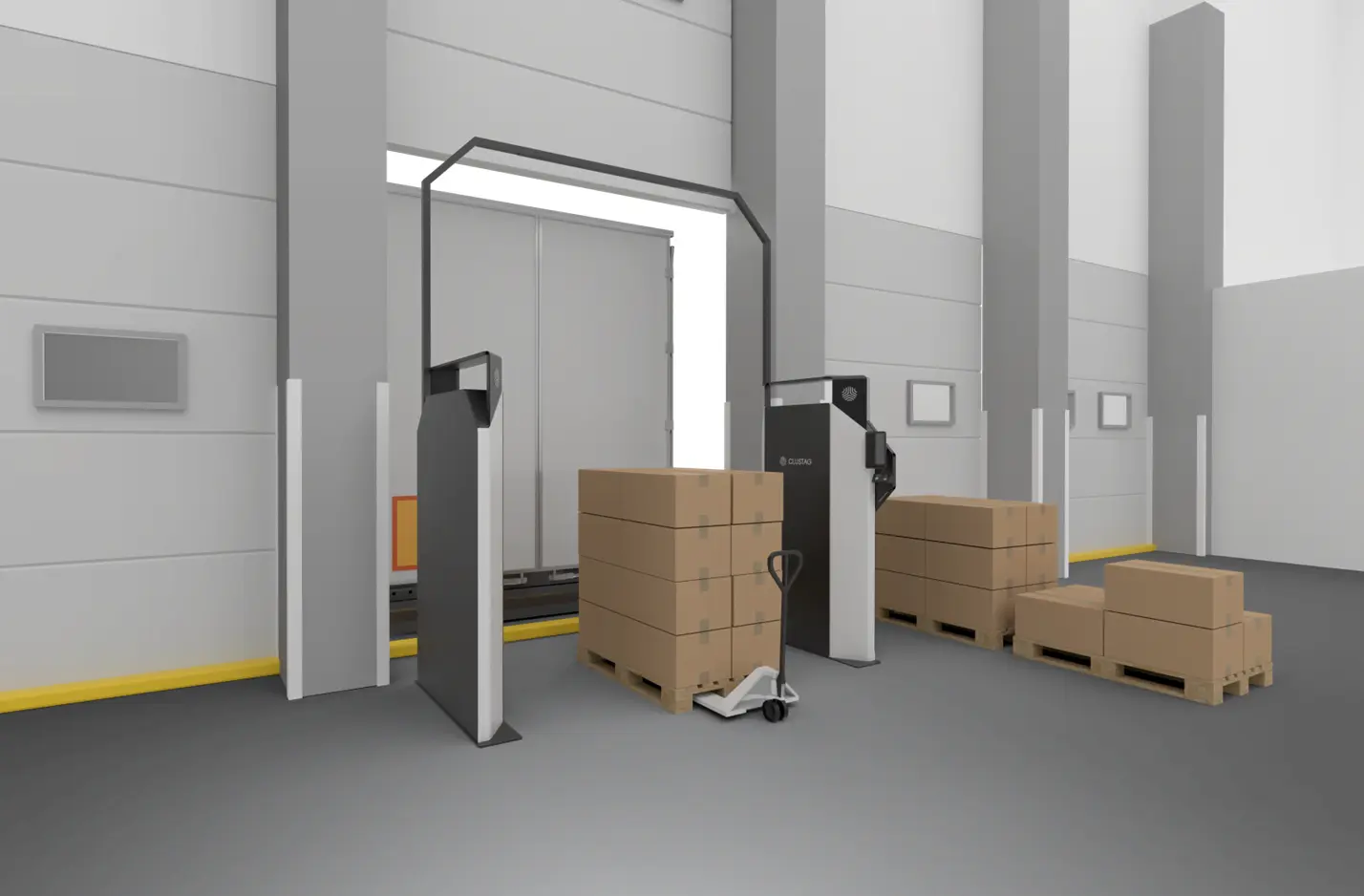
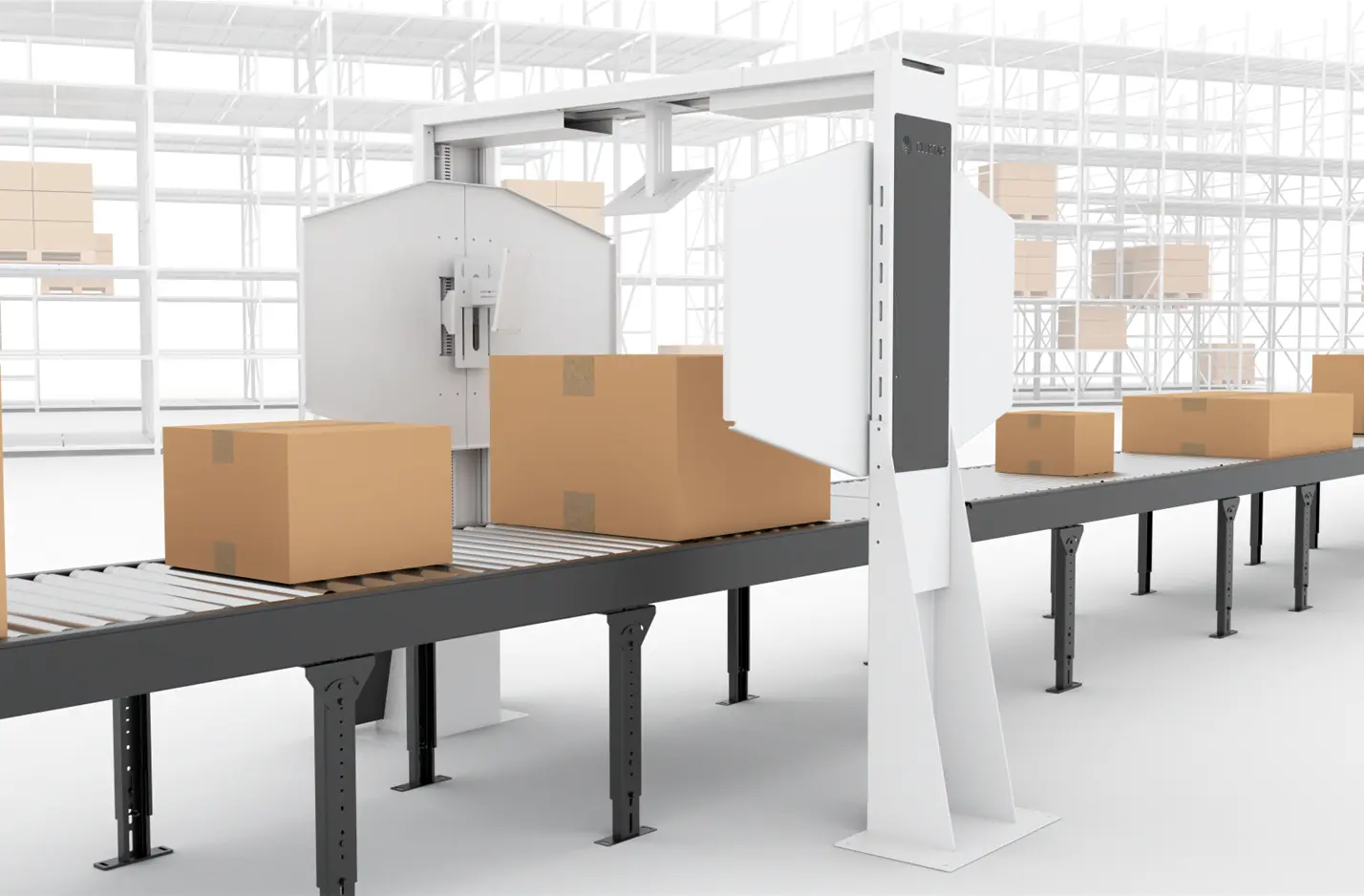
    When outbound activity intensifies, teams need systems that maintain momentum without compromising control. The RFID Portal confirms pallet composition directly at the loading dock, ensuring every order is ready to leave the facility.

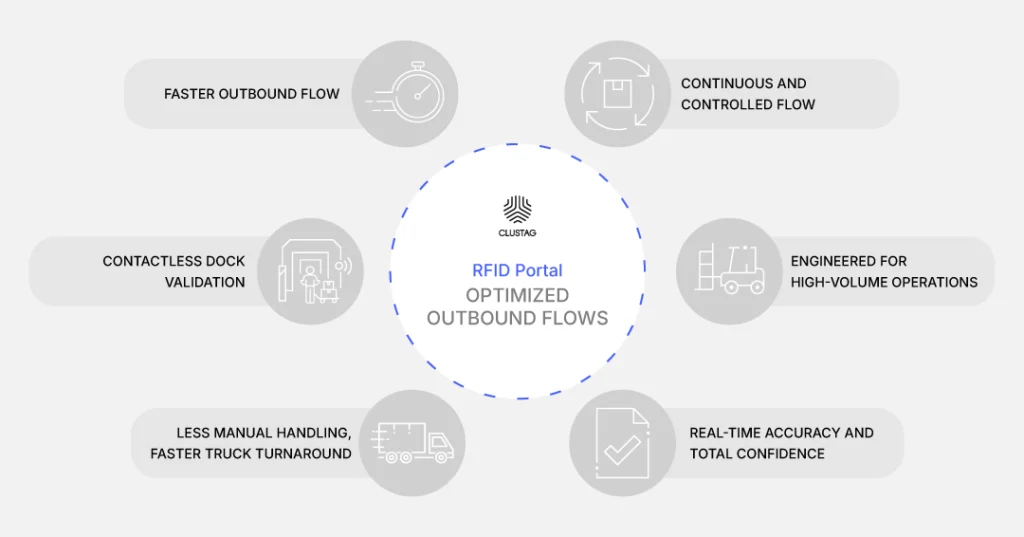
    • Zero-Touch Validation: Confirm outbound loads instantly without stopping for manual scans.
    • Continuous Flow: Operators maintain their natural workflow using forklifts or pallet jacks.
    • Accelerated Turnaround: Reduced loading times mean trucks leave on time, every time.
    Boost outbound speed with the RFID portal, streamlining loading‑dock workflows and reducing manual checks.

    Enhancing productivity with continuous flow control

    Maintaining a smooth operational flow requires a delicate balance between accuracy and speed. Our RFID Portal has been engineered to support high-throughput environments while providing clear, real-time feedback.

    Performance Breakdown: Manual vs. Automated Outbound

    FeatureTraditional Manual CheckRFID Portal Solution
    Verification SpeedSlow (item by item)Instant (full pallet in motion)
    Error MarginHigh (human error)Minimal (automated verification)
    Operator FeedbackDelayed / Paper-basedReal-time visual signals (Beacons)
    Congestion RiskHigh at loading docksSignificantly reduced

    Driving performance through engineered design

    To support operational speed, the RFID Portal integrates industrial‑grade components that ensure stability, durability and easy serviceability. This reduces downtime and allows facilities to maintain high availability during critical outbound windows.

    Built for high‑volume, industrial environments

    With heavy‑duty steel construction, wide pallet‑size compatibility and temperature‑resilient specifications, the system is designed to withstand the intensity of dock activities without loss of performance. This makes it a dependable asset for distribution centers, manufacturing plants and 3PLs that move large volumes daily.

    Integrating seamlessly into existing workflows

    The portal fits into manual loading processes without requiring changes to operator routines. Its design allows teams to continue using forklifts, pallet jacks or manual handling tools in a familiar way, while the system captures and validates data automatically. This balance between automation and operational flexibility enhances overall productivity without disrupting current methods.

    Boost outbound speed with the RFID portal, streamlining loading‑dock workflows and reducing manual checks.

    Empowering teams with real‑time accuracy

    By delivering accurate reads in real time, the RFID Portal gives supervisors and control room teams immediate visibility over outbound execution. This allows faster decision‑making, earlier detection of anomalies and better alignment between WMS data and physical movement.

    “Accuracy at the final stage of the operation is your best defense against claims, rework, and expensive reverse logistics costs.”

    Every time a pallet passes through the portal, our Zentup data intelligence platform validates the load against the shipping order, ensuring that only the correct units reach the trailer.

    Take Control of Your Loading Dock

    The RFID Portal isn’t just a piece of hardware; it’s a strategic asset for distribution centers and 3PLs that move large volumes daily. By combining Smart RFID Intralogistics with rugged industrial design, we help you master your outbound flows.

    Ready to boost your outbound speed and accuracy? We invite you to visit our Customer Experience Center to see the RFID Portal in action with your own pallets and products.

  • Understanding the Digital Product Passport and Why It Matters for Connected Supply Chains

    Understanding the Digital Product Passport and Why It Matters for Connected Supply Chains

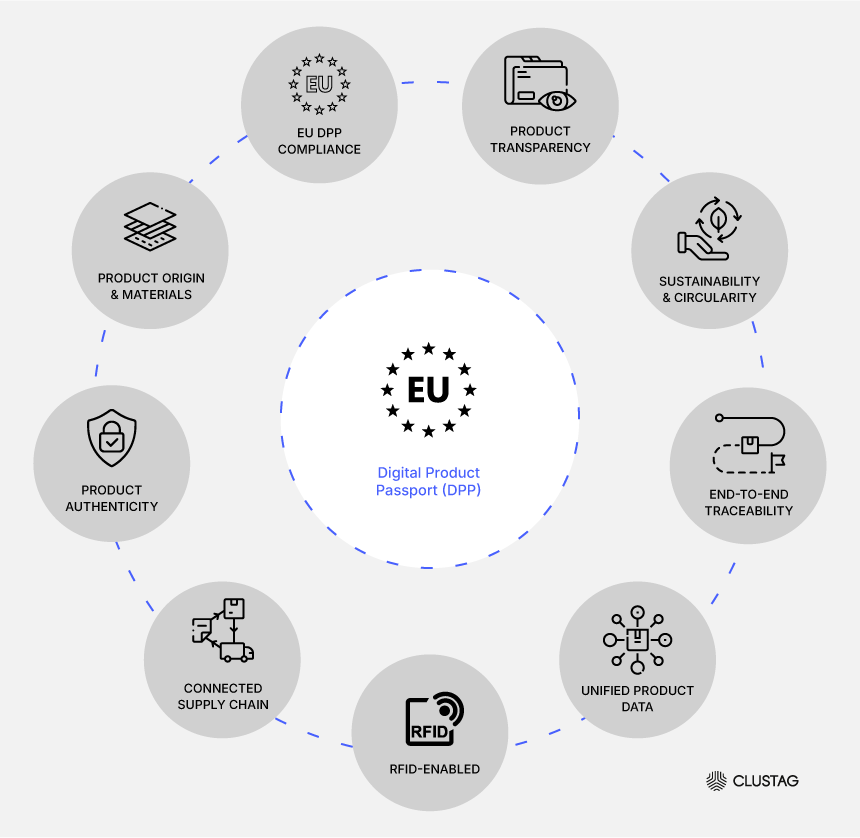
    The Digital Product Passport (DPP) is no longer a futuristic concept, it is becoming a regulatory reality. As the European Union moves toward a more circular economy, the ability to track every item’s lifecycle, from raw materials to recycling, is becoming a mandatory requirement for global brands.

    “The Digital Product Passport is not just a compliance hurdle; it is a strategic tool that turns product transparency into a long-term competitive advantage.”

    At Clustag, we help organizations navigate this transition by using RFID technology as the physical bridge to the digital data required by the DPP.

    What is the Digital Product Passport?

    The Digital Product Passport is a structured collection of product-related data. It provides detailed information on sustainability, origin, material composition, and end-of-life handling. By scanning a product, stakeholders can access its entire “digital identity.”

    What a Digital Product Passport contains

    A Digital Product Passport typically includes product origin, material composition, certifications, manufacturing data, repair history and end‑of‑life guidance. It consolidates information that was traditionally fragmented across systems, creating a single reliable source of truth that improves decision‑making at every stage of the supply chain.

    Who needs to comply with Digital Product Passport regulations?

    The “economic operator” placing a product on the EU market is responsible for ensuring its validity. This includes European manufacturers and retailers. It also affects non-European organizations that export products to the EU. Essentially, any business operating within the European market must prepare for these new regulatory standards.

    Why industries are adopting it

    The Digital Product Passport supports regulatory compliance, enhances product authenticity, strengthens recycling initiatives and enables more transparent business practices. Companies adopting it are better positioned to navigate evolving sustainability frameworks and respond to customer expectations for trust and visibility.

    Strategic Benefits of the Digital Product Passport

    Implementing a Digital Product Passport offers more than just legal safety; it provides deep insights into the supply chain that were previously unreachable.

    DPP Impact: From Compliance to Performance

    Benefit AreaImpact of Digital Product PassportClustag Solution
    SustainabilityVerifiable carbon footprint and material originItem-level lifecycle tracking
    Brand IntegrityReal-time authentication and anti-counterfeitSecure RFID digital ID
    Operational FlowFull visibility from manufacturing to retailSmart RFID Intralogistics
    Customer TrustDirect access to product history via smartphoneSeamless data integration

    How RFID Powers the Digital Product Passport

    At Clustag, we bring our expertise in item‑level RFID encoding, verification and traceability to help organizations adopt Digital Product Passport‑ready workflows. Our ecosystem of hardware and software enables accurate data capture from the point of manufacture to the final distribution stages. Solutions such as our RFID tunnels, verification stations and Zentup platform ensure end‑to‑end visibility, enabling businesses to meet the data quality expectations required for DPP readiness.

    Our role in enabling connected operations

    We design and deploy RFID solutions that capture every relevant event across industrial, retail and logistics environments. This ensures that the Digital Product Passport is continuously updated with data that is precise, complete and aligned with global standards. Our systems support EPC‑based encoding and interoperable data models that simplify integration with existing platforms.

    Why this approach creates long‑term value

    By combining advanced RFID technology with structured traceability frameworks, we help businesses reduce errors, automate verification, strengthen compliance and optimize operations. This creates a future‑ready ecosystem where product information becomes a strategic asset instead of a fragmented challenge.

    Preparing for a Transparent Future

    If you want to experience how RFID traceability elevates the Digital Product Passport in real operations, we invite you to meet us in person. Bring your own products to our Customer Experience Center and see how our technology captures data seamlessly across every step of the supply chain. Or, if you prefer, contact us through our online form and we will help you build a tailored roadmap for Digital Product Passport adoption.

  • RFID Chargeback Reduction: The Perry Ellis Success Story

    RFID Chargeback Reduction: The Perry Ellis Success Story

    Achieving RFID chargeback reduction is one of the most effective ways to protect margins in high‑volume distribution. Improving outbound accuracy remains critical in sectors where retailer compliance is strict. In the fashion and apparel industry, even small mismatches generate substantial deductions.

    In this post, we explore how Perry Ellis achieved measurable savings by implementing high‑accuracy RFID validation reinforced with our Smart RFID Solutions. From real‑time control to automated discrepancy detection, we share how this transformation works for any fast‑paced distribution operation.

    The Financial Drain: Why Accuracy Matters

    Improving outbound validation does more than enhance operational quality. It directly protects profitability and stabilizes revenue streams. Before diving into the transformation, it is essential to understand why financial leakage occurs so frequently in B2B distribution.

    “Retailers apply automatic deductions that can reach up to 20% of the invoice value, eroding margins month after month.”

    The Core Challenges

    • Manual Bottlenecks: Manual validation steps often remain the final barrier before shipping.
    • Outbound Velocity: Even with strong picking processes, the last validation point is typically the weakest.
    • Compliance Friction: Recurring financial losses due to strict retailer requirements.

    The Transformation: From Manual to Automated

    Perry Ellis operates a 600,000 square‑foot distribution center in Dublin, Georgia. While their pick‑to‑light system performed well, the post‑picking validation process needed a robust, automated alternative.

    FeatureLegacy Manual ProcessClustag Smart RFID Solutions
    SpeedSlow / Dependent on staffHigh-speed (Conveyor speed)
    AccuracyProne to human errorItem-level EPC validation
    VisibilityLimited to barcode scansReal-time item-level visibility
    Financial RiskHigh (Frequent chargebacks)Low (Automated discrepancy detection)

    The Technology Stack

    To address the issue, Perry Ellis deployed a fully integrated RAIN RFID validation system built on our Smart RFID Solutions ecosystem:

    1. Hardware: RFID tunnels and automated rejection lines.
    2. Software: Zentup middleware integrated with Manhattan WMS.
    3. Process: Real-time verification of every box before shipping.

    Quantifiable Success: The Financial Outcomes

    The power of the system lies in the seamless integration between hardware, software, and operational flow. With Zentup acting as the central intelligence layer, Perry Ellis gained real‑time visibility that directly protects financial performance.

    Key Performance Indicators (KPIs)

    • 17% Reduction in shipping discrepancies from day one.
    • Thousands of dollars saved every single month.
    • Immediate ROI through the elimination of retail penalties.

    Strategic Advantage: Once accuracy stabilizes, the savings compound, freeing up capital for further automation. Improved accuracy also enhances the perception of reliability among retail partners.

    Ready to Protect Your Margins?

    If you want to see firsthand how Clustag RFID Solutions and our high‑accuracy validation tunnels can help your operation eliminate shipping errors and unlock measurable monthly savings, we are ready to help.

  • Beyond Cycle Counts How Always on RFID Is Transforming Inventory Accuracy in Warehouses

    Beyond Cycle Counts How Always on RFID Is Transforming Inventory Accuracy in Warehouses

    Achieving rfid inventory accuracy is becoming essential for every logistics operation that demands real time visibility, seamless traceability and higher fulfillment performance. As warehouse complexity increases and customer expectations accelerate, we cannot afford delays, blind spots or manual counting processes that interrupt workflows and create inconsistent data. With Clustag’s RFID intralogistics ecosystem, we elevate inventory management to a continuous, automated and highly reliable process that empowers us to operate with precision at every movement of the product.

    Elevating warehouse operations with RFID inventory accuracy

    Ensuring rfid inventory accuracy allows us to move from periodic cycle counts to uninterrupted visibility. When inventory data remains updated throughout inbound, outbound and picking activities, we eliminate operational inefficiencies and unlock a new level of responsiveness.

    Replacing manual cycle counts with continuous RFID visibility

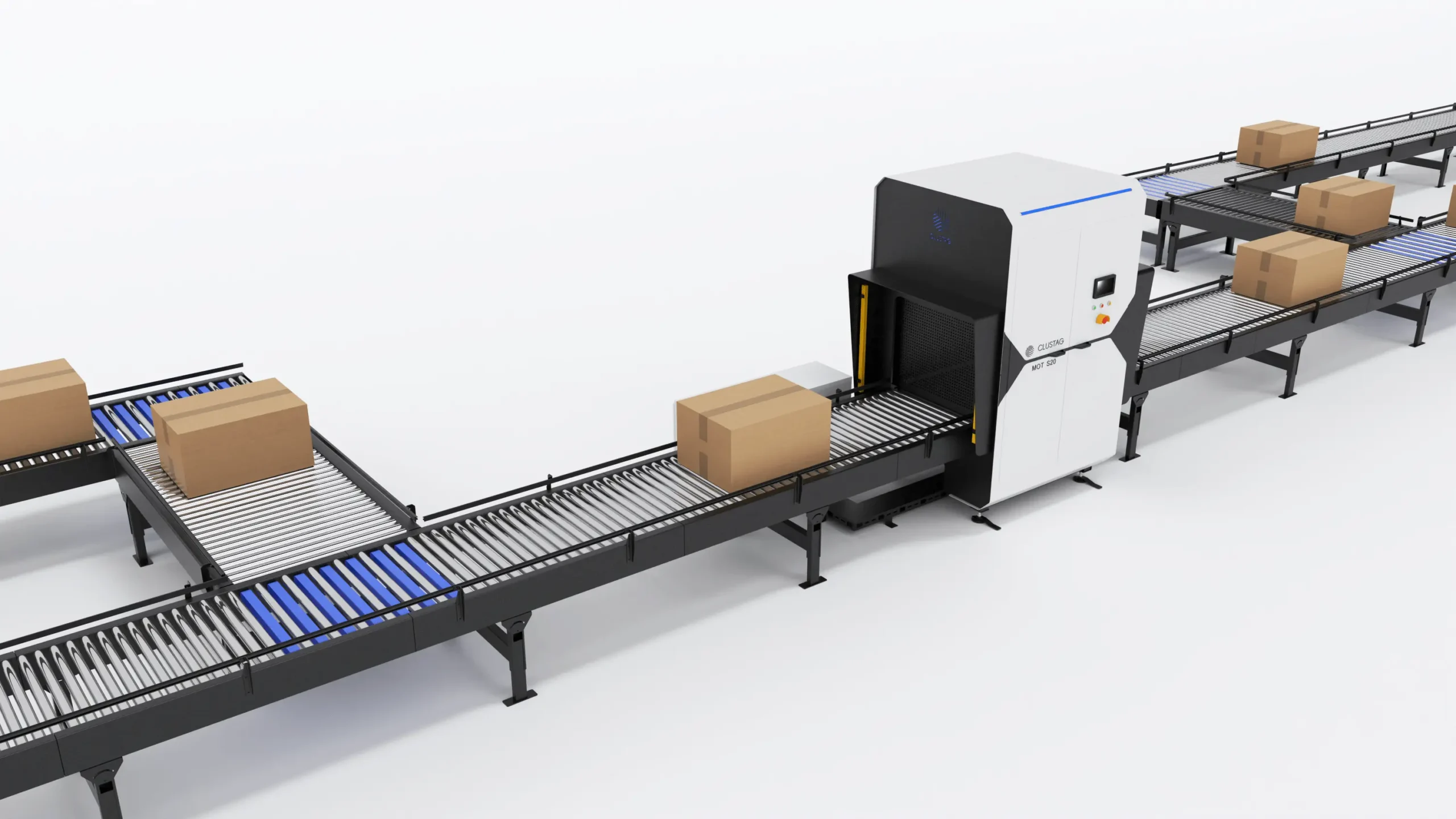
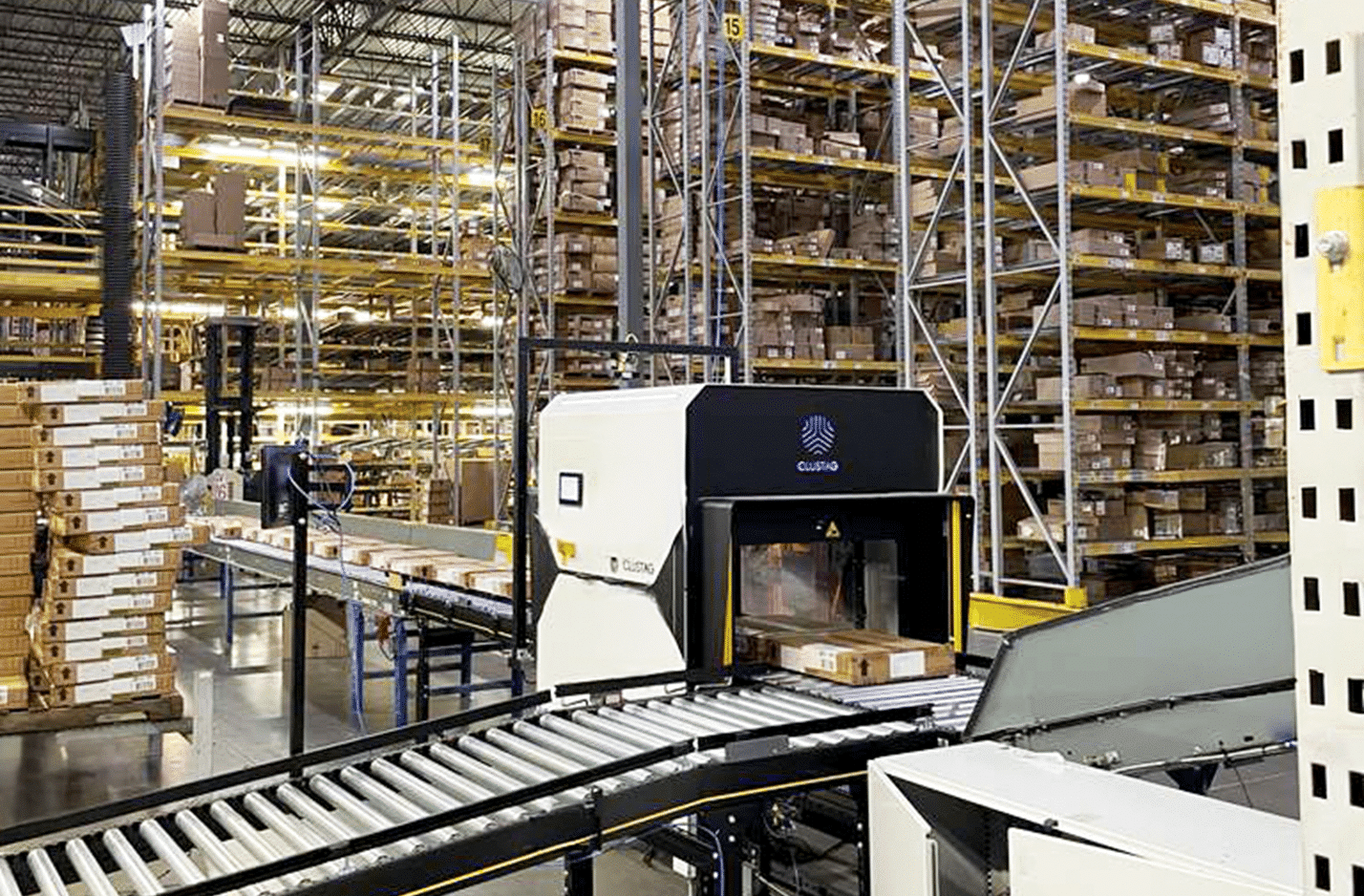
    Manual cycle counting consumes time, resources and disrupts operations. By deploying Clustag’s RFID tunnels, MOT Stations and AS/RS integrated read points, we achieve automated item level reading that updates records instantly. These systems capture hundreds or even thousands of tags in seconds, enabling nonstop verification without slowing conveyors or teams on the floor.

    Strengthening data quality through controlled reading environments

    Our solutions are engineered with mechanical shielding that isolates the reading area, preventing stray reads and ensuring precise EPC detection. This design guarantees consistent rfid inventory accuracy throughout high volume processes, from inbound reception to outbound validation.

    Improving operational flow through real time synchronization

    ZENTUP, our RFID data platform, ensures that every read is validated and transmitted in real time to WMS, ERP or WCS systems. This constant synchronization minimizes discrepancies, streamlines root cause analysis and enhances decision making across the warehouse.

    Enhancing logistics processes through accurate RFID data

    Building rfid inventory accuracy into daily operations improves performance in every stage of the warehouse. Our ecosystem is adaptable to automated systems, manual workflows and high speed conveyor environments.

    Streamlining inbound verification

    Inbound operations benefit greatly from automated content checks. With our RFID tunnels and read points, we validate quantities, detect encoding issues and prevent supplier errors before they impact stock availability. This accuracy strengthens downstream picking and shipping processes.

    Accelerating picking workflows with real time item insights

    Whether in shelf to person, person to good or ASRS environments, instant item level visibility enhances picking efficiency. Operators confirm item correctness without manual scanning, reducing exceptions and improving throughput.

    Securing outbound accuracy and reducing costly returns

    Outbound control becomes more reliable when shipments are validated automatically. Our stations verify carton and pallet content with high accuracy, helping prevent mispicks, chargebacks and customer dissatisfaction. With rfid inventory accuracy as a baseline, fulfillment becomes faster and more consistent.

    Building sustainable and resilient warehouse operations through RFID inventory accuracy

    Real time RFID visibility not only optimizes day to day operations but also supports long term efficiency and sustainability initiatives.

    Reducing operational waste and unnecessary movements

    Every incorrect shipment or inbound discrepancy adds avoidable labor, transport and energy consumption. Accurate RFID data minimizes rework and prevents inefficiencies from escalating through the supply chain.

    Ensuring long term reliability through robust electromechanical design

    We design and manufacture our hardware in house, ensuring durability and performance in demanding industrial environments. This engineering approach guarantees that rfid inventory accuracy remains consistent across continuous high speed operations.

    Supporting end to end traceability across the supply chain

    From source tagging to last mile delivery, RFID delivers a continuous view of inventory. With accurate data driving forecasting, replenishment and fulfillment strategies, we help companies meet service levels while reducing operational risks.

    Transforming warehouse intelligence with RFID inventory accuracy

    As warehouses evolve toward higher automation and real time operations, achieving rfid inventory accuracy becomes the foundation for resilient, efficient and scalable logistics. Our RFID intralogistics ecosystem enables companies to work with confidence, speed and traceability at every stage of material flow.

    We invite you to experience our RFID solutions firsthand at our customer experience center. Bring your own products and validate how our technology performs under real operating conditions. You can also contact us through our form and we will help you shape the ideal roadmap toward real time, automated warehouse visibility.

  • Clustag and QodeNext strengthen RFID at source adoption across South Asia

    Clustag and QodeNext strengthen RFID at source adoption across South Asia

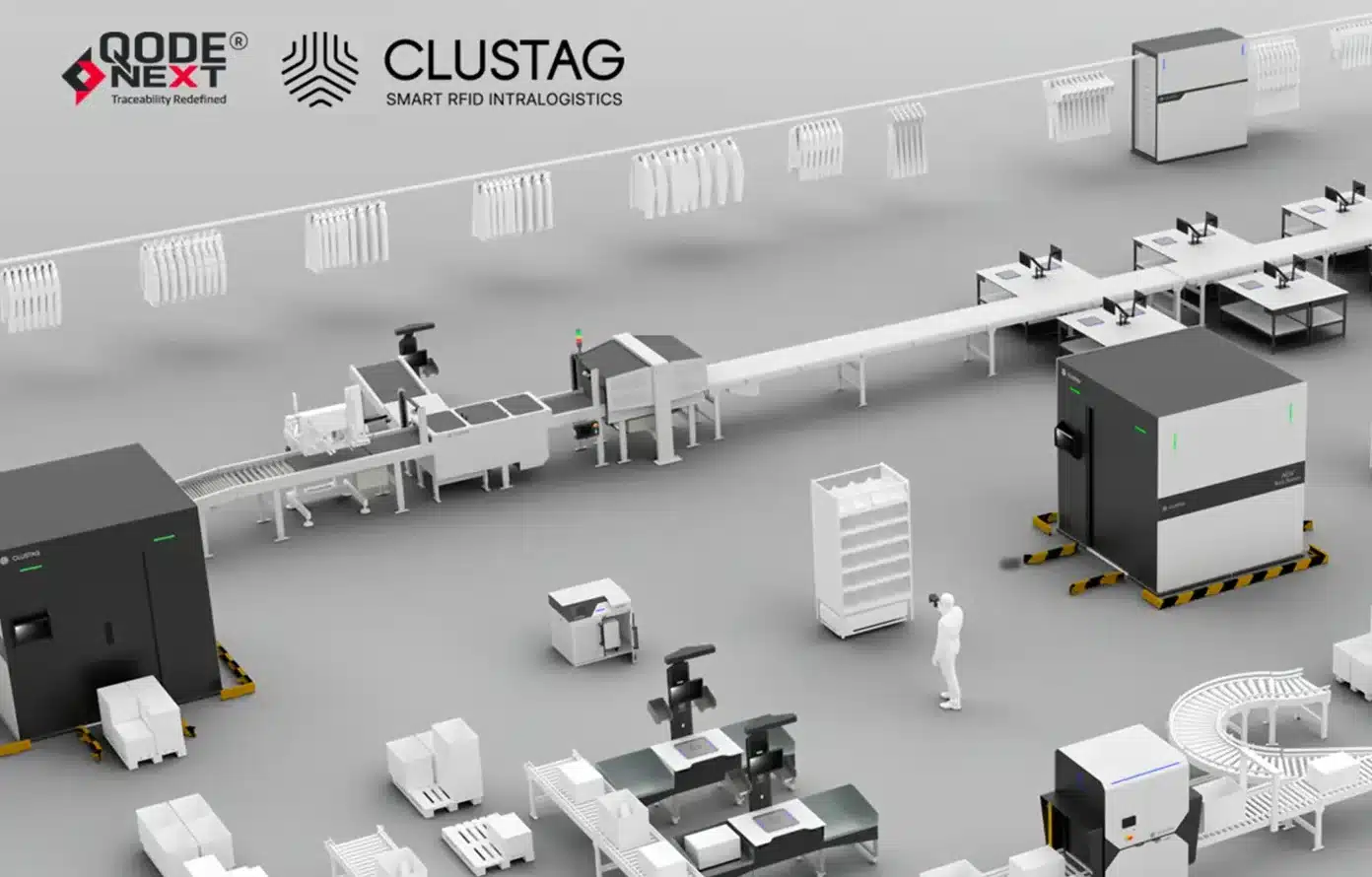
    South Asia rfid adoption is advancing quickly across major manufacturing hubs. We see a strong need for accurate item‑level identification from the start. This new alliance with QodeNext strengthens our ability to support manufacturers at source. We work together to deliver reliable encoding, verification and automation right where production begins. Our goal is to help companies improve accuracy, reduce errors and build a more connected supply chain. Keep reading to discover how this partnership shapes the region’s digital transformation.

    A strategic partnership accelerating regional transformation

    This alliance expands our capacity to deploy Smart RFID Solutions across South Asia. We combine our hardware, software and intralogistics expertise with QodeNext’s strong local presence.

    Stronger capabilities for manufacturers

    QodeNext has deep experience in AIDC, RFID, automation and integration. This expertise supports factories moving toward more digital operations. We add our item‑level encoding, RFID tunnels and verification systems to their portfolio. This combination strengthens accuracy at source and ensures every tag meets global standards.

    Bringing our ecosystem to key production hubs

    South Asia concentrates a large share of global fashion, sports and home goods manufacturing. We bring our full ecosystem to these environments. Our tunnels, workstations and Zentup middleware improve speed, reliability and real‑time control from day one of production.

    A unified approach to Smart RFID Solutions

    Our partnership addresses real operational needs with practical, scalable tools.

    Encoding and verification built for reliability

    We deliver encoding stations, RFID tunnels and manual workstations for flexible operations. These tools reduce errors and support consistent quality. They also help companies prepare for new regulatory models, including Digital Product Passport requirements. This improves transparency and strengthens south asia rfid adoption across the region.

    Local support and turnkey deployment

    QodeNext provides strong on‑site service. Their teams offer installation, integration and maintenance near the factories. This local support accelerates adoption and ensures systems operate smoothly at scale.

    Expanding our partner network and regional footprint

    This alliance fits our strategy to grow in fast‑moving markets and build reliable regional partnerships.

    Supporting large‑scale deployments

    QodeNext becomes our official partner in India and South Asia. Together we enable large deployments in factories, distribution centers and retail environments. This expansion supports the rapid growth of south asia rfid adoption and strengthens regional supply chains.

    A shared vision for traceability

    Both companies believe in innovation and reliability. We work together to bring accurate, automated and visible operations to manufacturers. This collaboration improves upstream processes and supports global brands that depend on precise encoding at source.

    Connecting with us to explore next steps

    If you want to explore how Smart RFID Solutions can improve your supply chain, we invite you to contact us through our website’s form. You can also visit our customer experience center to test our solutions with your own products. We would be pleased to guide you through your next step toward a more efficient and traceable operation.