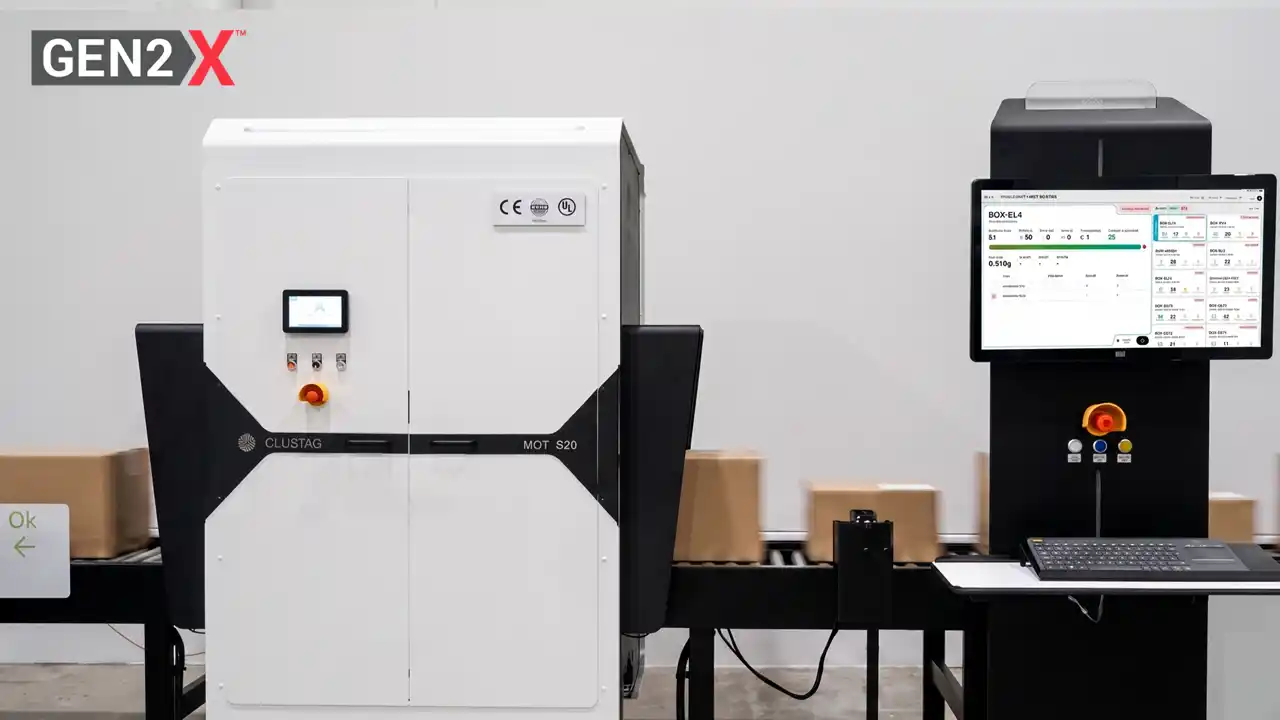
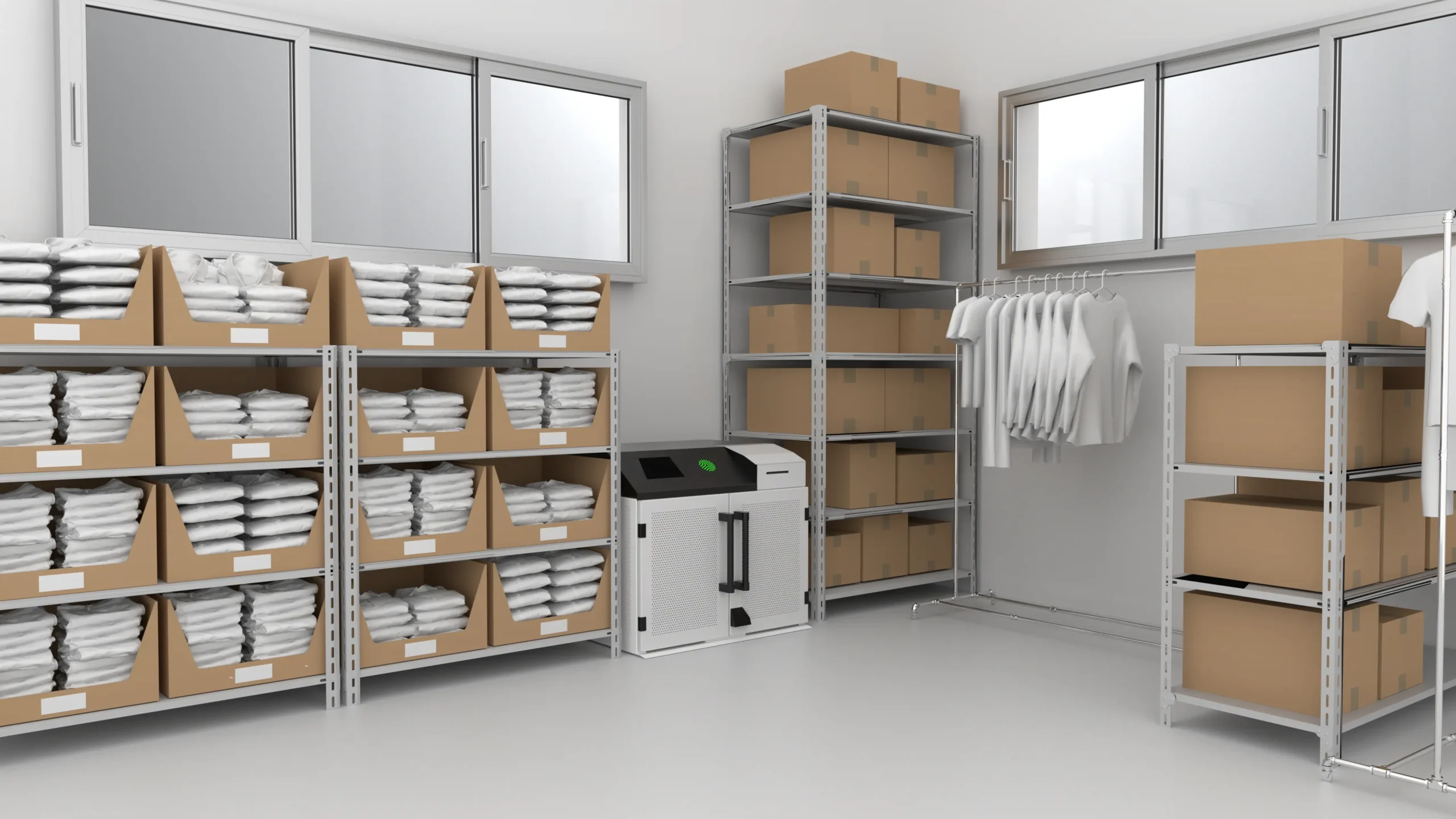
Gen2X with RAIN RFID tunnel enables near‑perfect item-level verification when operating under optimized tagging conditions and controlled RF environments. At Clustag, we design our RFID tunnel solutions to consistently deliver 100% accuracy when tags, materials, and encoding parameters are properly defined for each use case.
Clustag RAIN RFID tunnel stations powered by Impinj R700 readers and Gen2X technology provide high-performance verification even in demanding intralogistics scenarios. However, achieving maximum accuracy is not only about the tunnel itself, it also depends on how items are tagged, the materials involved, and the selection of tag providers.
Near‑perfect RFID accuracy is not accidental. It is the result of combining high-performance tunnel design with the right tagging strategy and material compatibility.
Item-level verification in high-density RAIN RFID tunnel environments
When a leading enterprise retailer needed to verify outbound with more than 99% accuracy in under 1.5 seconds, its existing RFID system achieved only 91.7% accuracy.
Across warehouses and distribution centers, RAIN RFID systems transform operations by turning items into data-producing units. This enables:
Automated supply chain processes
Reduction of shipping errors
Faster omnichannel fulfillment
However, achieving consistent performance is increasingly complex. Items are densely packed, tags are smaller, and RF conditions are more challenging, directly impacting read reliability.
Controlled RF environments in RAIN RFID tunnels with Gen2X
To address these challenges, we upgraded the Clustag MOT S20 RFID tunnel with Gen2X technology. Combined with RFID Shield Technology, this creates a highly controlled RF environment inside the RAIN tunnel.
This enables us to:
Minimize RF interference
Reduce stray reads
Improve tag readability
Ensure precise read-zone confinement
As a result, cartons and packages move continuously through the tunnel without manual intervention, increasing throughput while maintaining consistent read accuracy.
Achieving near-perfect accuracy in real operating conditions with Gen2X
To validate performance, Clustag and Impinj tested the solution under real-world conditions replicating enterprise operations.
Each carton contained 60 RFID-tagged metal glass items, densely packed and randomly oriented. The system had to verify all items in less than 1.5 seconds while exceeding 99% accuracy.
This scenario is particularly challenging due to:
Metal interference affecting RF signals
Multipath reflections
Random tag orientations
High tag density interactions
These conditions represent one of the most demanding environments for RFID verification systems.
Performance comparison in high-density environments
The upgrade from a non‑Gen2X system to a Gen2X-enabled solution resulted in a clear improvement in performance.
Metric
Previous solution (non-Gen2X)
With Gen2X (R700 + M800 tags)
Average accuracy
91.7%
Near 100%
Test runs
100 runs
100 runs
Perfect accuracy runs
Not specified
90 out of 100
Performance in dense environments
Limited
Reliable
These results confirm that item-level outbound verification can achieve near‑perfect accuracy in real-world intralogistics environments.
By upgrading to Gen2X-enabled readers and tags, verification accuracy reached near‑100%, with perfect verification in 90 out of 100 test runs.
As Manolo Reguart explains:
Using Gen2X-enabled Impinj R700 readers and M830 tags, our Clustag MOT S20 can read densely packed tags on hard-to-read metal items with near-100% accuracy. This incredible performance enables high-volume logistics operations to deliver superior shipment verification and achieve new levels of efficiency.
Gen2X feeding enterprise systems with item-level data
With Gen2X, item-level data flows continuously into enterprise systems, enabling real-time visibility and traceability across operations.
The Clustag MOT S20 integrates seamlessly into warehouse workflows, supporting:
This ensures every item entering or leaving a facility matches expected records.
Without accurate and automated verification, organizations face:
Shipping errors
Operational bottlenecks
Inventory discrepancies
Reduced customer satisfaction
Automating logistics workflows at scale
Automating business-critical processes such as shipment verification requires near-perfect accuracy, especially in high-throughput RAIN RFID environments.
With Gen2X-enabled solutions and Clustag RFID tunnels, we deliver:
Reliable performance in complex RF conditions
Autonomous verification processes
Scalable operations for high-volume logistics
This ensures consistent and accurate data capture across every movement in the supply chain.
Experience Clustag RAIN RFID solutions
Automating outbound verification requires accuracy without compromise, even in the most challenging conditions. The Clustag MOT S20 with Gen2X shows how autonomous RAIN RFID Solutions can meet these demands at scale.
We invite you to discover how Clustag can support your intralogistics operations. Visit our Customer Experience Center or fill in our contact form to test the solution with your own products and explore near‑perfect item‑level verification in action.
The loading dock is often the most overlooked area of the warehouse, yet it is arguably the most critical. It represents the “moment of truth” where all previous efforts planning, picking, and packing must culminate in a perfect delivery.
Historically, dock validation have been treated as a simple transition point. However, in today’s high-velocity logistics environment, the dock has evolved into a strategic decision node. Any failure here a missed pallet, a wrong truck assignment, or a manual scanning error cascades into customer dissatisfaction and significant operational costs. At Clustag, we transform this “operational bottleneck” into a streamlined, automated, and data-driven process.
“The dock is no longer just a place where goods pass through; it is the final filter for quality and the last chance to ensure that what was promised is what is delivered.”Luis Rius, CEO at Clustag
Why Dock Operations Often Break Down
Traditional dock management relies heavily on manual intervention and visual checks. Even in highly automated warehouses, the “last yard” of the loading process often remains a manual blind spot. When shipping volumes peak, these manual processes inevitably lead to friction.
Common challenges at the loading dock:
Loading errors: Pallets loaded onto the wrong carrier or route.
Manual bottleneck: Drivers and operators waiting for manual paperwork or barcode scans.
Inbound/Outbound friction: Lack of real-time synchronization between the warehouse and the transport fleet.
Data gaps: A loss of visibility the moment a pallet leaves the packing station but hasn’t yet entered the truck.
Without automated validation, the dock remains a source of risk rather than a source of value.
How RFID Transforms Dock Validation into a Traceable Flow
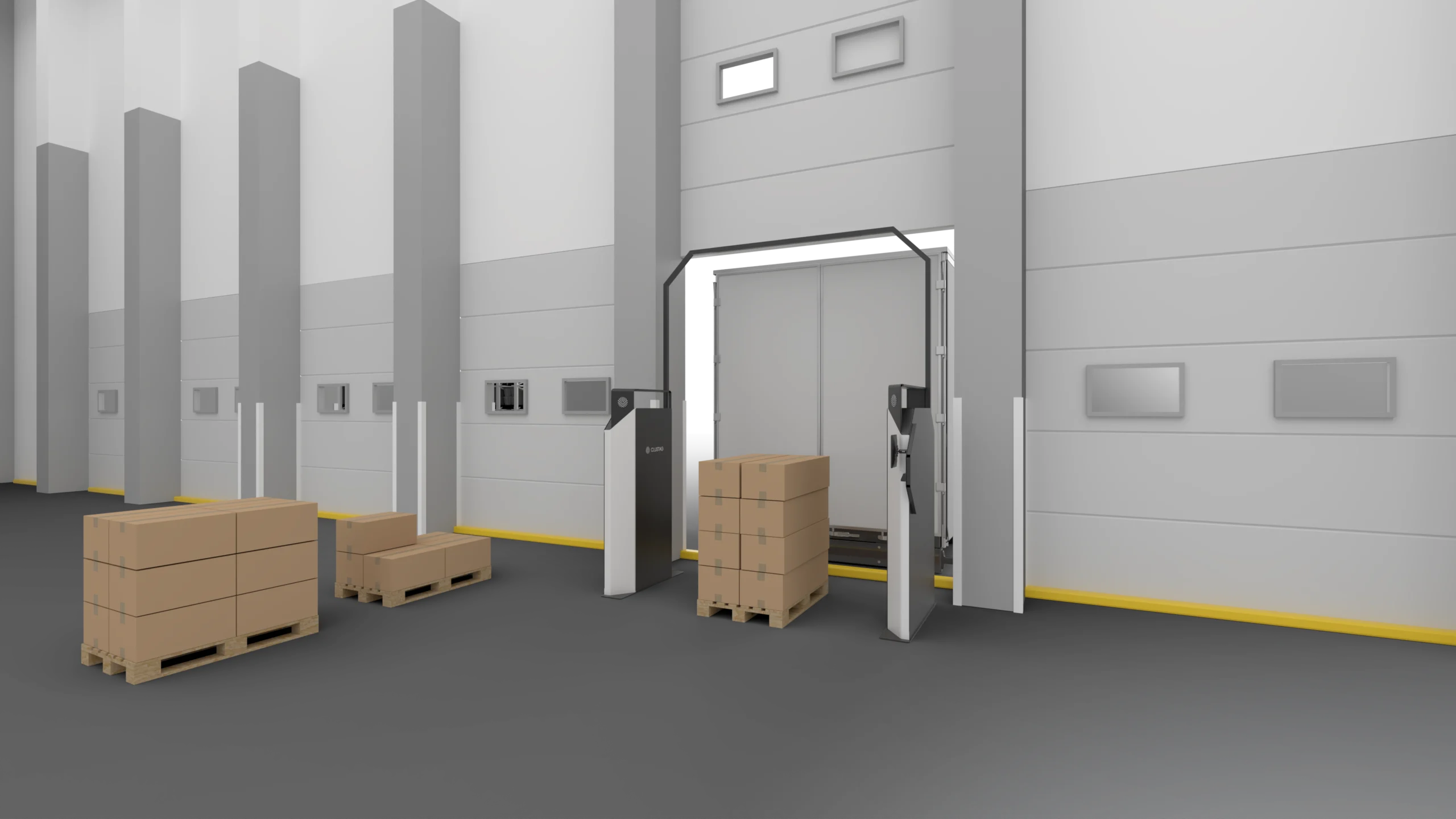
With Clustag RFID Solutions, dock shipping validation shifts from a fragmented manual task to a fully automated, item-level flow. By deploying RAIN RFID portals at each dock door, we eliminate the need for operators to stop and scan.
The process is designed for maximum velocity:
Automatic Identification: As a forklift or pallet jack passes through the RFID portal, every item is identified instantly without line-of-sight.
Real-Time Validation: Our software, Zentup, cross-references the RFID data with the shipping order in the WMS/ERP. If a pallet is heading to the wrong dock, the system triggers an immediate alert.
Carrier Coordination: The system records the exact timestamp of departure, providing irrefutable proof of delivery to the carrier and closing the traceability loop.
Business Impact of Automated Dock Validation
When accurate, automated data capture supports the outbound process, the results are measurable across both financial and operational KPIs.
Operational Challenge
Impact with Clustag RFID
Shipping Errors
Reduction of mis-shipments to near 0%
Loading Speed
Up to 80% faster dock turnaround times
Labor Costs
Elimination of manual scanning and double-checks
Dispute Management
Digital “Proof of Load” reduces carrier claims
Why Clustag is Built for Scalable Dock Automation
Our approach to dock validation goes beyond hardware. We provide an integrated ecosystem that handles the complexity of high-density RFID environments:
Zentup Integration: Our platform acts as the brain, translating billions of RFID reads into actionable warehouse events for your ERP or WMS.
Global Scalability: Whether you manage a single facility or a global network, our solutions provide a standardized data model for all shipping operations.
Turning Dock Management into a Competitive Advantage
Optimizing the loading dock is no longer optional. It is a fundamental pillar of a modern, resilient supply chain. By replacing manual uncertainty with RFID-driven precision, retailers and logistics providers can ensure that their outbound flow is as fast and accurate as their automated storage systems.
At Clustag, we don’t just provide technology; we provide the visibility and control needed to master the final step of the logistics journey.
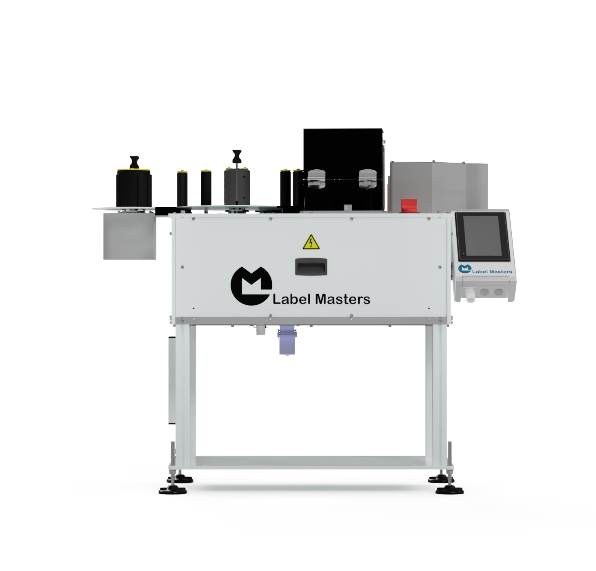
Labelmasters strengthens our position as an end-to-end technology partner in logistics traceability, expanding our portfolio with advanced automated labeling solutions and reinforcing our vertical integration strategy.
With this acquisition, we continue executing our growth and consolidation roadmap. Focused on building leading platforms through the integration of complementary capabilities. The addition of Labelmasters allows us to extend our value proposition from intelligent label creation to real-time data capture and exploitation.
Why Labelmasters strengthens our integrated model
This operation enables us to gain greater control over traceability projects from their earliest stages, reduce reliance on third parties for critical components, and reinforce recurring business linked to consumables and specialized services.
Labelmasters contributes deep expertise in automated labeling solutions for high-demand logistics environments. Including distribution centers, automated warehouses, parcel operations, and high-speed sorting processes.
“This move represents a natural step in Clustag’s evolution toward a vertical integration model. It allows us to enter projects earlier, capture more value across the chain, and offer a truly differentiated proposition: from the physical label to exploitable data in our customers’ systems,” says Luis Rius, CEO of Clustag.
The integration also opens new opportunities for accelerated innovation in labeling technologies within a broader technological platform.
“Joining Clustag is a unique opportunity to accelerate the development of innovative labeling solutions and bring them into a reference technology platform. The complementarity of capabilities and the shared growth vision will deliver a more complete and differentiated offering to the market,” adds Giuseppe Vernone, founder of Labelmasters.
Creating more value for logistics and retail customers
This acquisition further positions us as a strategic technology partner for retail, and distribution companies, strengthening our ability to deliver integrated, high-performance traceability and automation solutions.
If you want to explore how our integrated approach can support your logistics strategy, contact our team or visit our Customer Experience Center to see our solutions in action.
Working with an RFID consultant is the most effective way to start an RFID project with clarity, confidence, and alignment. Before technology decisions are made, before tags or readers are discussed, organizations need a structured and assisted process that focuses on understanding their real operational pain points.
At Clustag, we approach RFID as a collaborative journey. We believe successful projects begin with listening, not pitching, and with guiding decision-makers through a process where information flows both ways.
Understanding pain points through assisted RFID consulting
Every company faces different operational challenges. Inventory inaccuracies, lack of visibility, process inefficiencies, or data silos often look similar on the surface, but their root causes are rarely the same.
That is why working with an RFID consultant is not about applying a predefined solution. It is about jointly identifying where friction exists and whether RFID is the right tool to address it.
RFID only delivers value when it solves a clearly defined business pain, not when it is implemented for technology’s sake.
Our consulting process is designed to help organizations articulate their challenges and translate them into tangible use cases. We bring industry experience, but we never assume. Instead, we work side by side with operations, logistics, and innovation teams to connect strategy with reality.
Free RFID consulting meetings as a first, pressure-free step
One of the most important aspects of our approach is accessibility. All initial meetings with our RFID consultants are free, because we believe that exploring RFID should never feel like a commitment.
These sessions are intended to serve as a first point of contact, where companies can openly discuss their situation without pressure to move forward.
What happens during a free RFID consulting session
Each meeting is structured but flexible, allowing room for dialogue and feedback. During these conversations, we typically focus on:
Understanding your current operational workflows
Identifying pain points and inefficiencies
Discussing where RFID could add measurable value
Sharing relevant insights from similar projects
Clarifying doubts around feasibility, costs, and risks
Even if you are not ready to make a decision, you leave the meeting with clearer information and a better understanding of your options.
A two-way conversation built on feedback
Many organizations have experienced technology conversations that feel one-sided. We actively avoid that dynamic.
Our RFID consulting sessions are designed as two-way conversations, where feedback plays a central role. We listen carefully, challenge assumptions when needed, and adapt the discussion based on your priorities.
This feedback-driven approach ensures that solutions are shaped collaboratively and that no critical detail is overlooked.
Assisted decision-making throughout the RFID journey
RFID adoption is rarely immediate. Most companies go through stages of exploration, validation, and internal alignment. Our role as RFID consultants is to assist throughout that journey, regardless of timing.
How assisted RFID consulting reduces uncertainty
An assisted process means you are never left alone navigating technical complexity. We provide structured guidance around:
Selecting the right RFID tags for your environment
Designing reliable read zones and infrastructure
Managing data capture and interpretation with Zentup
Preventing stray reads using RFID Shield Technology
Aligning technical choices with business objectives
The goal is not speed, but informed decision-making.
Common challenges
How assisted RFID consulting helps
Unclear ROI
We link pain points to measurable outcomes
Technical complexity
We translate RFID into business language
Data overload
Zentup turns raw reads into actionable insight
Read accuracy risks
RFID Shield Technology mitigates stray reads
This structured support helps organizations move forward with confidence, even if the final decision comes later.
Being listened to leads to better RFID solutions
Listening is not a soft skill in RFID projects. It is a technical necessity.
When consultants deeply understand your operation, they can design solutions that work in real environments, not just in controlled scenarios. This is how Clustag RFID Solutions are built: by combining consulting expertise, field experience, and technology into a cohesive approach.
Our consultants do not push predefined architectures. They co-create solutions that respect your constraints, scale with your growth, and integrate seamlessly into your processes.
From consulting to next steps through RFID testing
After the initial consulting phase, the natural next step is validation. RFID should always be tested before full deployment.
Once you have met with an RFID consultant and defined your use case, we typically move into proofs of concept and controlled testing using your own products and real operational conditions.
This phase allows organizations to:
Validate read accuracy and performance
Compare different tag and reader configurations
Evaluate data quality and filtering with Zentup
Identify risks early and address them proactively
Testing transforms assumptions into evidence and ensures that decisions are based on real data, not expectations.
If you are considering RFID, the smartest first step is not purchasing hardware. It is starting a conversation.
We invite you to schedule a free meeting with one of our RFID consultants, share your challenges, and explore together whether RFID is the right solution for your organization. You can also visit our Customer Experience Center to test solutions with your own products and see RFID in action.
Understanding your pain is the first step to solving it.
Testing RFID Solutions are the difference between a system that looks good on paper and one that performs reliably on the shop floor from day one. In complex industrial environments, RFID success is not defined by hardware specifications alone, but by how well the solution behaves under real operational conditions such as materials, density, speed, and RF interference.
When we treat testing as an optional step, hidden costs surface after go‑live. When we structure testing, make it transparent, and align it with operations, we turn it into a powerful cost‑control mechanism that protects the entire investment lifecycle.
Testing is not a technical detail. It is how we replace assumptions with evidence before go-live.
Why testing RFID protects total cost, not just performance
In RFID projects, the most expensive problems rarely come from choosing the wrong reader or tag. They come from discovering too late that the solution does not fit the real operation. This mismatch triggers rework, delays, and loss of internal confidence.
Structured testing RFID solutions shift risk to the earliest possible phase. Instead of correcting issues after installation, testing validates performance before commitment, following the same logic used in mature industrial validation frameworks such as Factory Acceptance Testing and Site Acceptance Testing.
The hidden cost of skipping RFID testing
When validation is skipped, costs do not disappear. They simply reappear later in more disruptive ways.
Operational risk
What happens without testing
How testing RFID solutions help
Hardware misalignment
Antennas, shielding, or mechanics must be reworked
Early validation confirms physical setup before deployment
This is why we understand testing not as an engineering task, but as financial risk management.
The three RFID testing proposal that enable confident decisions
Not all tests deliver the same level of certainty. Mature RFID testing solutions are structured in different options, each one reducing uncertainty and strengthening decision quality.
Each proposal builds on the previous one, moving from feasibility to operational proof.
Proposal 1: Testing with real items in a controlled environment
This establishes the minimum acceptable baseline. Real customer products are tested at the supplier’s facilities to validate how materials, packaging, and tag placement affect performance.
At this level, testing delivers:
Validation with real materials, not generic samples
Initial performance metrics such as read rates and edge cases
Early identification of risks linked to density or throughput
This is how we align testing with factory acceptance logic, grounding expectations before anything reaches the site.
Proposal 2: Witnessed testing with customer teams present
In the second proposal, the same tests are performed, but with a crucial difference: operations and engineering teams are present to observe how results are achieved.
This transparency matters because:
Teams understand test conditions, not just final numbers
Performance expectations are aligned across stakeholders
Practical questions are addressed early, not after go-live
Witnessed testing significantly reduces ambiguity and builds internal confidence ahead of approval.
Proposal 3: Proof of concept in the real operation
A proof of concept is the most conclusive validation stage. The customer tests the RFID solution directly within their workflow and facilities, under real operating conditions.
This proposal answers the only question that truly matters:
Will this RFID solution work reliably in our day‑to‑day operation?
While PoCs require engineering effort and structured measurement, their cost is negligible compared to correcting a failed deployment later.
How Clustag applies testing RFID solutions in real projects
At Clustag, testing RFID solutions are not treated as optional add-ons. They are integrated into how we deliver reliable outcomes.
RFID Shield Technology to mitigate stray reads in high-density and high-throughput environments
This combination allows us to transform testing from a technical checkbox into a decision-making framework that protects operations, budgets, and timelines.
Turning testing into competitive advantage
We build reliable RFID decisions on evidence, not assumptions. When testing is structured and transparent, we do not just buy a system.
They are buying confidence in performance from day one.
If you want to validate RFID solutions using your own products, processes, and constraints, we invite you to experience our approach first-hand.
The RFID industry continues to evolve rapidly. And when combined with advanced robotics, its impact on retail and logistics becomes even more powerful.
The upcoming RFID Summer Meetup, organized by PAL Robotics and with the collaboration of Clustag, Nedap, STC Retail,Teamwork Commerce and Pal Robotics , is set to become a key event for understanding the future of intelligent automation.
A Meeting Point for the RFID Ecosystem
The RFID Summer Meetup brings together industry professionals, technology experts, and companies to share insights, real use cases, and emerging trends.
In a landscape where:
Real-time visibility is essential
Automation drives efficiency
Technology integration (RFID, AI, robotics) is accelerating
Events like this play a crucial role in connecting innovation with real-world applications. Industry gatherings focused on RFID often stand out because they showcase practical implementations and measurable results, not just concepts.
Why Attend an Event Like This?
Beyond networking, events like the RFID Summer Meetup deliver real value to companies exploring or scaling RFID initiatives.
1. Learn from real use cases
Understand how companies are applying RFID across retail, logistics, and supply chain operations.
2. Evaluate the ROI
See how RFID drives measurable improvements in efficiency, accuracy, and cost reduction.
3. Discover new technologies
Explore innovations such as autonomous inventory robots and intelligent data-driven systems.
4. Connect with the ecosystem
Meet technology providers, integrators, and decision-makers in one place.
The Role of Data in the Future of Operations
RAIN RFID is no longer just an identification technology. It is now a core system for capturing real-time data at scale.
When combined with:
Autonomous robotics
Artificial intelligence
Advanced management systems
It enables a new generation of operations that are:
More accurate
More agile
Fully connected
This evolution is reshaping how companies manage inventory and make strategic decisions.
A Chance to Move Your RFID Strategy Forward
The RFID Summer Meetup is more than just an event. It is an opportunity to:
Stay up to date with industry trends
Identify improvement areas in your operations
Validate your RFID strategy
Get inspired by real-world implementations
In today’s competitive environment, staying current with RFID and automation technologies is no longer optional.
About the Partners
The RFID Summer Meetup is driven by a collaboration between leading technology companies that are shaping the future of retail and supply chain automation.
These partners bring together expertise in RFID, robotics, and retail technology to showcase real-world applications and innovation.
PAL Robotics
A global leader in service robotics, PAL Robotics develops advanced robotic platforms designed to operate in real-world environments. Their RFID-enabled solutions, such as autonomous inventory robots, help retailers improve stock accuracy and operational efficiency.
Nedap
Nedap is a recognized reference in RFID technology for retail. Their solutions focus on enhancing inventory visibility, reducing losses, and enabling smarter store operations through real-time data.
STC Retail
STC specializes in source tagging and RFID implementation at scale. They help brands and retailers integrate RFID from the origin, enabling end-to-end traceability across the supply chain.
Teamwork Commerce
Teamwork Commerce provides unified retail technology solutions that connect in-store and digital operations. Their platform helps streamline commerce processes while improving the customer experience.
Together, these companies represent a strong ecosystem focused on driving innovation, efficiency, and data-driven decision-making in retail and logistics.
Shaping the Future of Retail and Logistics
The combination of RFID and robotics is redefining the future of retail and logistics. Events like the RFID Summer Meetup highlight a clear shift toward smart, automated, and data-driven operations.
If you’re looking to take your operations to the next level, this is the kind of event that can help you get there.
Post‑Pick Verification is the last and most critical control point to ensure order accuracy before shipments leave the warehouse. Supported by advanced Clustag RFID Solutions, this control layer enables warehouses to validate every picked order at item level, in real time, before errors propagate downstream. At this stage, even a single unchecked mistake can cascade into returns, chargebacks, and lost customer trust. That is why we see Post‑Pick Verification not as a safeguard, but as a strategic enabler of operational excellence, especially in high‑volume, omnichannel environments. In modern intralogistics, speed without certainty is a liability. By validating every picked order against a trusted digital twin, operations eliminate human error, protecting service levels and margins at scale.
Post‑Pick Verification transforms quality control from a manual bottleneck into a real‑time, data‑driven guarantee of accuracy.
Why Traditional Pick Validation Fails in High‑Volume Operations
Many operations rely on a combination of:
Manual checks
Barcode scans
Weight validation
Random audits
These methods can work in low‑volume or low‑pressure environments. But in high‑throughput warehouses, they struggle with three structural limitations.
1. Manual checks don’t scale
As volumes increase, operators are under pressure to move faster. Manual validation becomes superficial or is skipped altogether.
2. Barcodes validate what is scanned, not what is inside
If an item isn’t scanned, scanned twice, or swapped, the system has no awareness of the discrepancy.
3. Errors propagate silently
A picking error that isn’t detected immediately flows downstream:
It reaches packing
Then outbound
Then transportation
And finally, the customer
Each step multiplies the cost of that single mistake.
What Is Post‑Pick RFID Verification?
Post‑pick RFID verification is a validation step placed immediately after picking and before packing. At this point, the picked items pass through an RFID‑controlled verification zone such as:
Anywhere order accuracy directly impacts customer trust and cost control.
Stop Errors Where They Are Still Easy to Fix
If your outbound team is acting as your quality department, the problem isn’t outbound. It’s timing. Post‑pick RFID verification gives operations what they actually need:
Early visibility
Immediate correction
Predictable outbound flows
And most importantly: Errors that never reach the customer.
If you want to experience Post‑Pick Verification with your own products and real order profiles, we invite you to visit our Customer Experience Center or get in touch through our contact form. Testing accuracy in real conditions is the fastest way to see how errors can be eliminated before they ever reach outbound.
Inventory management is one of the factors with the greatest impact on a company’s profitability. Stock inaccuracies, out-of-stock situations, excess inventory and limited visibility into product locations create hidden costs that directly affect sales, customer service and cash flow.
In the food industry, where product availability, traceability and expiration date control are critical, these inefficiencies can lead to significant financial losses. As supply chains become more complex and consumer expectations continue to rise, having accurate, real-time inventory information has become a strategic necessity.
From increasing inventory accuracy from 85% to 99.9% to reducing stock counts from 80 minutes to just a few seconds, the food industry is entering a new operational era. At Clustag, we see first-hand how RFID technology has evolved from an emerging innovation into a proven strategic tool that helps retailers and food manufacturers reduce costs, minimize waste and improve product availability.
The Main Challenges of Traditional Inventory Management
Many organizations still rely on manual processes, spreadsheets or barcode-based systems to manage inventory. While these methods have supported operations for years, they become increasingly difficult to scale as product portfolios expand, logistics networks grow and traceability requirements become more demanding.
Inventory Count Errors and Stock Discrepancies
One of the most common challenges is the mismatch between physical inventory and system records. These discrepancies are often caused by:
Human errors during stock counts.
Unrecorded product movements.
Incomplete scans.
Delayed data updates.
Time-consuming operational processes.
When inventory data becomes unreliable, purchasing, replenishment, order fulfillment and production planning decisions are affected.
Lack of Visibility Into Product Locations
Not knowing exactly where products are located leads to unnecessary searches, replenishment delays and operational inefficiencies. In the food sector, where product availability directly impacts sales and customer satisfaction, limited visibility can quickly translate into financial losses.
Slow Inventory Processes
Traditional inventory counts often require significant time and labor. Companies frequently dedicate valuable resources to counting, auditing and reconciling inventory data, only to end up working with information that may already be outdated.
Stockouts and Excess Inventory
Poor inventory management typically creates two costly scenarios: products are unavailable when customers need them, or excess inventory ties up working capital and increases storage costs.
What Companies Need to Keep Inventory Under Control
Modern inventory management requires much more than knowing how many items are stored in a warehouse. Businesses need complete visibility into product location, movement and status at any given time.
An effective inventory management strategy should provide:
Real-time visibility
Item-level traceability
Automated data capture
ERP and WMS integration
Reliable information for decision-making
Scalability without increasing operational workload
This is precisely where RFID delivers a significant advantage.
RFID as a Real Cost-Saving Driver
RFID-based inventory management has evolved far beyond basic process automation. According to GlobalData’s Food in the Digital Age report, large food companies managing inventories valued at approximately €93 million can achieve annual savings of up to €32.5 million through RFID-enabled inventory systems.
These savings are driven by two key factors. First, RFID dramatically reduces the labor and time required for inventory counts. Second, it helps lower working capital requirements by improving stock turnover and product availability throughout the supply chain.
RFID-enabled processes can shorten inventory holding cycles from four weeks to just three. That one-week reduction is particularly valuable for fresh and perishable goods, helping companies free up cash flow while improving shelf availability.
“With the growth of ecommerce, the expansion of convenience retail and the increasing demand for inventory transparency, more food companies are viewing RFID as a strategic investment that directly strengthens competitiveness and consumer trust,” says Manolo Reguart from Clustag.
Why Traditional Methods No Longer Work
As ecommerce and convenience retail continue to grow, manual inventory systems and barcode-based processes are reaching their limits. These methods struggle to deliver the speed, detail and transparency required by today’s food supply chains.
RFID changes this by providing automated, continuous visibility across warehouses, distribution centers and stores. At Clustag, we combine RFID Solutions with the data intelligence capabilities of Zentup to transform raw inventory data into actionable operational insights.
Aspect
Traditional Inventory Management
RFID-Based Inventory Management
Data capture
Manual or barcode-based
Automated and continuous
Stock visibility
Limited and periodic
Real-time
Inventory accuracy
Around 85%
Up to 99.9%
Inventory count time
Approximately 80 minutes
Just a few seconds
Traceability
Partial
End-to-end item-level
Decision-making
Reactive
Data-driven and proactive
The difference extends far beyond reading speed. While traditional methods rely on periodic inventory counts, RFID provides continuous visibility into product location and availability.
This is not simply an operational improvement. It represents a completely different approach to inventory management built on accurate, real-time information.
Reducing Food Waste with RFID
Food waste remains one of the industry’s biggest challenges. According to industry research, food waste costs the grocery retail sector billions of dollars every year.
RFID-based inventory management helps address this challenge by providing real-time visibility into both product location and product status.
Retailers can:
Identify products approaching their expiration date
Automate discount and promotional strategies
Prioritize redistribution or donations
Remove products before they become unsellable
The impact goes beyond cost reduction. Better control over shelf life also contributes to sustainability goals and helps companies optimize inventory turnover.
At Clustag, we reinforce this capability with RFID Shield Technology, specifically designed to minimize inaccurate reads in dense retail and warehouse environments. This ensures that decisions are based on reliable data, even in challenging food industry scenarios.
For organizations operating in the food industry, this level of visibility can significantly reduce waste while improving product availability.
Complete Traceability from Source to Point of Sale
Food safety regulations and consumer expectations have made end-to-end traceability a business requirement.
RFID enables item-level tracking throughout the entire product journey:
Receiving → Storage → Picking → Shipping → Point of Sale
Unlike traditional systems, RFID makes it possible to identify and locate individual products across the supply chain within seconds. This capability is particularly valuable during recalls, food safety incidents and compliance audits.
With Clustag RFID Solutions, organizations can achieve:
Faster and more accurate recalls.
Reduced financial and reputational risk.
Greater compliance with food safety regulations.
Increased transparency for consumers and partners.
By integrating RFID information into business processes, companies can transform traceability from a regulatory obligation into a strategic advantage.
Product Location Without Manual Searches
Beyond inventory accuracy, RFID enables rapid location of products within warehouses and retail stores.
This capability is especially valuable for:
Order picking
Inventory audits
Returns processing
Lost product identification
Zone-specific inventory control
Reducing time spent searching for inventory increases productivity and streamlines logistics operations. Warehouse teams can focus on higher-value activities rather than manually locating products.
From Data to Intelligent Decisions
RFID alone is already powerful, but its real value emerges when collected data becomes actionable intelligence.
By combining RFID with advanced analytics, businesses can:
Anticipate stock shortages before they occur
Optimize replenishment strategies
Measure shrinkage and losses more accurately
Align inventory decisions with sustainability goals
By integrating RFID data into Zentup, organizations can transform millions of inventory reads into meaningful operational decisions based on real-time information.
The result is a more agile, resilient and efficient supply chain capable of responding quickly to changing customer demand.
Integration with ERP and WMS: Turning Data into Action
Automated data capture is only one part of the equation. The real value of RFID emerges when inventory data is seamlessly integrated with ERP and WMS systems.
At Clustag, we combine our RFID Solutions with the data intelligence capabilities of Zentup to transform millions of RFID reads into actionable operational insights.
By connecting RFID data with ERP and WMS platforms, organizations can:
Maintain accurate inventory records in real time.
Improve replenishment and allocation decisions.
Detect inventory discrepancies immediately.
Reduce stock shortages and overstock situations.
Improve planning across the entire supply chain.
This integration enables companies to move from reactive inventory management to proactive decision-making based on reliable, up-to-date information.
RFID: Efficiency, Control and Confidence
The evidence is clear. RFID delivers measurable improvements in inventory accuracy, operational efficiency, cost reduction and sustainability.
More importantly, it provides businesses with the confidence that comes from having complete visibility into their inventory and supply chain operations. Teams can make faster, more informed decisions, while customers benefit from better product availability, improved traceability and greater transparency.
At Clustag, we design and implement RFID ecosystems built for real-world complexity, from high-density retail environments to multi-site food supply chains. We do more than deploy technology. We help organizations rethink how inventory management can drive long-term growth, operational excellence and customer trust.
If you would like to discover how RFID-based inventory management can be applied to your products, facilities and processes, we invite you to contact our team or visit our Customer Experience Center.
By transforming inventory visibility into actionable intelligence, RFID is helping food industry organizations build more efficient, resilient and profitable operations for the future.
RAIN RFID plays a key role in enabling accurate item identification, traceability, and automation across retail, logistics, and industrial environments. But when it comes to deploying RFID successfully, one question consistently comes up: how do you test, validate, and truly understand tag performance in real conditions?
In this Q&A, we share our approach to RAIN RFID, introduce Tag Inspector, and explain how smartphone‑integrated RFID is changing the way professionals test and validate tags. From real‑world use cases to standards and next steps, this article breaks down the essentials, clearly, practically, and straight from hands‑on experience.
Who are we and how do we work with RAIN RFID?
We design and deploy RAIN RFID solutions to identify, verify, and track items automatically—without line of sight or manual scanning.
Our work focuses on delivering real operational impact by combining:
Engineering, software, and real-world integration
Zentup, our middleware connecting RFID devices with WMS and ERP systems
Complementary technologies like RFID‑Shield to avoid unwanted reads
We take a collaborative, R&D‑driven approach, designing each solution around real customer workflows so RFID fits existing processes, not the other way around.
What is Tag Inspector?
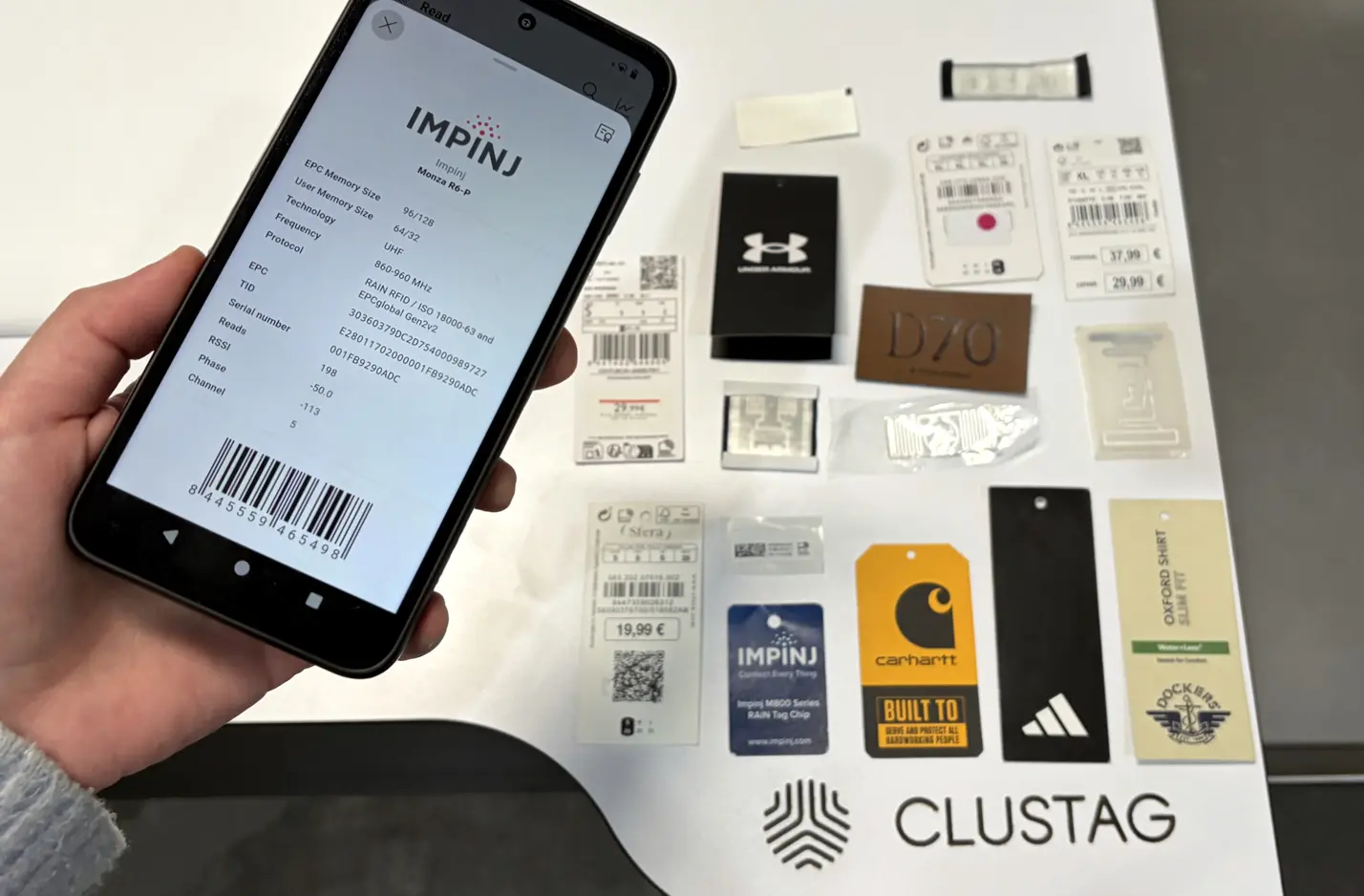
Tag Inspector is an application that allows professionals to test and analyze RFID tag performance using an RFID‑enabled smartphone, such as the Zebra EM45‑RFID or Zebra TC53e‑RFID.
In short, it turns smartphones into practical RFID testing tools, without the complexity of traditional RFID equipment.
How does Tag Inspector work in practice?
Through a clean and intuitive interface, users can evaluate tags in seconds, both in controlled and real‑world environments.
With Tag Inspector, users can:
Read and write RFID tags
Check EPC and barcode data
Compare tag behavior
Visualize performance through real‑time RSSI charts
This makes it easier to run technical validations and make data‑driven decisions on the spot.
What problems does Tag Inspector help solve?
Tag Inspector simplifies and speeds up RFID validation tasks that are often time‑consuming or hardware‑dependent.
It helps teams:
Validate tag quality and consistency
Compare tags from different suppliers
Troubleshoot performance issues in real scenarios
Reduce reliance on specialized RFID equipment
All from a single mobile device.
What are the benefits of smartphone‑integrated RAIN RFID?
Integrating RAIN RFID into smartphones brings professional RFID capabilities directly to where work happens.
Key benefits include:
Mobility: testing can be done in store, in the field, or in the lab
Simplicity: no need for dedicated RFID readers
Speed: quick tests and immediate feedback
Flexibility: one device for multiple technical tasks
This is especially valuable in retail, logistics, and technical validation environments.
Who typically uses Tag Inspector?
Tag Inspector is designed for a wide range of both operational and technical users. It is commonly used by RFID engineers and R&D teams working on tag performance analysis, as well as by quality and validation teams responsible for ensuring consistency and reliability. Integrators and technical consultants also rely on it during deployments and evaluations, while retail and logistics teams use it on site to validate tags directly in real operating conditions. Thanks to this flexibility, Tag Inspector is useful across multiple stages of an RFID deployment, from early testing to day‑to‑day validation.
Why did we join the RAIN Alliance?
We joined the RAIN Alliance to actively contribute to the global ecosystem driving RAIN RFID adoption and standardization.
Being part of the Alliance allows us to:
Stay aligned with industry standards
Collaborate with technology partners
Support interoperability across devices and platforms
We believe shared standards accelerate innovation and real‑world adoption.
Why are RAIN RFID standards so important?
Standards are what make RAIN RFID scalable and future‑ready.
They ensure:
Interoperability across devices and systems
Long‑term compatibility
Easier integration of new use cases, like RFID‑enabled smartphones
By aligning with RAIN standards, we help protect customer investments and simplify collaboration.
What’s next for Tag Inspector?
Tag Inspector will continue evolving based on feedback from users, customers, and partners.
Our focus moving forward includes:
New validation and analysis features
Enhanced mobile RFID workflows
Continued investment in applied R&D
The goal remains the same: making RAIN RFID easier to test, validate, and use in real operational environments.
Store to warehouse (STW) transfer plays a critical role in modern retail operations. As product lifecycles shorten and omnichannel complexity grows, retailers must return slow‑moving or non‑sellable inventory from stores back to central facilities with speed and accuracy.
When these transfers rely on manual handling and fragmented validation, they quickly become a source of discrepancies, delays, and operational friction. With Clustag RFID Solutions, we turn this process into a controlled, traceable flow that protects margin and restores trust between stores and distribution centers.
Reverse logistics only creates value when every item is validated automatically and inventory updates in real time across systems.
Why Store to Warehouse Transfer Often Breaks Down at Store Level
Traditional backstore processes were never designed to handle high‑volume returns efficiently. Manual consolidation, barcode scanning, and limited visibility create blind spots that affect both store teams and warehouse operations.
During peak periods such as end‑of‑season transitions, these weaknesses become even more visible, slowing down reintegration into central stock and increasing operational costs.
Structural challenges in backstore returns
Across fashion and sporting goods retail, we consistently see the same issues:
Limited visibility once products leave the store
Manual consolidation of returned items with high error rates
Time‑consuming inbound reconciliation at the warehouse
Disputes caused by missing or misclassified items
Inventory blocked in stores without a clear return path
Without automation and real‑time validation, returning stock to the warehouse becomes slow, costly, and difficult to scale.
How RFID Transforms STW into a Traceable Flow
With Clustag RFID Solutions, store to warehouse transfer shifts from a fragmented reverse process to a fully traceable, item-level flow. Each product is uniquely identified and tracked from the backstore to the warehouse dock, eliminating manual checks and reconciliation efforts.
Bulk RFID reading allows teams to validate full cartons or pallets instantly, without opening boxes or scanning items individually. Zentup synchronizes every event with ERP, WMS, and OMS platforms, ensuring consistent inventory visibility throughout the flow.
How the process works in practice
In an RFID‑enabled environment, returns to the warehouse follow a predictable logic:
We identify return‑eligible items based on sales velocity or lifecycle rules
Store teams consolidate products in the backstore without manual scanning
We validate cartons automatically using RFID‑shielded stations
Outbound movements are confirmed in real time through RFID portal
We validate warehouse inbound through bulk RFID reading, without manual reconciliation.
The result is a closed, auditable process with full item‑level traceability.
Business Impact of Store to Warehouse Transfer powered by RFID
When accurate, automated data capture supports reverse logistics, retailers can clearly measure both operational and financial impact.
Operational challenge
Impact with RAIN RFID enabled STW
Inventory discrepancies
Inventory accuracy above 98%
Slow return processing
Up to 70% faster processing
Manual handling effort
60–80% reduction
Store–DC disputes
Discrepancy rate near zero
Limited traceability
100% item‑level visibility
These results show that returning inventory to the warehouse is not just an operational necessity, but a margin‑recovery lever when executed with precision.
Accurate item validation accelerates reintegration into central stock and reduces friction across the network.
Why Clustag is Built for Scalable Reverse Logistics
We approach store returns as a system‑level capability, not an isolated task. Through a co‑innovation model, we adapt each deployment to store layouts, operational constraints, and required throughput.
Key enablers include:
Clustag RFID Solutions for automatic carton and pallet validation
Zentup data intelligence for real‑time synchronization
Seamless integration with ERP, WMS, and OMS environments
This combination ensures fast, precise, and scalable reverse logistics as volumes grow and demand patterns evolve.
Turning Store to Warehouse Transfer into a Competitive Advantage
Retailers that master returns from store to warehouse recover value faster, reduce markdown exposure, and maintain operational alignment between stores and distribution centers.
At Clustag, we help retailers validate these benefits in real conditions. We invite you to visit our Customer Experience Center or contact our team to explore how RFID can transform your reverse logistics operations.