RAIN RFID plays a key role in enabling accurate item identification, traceability, and automation across retail, logistics, and industrial environments. But when it comes to deploying RFID successfully, one question consistently comes up: how do you test, validate, and truly understand tag performance in real conditions?
In this Q&A, we share our approach to RAIN RFID, introduce Tag Inspector, and explain how smartphone‑integrated RFID is changing the way professionals test and validate tags. From real‑world use cases to standards and next steps, this article breaks down the essentials, clearly, practically, and straight from hands‑on experience.
Who are we and how do we work with RAIN RFID?
We design and deploy RAIN RFID solutions to identify, verify, and track items automatically—without line of sight or manual scanning.
Our work focuses on delivering real operational impact by combining:
Engineering, software, and real-world integration
Zentup, our middleware connecting RFID devices with WMS and ERP systems
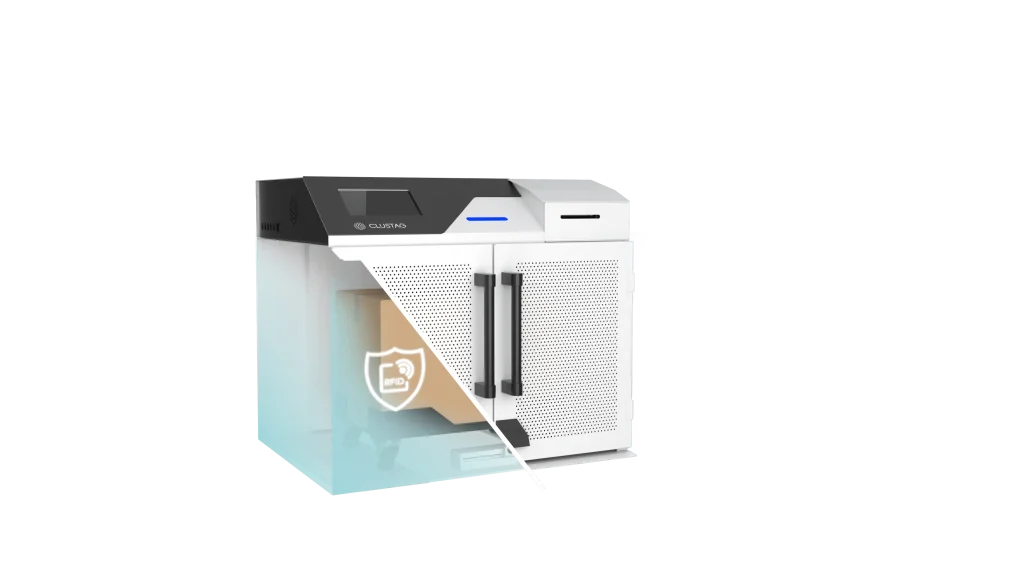
Complementary technologies like RFID‑Shield to avoid unwanted reads
We take a collaborative, R&D‑driven approach, designing each solution around real customer workflows so RFID fits existing processes, not the other way around.
What is Tag Inspector?
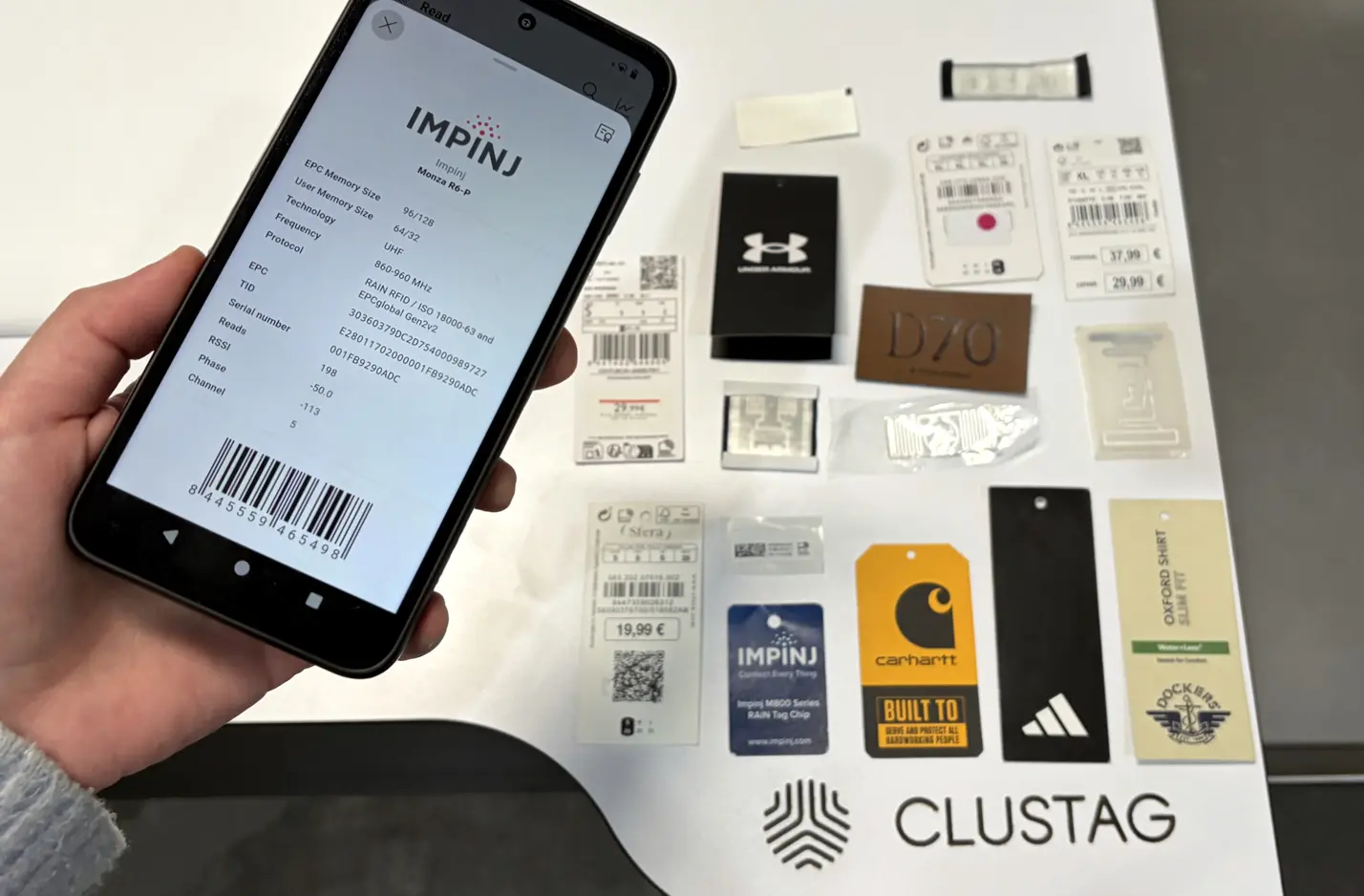
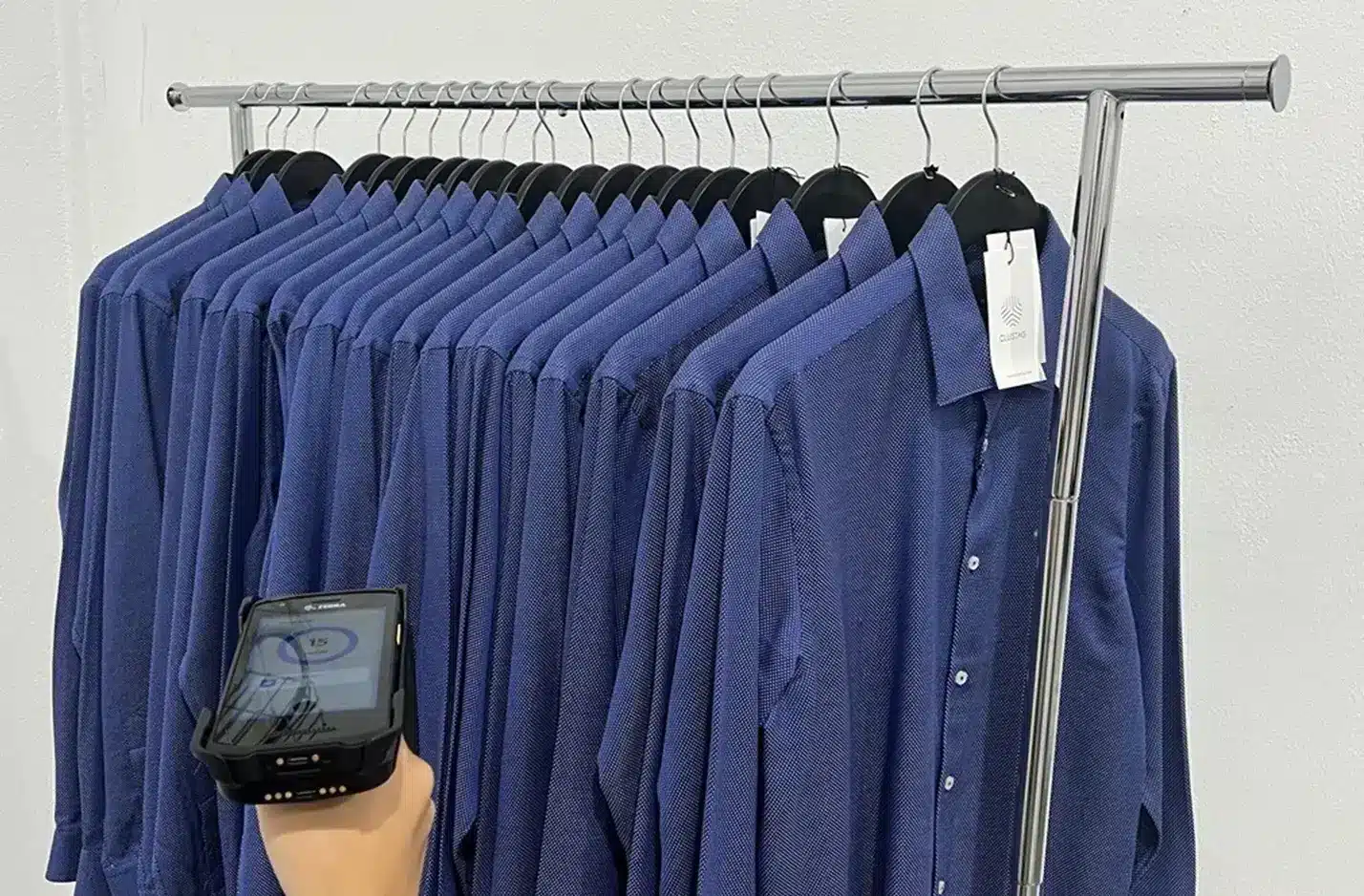
Tag Inspector is an application that allows professionals to test and analyze RFID tag performance using an RFID‑enabled smartphone, such as the Zebra EM45‑RFID or Zebra TC53e‑RFID.
In short, it turns smartphones into practical RFID testing tools, without the complexity of traditional RFID equipment.
How does Tag Inspector work in practice?
Through a clean and intuitive interface, users can evaluate tags in seconds, both in controlled and real‑world environments.
With Tag Inspector, users can:
Read and write RFID tags
Check EPC and barcode data
Compare tag behavior
Visualize performance through real‑time RSSI charts
This makes it easier to run technical validations and make data‑driven decisions on the spot.
What problems does Tag Inspector help solve?
Tag Inspector simplifies and speeds up RFID validation tasks that are often time‑consuming or hardware‑dependent.
It helps teams:
Validate tag quality and consistency
Compare tags from different suppliers
Troubleshoot performance issues in real scenarios
Reduce reliance on specialized RFID equipment
All from a single mobile device.
What are the benefits of smartphone‑integrated RAIN RFID?
Integrating RAIN RFID into smartphones brings professional RFID capabilities directly to where work happens.
Key benefits include:
Mobility: testing can be done in store, in the field, or in the lab
Simplicity: no need for dedicated RFID readers
Speed: quick tests and immediate feedback
Flexibility: one device for multiple technical tasks
This is especially valuable in retail, logistics, and technical validation environments.
Who typically uses Tag Inspector?
Tag Inspector is designed for a wide range of both operational and technical users. It is commonly used by RFID engineers and R&D teams working on tag performance analysis, as well as by quality and validation teams responsible for ensuring consistency and reliability. Integrators and technical consultants also rely on it during deployments and evaluations, while retail and logistics teams use it on site to validate tags directly in real operating conditions. Thanks to this flexibility, Tag Inspector is useful across multiple stages of an RFID deployment, from early testing to day‑to‑day validation.
Why did we join the RAIN Alliance?
We joined the RAIN Alliance to actively contribute to the global ecosystem driving RAIN RFID adoption and standardization.
Being part of the Alliance allows us to:
Stay aligned with industry standards
Collaborate with technology partners
Support interoperability across devices and platforms
We believe shared standards accelerate innovation and real‑world adoption.
Why are RAIN RFID standards so important?
Standards are what make RAIN RFID scalable and future‑ready.
They ensure:
Interoperability across devices and systems
Long‑term compatibility
Easier integration of new use cases, like RFID‑enabled smartphones
By aligning with RAIN standards, we help protect customer investments and simplify collaboration.
What’s next for Tag Inspector?
Tag Inspector will continue evolving based on feedback from users, customers, and partners.
Our focus moving forward includes:
New validation and analysis features
Enhanced mobile RFID workflows
Continued investment in applied R&D
The goal remains the same: making RAIN RFID easier to test, validate, and use in real operational environments.
Organizations across global supply chains are accelerating their transition toward more responsible operations. As expectations around efficiency, transparency, and environmental performance rise, technology becomes essential to enable smarter decisions and reduce waste. Our Smart RFID Solutions help companies strengthen RFID circular economy by increasing visibility, improving accuracy, and enabling better control of product lifecycles. These capabilities empower teams to adopt more sustainable practices and build future‑ready operations. We invite you to explore how they support progress across RFID circular economy strategies and resource‑efficient logistics.
Enhancing circular practices with item‑level intelligence
A circular approach requires understanding how products move, return, and reenter the value stream. Traceability plays a central role by ensuring organizations can follow each asset through every stage of its lifecycle. Our Smart RFID Solutions provide the foundation for this visibility while enabling more consistent and scalable circular workflows.
How RFID circular economy practices improve lifecycle visibility
With reliable item identification, teams can monitor usage, history, and condition with far greater precision. This clarity helps organizations extend product life through controlled maintenance cycles, timely inspections, and more efficient rotation of assets. The result is a reduction in resource consumption and more responsible utilization of materials.
Improving reverse logistics efficiency
Returns often introduce complexity, delays, and waste. Mass reading accuracy simplifies product triage, allowing teams to classify and reassign items more effectively. By accelerating these workflows, organizations can reintegrate products into inventory or recycling streams with less manual intervention and fewer errors. In selected locations, Zentup reinforces this process by highlighting anomalies and surfacing performance trends that help prevent bottlenecks and support continuous improvement.
Enabling reuse, refurbishing, and secondary markets
Circular operations depend on trustworthy data about origin and item condition. RFID makes this information accessible, helping companies determine which goods can be repaired, reused, or repurposed with confidence. With clear lifecycle records, teams can scale refurbishing programs and support secondary product channels that reduce environmental impact while improving cost efficiency.
Reducing environmental impact through smarter logistics
Sustainability does not rely solely on circularity. Operational efficiency also plays a fundamental role in minimizing emissions, reducing waste, and optimizing energy use. Our Smart RFID Solutions help organizations eliminate unnecessary movements, prevent rework, and streamline high‑volume processes.
Reducing errors that lead to unnecessary shipments
Incorrect orders and inaccurate dispatches increase transportation emissions and packaging use. By significantly improving picking accuracy and shipment validation, RFID eliminates many of the root causes of rehandling and returns. This directly contributes to greener operations and better resource management across distribution networks.
Optimizing energy consumption in warehouses
Efficient intralogistics reduce the time equipment must remain powered and the distance assets need to travel. Real‑time visibility supports faster decision‑making, helping teams minimize idle time and optimize workflow planning. In environments where exceptions occur frequently, Zentup adds value by providing analytical insights that help managers identify inefficiencies and refine process behaviors for more sustainable performance.
Accelerating throughput across complex operations
Large distribution centers and manufacturing sites require fast and reliable data capture to avoid slowdowns. High‑throughput reading capabilities ensure that items are verified instantly, reducing manual interventions and preventing downstream corrections. This efficiency helps minimize energy‑intensive activities and keeps operations running predictably even during peak periods.
Supporting transparency and responsible decision‑making
By applying RFID circular economy principles, we help teams capture lifecycle insights that support repair, reuse, and smarter material recovery. As environmental expectations grow, organizations must demonstrate the integrity of their operations. Traceability enables them to meet emerging requirements, validate responsible sourcing practices, and communicate accurate sustainability metrics. RFID strengthens these capabilities by providing consistent, verifiable information that supports strategic planning.
Improving accountability across supply networks
From raw materials to product end‑of‑life, reliable identification helps confirm that each step of the supply chain meets responsible standards. This visibility builds stronger partnerships and positions companies as trustworthy contributors within their sectors. It also supports long‑term efforts to measure and reduce environmental impact.
Facilitating compliance with evolving regulations
Many industries face new rules requiring product‑level information, lifecycle documentation, or environmental reporting. Automating data capture helps teams meet these obligations without increasing administrative workload. RFID ensures accuracy and consistency so organizations can respond confidently to audits, certifications, and market expectations.
Strengthening RFID circular economy sustainability analytics
Data‑driven planning requires more than visibility. Organizations must also interpret trends that influence waste reduction and resource efficiency. In selected processes, Zentup provides this analytical support by highlighting operational deviations and identifying areas where sustainability gains can be achieved. This helps leadership teams prioritize high‑impact initiatives and drive measurable improvements.
Enabling future‑ready intralogistics through Clustag Smart RFID Solutions
A resilient sustainability strategy requires adaptable technology that can scale with operational needs. Our portfolio combines high‑precision hardware with robust software and seamless integration to support the evolution toward more circular, efficient, and transparent operations. By giving every product a digital identity and enabling real‑time insight, our solutions help organizations operate more responsibly while strengthening competitiveness in increasingly demanding markets.
If your company is ready to accelerate its sustainability journey and explore how circular practices can deliver measurable value, we would be glad to assist you. Connect with our team through our contact page or visit our Customer Experience Center to discover how our Smart RFID Solutions can support your long‑term goals.
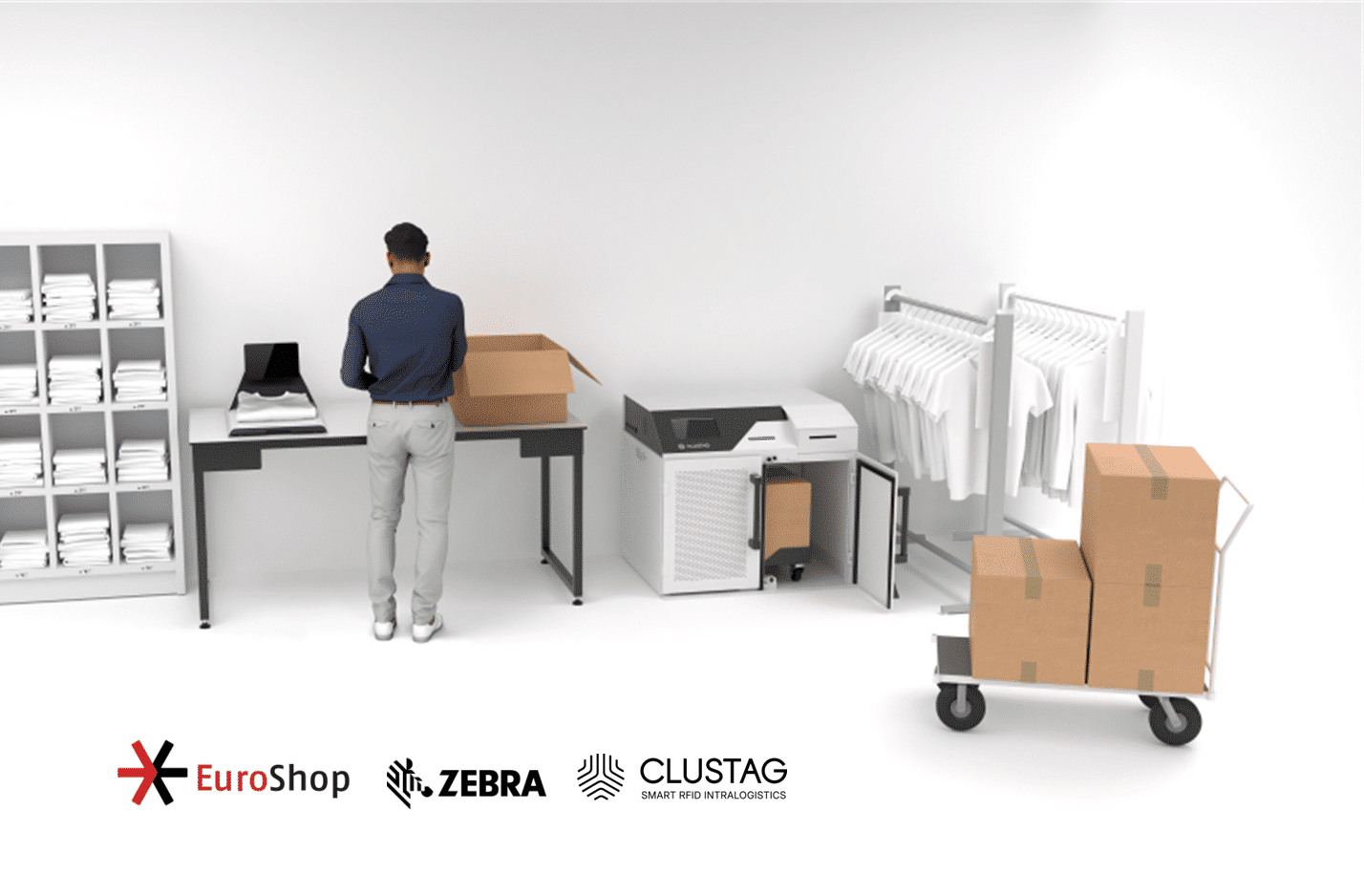
We’re excited to announce that Clustag will be present at EuroShop 2026, taking place February 22–26 in Düsseldorf, the world’s leading retail trade fair for innovation, technology, and operational excellence. You will find us at theZebra Technologies booth (Hall 6, A79), together with key strategic partners, showcasing how RFID is shaping the next generation of efficient, connected in‑store operations.
Why Euroshop 2026 matters
EuroShop is the global benchmark event for retailers, tech providers, and industry leaders looking to explore the future of store operations, automation, and customer experience. This year’s edition places a strong emphasis on:
Operational efficiency
Automation and smart processes
Real-time visibility across the supply chain
Customer-centric retail environments
These pillars align perfectly with Clustag’s mission: bringing precision, intelligence, and simplicity to store-level operations through RFID‑enabled solutions.
A powerful ecosystem: Clustag at EuroShop 2026 with Zebra
Our presence at EuroShop is built on collaboration. Together with Zebra Technologies, we will demonstrate how RFID can simplify daily store workflows, reduce manual tasks, and unlock item‑level visibility that supports more agile and error‑free retail operations.
This collaboration enables us to present a fully connected approach, combining hardware, software, and data intelligence, to deliver measurable improvements in accuracy, speed, and productivity.
Together, these partnerships create a powerful ecosystem for retailers seeking to boost efficiency, accuracy, and scalability.
Live RFID solutions for modern retail
At EuroShop 2026, visitors will be able to see firsthand how Clustag’s RFID technology helps retailers manage key processes with reliability and speed. Live demonstrations will focus on practical, high‑impact use cases, including:
Accurate receiving: Validate inbound goods in minutes with near‑perfect read reliability.
In‑store inventory workflows: Ensure precise stock movement between backroom and sales floor.
Returns processing: Accelerate reverse logistics with item‑level authentication.
Omnichannel execution: Support BOPIS, BORIS, e‑reserve, and ship‑from‑store with real‑time accuracy.
Our RFID innovation is designed to simplify complex workflows through intuitive interfaces, error‑free reads, and seamless integration with partner solutions.
Its integrated display, optional label printer, and compact design make SABI a perfect fit for modern retail environments.
Why accuracy matters: RFID Shield Technology
Reliability is at the core of every RFID‑enabled workflow. Clustag’s shielding and read‑control technology ensures:
This level of accuracy empowers retailers to reduce shrink, prevent return fraud, and maintain consistency across omnichannel processes.
A connected ecosystem for smarter operations
Beyond individual devices or workflows, Clustag’s value lies in ecosystem integration. Through collaboration with software partners and Zebra hardware, retailers can benefit from:
Real‑time, item‑level visibility
Automated validations for receiving, picking, and shipping
Seamless omnichannel enablement
Improved staff efficiency through guided workflows
The result: a faster, smarter, and more sustainable store operation that supports modern retail demands.
See RFID innovation live at EuroShop 2026
If you’re attending EuroShop, we invite you to visit us at the Zebra Technologies booth (Hall 6, A79). Discover how RFID‑powered retail can enhance accuracy, simplify store tasks, and accelerate operational efficiency across every corner of the store.
Want to schedule a meeting or learn more before the event? Reach out to the Clustag team, we’d love to connect, or fill in ourcontact form to get in touch with us.
Black Friday is no longer just a date on the calendar. It has become the biggest logistics challenge of the year for the apparel and fashion sector. In this context, RFID in fashion during Black Friday helps brands manage inventory more efficiently, optimize Black Friday returns, and recover sales that would otherwise be lost. Every minute counts. Any item missing from stock means a lost sales, and in a competitive market, delays push customers toward competitors.
Retailers face a dual challenge. They must manage high sales volumes while also processing a large number of returns without affecting stock availability. As the holiday season approaches, pressure increase. This makes fashion inventory management with RFID essential for operational success.
The challenge of returns in fashion during Black Friday
Returns are a growing reality in e-commerce, and the fashion industry is particularly affected. According to the 2025 Annual Returns Benchmark Report for Spain, prepared by ZigZag in collaboration with Retail Economics, the value of online returns in Spain is expected to reach €13.3 billion by 2025. During campaigns like Black Friday, consumers may return up to 35% of their purchases, creating a logistical bottleneck for retailers.
A common practice known as bracketing, buying multiple sizes or colors only one, make the situation even more challenging. Over 60% of online fashion shoppers admit to doing this, multiplying the volume of returns and putting pressure on order preparation processes and retail reverse logistics.
The economic impact is significant: in Europe, operational costs associated with returns can reach up to 66% of the product’s value. Any delay in reintegrating a returned item into inventory translates into lost sales that end up in competitor’s hands. In addition, delayed returns can lead to inaccurate stock data, causing issues with online availability and in-store replenishment, ultimately affecting customer satisfaction and brand reputation.
From 72 to 8 hours: the speed of fashion inventory management with RFID
Historically, a returned item could take up to 72 hours to be reintegrated into stock. Thanks to RFID in fashion during Black Friday, brands can reduce this time to less than 8 hours. This technology, based on smart tags that can be read remotely, allows every item to be tracked in real time, even during the return process.
Complete inventory visibility transforms retail reverse logistics: it creases to be an unavoidable cost and becomes an additional sales opportunity. Each item quickly returned to the store or online inventory means satisfied customers and recovered sales. Moreover, RFID helps retailers avoid stock discrepancies, allowing them to plan better promotions, restock efficiently, and make data-driven decisions during peak sales, periods.
By reducing reintegration times, brands can also manage high-demand products more effectively. For example. If a popular jacket is returned in the morning, it can be back online or ins-tore by the afternoon, ready for another customer who might have otherwise missed the opportunity to purchase it.
Clustag recovers sales in record time
The Spanish tech company Clustag has demonstrated how RFID in fashion during Black Friday can make a measurable difference. During the latest European campaign, their solutions allowed the reintegration of 20 million returned items in record time.
The economic outcome was clear: their clients recovered more than €600 million in sales that would have otherwise been lost to competitors.
Luis Rius, CEO of Clustag explains: “During campaigns like Black Friday or Christmas, every minute counts. Our technology allows returns to be processed and available for sale almost immediately, preventing customers from turning to competitors. It’s not just about optimization. It’s about ensuring an impeccable customer experience.”
By combining speed with accuracy, Clustag ensures that retailers can handle even the most complex holiday peaks without compromising service quality or losing revenue.
Optimizing Black Friday returns to improve customer experience
The benefits of RFID go beyond speed. In an omnichannel environment, where consumers expect to buy online and return or pick up products in-store seamlessly, fashion inventory management with RFID becomes a strategic asset. Its advantages include:
Intelligent stock redistribution between physical stores and online channels. Retailers can decide in real time whether returned items should go back to the closest store or to the central warehouse.
Improved product availability, with returns reintegrated almost immediately, ensuring customers find what they want without frustration.
Reduced losses from delayed returns reintegrated almost immediately, ensuring customers find what they want without frustration.
Reduced losses from delayed returns, preventing customers from shopping elsewhere.
Optimized customer experience, increasing loyalty. Consumers are more likely to shop with brands that provide fast, reliable, and transparent return processes.
Thanks to this, optimizing Black Friday returns cases to be a challenge and becomes a competitive advantage for fashion brands. Retailers can even promote their fast return capabilities as part of their marketing campaigns, turning what was traditionally a pain into a selling point.
Why RFID in fashion during Black Friday is key for the future
The fashion market is constantly evolving, and logistics has become a strategic factor. The ability to process returns quickly and keep inventory updated in real time determines the difference between a successful campaign and lost opportunities.
RFID in fashion during Black Friday offers a triple benefit:
Operational efficiency: less time lost on returns, freeing staff to focus on other critical tasks.
Sales recovery: each item reintegrated quickly means recovered revenue and minimized lost opportunities.
Enhances customer experience: fast returns and guaranteed availability increase loyalty and build long-term brand trust.
In a market where consumers are increasingly demanding, RFID becomes an essential tool to maintain relevance and competitiveness. It also supports data-driven decision-making, allowing retailers to anticipate demand trends, prevent stockouts, and optimize inventory across multiple channels.
Make the most of Black Friday with Clustag
Don’t let returns slow down your sales this Black Friday. With RFID in fashion during Black Friday, Clustag helps you optimize Black Friday returns, recover stock, and ensure every item is available to your customers in record time.
Discover how our solutions can transform your retail reverse logistics, improve fashion inventory management with RFID, and turn returns into sales opportunities. This Black Friday, sell more, sell faster, and keep your customers satisfied with Clustag.
Visit Clustag’s customer experience centre
Visit our Customer Experience Centre to see our solutions in action and experience the speed, accuracy, and traceability that Clustag can bring to your warehouse. To explore how our RFID solutions can be tailored to your specific needs, fill out our contact form and one of our experts will guide you through a personalized demonstration. Don’t miss the opportunity to optimize your warehouse processes and take your order preparation to the next level.
Reverse logistics has become one of the biggest black holes in modern ecommerce. While commercial teams push massive campaigns and promotions the reality in the warehouse moves at a different pace: thousands of products are returned every day, and most take too long to be restocked and made available online. Implementing RFID returns processing with Inbound Verification and RFID for returns can help close this gap, ensuring returned items are quicky visible online and reducing lost sales.
This gap is especially critical in premium fashion, where top-selling items have very short sales cycles. Clara’s story illustrates how slow returns processing can turn a physical available product into a lost online sale.
Slow returns processing and delayed restocking
Madrid, December 12th.
Clara knew exactly what to give for Christmas: a limited-edition camel jacket she had seen weeks earlier on her favourite brand’s website. After Black Friday, it appeared as “sold out”. But she trusted that typical December returns would make it available again.
What Clara didn’t know was that the jacket she wanted had already been returned to the warehouse on December 9th. However, it hadn’t been processed yet. The warehouse used a manual returns processing workflow: opening the package, validating the label, checking condition, re-tagging, updating systems. During the post-Black Friday surge, this process took 72 hours.
On December 11th, Clara checked the website again. It was still sold out. With Christmas approaching, she bought an alternative from another brand.
For her, it was just a practical decision. The company, however, lost a sale. Meanwhile, the competition gained a customer.
The impact of stockouts during peak season
These situations are not exceptions; they are constant during peak periods. For a premium fashion brand with a strong online channel, the impact is huge:
Approx. 10.000 returns between Black Friday and Christmas
40% are high-rotation items
Average price €90
Sales that never happen, because the item is in the warehouse but not online, represent €540.000-€720.000 in lost revenue over three weeks.
This is not a commercial failure or poor planning: it is an operational problem. And this is where RFID returns processing and RFID reverse logistics make a difference.
How returns processing affects online stock availability
Before diving into solutions, it is important to understand how the returns process itself affects online stock availability. Most traditional systems create a time gap between what exists physically and what is shown digitally. This gap is the root of “phantom sales” that never happen.
Out of stock due to returns
When a return takes days to be restocked, the e-commerce marks the item as sold out. This hides hundreds of items from customers that are physically in the warehouse. A delay of 48 and 96 hours can make the difference between selling a product or losing it forever to the competition.
Customer frustration is evident, but the economic impact is even greater: an invisible product is an unsellable product.
Inventory visibility issues
Additionally, manual workflows create other critical problems:
Discrepancies between physical and digital inventory
Distorted demand forecasts
Inefficient replenishment
Overproduction to cover perceived “out of stock” that is not real
The result is a less competitive ecommerce and higher operational costs. The solution is not more stock, but better inventory visibility, which RFID returns processing enables.
What RFID brings to reverse logistics and returns processing
To bridge the gap between the warehouse and ecommerce, brands are adopting item-level RFID, especially in the returns workflow known as Inbound Verification. This technology transforms a slow operation into a reliable, fast, and automated process.
RFID returns processing explained
With RFID, each item has a unique identifier. In a return, the system can:
Read the item without handling it
Validate its authenticity
Check category, size, and price
Detect anomalies or fraud
Update stock in seconds
The key difference is that everything happens automatically, reducing errors and accelerating product availability through automated returns processing.
Automated vs manual returns workflows
The contrast between the two approaches is clear:
Manual
3-5 minutes per item
48-72 hours for restocking
Labor-intensive
Frequent errors
Delayed e-commerce updates
RFID with Inbound Verification (Clustag):
Process completed in seconds
Restocking in less than 6 hours
No package opening
No human errors
Stock updated almost in real time
The result is clear: a product is back online the same day it arrives at the warehouse.
RFID tunnel solutions for high-speed returns handling
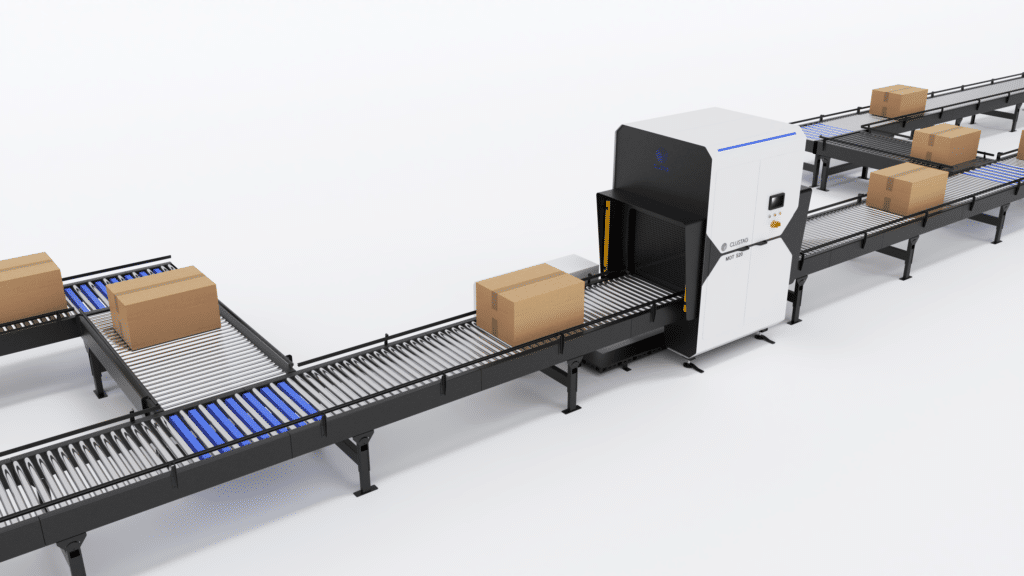
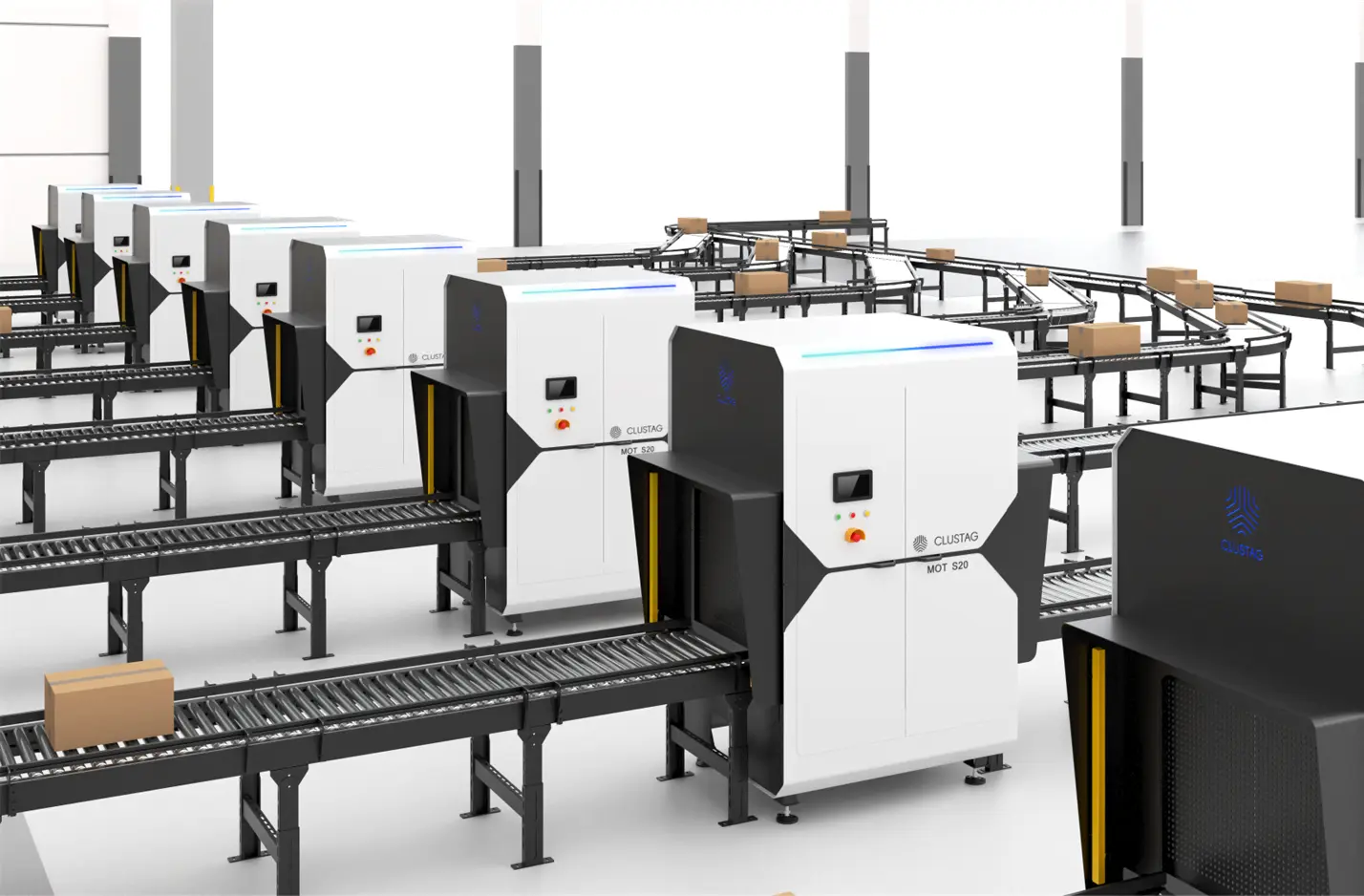
The use of specialized RFID tunnels enables this speed to become a reality. Solutions like those offered by Clustag automate returns validation and eliminate almost all manual handling.
How RFID tunnel reading accelerates reintegration
The process is simple for warehouse staff but powerful for the brand:
The returned box is placed in the tunnel.
The system reads all RFID tags simultaneously (RFID tunnel reading).
It validates authenticity and SKU matching
It detects any discrepancies.
Stock is updated automatically.
These massive reads, hundreds per minute, reduce restocking time from 72 hours to just 6.
This cuts typica sales losses of 15-20% to 2-3%, potentially recovering up to €600.000 during peak campaigns.
How RFID prevents stockouts in fashion and e-commerce
Availability is key to online performance. An e-commerce that reflects in real time what happens in the warehouse can capture sales that would otherwise be lost.
How item-level RFID prevents stockouts
Full inventory visibility allows:
Returned items to be restocked the same day
Stock balance between stores and online
Prevention of apparent stockouts (stockouts e-commerce)
Maximized ecommerce conversion
Reduced safety stock needs
Reliable inventory equals profitable inventory.
Reducing lost sales with RFID
The most direct benefit of reducing lost sales with RFID is recovered sales:
More availability = more conversion
Fewer OOS (out-of-stock) = fewer lost sales to competitors
Greater accuracy = less overproduction
As Ferran Bodí, Clustag’s RFID manager, summarizes:
“During critical campaigns, every minute counts. RFID turns returns into opportunities, not losses.”
Peak season pressure: Black Friday and Christmas as stress tests
Black Friday and Christmas are the critical weeks when a brand is truly tested. High demand and a surge of returns put reverse logistics to the rest: if return processing fails, lost sales multiply and customer experience suffers.
During these periods, every minute matters. A 48–72-hour delay in restocking can mean returned items are not visible when customers want to purchase them. This not only frustrates customers but directly impacts revenue, diverting sales to competitors.
RFID for Christmas peak season
RFID technology changes the rules. With automated return reading, items can be restocked in hours, not days (RFID for Christmas peak season), keeping them available online even during peak season.
In Clara’s case, the story would have been very different: the jacket she wanted would have returned to stock on December 9th, and she would have seen it available on December 11th. The sale would have been completed, her experience would have been positive, and the competitor would not have gained a customer. This example shows how RFID returns processing ensures that every return can become a sales opportunity rather than a loss.
ROI of RFID in reverse logistics
Beyond improving stock availability and customer experience, implementing RFID reverse logistics delivers clear, measurable financial returns, especially in fashion and e-commerce.
Key benefits include:
Recovered sales because returned items become immediately visible online
Reduced labor in manual verification and restocking processes
Reliable inventory with fewer discrepancies between physical and digital stock
Fraud and grey market prevention, ensuring item-level traceability
Optimized stock across the networks, avoiding overproduction or unnecessary purchases
“Item-level traceability not only prevents errors, but it also stops fraud and the grey market.”
Thanks to these advantages, most implementations achieve ROI in less than 12 months, showing that investing in RFID not only improves operations but protects and increases sales during critical campaigns.
Turning returns into opportunities with Clustag
After implementing RFID and achieving measurable ROI, the next step is turning every return into a real sales opportunity.
With Clustag’s RFID technology, brands can:
Process returns in seconds instead of days (automated returns processing)
Update online inventory almost immediately
Reduce apparent stockouts and lost sales
Improve customer experience by ensuring the product they want is available
Each returned item can become a sales opportunity rather than a loss
Discover how Clustag can transform your returns management and ensure your products are always available to your customers.
Visit our Customer Experience Centre to see our solutions in action and experience the speed, accuracy, and traceability that Clustag can bring to your warehouse. To explore how our RFID solutions can be tailored to your specific needs, fill out our contact form and one of our experts will guide you through a personalized demonstration. Don’t miss the opportunity to optimize your warehouse processes and take your order preparation to the next level.
See how RFID technology speeds up your reverse logistics.
The retail industry is transforming rapidly. RFID in fresh food drives much of this change. After years of trials and technical challenges, RFID (Radio Frequency Identification) now enters one of the most complex sectors: fresh food. Walmart, has implemented RFID tags from Avery Dennison in meat, bakery, and deli categories. This initiative marks a major turning point for grocery retail.
This adoption improves more than technology. It enhances supply chain efficiency, reduces food waste, and strengthens product traceability. Retailers now see that integrating RFID from warehouses to store shelves, transform how they manage fresh products..
Why supermarkets are adopting RFID in fresh food
Supermarkets are adopting RFID in fresh food to tackle ongoing challenges in managing perishable and chilled products. Traditional barcode systems offer limited visibility and rely on manual intervention, causing stockouts, overstocks, and waste. RFIDprovidesreal-time, item-level tracking, supporting both operational efficiency and sustainability goals.
Key motivations behind RFID adoption
Inventory accuracy: RFID gives real-time visibility of stock at the item level, reducing errors and preventing out-of-stocks situations.
Shelf-life management: Retailers can track product expiry dates more precisely, improving rotation and reducing waste.
Sustainability: Enhanced monitoring helps supermarkets meet environmental targets, including reducing food waste and limiting overproduction.
Operational efficiency: RFID-driven automation reduces labor-intensive processes tasks, such as manual counting like manual counting, and boosts overall productivity.
For Walmart and other top retailer, these capabilities are not optional. They are essential to maintaining competitiveness in the fast-moving grocery sector.
RFID for fresh, perishable and chilled products
Despite its promise, RFID adoption in fresh products has historically faced significant challenges. Cold, humid environments and metallic packaging can interfere with radio signals, making reliable reads difficult. Avery Dennison has addressed these technical obstacles with advanced RFID tags designed for harsh conditions, enabling consistent performance in chilled and perishable categories.
RFID performance in cold and humid environments
These innovations let supermarkets track meat, cheese, bakery, and deli items accuracy. RFID tags now withstand refrigeration, humidity, and complex packaging, allowing retailers to monitor stock across the entire cold chain, from distribution centres to store shelves. This visibility guarantees product safety, quality, and traceability on a scale that was previously impossible.
RFID traceability and expiry date accuracy
Item-level RFID tracking provides complete traceability across the supply chain. Each tag contains a unique identifier linked to production data, batch, and expiry information, enabling real-time monitoring of product movement.
Item-level tracking in meat, bakery, and deli
For Walmart, deploying Avery Dennison’s RFID tags in fresh categories allows for precise expiry tracking, automated inventory checks, and proactive stock rotation. Products nearing expiration can be flagged for promotion or redistribution, reducing food waste and enhancing customer satisfaction.
This capability also supports Walmart’s goal of cutting food waste by 50% by 2030, demonstrating how technology can directly impact sustainability initiatives.
RFID in cold chain and grocery supply chain operations
While in-store applications receive significant attention, the true potential of RFID in fresh food lies in integrating the technology across the entire supply chain. From distribution centres to delivery trucks, RFID provides continuous visibility into every product, enabling faster decision-making and reducing errors.
By linking RFID data to warehouse management systems (WMS) and enterprise resource planning (ERP) platforms, supermarkets gain full inventory control, ensuring products are handled correctly and efficiently throughout the cold chain.
Reducing food waste with RFID visibility
Food waste remains a critical challenge for supermarkets. Estimates suggest that up to 10% of fresh products are discarded due to mismanagement or inaccurate inventory tracking. RFID transforms this scenario by enabling real-time monitoring of freshness and expiry, allowing stores to reduce waste proactively.
Automation also frees staff from labor-intensive tasks such as manual counting and inspection, allowing them to focus on value-added activities. This data-driven approach improves supply forecasting, supplier collaboration, and sustainability reporting, making food waste reduction with RFID a practical and measurable outcome.
Industry leaders driving RFID adoption
Avery Dennison’s RFID solutions have overcome key barriers in cold, humid, and metallic environments, making RFID for fresh and chilled products feasible at scale. Their technology supports high read rates and reliable performance across a variety of packaging types, setting the stage for widespread adoption.
Walmart’s RFID deployment in grocery
Walmart’s initiative is one of the largest in the world, potentially involving billions of RFID tags. By adopting item-level tracking for fresh products, Walmart demonstrates the transformative impact of RFID in fresh food, paving the way for other retailers to follow suit.
Automated warehouse RFID solutions for grocery
While store-level RFID is crucial, warehouse automation is where the technology delivers its highest return on investment. Clustag, a specialist in RFID for complex environments, has developed RFID tunnel systems capable of reading entire pallets or boxes of fresh products in seconds.
RFID tunnels for food processing
Clustag’s tunnels enable:
High-speed mass reading of over 1.000 units per hour.
Seamless integration with WMS and ERP systems for real-time inventory visibility.
Error reduction in picking, packing, and dispatch.
End-to-end traceability from production to store shelf.
With experience in both food and fashion retail, Clustag is well-positioned to help supermarkets scale RFID adoption, driving automation and efficiency across their supply chains.
The future of supermarket automation with RFID
Experts that RFID in fresh food is no longer a luxury, it’s a strategic necessity. Manolo Reguart, Director of Strategy and Business Development in retail technology, explains:
“RFID in fresh products is essential for efficiency, customer experience, and sustainability. Combining smart labeling with automated RFID systems like tunnels will reduce costs, improve inventory accuracy, and ensure food quality. Retailers who delay adoption risk falling behind”
The integration of RFID, automation, and data analytics is reshaping supermarkets. With Walmart, Avery Dennison, and Clustag leading the charge, the future of grocery retail is built on real-time visibility, reduced waste, and complete supply chain transparency.
See Clustag in action and transform your warehouse operations
Visit our Customer Experience Centre to see our solutions in action and experience firsthand the speed, accuracy, and traceability that Clustag can bring to your warehouse. Our RFID systems, including RFID tunnels and automated tracking solutions, are designed to handle complex environments with chilled, perishable, and packaged goods, ensuring end-to-end visibility across your supply chain.
By exploring our solutions in person, you will understand how RFID in fresh food can:
Streamline order preparation and reduce errors.
Optimize inventory management with real-time item-level tracking.
Enhance traceability for perishable products, ensuring compliance and reducing waste.
Integrate seamlessly with your existing WMS and ERP systems for a complete digital workflow.
To see how our RFID solutions can be tailored to your specific operations, fill out our contact formand one of our experts will guide you through a personalized demonstration. This interactive session will provide practical insights into how Clustag can accelerate your warehouse automation, improve accuracy, and boost operational efficiency.
Don’t miss the opportunity to optimize your warehouse processes, enhance food safety, and elevate your oder preparation to the next level.
Efficiency in warehouse is no longer just about speed; it’s about smart automation. Traditional “Person-to-Good” picking models slow down operations and increase the risk of errors as employees move across the facility to collect items. The shelf-to-personsystem changes everything by delivering inventory directly to the operator, optimizing workflows and improving accuracy. With Clustag solutions, businesses can streamline cycle counting and order picking usingadvanced RFID technology.
The shift from manual picking to automated systems is not just about speed. It also transforms operational reliability, reduces labor costs, and creates a safer work environment. By combining AGVs, WMS, and RFID technology, shelf-to-person systems ensure that warehouses can handle higher order volumes without increasing human error.
What is the shelf-to-person system?
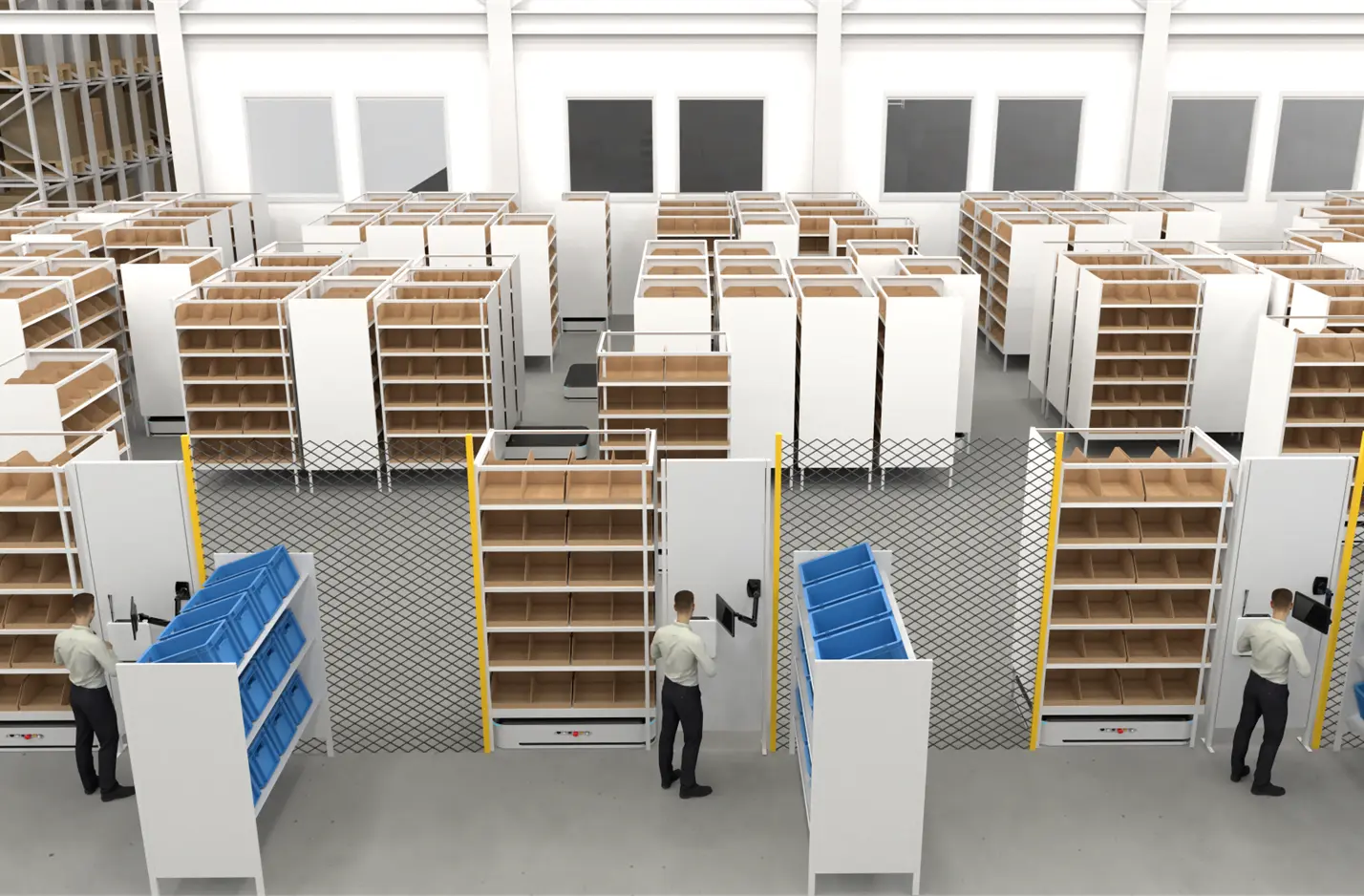
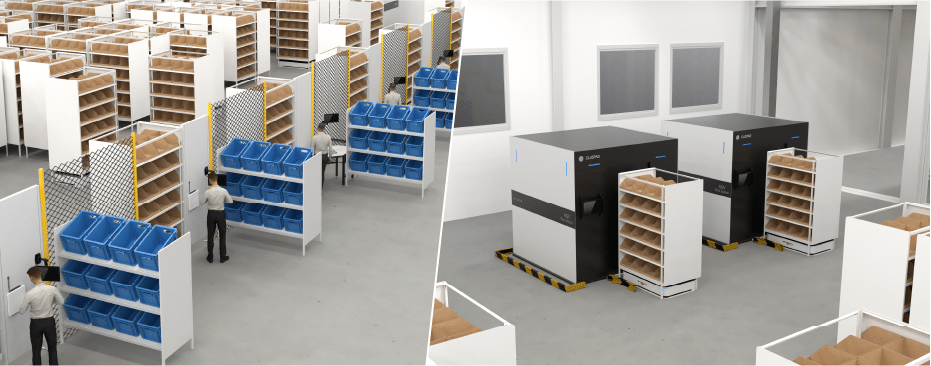
The shelf-to-person system is a modern warehouse automation solution designed to replace the conventional method of picking items manually. Instead of employees walking the aisles to locate products, items are stored on mobile shelves and transported to picking stations via a fleet of Autonomous Guided Vehicles (AGVs).
At the picking station, operators receive the shelves and pick items as indicated by the Warehouse Management System (WMS). This approach minimizes movement, reduces picking item, and ensures that operators can focus on accurate item selection.
These systems are particularly beneficial in warehouses with high SKU counts and dense storage layouts, where manual picking would be slow and error prone. By automating shelf delivery, warehouses can maintain high throughput while reducing fatigue-related mistakes.
What types of software controls the shelf-to-person system?
The efficiency of a shelf-to-person system depends heavily on software integration. At the core, the Warehouse Management System (WMS) or Enterprise Resource Planning (ERP) system directs AGVs, tracks inventory and ensures that items are delivered to the corrects picking station.
Clustag enhances this process by integrating its RFID solutions through its ZENTUP data-capture layer, providing:
Real-time inventory visibility
Seamless communication between AGVs and WMS
Accurate RFID-based item identification
Instant synchronization with ERP, SAP, or other business systems
This combination of hardware and software guarantees that warehouse operations remain fast, accurate, and scalable. The software layer also allows warehouse managers to monitor AGV paths, predict bottlenecks, and optimize the placement of high-demand products near picking stations, further improving efficiency.
How does the shelf-to-person system work?
The operation of a shelf-to-person system streamlined and highly automated:
RFID-tagged products: Every item is labelled with an RFID tag for precise tracking.
AGV Shelf delivery: AGVs transport shelves containing the request items to the picking station.
Operator picking: The operator picks items guided by the WMS and real-time data.
RFID reading and validation: Clustag RFID Read Points verify items to prevent errors.
Data synchronization: All information is instantly shared with client systems (ERP, WMS, SAP) with 99.96% reliability.
Ensuring safety and accuracy
AGVs operate on predetermined paths with sensors to avoid collisions, ensuring a safe environment for operators. Clustag solutions integrate seamlessly with the FMS (Fleet Management System) to manage traffic, monitor AGV health, and schedule maintenance without interrupting operations.
Handling different warehouse layouts
Shelf-to-person systems can adapt to various warehouse layouts, including multi-level mezzanines and high-density shelving. Clustag’s RFID-enabled workstations and AGV rack stations make it possible to manage even complex inventories, ensuring that every item is correctly identified and delivered to the operator in the shortest possible time.
What are the advantages of the shelf-to-person system?
Implementing a shelf-to-person system delivers multiple benefits for modern warehouses:
Reduced operator movement: less physical strain and faster picking times.
Improved accuracy: RFID validation ensures 100% reliable item identification.
Continuous operation: AGVs work around the clock, allowing for uninterrupted inventory processes.
Rapid ROI: Automation reduces labor costs and speeds up inventor management, often with ROI achieved in less than a year.
Scalable solution: Easly adaptable to warehouses of all sizes and inventory volume.
Enhanced data analytics: Real-time tracking of inventory movement allows managers to forecast demand and optimize stock placement
Reduced stock discrepances: automated counting and RFID reading drastically reduce errors and prevent stockouts.
By integrating Clustag solutions, warehouses can further improve order accuracy and cycle counting while freeing human operators to focus on higher-value tasks.
Innovative picking with the shelf-to-person system
Clustag takes the shelf-to-person system to the next level by integrating advanced RFID technology into both cycle counting and order preparation:
Cycle count with Clustag solutions
Maintaining an up-to-date inventory is essential. Traditional counting can be slow and error-prone, especially with large volumes. Clustag enables:
Fully automated cycle counting
24/7 inventory updates
100% stock accuracy with RFID Shielding Technology
Integration with AGVs and Fleet Management Systems (FMS) for seamless operation
Automating cycle counts not only saves time but also ensures that inventory discrepances are detected immediately, reducing lost sales or misallocated products.
Order picking enhanced with Clustag workstations
Order preparation is faster and more reliable with Clustag’s RFID-enabled workstations. Operators receive real time guidance via ZENTUP Workflow, ensuring:
Faster item identification
Reduced human error
Instant EPC-level validation
Real-time stock updates synchronized with ERP/WMS/SAP systems
Clustag’s solutions can adapt to various warehouse environments, from high-density e-commerce fulfilment centres to large industrial warehouses, offering flexibility and consistent accuracy.
Trends in shelf-to-person automation
The future of warehouse automation is increasingly data-driven. Shelf-to-person systems are evolving to include:
AI-powered demand forecasting pre-positions high-demand items near picking stations
Predictive maintenance of AGVs for zero downtime
Advanced RFID analytics to identify slow-moving stock and optimize warehouse layouts
Integration with robotic picking arms for fully automated order fulfilment
Clustag is at the forefront of these trends, helping warehouses leverage the latest technology to maximize efficiency and reduce operational costs.
Optimize your warehouse today
The shelf-to-person system is transforming warehouse operations, making inventory handling faster, more accurate, and more efficient. With Clustag solutions, warehouses can enhance every aspect every aspect of this system. From automatic cycle counting to error-free order picking. Unlocking a new level of operational efficiency.
By leveraging advanced RFID technology and seamless software integration, Clustag is revolutionizing warehouse workflows and helping businesses achieve rapid ROI while maintaining precise stock management.
Visit our Customer Experience Centre to see our solutions in action and experience the speed, accuracy, and traceability that Clustag can bring to your warehouse. To explore how our RFID solutions can be tailored to your specific needs, fill out our contact form and one of our experts will guide you through a personalized demonstration. Don’t miss the opportunity to optimize your warehouse processes and take your order preparation to the next level.
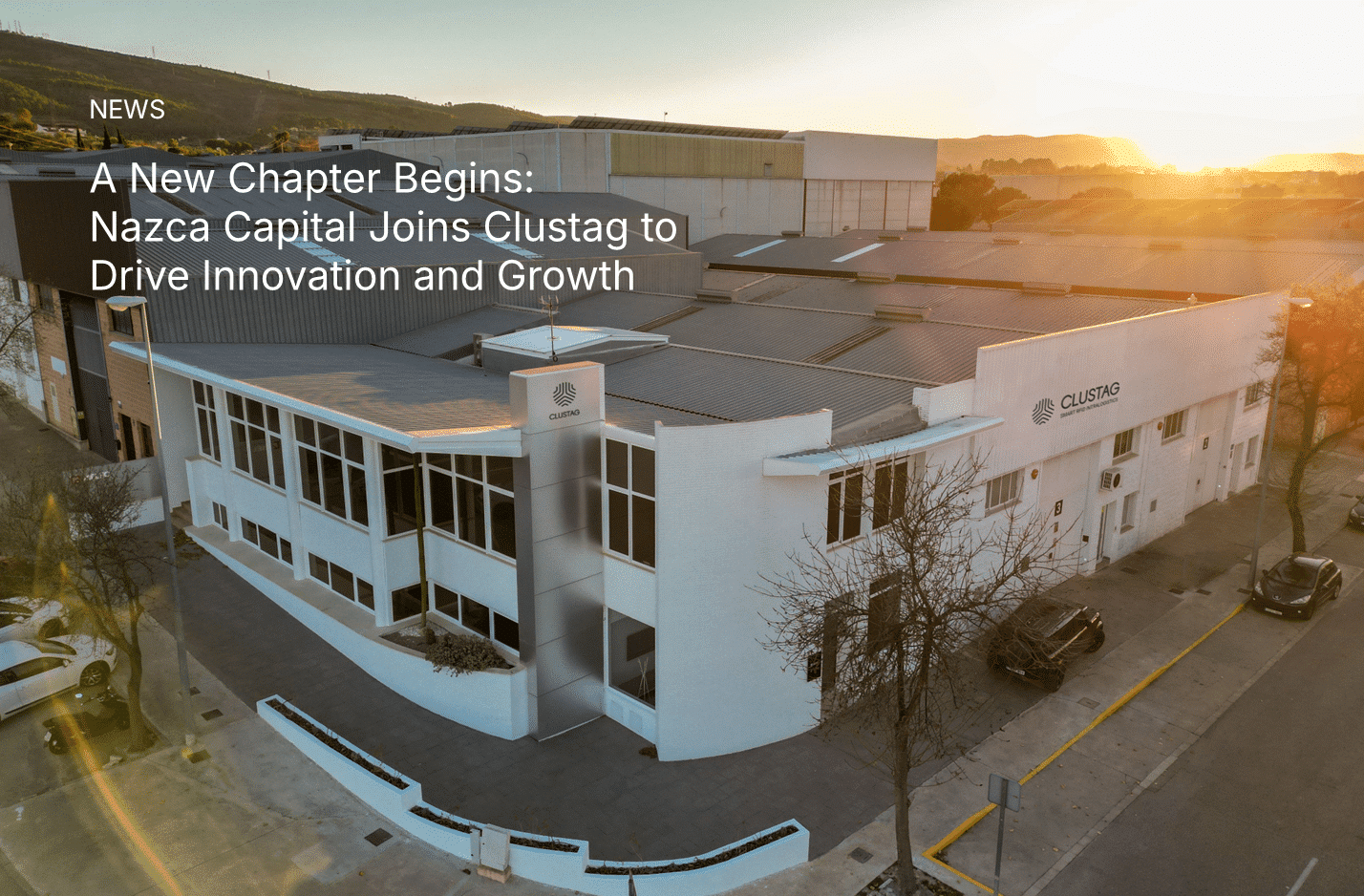
Nazca Capital has acquired a majority stake in Clustag, a leading provider of RFID intralogistics automation solutions, to support its international expansion and strengthen its global leadership. Founded in 2015 in Valencia, Clustag develops cutting-edge RFID technology. It ensures the highest accuracy, reliability, and speed in complex logistics environments. As a result, this transaction marks the fourth investment by the Nazca Small Cap II fund and represents a key step in consolidating Clustag’s growth strategy and innovation leadership.
Nazca Capital, a leading private equity firm specializing in Spanish unlisted SMEs, has acquired its stake through its Nazca Small Cap II fund. Clustag is a leading company in RFID reading solutions for logistics environments.
The role of RFID in logistics and supply chain efficiency
RFID (Radio Frequency Identification) technology is transforming the way companies control and optimize their operations. Specially, it enables real-time identification and tracking of products without physical contact or direct line of sight. This technology provides total inventory visibility, reduces losses and errors, increases speed and operational efficiency, enhances the customer experience, and generates significant cost and time savings. In an increasingly complex logistics and e-commerce landscape, these advantages are decisive.
Clustag’s position as a global leader in RFID automation
Clustag is a benchmark in the intralogistics segment thanks to its broad portfolio of innovative, customer-oriented solutions. The company designs and manufactures its own equipment, achieving the highest reading accuracy, reliability, and speed in the market. Moreover, these solutions enable cost savings and greater supply chain control in demanding and complex logistics environments. In addition, they are fully compatible with all RFID tags available in the market. This unique value proposition is the result of over ten years of specialization and continuous improvement led by Clustag’s dedicated R&D team.
Financial growth and international presence
The company expects to exceed €18 million in revenue by 2025, maintaining the double-digit growth achieved in recent years. Furthermore, more than 50% of its sales come from international markets, with a presence in over 25 countries and subsidiaries in the United States and Mexico. Its client portfolio includes leading operators in sectors such as fashion, retail, consumer goods, healthcare, and cosmetics. In addition, it serves logistics operators and automation engineering firms.
Leadership continuity and strategic vision
Luis Ríus, founder and CEO of the company, will remain as shareholder and chief executive. He will lead a new plan focused on continuing international growth, increasing presence in sectors where RFID adoption is still emerging, and supporting the radio frequency identification rollout among textile manufacturers.
This transaction also involves the exit of RFID tag supplier SML Intelligent Inventory Solutions, leaving Nazca and Luis Ríus as the sole shareholders of Clustag.
Through this acquisition, Nazca will contribute its experience in high-growth and international expansion projects. Consequantly, it will accompany Clustag in a new phase of development that will build on its innovative character, commitment to continuous improvement, and customer-centric approach through tailored solutions.
This investment marks the fourth transaction completed by Nazca Small Cap II, which already includes Global Factor (a leader in sustainability and environmental markets), Coycama and Becrisa (a leading group in the bathroom sector), and Laberit (a leader in digital transformation services).
“Nazca’s entry represents a major milestone for Clustag and validates our successful trajectory in recent years. We are convinced that Nazca is the right partner to drive this new stage of strong growth and to consolidate our position as a global leader.”
“Clustag fits perfectly with Nazca’s investment strategy. Indeed, it is a company with an excellent management team, exposure to a high-growth market, and a strong international presence. Its technology-based and service-driven value proposition allows it to meet the needs of global leading clients with excellence.”
As part of the transaction, Deloitte, KPMG, and Uría Menéndez advised Nazca, while Livingstone Partners and Araoz & Rueda advised Clustag.
The implementation of the right RFID tunnel is particularly crucial for business that rely on accurate inventory management to run their operations smoothly. RFID technology has become an essential tool for businesses that want to streamline their operations and stay competitive in today’s fast-paced marketplace.
In this post, we’ll explore the effects of not using the correct RFID tunnel and the benefits of implementing the right one for your business.
Increased costs and loss of revenue
By not having an accurate inventory management system in place, you risk overspending on inventory and missing out on opportunities to increase revenue. This can result in lower profit margins, decreased cash flow, and reduced business growth.
Therefore, one of the most significant consequences of not using the right RFID tunnel is an increase in costs and loss of revenue throughout time, in comparison to other competitors that have improved their inventory management system.
Reduced efficiency and increased labor costs
When implementing a RFID tunnel, there are several factors to take into account in order to maximize the efficiency.
Not having the right sized tunnel can lead to reduced efficiency and increased labor costs as companies try to rearrange the limited work space available. Generally, smaller sized and quick set-up RFID tunnels such as the ones available with Clustag allow quick and smooth installation, with a minimal.
Inaccurate inventory management can result in lost or misplaced items, which can scale into delayed shipments and eventually dissatisfied customers. Therefore, it can lead to increased labor costs, as employees spend more time searching for missing items or processing returns.
Missed opportunities for growth
When you’re not using the correct RFID tunnel, you risk missing out on opportunities for growth. With the right RFID technology in place, you can streamline your operations, reduce costs, and improve customer satisfaction.
This can lead to increased revenue, higher profit margins, and greater business growth. Without it, you risk falling behind your competitors and missing out on opportunities for expansion.
The benefits of implementing the right RFID tunnel
To avoid the consequences of not implementing the right RFID tunnel, it’s essential to choose the right one for your business. Consider factors such as the size of your business, the speed of procesing you need, the type of products you sell, and your budget when selecting an RFID tunnel.
By working with an RFID solutions provider such as Clustag, you can find the right tunnel to meet your unique business needs.
Working with an RFID solutions provider
Partnering with an RFID solutions provider can help you maximize the benefits of implementing the right RFID tunnel. A provider can help you choose the right technology, install it properly, and provide ongoing support to ensure it continues to meet your business needs. This can help you improve your operational efficiency, reduce costs, and drive business growth.
In conclusion, not implementing the right RFID tunnel can negatively impact your business, including increased costs, reduced efficiency, and missed opportunities for growth.
By choosing the right tunnel and working with an RFID solutions provider, you can streamline your operations, reduce costs, and drive business growth.
Contact us to learn more about our cutting-edge RFID solutions and how they can benefit your business.
Sensormatic
Sensormatic Solutions is a global leader in retail solutions from Johnson Controls, powering safe and seamless shopping experiences. With more than 60 years of experience, it delivers an interconnected ecosystem of loss prevention, inventory intelligence, and traffic analytics, transforming data into actions that shape the future of retail.
Malipo is a Mexican integrator specialized in in‑store inventory management, loss prevention, and security, using AI to enhance the shopping experience and increase sales. Clustag complements their scope by providing RFID solutions for back‑of‑store and warehouse operations, covering the end‑to‑end operational flow.
QodeNext is a leading provider of supply chain traceability and automation technologies. With over 25 years of experience, they deliver integrated solutions using Barcode, RFID, Vision, IoT and advanced analytics to enable end‑to‑end visibility and improve operational efficiency.
Conveyor Logistics specializes in providing innovative material handling and warehouse automation solutions. With a passion for excellence and a commitment to customer satisfaction, they have become a trusted partner for businesses seeking to optimize their operations.
Omnisint is a technology company specialized in implementing highly innovative solutions for the retail market and beyond. Its mission is to identify and deliver innovative, sustainable, and reliable technologies to its clients. Omnisint is a continuously growing organization that counts among its established customers some of the leading international brands and retailers.
At Times-7, they design and manufacture high-performance RAIN RFID antennas that deliver trusted accuracy, reliability, and RF excellence. Based in New Zealand and supported by a global distribution network, their antennas power mission-critical applications across retail, healthcare, logistics, manufacturing, and more.
Clustag collaborates with ITI, a Technological Center for Research, Development and Innovation in Information and Communication Technologies (ICT). As part of REDIT and FEDIT, ITI develops advanced technological solutions aimed at improving industrial competitiveness and fostering a smarter, more sustainable society. This partnership supports Clustag’s commitment to innovation in RFID and IoT for logistics, traceability, and digital transformation.
The National Innovation and Sustainability Cluster located in Ontinyent, is an organisation that adds value to its member companies as it was created with a focus on innovation, business cooperation and internationalisation.
The Vall d’Albaida Business Confederation (COEVAL) was created at the end of 1996 with the basic objective of uniting the efforts of the different sectoral organisations and companies based in the region.
The Spanish Logistics Centre is the national reference association for supply chain management in Spain. Focused on providing value to its members through knowledge and innovation in logistics management. CLUSTAG is part of this group that promotes automation in Spain.
Collaborating in research with the Institute of Telecommunications and Multimedia Applications of the Universitat Politècnica de València implies a relationship focused on research and technological innovation allowing Clustag to develop joint R&D projects, access to specialised knowledge in telecommunications and multimedia applications and support technical training through participation in conferences, collaboration in research and access to advanced laboratories.
Being a collaborating partner of EDEM Business School means that Clustag actively participates in the business training and entrepreneurship ecosystem that EDEM promotes by offering its experience in RFID technology and logistics in training programmes, connecting with young talent
National Retail Federation has represented the retail trade for more than a century in the USA. They are passionate advocates for the people, policies and ideas that help retail thrive. At Clustag we know that the automation of warehouse operations must go hand in hand with the retail sector, so we are pleased to support and share our knowledge with NRF members.
MHI is the largest materials handling, logistics and supply chain association in the US, working to provide the latest advancements, the strongest industry and technology relationships, powerful leadership in the automation sector and the best market access for manufacturing and supply chain professionals.
The RAIN Alliance is a global non-profit organization that promotes the widespread adoption of RAIN RFID technology around the world. Founded in 2014, the alliance brings together more than 160 companies from the RFID ecosystem, including hardware manufacturers, software developers, system integrators, and end users. The name RAIN stands for “RAdio frequency IdentificatioN” and symbolizes the connection between data from the physical world and digital systems through UHF RFID technology.
Lenze is a leader in automation and motion control solutions offering innovative technology for the optimisation of industrial machinery. Its product range includes servo drives, servo motors and control systems that improve efficiency, flexibility and connectivity in automated production environments.
Leuze is a company specialising in sensors and detection systems for industrial automation providing advanced solutions in security, identification and process control. Its products include optical sensors, code readers and measurement technology designed to guarantee maximum precision, reliability and safety in the most demanding production environments.
Cognex is a leading company in machine vision and industrial identification specialising in the development of intelligent camera systems and advanced sensors that optimise automation processes in industrial environments. Its solutions enable recognition and quality control on production lines ensuring greater precision, efficiency and error reduction.
Rolling On Interroll is a strategic, long-term initiative of the worldwide Interroll Group. It is tangible proof of the company’s strategic positioning as strong partner for system integrators and OEMs around the globe.
Zebra is committed to empowering teams with the mobility and insight needed to operate at the cutting edge of excellence. Beyond simply providing intelligent hardware, Zebra delivers solutions that offer organizations complete visibility, enabling smart, agile decision-making — both in the moment and for future planning.
ClarityRFID is a global business and branding solutions provider, a testimony of 35+ years of vision and innovation. From its start in 1985 as a label and accessories provider to its position today as a worldwide leader in item-level RFID solutions, ClarityRFID have remained committed to continuous innovation, sustainability, and value-driven solutions for unique brand needs.
Impinj helps partners virtualize, analyze, and optimize businesses by wirelessly connecting everyday things to the Internet. The Impinj Partner Network program offers training, technical support, and marketing and sales resources that empower us to build connections and grow business.
STC Retail. RFID projects are implemented to improve inventory management accuracy, enhance the shopping experience, and reduce theft in stores and warehouses. Thanks to the collaboration with Clustag, these solutions also enable real-time traceability, greater operational efficiency, and data-driven decision-making tailored to the needs of the retail sector.
Terso Solutions is a U.S.-based company specialized in RFID solutions for inventory management in critical environments such as healthcare and pharmaceuticals. Its technology enables secure, connected devices to control high-value products at the point of use.
Its mission is to free professionals from administrative tasks, allowing them to dedicate more time to healthcare and scientific work.