Tag: inbound verification

  • Chargeback Reduction with RFID Improves Retail Accuracy and Protects Margins

    Chargeback Reduction with RFID Improves Retail Accuracy and Protects Margins

    For manufacturers and 3PLs, shipping errors are more than just a logistical headache, they are a financial drain. Retailer penalties and dispute costs can quickly erode margins. Achieving significant chargeback reduction requires moving beyond manual checks toward a system of automated, indisputable verification.

    A chargeback is often the price of a lack of evidence. Clustag RFID Solutions provides the digital proof needed to validate every shipment before it leaves the dock.

    By implementing automated outbound verification, organizations can eliminate the root causes of shipping disputes and secure their relationships with major retailers.

    Understanding Chargeback Challenges in Retail Fulfillment

    Managing accuracy across warehouse operations becomes more complex as retail organizations handle diverse product categories and seasonal peaks. Before leveraging digital tools, it is vital to understand the operational risks.

    Common Sources of Discrepancies

    • Manual Picking Routines: Variability in SKUs often leads to picking errors.
    • Labeling Inconsistencies: Incorrect or missing labels trigger retailer penalties.
    • Repetitive Barcode Scanning: A bottleneck that increases the margin for human error.

    The Financial Impact on Retail Margins

    When errors reach their destination, retailers face deductions tied to inaccurate shipments or failed compliance. Each deduction reduces margins and adds an administrative workload for operations, finance, and customer service teams.

    How RFID Supports Chargeback Reduction

    RFID technology has become a key enabler for retail operations seeking higher accuracy and measurable chargeback reduction. With Smart RFID Solutions from Clustag, we transform warehousing into an automated, verified environment.

    Efficiency Comparison: Manual vs. RFID Control

    ProcessTraditional Manual RiskClustag RFID Solutions
    Inbound ValidationPaper-based / SlowInstant PO matching
    Packing AccuracyManual SKU verificationAutomated assortment check
    Outbound ControlSampling / Visual checks100% Automated validation
    Data IntegrityProne to deviationsReal-time digital traceability

    Protecting the Lifecycle of the Retail Shipment

    To achieve sustainable chargeback reduction, precision must be embedded into every touchpoint of the logistics chain:

    • Automated Inbound Validation: Confirm that what arrives matches purchase order expectations before discrepancies flow downstream.
    • Real-time Packing Accuracy: Stations equipped with RFID automatically confirm each carton. Operators receive immediate notifications if an incorrect SKU is detected.
    • Outbound Control: RFID portals positioned at outbound areas validate each carton before it leaves, ensuring orders are complete and correctly routed.

    Precision supports growth. By validating every item and confirming every assortment, we reduce the likelihood of disputes and strengthen reliability across store networks.
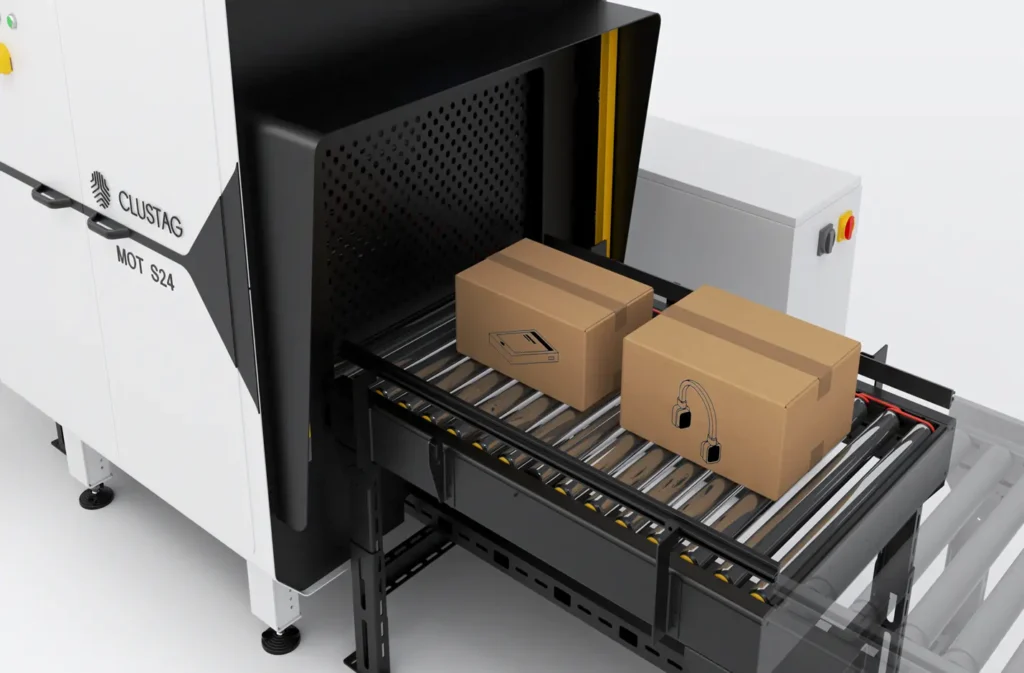
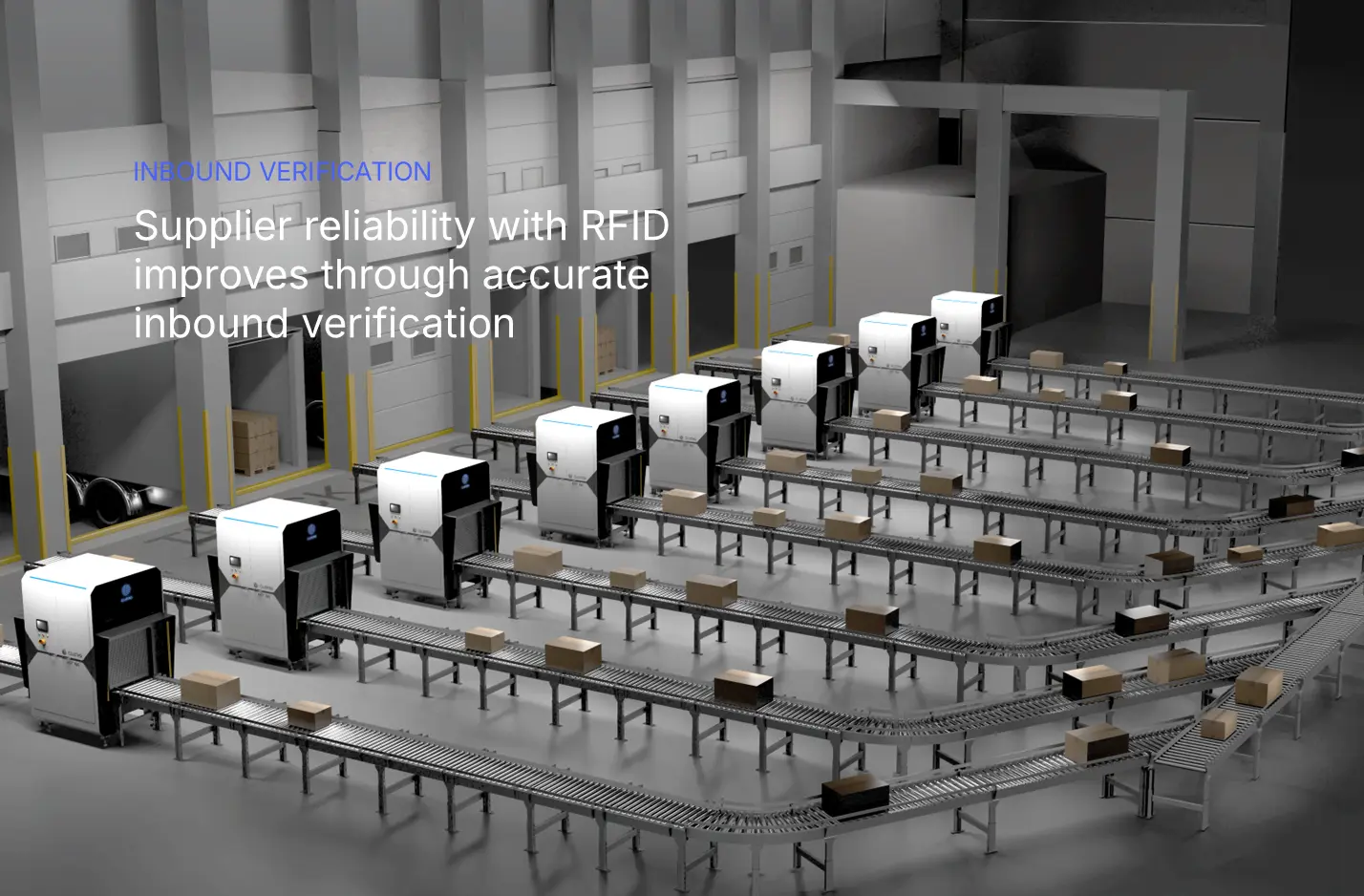
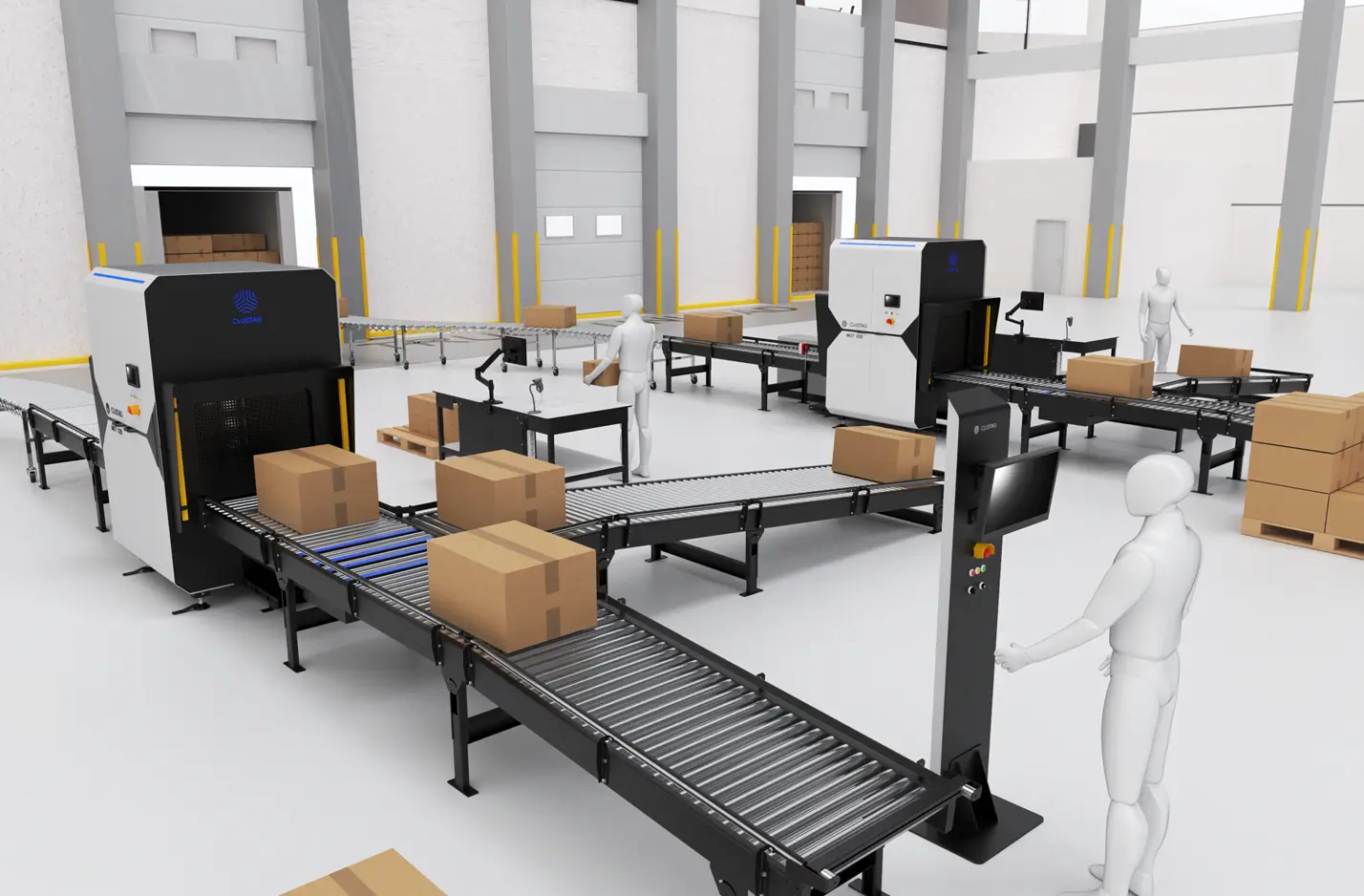
    chargeback reduction with inbound verification using Mot S24 from Clustag RFID Solutions

    Enhancing Operations Through Analytics

    Technology is most effective when paired with strong routines. By combining structured processes with real‑time data, retail organizations can boost execution quality and minimize operational variability.

    • Standardized Workflows: Embed accuracy into daily routines, even during high‑volume seasonal peaks.
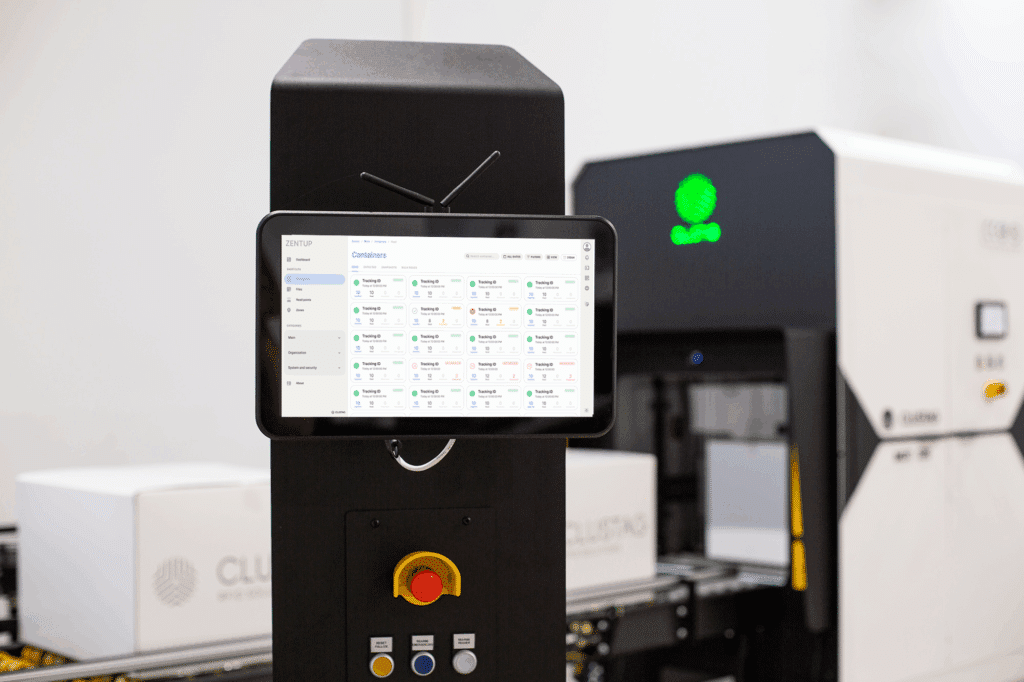
    • RFID-powered Analytics: Zentup generates real-time dashboards that highlight patterns in stock deviations or pick errors.
    • Store Alignment: When stores receive error-free deliveries, teams focus on merchandising and customer service rather than resolving discrepancies.

    Building Long-term Financial Resilience with Clustag RFID Solutions

    RFID delivers value far beyond real‑time visibility. It provides the data needed to avoid operational deviations that lead to deductions and financial loss.

    • Operational Integrity: A roadmap for consistent performance and effective chargeback reduction.
    • Enhanced Visibility: Real-time tracking from inbound reception to outbound dispatch.
    • Scalable Work Cycles: Handle higher volumes without compromising quality during product launches or promotions.

    Take Control of Your Retail Efficiency

    We would be glad to help you explore how digital automation enhances operational integrity and reduces financial losses. You can reach us through the contact form and you are also welcome to visit our Customer Experience Center, where we demonstrate our RAIN RFID Solutions in action and discuss how they can support your operational goals.


  • Tailored RFID Store Solutions for Modern Retail Operations

    Tailored RFID Store Solutions for Modern Retail Operations

    In the current retail environment, operational pressure continues to rise as brands face increasing inventory complexity, omnichannel demand, and rapid product rotation. To stay competitive, retailers are increasingly turning to RFID Store Transfer Solution that strengthen accuracy, accelerate workflows, and deliver real-time visibility without adding complexity.

    Our approach focuses on building adaptable, data-driven configurations that simplify store execution and enhance decision-making. By analyzing how each operation truly works, we help teams remove friction, strengthen control, and elevate performance across every store.

    Building Adaptable Systems for Store Performance

    Every store has unique dynamics, layout restrictions, and operational priorities. Rather than applying generic templates, we build flexible configurations that respond to how each store actually functions.

    Understanding Store Dynamics

    Backrooms face constant pressures such as:

    • Variable shipment sizes.
    • Seasonal return peaks.
    • High SKU density.
    • Unpredictable customer demand.

    By observing these patterns, we codesign reading points and validation flows that stay consistent even under fluctuating volumes. Our goal is to ensure every store captures reliable item-level data without interruptions.

    Aligning with Strategic Retail Goals

    Retailers operate with different priorities: sustainability, reduced shrinkage, improved omnichannel accuracy, or faster replenishment. We map our configurations to these priorities, ensuring data consistency from inbound to sales floor and supporting stronger fulfillment and inventory integrity through specialized RFID Store Solutions.

    Designing Solutions That Scale With Your Operations

    A future‑ready store system must evolve over time. For this reason, we create modular RFID configurations powered by a Smart RFID ecosystem that ensures software, devices, and data flows remain synchronized as the business grows.

    • Combining Automation with Human Efficiency: Store teams gain agility when repetitive tasks are removed. Automated read points and verification steps streamline counts and allow staff to focus on customer experience.
    • Superior Accuracy through Item‑Level Insight: RAIN RFID technology elevates store visibility by transforming every product movement into actionable information. With high‑performance reading and real‑time synchronization, retailers reduce errors and reinforce inventory integrity.

    Practical Applications to Strengthen Store Execution

    The true impact comes from selecting configurations that respond to specific operational pain points. Our approach focuses on building RFID Store Solutions that solve real problems rather than applying universal models.

    1. Enhancing Inbound Visibility

    For environments affected by slow manual validation or recurring discrepancies, we deploy streamlined inbound verification setups that confirm item accuracy immediately upon arrival. These configurations:

    • Reduce check‑in times.
    • Prevent errors caused by mislabeled units.
    • Accelerate product availability on the sales floor.

    2. Processing Returns with Speed and Precision

    High return volumes can overwhelm backrooms. We design rapid return‑processing workflows equipped with dependable item‑level checks. This prevents missed sales opportunities, especially for brands managing highly seasonal assortments.

    3. Maintaining Real‑Time Stock Awareness

    For locations with large assortments or frequent movement, we implement item‑location scanning routines that help teams detect missing units early. These routines are tailored to each store’s layout, supporting better omnichannel execution.

    Backroom workflow with an RF Surface validation station and Sabi Station processing inventory in a retail backstore environment.

    Creating Value Through the Smart RFID Ecosystem

    Our holistic approach ensures every device, software module, and reading point reinforces the others through a unified architecture.

    • Seamless Enterprise Integration: We ensure every read point aligns with the retailer’s ERP, POS, and e-commerce systems.
    • Operational Evolution: Modular configurations enable retailers to expand functionality or add new read points as campaign cycles and product assortments shift.

    Drive Measurable Impact with Personalized Innovation

    Improving store workflows requires more than deploying technology. It demands a careful study of product behavior, customer journeys, and process rhythms.

    If you are ready to enhance accuracy, visibility, and operational flow across your stores, we invite you to contact our team and explore how a personalized RFID strategy can empower your retail operations.

  • How an automated infeed elevates AS/RS performance

    How an automated infeed elevates AS/RS performance

    An automated infeed for AS/RS performance is the foundation of fast, predictable and error-free warehouse operations. While shuttles, cranes and high-density storage systems are essential, their real efficiency depends on the quality of inbound data. When identification, weight or volume information is incomplete, even the most advanced AS/RS struggles to perform at scale.

    By automating the inbound entry point and capturing accurate data in a single step, warehouses can improve flow, reduce exceptions and unlock full inventory visibility from the very first meter of the process.

    Why automated infeed is critical for AS/RS performance?

    Automated Storage and Retrieval Systems depend entirely on the reliability of inbound information. The infeed area generates, validates, and distributes operational data across the entire warehouse ecosystem.

    An automated infeed for AS/RS performance ensures that every item enters the system with verified identification, dimensions and weight. This structured data foundation enables automated decisions downstream and prevents disruptions that are difficult to correct later in the process.

    Ensuring data consistency from the entry point

    When people capture inbound data manually or in multiple steps, they almost inevitably introduce inconsistencies. Automated infeed solutions eliminate these gaps by standardizing data capture at the source.

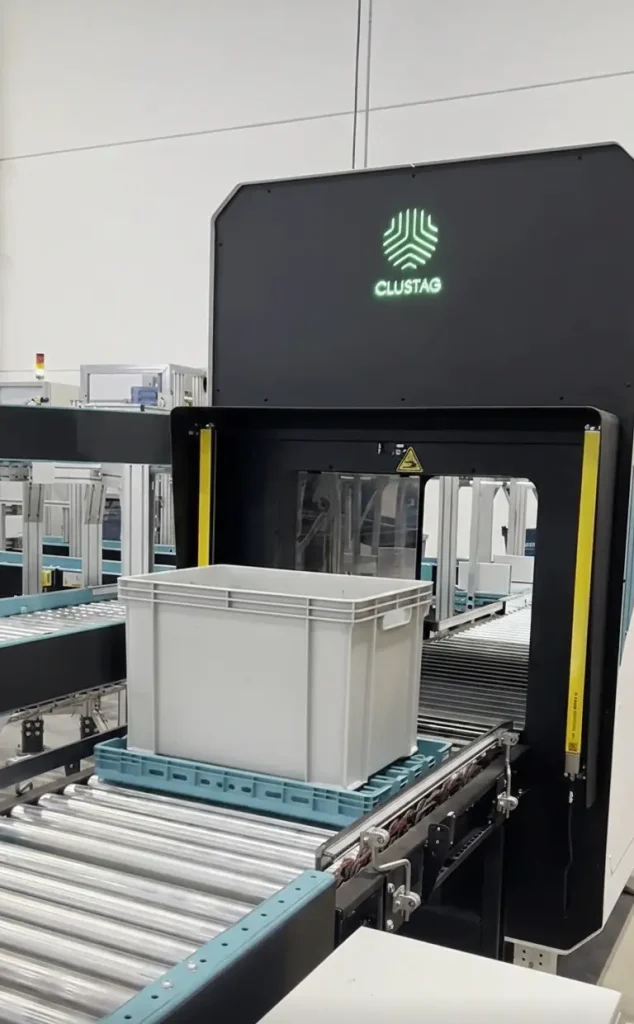
    Automated RFID infeed station by Clustag scanning a plastic tote on a conveyor inside a warehouse.

    Capturing inbound data in a single automated step

    One of the main advantages of an automated infeed is the ability to consolidate multiple validation tasks into a single, continuous flow. This reduces handling, accelerates inbound throughput and minimizes operational friction.

    By integrating identification, weighing and volume measurement, warehouses gain a reliable and repeatable process that supports AS/RS performance at scale.

    RFID, weight and volume capture at infeed

    Modern automated infeed systems combine RFID reading, dynamic weighing and volumetric measurement in motion. This approach removes manual checks and validates every carton, tote, or parcel before it enters automated storage.

    Improving data accuracy with Zentup from day one

    Accurate inbound data supports better inventory control, faster storage decisions and fewer exceptions. For high-volume warehouses, this level of precision is critical to maintain stable performance over time.

    Optimizing storage slotting with automated infeed for AS/RS data

    Storage slotting decisions are only as good as the data that feeds them. When AS/RS systems receive incomplete or incorrect dimensions, space utilization and system efficiency suffer.

    An automated infeed provides the dimensional intelligence required to allocate storage locations correctly from the outset.

    Enabling smart slotting decisions in AS/RS

    With verified item dimensions and identification, shuttles and cranes can automatically select the optimal storage position. This improves space utilization, reduces congestion and minimizes unnecessary relocation cycles.

    Reducing exceptions in automated storage systems

    Exceptions are one of the biggest threats to AS/RS performance. Even minor discrepancies can force automated systems to stop, reroute or require manual intervention.

    Automated infeed solutions act as a control gate, detecting inconsistencies before items enter the automated core of the warehouse.

    Preventing disruptions before they enter the AS/RS

    The system identifies issues such as unreadable tags, incorrect carton sizes, or unexpected weights early. The system diverts items that do not meet validation criteria to exception lanes, keeping automated flows uninterrupted.

    Stopping error propagation across warehouse processes

    By validating data at the source, warehouses prevent errors from cascading into storage, picking and outbound operations, where corrections are significantly more costly.

    Enhancing traceability with smart RFID intralogistics

    Beyond operational efficiency, automated infeed plays a critical role in traceability and quality assurance. Capturing item-level data at entry creates a digital record that follows each unit through the warehouse.

    This level of visibility supports compliance, auditing and service transparency across supply chains.

    Improving inventory visibility and accountability

    Smart RFID intralogistics solutions enable accurate inventory reconciliation, reduce disputes and improve accountability in both B2B and B2C environments.

    Maximizing AS/RS ROI with a reliable infeed process

    AS/RS systems represent a significant investment, and their performance depends heavily on inbound data quality. Strengthening the infeed process is one of the most effective ways to increase return on investment without major infrastructure changes.

    Supporting Scalable and Future-Ready Operations

    A robust automated infeed allows warehouses to adapt to changing product mixes, seasonal peaks and business growth while maintaining consistent AS/RS performance.

    At Clustag, we design automated infeed solutions that enhance AS/RS performance through precise data capture, Smart RFID technology and seamless system integration. Visit our Customer Experience Centre to see our solutions in action and experience the speed, accuracy, and traceability that Clustag can bring to your warehouse. To explore how our RFID solutions can be tailored to your specific needs, fill out our contact form and one of our experts will guide you through a personalized demonstration.


    What is an automated infeed in AS/RS systems?

    An automated infeed in AS/RS systems is the process where inbound items are automatically identified, weighed and measured before entering automated storage. It ensures accurate data capture at the entry point, enabling efficient storage, sequencing and retrieval operations.

    Why is automated infeed important for AS/RS performance?

    Automated infeed is critical for AS/RS performance because automated storage systems rely on precise inbound data. Accurate identification, weight and volume information reduce exceptions, prevent disruptions and allow AS/RS equipment to operate at full capacity.

    How does automated infeed reduce exceptions in AS/RS environments?

    Automated infeed reduces exceptions by validating inbound items before they enter the AS/RS. Incorrect dimensions, unreadable tags or unexpected weights are detected early and diverted to exception handling areas, preventing system interruptions.

    What data is captured during an automated inbound process?

    During an automated inbound process, systems typically capture item identification using RFID, along with accurate weight and volume measurements. This data is used to optimize storage allocation and improve overall warehouse efficiency.

    Can automated infeed improve ROI on existing AS/RS systems?

    Yes, automated infeed improves ROI on existing AS/RS systems by enhancing data quality without major infrastructure changes. Better inbound data increases throughput, reduces downtime and extends the operational lifespan of automation assets.

  • Supplier reliability with RFID improves through accurate inbound verification

    Supplier reliability with RFID improves through accurate inbound verification

    In today’s competitive logistics landscape, supplier reliability with RFID drives smooth and error-free inbound operations. As companies strive to optimize their supply chains, the need to verify shipments accurately and hold suppliers accountable. Clustag, a leader in RFID and automation solutions, helps businesses strengthen supplier reliability through RFID inbound verification powered by its propietary software, Zentup.

    Supply reliability with RFID: a strategic imperative

    Supplier reliability goes beyond on-time deliveries, it means delivering the correct items, in the right quantities, with full traceability. Traditional barcode systems often miss hidden shortages, mislabeling or unscanned items.

    When companies integrate RFID technology into their receiving workflows, they gain real-time, item-level visibility that turns inbound verification into a proactive quality control mechanism.  

    Clustag’s middleware, Zentup, compares expected shipments with actual deliveries automatically. As goods arrive, Zentup reads each RFID tag and matches it directly to the Advance Shipping Notice (ASN). The system identifies and classifies any discrepancy instantly, documenting it for supplier feedback and ensuring complete traceability from the start.

    The role of RFID inbound verification in supplier reliability

    RFID inbound verification confirms that received goods match purchase orders and shipping notices, improving inventory accuracy, productions schedules and customer experience.

    With RFID enabled inbound verification, companies:

    Zentup streamlines every stage, reduces manual work, and minimizes human error, helping teams build stronger and more reliable supply chains.

    Measuring supplier reliability with RFID

    To quantify the RFID impact in supplier reliability, companies can track key performance indicators such as:

    Zentup provides dashboards and analytics that help to the companies monitor these KPIs and make informed decisions regarding supplier relationship and operational improvements.

    Scaling RFID across multiples warehouses

    For organisation with various distribution centers, maintaining consistent inbound verification is essential. Clustag’s solution supports centralized configuration and remote monitorization, allowing businesses to:

    This scalability ensures that supplier reliability with RFID becomes a company-wide standard, not just a localized idea.

    Common challenges solved by RFID receiving accuracy

    Receiving accuracy with RFID addresses several problems in inbound logistics:

    With Zentup, these challenges are resolved through automated detection and documentation, making RFID inbound verification more reliable and efficient.

    Strategic benefits of supplier reliability with RFID

    Beyond operational improvements, supplier reliability with RFID offers strategic advantages:

    Clustag’s RFID solutions are designed to growth with your business, adapting to new suppliers, product lines and logistic models.

    How Clustag measures the supplier reliability with RFID

    Clustag’s middleware Zentup not only automates inbound verification, but it also provides a robust framework to measure supplier reliability with RFID over time. Through its analytics dashboard, companies can track supplier performance using real-time RFID data and historical trends.

    Key metric includes:

    These insights allow procurement and logistics teams to build scorecards based on objective data, not just anecdotal feedback. Over time, this leads to more strategic sourcing, better collaborations and fewer disruptions in the supply chain.

    Zentup also enables exporting reports for audits, internal reviews, or supplier negotiations, making supplier reliability with RFID not only a technical metric, but a strategic asset.

    Managing exceptions and errors with Zentup

    Even in highly automated environments, exceptions can occur, whether due unreadable tags, unexpected items or discrepancies between shipment data and actual goods. Clustag’s Zentup middleware is designed to detect and manage these exceptions in real time, ensuring that supplier reliability with RFID is not compromised:

    When a discrepance is detected, Zentup:

    These exceptions are not just logged: they are actionable. Zentup enables users to categorize errors (e.g., missing item, incorrect SKU, duplicate tag), assign resolution status and track how quickly each issue is addressed. This process helps teams close the feedback loop with supplier and continuously improve inbound accuracy.

    By managing exceptions proactively, Clustag ensures that RFID inbound verification remains robust, even when shipments deviate from expectations.

    Supplier reliability with RFID as a competitive advantage

    In a supply chain where every error can lead to delays and lost revenue, supplier reliability with RFID is a powerfull tool for ensuring operational excellence. Clustag’s Zentup middleware enables companies to automate inbound verification with RFID, reduce errors and build stronger relationships with suppliers.

    By transforming receiving from a manual bottleneck into a strategic advantage, RFID technology helps companies to achieve more accuracy, accountability and efficiency. Whether you are scaling across warehouses or optimizing a single site, Clustag provides the tools to make supplier reliability with RFID a cornerstone of your logistics strategy.

  • RFID receiving accuracy prevents tech errors in warehouse inbound operations

    RFID receiving accuracy prevents tech errors in warehouse inbound operations

    RFID receiving accuracy is becoming a strategic advantage for retailer seeking to improve supply chain efficiency. From ensuring shelves are stocked to enabling seamless omnichannel fulfilment, business must optimize every step of the logistics process. One of the most critical areas in the inbound flow of goods into warehouses. Errors at this stage can ripple through the entire supply chain, causing delays, stockouts, and unnecessary costs.

    To address these challenges, retailers increasingly rely on RFID receiving accuracy. By using item-level RFID technology during the inbound verification process, businesses can detect technological errors early, validate shipments with precision, and gain real-time visibility into inventory from the moment it enters the warehouse. Consequently, they minimize operational disruptions and reduce costs.

    The importance of accurate inbound verification

    Inbound verification confirms that received goods match the expected shipment in terms of quantity, type, and condition. Traditionally, staff perform this manually, which makes into prone to human error, time-consuming, and lacking real-time data. Inaccuracies at this stage can result in:

    In a high-volume warehouse environment, where thousands of items arrive daily, even small errors can have significant operational and financial consequences.

    The impact of RFID technology on receiving operations

    RFID technology enables automatic identification and tracking items using radio waves. When applied to inbound verification, RFID transforms the receiving process by:

    Clustag’s RFID Solutions, such as the MOT Station, are designed to handle high-throughput environments efficiently. They scan over 1200 boxes per hour and achieve inventory accuracy rates of up to 99,92%, eliminating manual bottlenecks and reducing technological errors during receiving.

    RAIN RFID technology errors before they escalate

    One major benefit of RFID receiving accuracy is detecting errors at the point of entry. These include:

    Container-type scanning: boxes, pallets, and GOH

    Inbound shipments often arrive in different formats, each presents unique verification challenges. Clustag’s RFID solutions adapt to all container types:

    This flexibility ensures that goods are verified accurately and efficiently, supporting RFID shipments verification across all formats.

    Enhancing supplier reliability

    RFID receiving accuracy also improves supplier accountability. Automation allows retailers to:

    As a result, suppliers consistently meet quality and accuracy standards, creating a more transparent and reliable supply chain.

    Real-time inventory visibility from day one

    Once items are verified, RFID provides real-time inventory visibility. Each scanned item logs instantly into the warehouse management system (WMS), providing:

    This visibility enables retailers to make informed decisions about stock allocation, replenishment, and logistics planning. It also supports real-time inbound logistics, keeping inventory aligned with demand.

    How Clustag enhances inbound verification with RFID

    At Clustag, we understand that inbound verification is more than a technical process; it is a strategic opportunity to gain control, reduce errors, and improve supplier accountability from the very first scan. Our RFID ecosystem delivers receiving accuracy at scale, tailored to the real-world needs of retail warehouses.

    The MOT Station, equipped with high-performance RFID tunnel technology, scans over 1200 boxes per hour with up to 99.92% accuracy. This ensures faster receiving, fewer manual interventions, and immediate detection of errors such as mislabeling, unreadable tags, or incorrect shipments.

    Zentup and container-type flexibility

    Beyond speed and precision, Clustag’s solutions support container-type flexibility. Whether goods arrive in boxes, pallets or GOH formats, our RFID infrastructure ensures seamless verification. Integrated with Zentup, our middleware platform, all captured data is instantly synchronized with ERP or WMS systems.

    This enables real-time inventory visibility, automated inbound reconciliations, and actionable insights for logistics teams.

    By choosing Clustag, retailers gain a partner committed to operational excellence. Our RFID solutions automate inbound verification and elevate the reliability of the entire supply chain.

    To find out more about how RFID can transform your intralogistics operations, contact us here. Our team will be gratified to guide you through the possibilities of receiving accuracy and help you explore the best solution for your warehouse.