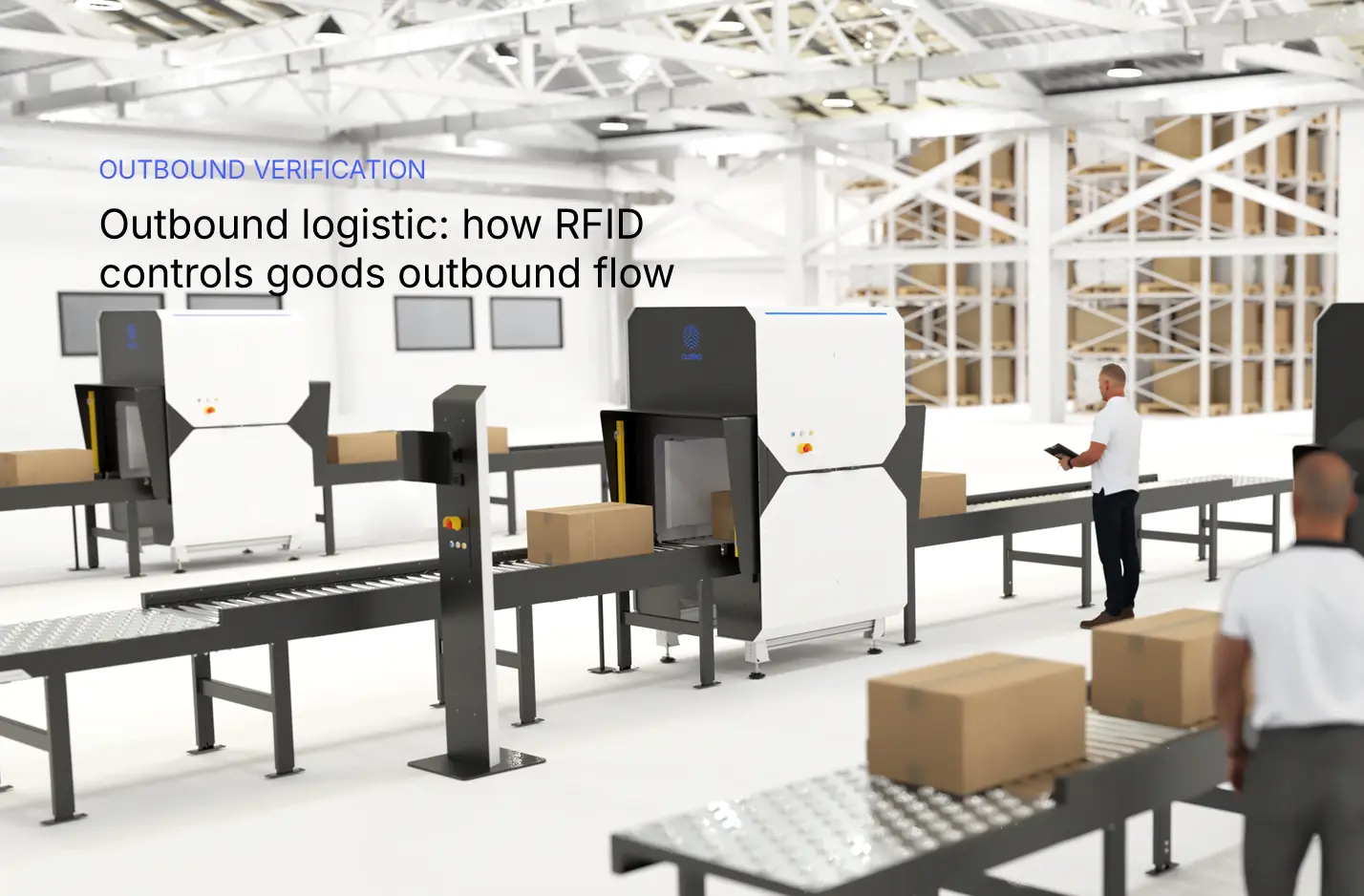

At Clustag, we work to ensure that every warehouse outbound operation is accurate, efficient and fully traceable. Implementing outbound verification in shipping processes guarantee that each order leaves the warehouse correctly and is recorded with complete real time visibility. The benefits of outbound verification not only improve shipment accuracy but also optimize inventory management and reduce errors that can affect supply chain.
With our RFID solutions and seamless integration with ERP and WMS systems, our Clustag’s team of experts provides full control over the outbound flow, from picking to final delivery, enhancing operational efficiency while minimizing costs associated with errors and returns.
Improved shipment accuracy
Ensuring every order is dispatched accurately is critical to maintaining customer satisfaction and operational efficiency. Outbound verification plays a vital role in minimizing errors before items leave the warehouse
Enhace shipment accuracy
At Clustag, we work to make outbound verification a reliable and automate process. Each pallet, box or item is validated through RFID before leaving the warehouse, ensuring that the shipment exactly matches the customer order
Reducing errors with RFID
Our RFID solutions automatically identify and cross-check each unit against ERP/WMS records, eliminating manual checks and significantly reducing human error.
In a retail logistical center, our team implemented RFID technology to verify thousands of daily shipments. Shipment accuracy increased to 99,8%, while inventory control was updated in real time without disruption operations.
Enhanced visibility and traceability
Real-time visibility of every in the outbound process is essential for effective warehouse management. Complete traceability enables, logistic teams to monitor operations and respond to issues immediately.
Real time tracking
At Clustag, we work to offer complete visibility over the outbound process. By automatically reading RFID tags at strategic points, logistics managers can track pallets, cartons and individual items in real time through the ERP o WMS.
Item-level records
Our RFID middleware generates detailed item-level records, offering complete traceability throughout the outbound process. This facilitates audits, achievement analysis and immediate identification of operational issues.
Our team supported an international logistics operator in monitoring of 100.000 daily items, achieving complete item-level traceability and reducing inventory discrepancies by 95%
Time and efficiency optimization
Optimizing outbound operations saves time, reduces bottlenecks and allows warehouse staff to focus on higher-value tasks. Implementing technology-based verification is key to speeding up processes.
Speeding up the outbound process
With our solutions, Clustag works to speed up the outbound process through mass RFID readings, eliminating manual steps and enabling operators to handle larger order volumes in less time.
Reducing downtime and bottlenecks
Automating outbound verification with RFID prevents interruptions caused by human errors, reducing bottleneck in critical areas such as consolidation a shipping.
Integration with ERP and WMS systems
Seamless integration between outbound verification and ERP/WMS platforms ensures that data flows with not interruptions, improving inventory accuracy and operational decision-making.
Verification automation and inventory update
At Clustag, we work to integrate outbound verification with existing ERP/WMS systems, so that each RFID read automatically updates inventory and confirms dispatched orders.
Real time data synchronization
This ensures a single, accurate view of stock, facilitates planning of routes, replenishments and deliveries. Reduce discrepances between systems, optimizing the entire supply chain.
Our experts team ensures seamless and scalable integration, maintaining operational efficiency without interrupting daily warehouse activities.
Scalability and adaptability
Warehouse operations must adapt to growing volumes and changing business requirements. RFID solutions provide the flexibility to scale efficiently while maintaining control.
Adapting to growing volumes
At Clustag, we work to make our RFID solutions scalable, capable of handling hundreds to thousands of units per minute, adapting to increasing demand or network expansion.
Suitable for manual and automated environments
Our solutions are flexible: they can be deployed in manual processes with RFID portals or handheld readers, as well as in fully automate systems with conveyors and fixed readers. This enables warehouses to gradually increase automation while always maintaining traceability and control.
RFID specific benefits
Leveraging RFID technology in outbound logistics provides measurable advantages in accuracy, efficiency and traceability:
- Higher accuracy in item counting and verification
- Reduction of human errors and returns
- Improved traceability across the supply chain
- Automatic inventory updates, eliminating repetitive tasks
- Increased productivity of operational staff
- Enhanced visibility of outbound flow, from preparation to final delivery
These improvements help maintain high OTIF compliance rates and optimize overall warehouse efficiency.
The Benefits of outbound verification are clear: higher accuracy, complete traceability, and optimized time in outbound operations. At Clustag, we work to ensure every outbound process is managed efficiently, reducing errors and enhancing visibility throughout the supply chain.
Would you like to explore how to enhace outbound verification and traceability in your warehouse?
Contact our team of experts and discover how Clustag can help you optimize your operations with a fully customized approach to your processes.