Tag: rfid outbound verification

  • Dock Validation: The Final Frontier of Supply Chain Efficiency

    Dock Validation: The Final Frontier of Supply Chain Efficiency

    The loading dock is often the most overlooked area of the warehouse, yet it is arguably the most critical. It represents the “moment of truth” where all previous efforts planning, picking, and packing must culminate in a perfect delivery.

    Historically, dock validation have been treated as a simple transition point. However, in today’s high-velocity logistics environment, the dock has evolved into a strategic decision node. Any failure here a missed pallet, a wrong truck assignment, or a manual scanning error cascades into customer dissatisfaction and significant operational costs. At Clustag, we transform this “operational bottleneck” into a streamlined, automated, and data-driven process.

    “The dock is no longer just a place where goods pass through; it is the final filter for quality and the last chance to ensure that what was promised is what is delivered.” Luis Rius, CEO at Clustag

    Why Dock Operations Often Break Down

    Traditional dock management relies heavily on manual intervention and visual checks. Even in highly automated warehouses, the “last yard” of the loading process often remains a manual blind spot. When shipping volumes peak, these manual processes inevitably lead to friction.

    Common challenges at the loading dock:

    • Loading errors: Pallets loaded onto the wrong carrier or route.
    • Manual bottleneck: Drivers and operators waiting for manual paperwork or barcode scans.
    • Inbound/Outbound friction: Lack of real-time synchronization between the warehouse and the transport fleet.
    • Data gaps: A loss of visibility the moment a pallet leaves the packing station but hasn’t yet entered the truck.

    Without automated validation, the dock remains a source of risk rather than a source of value.

    How RFID Transforms Dock Validation into a Traceable Flow

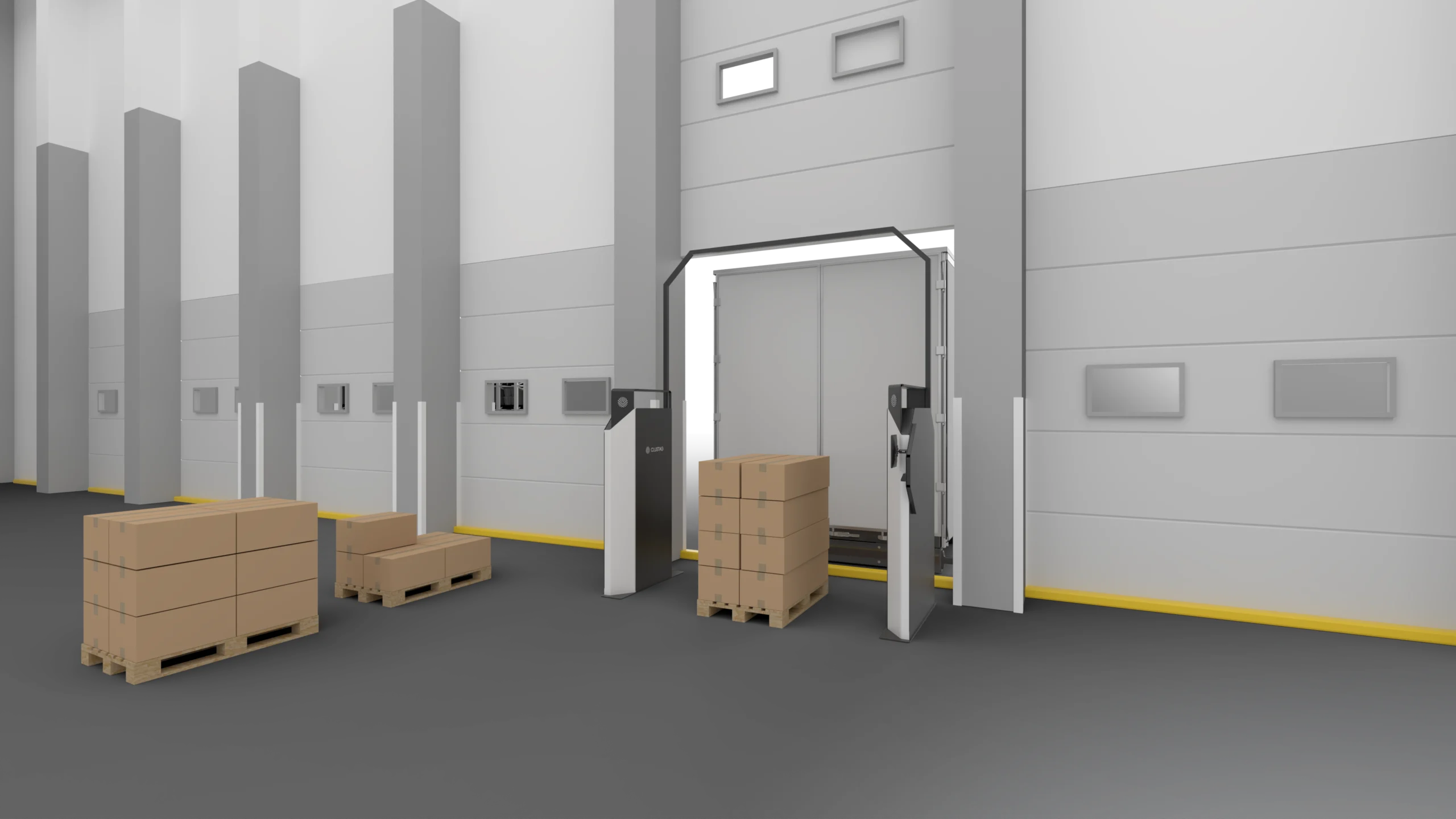
    With Clustag RFID Solutions, dock shipping validation shifts from a fragmented manual task to a fully automated, item-level flow. By deploying RAIN RFID portals at each dock door, we eliminate the need for operators to stop and scan.

    The process is designed for maximum velocity:

    1. Automatic Identification: As a forklift or pallet jack passes through the RFID portal, every item is identified instantly without line-of-sight.
    2. Real-Time Validation: Our software, Zentup, cross-references the RFID data with the shipping order in the WMS/ERP. If a pallet is heading to the wrong dock, the system triggers an immediate alert.
    3. Carrier Coordination: The system records the exact timestamp of departure, providing irrefutable proof of delivery to the carrier and closing the traceability loop.

    Business Impact of Automated Dock Validation

    When accurate, automated data capture supports the outbound process, the results are measurable across both financial and operational KPIs.

    Operational ChallengeImpact with Clustag RFID
    Shipping ErrorsReduction of mis-shipments to near 0%
    Loading SpeedUp to 80% faster dock turnaround times
    Labor CostsElimination of manual scanning and double-checks
    Dispute ManagementDigital “Proof of Load” reduces carrier claims

    Why Clustag is Built for Scalable Dock Automation

    Our approach to dock validation goes beyond hardware. We provide an integrated ecosystem that handles the complexity of high-density RFID environments:

    • Zentup Integration: Our platform acts as the brain, translating billions of RFID reads into actionable warehouse events for your ERP or WMS.
    • Global Scalability: Whether you manage a single facility or a global network, our solutions provide a standardized data model for all shipping operations.

    Turning Dock Management into a Competitive Advantage

    Optimizing the loading dock is no longer optional. It is a fundamental pillar of a modern, resilient supply chain. By replacing manual uncertainty with RFID-driven precision, retailers and logistics providers can ensure that their outbound flow is as fast and accurate as their automated storage systems.

    At Clustag, we don’t just provide technology; we provide the visibility and control needed to master the final step of the logistics journey.

    Ready to eliminate shipping errors?

    Contact our experts to learn how Clustag can automate your dock operations.

  • Benefits of outbound verification in warehouse operations

    Benefits of outbound verification in warehouse operations

    At Clustag, we work to ensure that every warehouse outbound operation is accurate, efficient and fully traceable. Implementing outbound verification in shipping processes guarantee that each order leaves the warehouse correctly and is recorded with complete real time visibility. The benefits of outbound verification not only improve shipment accuracy but also optimize inventory management and reduce errors that can affect supply chain.

    With our RFID solutions and seamless integration with ERP and WMS systems, our Clustag’s team of experts provides full control over the outbound flow, from picking to final delivery, enhancing operational efficiency while minimizing costs associated with errors and returns.

    Improved shipment accuracy

    Ensuring every order is dispatched accurately is critical to maintaining customer satisfaction and operational efficiency. Outbound verification plays a vital role in minimizing errors before items leave the warehouse

    Enhace shipment accuracy

    At Clustag, we work to make outbound verification a reliable and automate process. Each pallet, box or item is validated through RFID before leaving the warehouse, ensuring that the shipment exactly matches the customer order

    Reducing errors with RFID

    Our RFID solutions automatically identify and cross-check each unit against ERP/WMS records, eliminating manual checks and significantly reducing human error.

    In a retail logistical center, our team implemented RFID technology to verify thousands of daily shipments. Shipment accuracy increased to 99,8%, while inventory control was updated in real time without disruption operations.

    Enhanced visibility and traceability

    Real-time visibility of every in the outbound process is essential for effective warehouse management. Complete traceability enables, logistic teams to monitor operations and respond to issues immediately.

    Real time tracking

    At Clustag, we work to offer complete visibility over the outbound process. By automatically reading RFID tags at strategic points, logistics managers can track pallets, cartons and individual items in real time through the ERP o WMS.

    Item-level records

    Our RFID middleware generates detailed item-level records, offering complete traceability throughout the outbound process. This facilitates audits, achievement analysis and immediate identification of operational issues.

    Our team supported an international logistics operator in monitoring of 100.000 daily items, achieving complete item-level traceability and reducing inventory discrepancies by 95%

    Time and efficiency optimization

    Optimizing outbound operations saves time, reduces bottlenecks and allows warehouse staff to focus on higher-value tasks. Implementing technology-based verification is key to speeding up processes.

    Speeding up the outbound process

    With our solutions, Clustag works to speed up the outbound process through mass RFID readings, eliminating manual steps and enabling operators to handle larger order volumes in less time.

    Reducing downtime and bottlenecks

    Automating outbound verification with RFID prevents interruptions caused by human errors, reducing bottleneck in critical areas such as consolidation a shipping.

    Integration with ERP and WMS systems

    Seamless integration between outbound verification and ERP/WMS platforms ensures that data flows with not interruptions, improving inventory accuracy and operational decision-making.

    Verification automation and inventory update

    At Clustag, we work to integrate outbound verification with existing ERP/WMS systems, so that each RFID read automatically updates inventory and confirms dispatched orders.

    Real time data synchronization

    This ensures a single, accurate view of stock, facilitates planning of routes, replenishments and deliveries. Reduce discrepances between systems, optimizing the entire supply chain.

    Our experts team ensures seamless and scalable integration, maintaining operational efficiency without interrupting daily warehouse activities.

    Scalability and adaptability

    Warehouse operations must adapt to growing volumes and changing business requirements. RFID solutions provide the flexibility to scale efficiently while maintaining control.

    Adapting to growing volumes

    At Clustag, we work to make our RFID solutions scalable, capable of handling hundreds to thousands of units per minute, adapting to increasing demand or network expansion.

    Suitable for manual and automated environments

    Our solutions are flexible: they can be deployed in manual processes with RFID portals or handheld readers, as well as in fully automate systems with conveyors and fixed readers. This enables warehouses to gradually increase automation while always maintaining traceability and control.

    RFID specific benefits

    Leveraging RFID technology in outbound logistics provides measurable advantages in accuracy, efficiency and traceability:

    These improvements help maintain high OTIF compliance rates and optimize overall warehouse efficiency.

    The Benefits of outbound verification are clear: higher accuracy, complete traceability, and optimized time in outbound operations. At Clustag, we work to ensure every outbound process is managed efficiently, reducing errors and enhancing visibility throughout the supply chain.

    Would you like to explore how to enhace outbound verification and traceability in your warehouse?

    Contact our team of experts and discover how Clustag can help you optimize your operations with a fully customized approach to your processes.

  • Outbound logistic: how RFID controls goods outbound flow

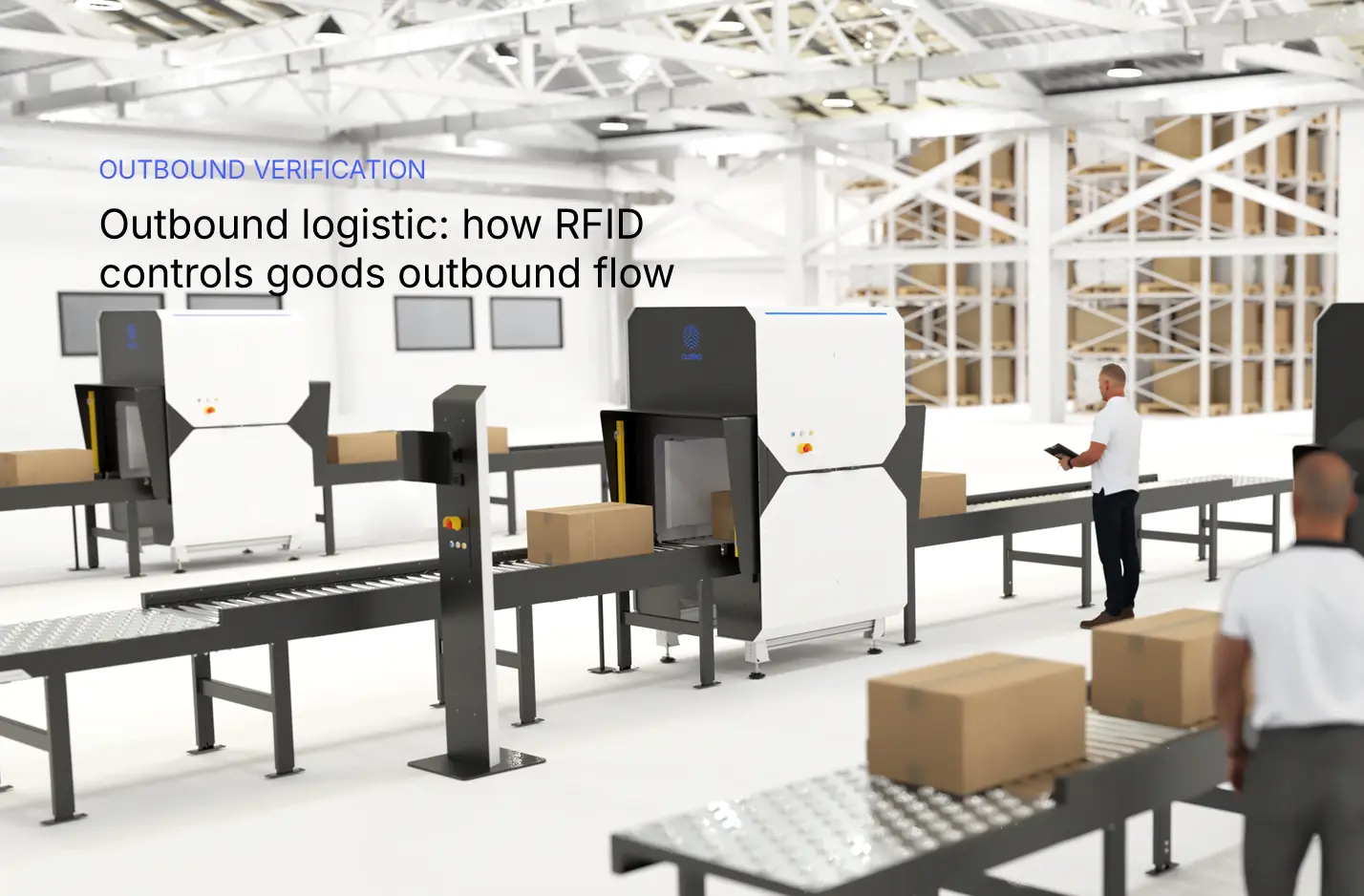
    Outbound logistic: how RFID controls goods outbound flow

    In outbound logistic, accuracy is non-negotiable. As the final stage before goods leave the warehouse, outbound verification guarantees that the right items reach the right customer, on time. RFID technology, integrated with middleware like Zentup, performs a key role in automating and securing this process, especially in high-volume, multi-SKU environments.

    What is outbound verification?

    Outbound verification is the process of confirming that the items prepared for shipment match the customer’s order before dispatch. It serves as a key control point within the outbound logistics process, ensuring accuracy, contractual compliance, and traceability.

    Although, it forms part of the outbound logistic value chain, it stands out for its specific focus on validating the products leaving the warehouse. It is especially relevant in sectors where shipping accuracy is non-negotiable, such as retail, 3PL, pharmaceutical and groceries.

    Operational flow of outbound logistic with RFID

    RFID technology enables fast and automated outbound logistic by capturing item-level data in real time. Here is how it works:

    Item-level RFID scanning

    Order validation via Zentup middleware

    Discrepancy detection and immediate correction

    Final validation and complete traceability

    Operational benefits of RFID-based outbound logistic

    Implementing RFID for outbound logistic provides measurable benefits in logistics KPIs:

    Integration with ERP and WMS: architecture and automation

    RFID Outbound logistic does not work in insolation. Its real value multiplies when integrated with management system such as:

    Zentup acts like middleware between RFID devices and these systems, managing events, validating rules and data flows. This architecture enables automate of tasks such as:

    Manual vs RFID-based verification

    AspectManual Verification    Verification RFID
    Time for shipmentHighVery low
    AccuracyVariableHigh (99,9% or more)
    TraceabilityLimitedComplete, item-level
    Operating costHigh (labor-intensive)Optimized (automation)
    ScalabilityLimitedHigh
    Human error riskHighMinimal

    Real-world stages of RFID error prevention

    Impact on customer experience and after-sale

    Outbound verification not only improves internal operations, but also has a direct impact on customer experience:

    It also enables value-added services such as:

    Applications in outbound shipments

    RFID outbound logistic adapts to different shipment types and industries.

    Whether verifying outbound activities in warehouse or ensuring outbound compliance in omnichannel retail, RFID guarantees speed and accuracy.

    Implementation examples

    These verification workflows are used in both automated and manual operations:

    These examples demonstrate how RFID enhances outbound verification, reducing errors and increasing operational performance.

    Outbound verification is the final quality checkpoint before items leave the warehouse. It guarantees that every shipped item is correct, traceable and ready for delivery. By integrating RFID with Zentup middleware, companies gain real time visibility, operational accuracy and complete traceability.

    In a supply chain where accuracy and speed are essential, RFID technology transforms outbound logistic into an agile, automated, and data-driven process that protects both the business and the customer.