
Author: Belén Cardona

  • Why Every Retailer Needs Its Own RFID Self-Checkout Kiosk

    Why Every Retailer Needs Its Own RFID Self-Checkout Kiosk

    An RFID self-checkout kiosk is often presented as the next big step in retail automation. Customers can complete a purchase in seconds, queues become shorter, and store teams can focus on delivering a better shopping experience. However, not every retailer is ready for RFID self-checkout.

    In our experience, the retailers that achieve the best results are not those looking for a checkout solution. They are those that have already spent years building a strong RFID foundation across their stores. They understand product visibility, they trust RFID data, and they have started rethinking how identification, protection, and checkout should work together.

    RFID self-checkout is not the starting point of the RFID journey. It is the natural next step for retailers that have already embraced RFID throughout their operations.

    The RFID journey that leads to self-checkout

    Before discussing autonomous purchasing experiences, it is important to understand how retailers typically reach this stage.

    Very few organizations move directly from traditional retail processes to RFID self-checkout. Instead, they progressively build RFID capabilities across multiple store operations until self-service becomes a logical evolution.

    From inventory accuracy to operational confidence

    Most retailers introduce RFID to solve inventory-related challenges.

    Their initial objectives usually include:

    • Increasing stock accuracy
    • Improving product availability
    • Accelerating inventory counts
    • Reducing manual processes
    • Supporting omnichannel operations

    At this stage, RFID is primarily viewed as an operational tool. As data quality improves and employees become familiar with RFID-enabled workflows, retailers begin discovering additional opportunities that go beyond inventory management.

    When RFID starts transforming the shopping experience

    Once product visibility becomes reliable, attention naturally shifts toward customer-facing processes.

    Retailers start asking new questions:

    • How can we reduce waiting times?
    • How can we simplify in-store transactions?
    • How can we increase customer autonomy?
    • How can we remove friction from the purchasing process?

    This is usually the moment when RFID self-checkout enters the strategic roadmap.

    Why traditional product protection becomes a limitation

    While RFID continues evolving across retail operations, many stores still rely on protection systems designed decades ago. These solutions have helped reduce theft, but they were never developed for autonomous purchasing environments.

    The operational burden of hard tags

    Hard tags remain common across many sectors, particularly fashion retail. Although effective as a deterrent, they introduce several operational challenges:

    • Manual attachment and removal processes
    • Dependence on store associates
    • Additional handling at checkout
    • Increased maintenance requirements
    • Interruptions during the purchasing process

    For retailers pursuing frictionless shopping experiences, these limitations become increasingly difficult to justify.

    Electromagnetic labels as a transition stage

    Many organizations are currently replacing traditional hard tags with electromagnetic labels. This transition helps simplify protection processes while reducing the physical interaction required during payment. However, for retailers with a mature RFID strategy, electromagnetic technology is rarely the final destination. Instead, it often represents an intermediate step toward a future where product identification and protection are supported by the same technology.

    The ultimate objective is not to replace one security device with another. It is to eliminate unnecessary technologies altogether.

    When RFID becomes the only technology needed

    As retailers advance in their digital transformation journey, running separate systems for identification and protection becomes increasingly inefficient.

    The goal shifts from managing multiple technologies to simplifying the entire ecosystem.

    One label supporting multiple processes

    A single RFID tag can contribute to several business functions simultaneously:

    • Product identification
    • Inventory visibility
    • Store replenishment
    • Omnichannel fulfillment
    • Merchandise traceability
    • Checkout automation
    • Exit validation

    This creates a more connected retail environment where information flows through the same infrastructure.

    Reducing complexity across the store

    Managing multiple technologies often means managing multiple workflows.

    Traditional approachRFID-driven approach
    Hard tags for protectionRFID tags for identification and validation
    Separate security processesUnified operational workflow
    Multiple devices and proceduresSimplified infrastructure
    Staff intervention during paymentGreater customer autonomy
    Higher operational complexityMore streamlined operations

    For many retailers, this simplification becomes one of the strongest business cases for RFID self-checkout.

    Why a standard RFID self-checkout kiosk does not exist

    Once a retailer reaches the point where RFID self-checkout becomes viable, another important realization emerges. No two retail environments operate in exactly the same way. As a result, no single kiosk design can solve every challenge.

    Different stores create different requirements

    Retail environments vary significantly in terms of:

    • Available selling space
    • Product assortment
    • Customer behavior
    • Traffic patterns
    • Self-checkout locations
    • Brand positioning

    A solution developed for a luxury fashion store will not necessarily fit the needs of a sports retailer or a department store. The interaction model, physical footprint, and operational requirements can be completely different.

    The checkout experience must fit the retail concept

    Customers should never feel that a technology has been added as an afterthought. The self-checkout area should feel like a natural extension of the store environment.

    This involves adapting elements such as:

    • Dimensions
    • Materials
    • User interaction points
    • Store integration
    • Customer flow

    The objective is not simply to install a kiosk.The objective is to create an experience that aligns with the retailer’s identity and purchasing journey.

    A real-world example of RFID self-checkout kiosk customization

    One of the most common mistakes in self-checkout projects is focusing exclusively on speed.

    In reality, retailers often face a broader challenge.

    The initial objective was bigger than reducing queues

    A fashion retailer approached the project with several objectives:

    • Improve transaction speed
    • Preserve store aesthetics
    • Support autonomous purchasing
    • Simplify protection processes
    • Prepare stores for future retail models

    The challenge was not technological. The challenge was creating an experience that fit naturally within the existing concept.

    The solution RFID was designed around the store, not around the kiosk

    Rather than deploying a predefined system, the project was developed according to the retailer’s specific requirements. Several factors shaped the final solution:

    1. Customer circulation patterns
    2. Available installation space
    3. Existing operational workflows
    4. Store design guidelines
    5. Long-term transformation objectives

    The result was not simply a checkout point. It was a purchasing experience fully integrated into the retail environment.

    The outcomes achieved

    Business objectiveResult
    Faster transactionsReduced self-checkout time
    Better customer autonomyLess dependence on store staff
    More consistent brand imageSeamless store integration
    Simplified purchasing processFewer operational steps
    Future-ready infrastructureScalable retail platform

    Every retailer needs its own RFID self-checkout kiosk

    Retailers do not arrive at RFID self-checkout overnight. They reach this stage after building inventory visibility, gaining confidence in RFID data, and understanding that traditional protection systems create unnecessary friction.

    By the time they start exploring self-service purchasing, they already recognize that the future lies in simplification. They understand that hard tags are becoming increasingly incompatible with autonomous shopping experiences. They see electromagnetic technologies as a transitional phase. And they recognize that RFID can support identification, traceability, protection, and checkout within the same ecosystem.

    This is precisely why there is no universal kiosk.

    Every retailer follows a different path, operates in a different environment, and serves customers with different expectations.

    Every retailer needs its own RFID Self-Checkout Kiosk. Not because the technology changes, but because each retail environment has its own operational realities, purchasing dynamics, and transformation priorities. The most successful projects are not based on standard products. They are built around the specific needs of the retailer behind them.

    Supporting retail transformation initiatives

    Many retailers view self-checkout as part of a broader digital transformation roadmap.

    RFID self-checkout provides a scalable foundation for future innovation while maintaining alignment with existing operational strategies.
  • Manufacturing Hub: One Year of Greater Efficiency

    Manufacturing Hub: One Year of Greater Efficiency

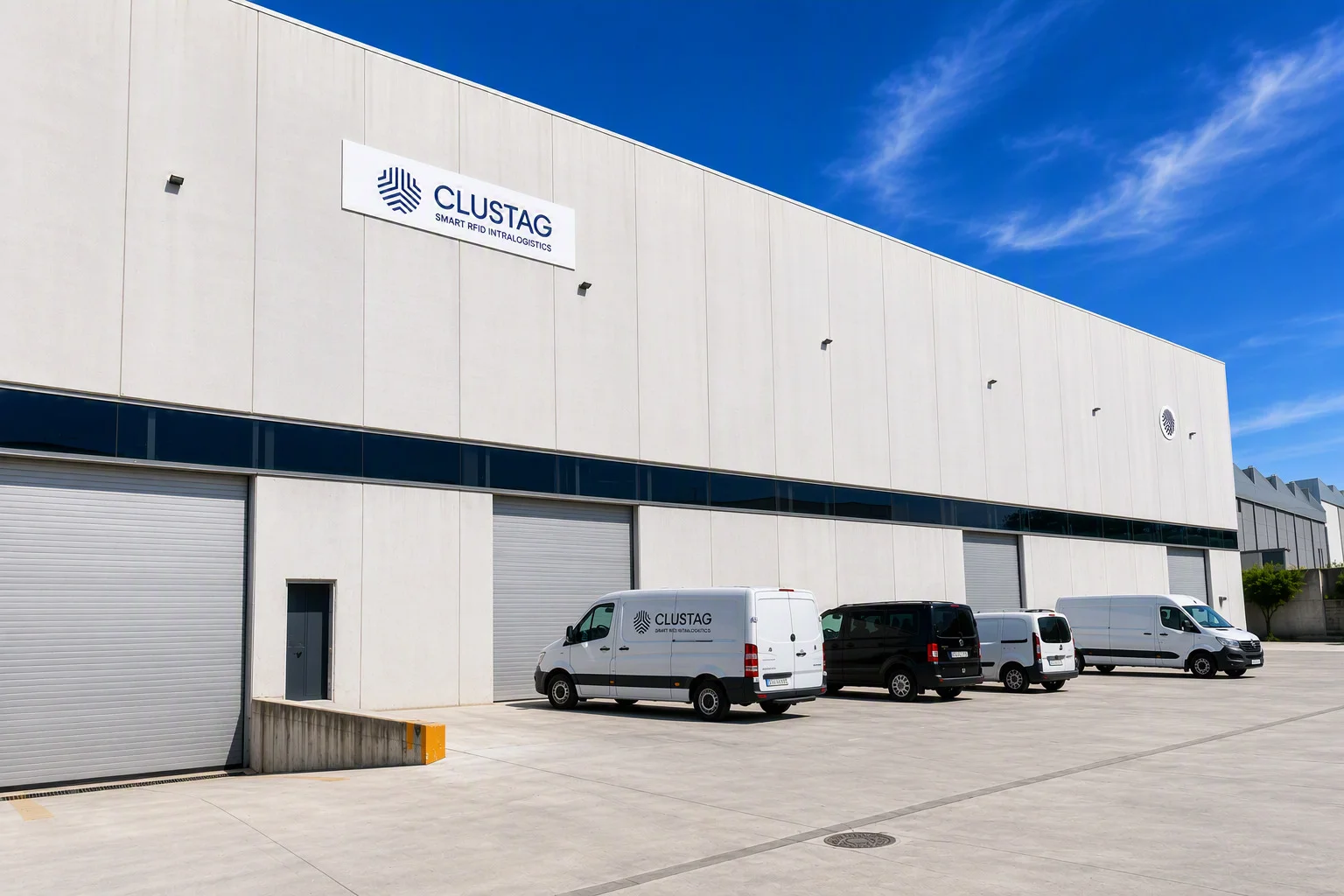
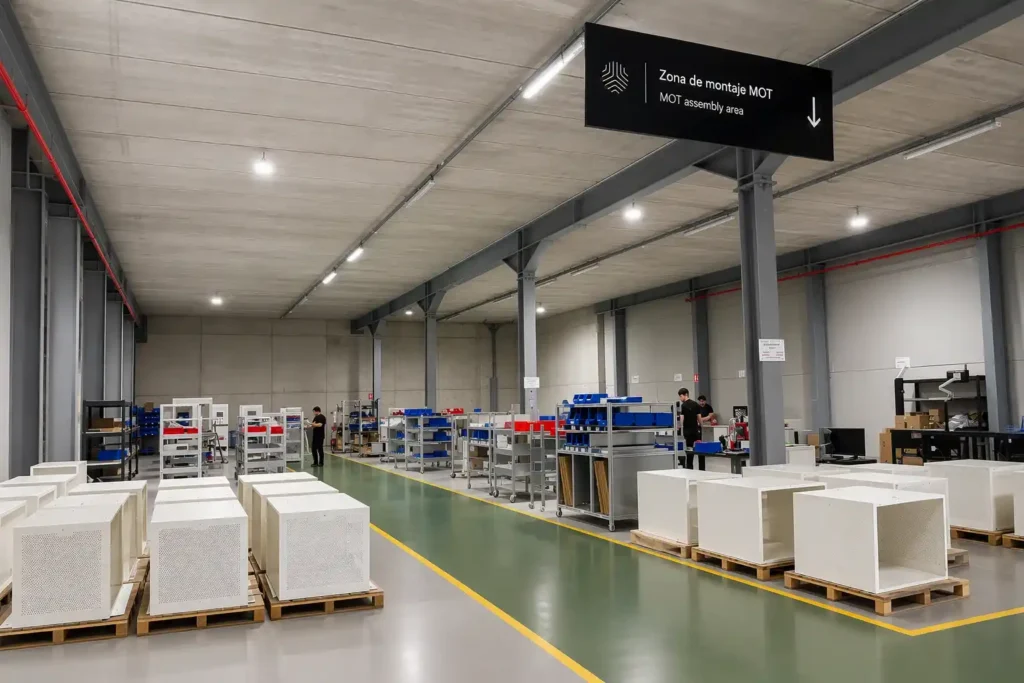
    A unified production hub is one of the most effective ways to improve operational efficiency, strengthen collaboration, and build a scalable foundation for future growth. One year ago, we took a major step in that direction by bringing our operations together in a purpose-built 10,000 m² facility, creating a single operational hub where teams, processes, and workflows are more connected than ever.

    What made this project truly significant was not the relocation itself, but the opportunity to redesign how our operation works. By consolidating production, assembly, quality, warehouse management, logistics, shipping, purchasing, spare parts, and health & safety under one roof, we created an environment where communication flows faster, coordination is simpler, and every department contributes to a shared operational vision.

    Bringing teams together in a single location is not just about sharing a building. It is about creating a connected operation that enables greater efficiency, stronger collaboration, and continuous improvement.

    Why a unified manufacturing hub matters

    As organizations grow, operational complexity increases. Different departments often become separated, creating communication gaps, duplicated efforts, and inefficiencies. A unified manufacturing hub helps overcome these challenges by creating a more integrated environment where departments can work together more effectively.

    Strengthening collaboration across teams

    When operational functions are located in the same facility, collaboration becomes part of daily routines rather than a structured process.

    Key benefits include:

    • Faster communication between departments
    • Improved visibility of operational priorities
    • Better alignment across teams
    • Faster problem-solving
    • More agile decision-making

    The result is a more responsive organization capable of adapting quickly to changing operational requirements.

    Building a shared operational culture with unified manufacturing hub

    Physical proximity plays a critical role in creating stronger relationships between teams. By working side by side, employees gain a better understanding of how their responsibilities impact the broader operation. This creates a stronger sense of ownership, accountability, and teamwork. As collaboration improves, organizations benefit from greater alignment around common goals and long-term objectives.

    Designing a unified manufacturing hub around operational flow

    The new facility was designed with one objective in mind: creating a seamless operational flow that connects every area of the business. Rather than focusing on individual departments, the project focused on how people, materials, and processes move throughout the entire operation.

    Creating a connected workflow

    Every area within the facility was strategically organized to improve coordination and ensure materials are available when needed.

    The new operational layout includes:

    AreaSurface
    Manufacturing, Assembly & Quality7,100 m²
    Bulk Material Warehouse800 m²
    Logistics & Shipping1,300 m²
    Purchasing, Spare Parts & Health & Safety800 m²

    This configuration allows departments to interact more efficiently while maintaining clear visibility across operations.

    Reducing barriers between departments

    One of the greatest advantages of centralization is the elimination of unnecessary barriers between teams. Information can be exchanged more quickly, issues can be resolved faster, and decisions can be made with greater confidence because all stakeholders are working within the same operational environment.

    The impact of a unified manufacturing hub after one year

    The benefits of the new hub extend far beyond the physical facility itself. After twelve months of operation, one of the most noticeable improvements has been the stronger connection between teams and the creation of a more agile operational structure.

    Improved coordination and production alignment

    The centralization of key functions has helped create a smoother and more coordinated operation.

    “Bringing our operations together in a single facility has transformed the way we work. Having manufacturing, warehouse, logistics, quality teams operating side by side has improved communication, reduced internal movements and created a much more connected workflow. Beyond the facility itself, the biggest achievement has been the collaboration and agility we have gained as a team.”

    Pau Micó, DAP Manager

    This enhanced coordination has strengthened day-to-day operations and helped create a more efficient working environment across all departments.

    A more integrated approach to operations

    The project was designed not only to centralize teams but also to rethink how departments interact and how workflows can be optimized.

    “The objective was not simply to bring departments together, but to create a more integrated and efficient flow across all activities. One year later, we can clearly see the benefits in terms of collaboration, visibility and operational alignment.”

    Juan Vicente, COO Clustag

    The result is an operation that is better connected, more agile, and better equipped to support future requirements.

    Building the foundation for future growth

    A unified manufacturing hub is not only an operational improvement. It is also a strategic investment in the future. As organizations continue to evolve, centralized operations provide the flexibility and scalability needed to support expansion while maintaining efficiency.

    Scalability through integration

    By connecting departments within a single operational framework, organizations can:

    • Improve resource allocation
    • Increase operational visibility
    • Facilitate future growth
    • Enhance organizational agility
    • Support continuous improvement initiatives

    This creates a stronger foundation for sustained development over the long term.

    A strategic vision beyond the facility

    The new hub reflects a broader commitment to operational excellence and continuous improvement.

    “This facility represents much more than additional space. It reflects our commitment to continuous improvement, operational excellence and long-term growth. By bringing our teams together under one roof, we have built a stronger foundation to support the next stage of our development.”

    Luis Rius, Founder & CEO Clustag

    The facility may have been the starting point, but its greatest value lies in the collaboration, efficiency, and shared vision it has enabled throughout the organization.

    Benefits of a unified manufacturing hub at a glance

    Operational challengeBenefit of a unified hub
    Departments working in separate locationsImproved collaboration and communication
    Limited operational visibilityGreater transparency across workflows
    Slower decision-makingFaster coordination and response times
    Fragmented processesMore integrated operations
    Challenges supporting growthScalable foundation for future expansion

    Visit our Customer Experience Center

    Visit Clustag’s Customer Experience Center and discover how connected operations, RFID technology, and real-time visibility help organizations improve efficiency, collaboration, and scalability.

  • Join Us at RAIN in Action 2026

    Join Us at RAIN in Action 2026

    RAIN in Action 2026 arrives in Madrid as a defining moment for RFID adoption in Europe, placing Spain firmly on the map as a leading market for connected retail and supply chain innovation.

    Madrid is not just hosting RAIN in Action 2026. We are seeing it emerge as a European benchmark for RFID adoption and real-world impact.

    Rain in Action 2026 in Madrid marks a turning point

    Taking place from 29 September to 1 October at Novotel Madrid Centre, this edition confirms a clear evolution in the European landscape. After Florence and Amsterdam, Madrid represents the next step in the expansion of RFID adoption across key markets.

    Spain is no longer an emerging adopter. It is becoming an active driver, especially in sectors such as fashion, cosmetics, and food retail, where the need for real-time visibility and operational efficiency continues to grow.

    This year’s theme focuses on how RFID evolves from infrastructure into measurable business impact. The message from the organization is clear: RAIN technology is enabling smarter, more connected, and more sustainable businesses by linking billions of everyday items to real-time data.

    From infrastructure to real-world impact

    RAIN in Action 2026 emphasizes how RFID is no longer limited to pilots or isolated deployments. It is now part of scalable infrastructures that support decision-making across entire organizations.

    Key topics addressed during the event include:

    • Digital Product Passport and regulatory readiness
    • Integration of RFID into smartphones and consumer interaction
    • Inventory accuracy across distribution and retail environments
    • Applications in healthcare, manufacturing, and smart environments

    These sessions reflect a broader industry reality: companies are moving from experimentation to execution, focusing on tangible outcomes and long-term value.

    A shared vision driven by the RAIN ecosystem

    RAIN in Action continues to highlight the importance of collaboration, interoperability, and trust. The ecosystem is evolving towards standardized infrastructures capable of supporting future initiatives and global scalability.

    A key industry reflection developed together with the organization focuses on one critical point: trust. Ensuring accuracy and reliability at moments such as shipping and receiving is essential to unlock the full value of RFID and build confidence across the supply chain.

    This vision aligns with the future of the sector, where connected products, transparent data, and regulatory frameworks will depend on robust and interoperable RFID systems.

    Clustag at Rain In Action 2026

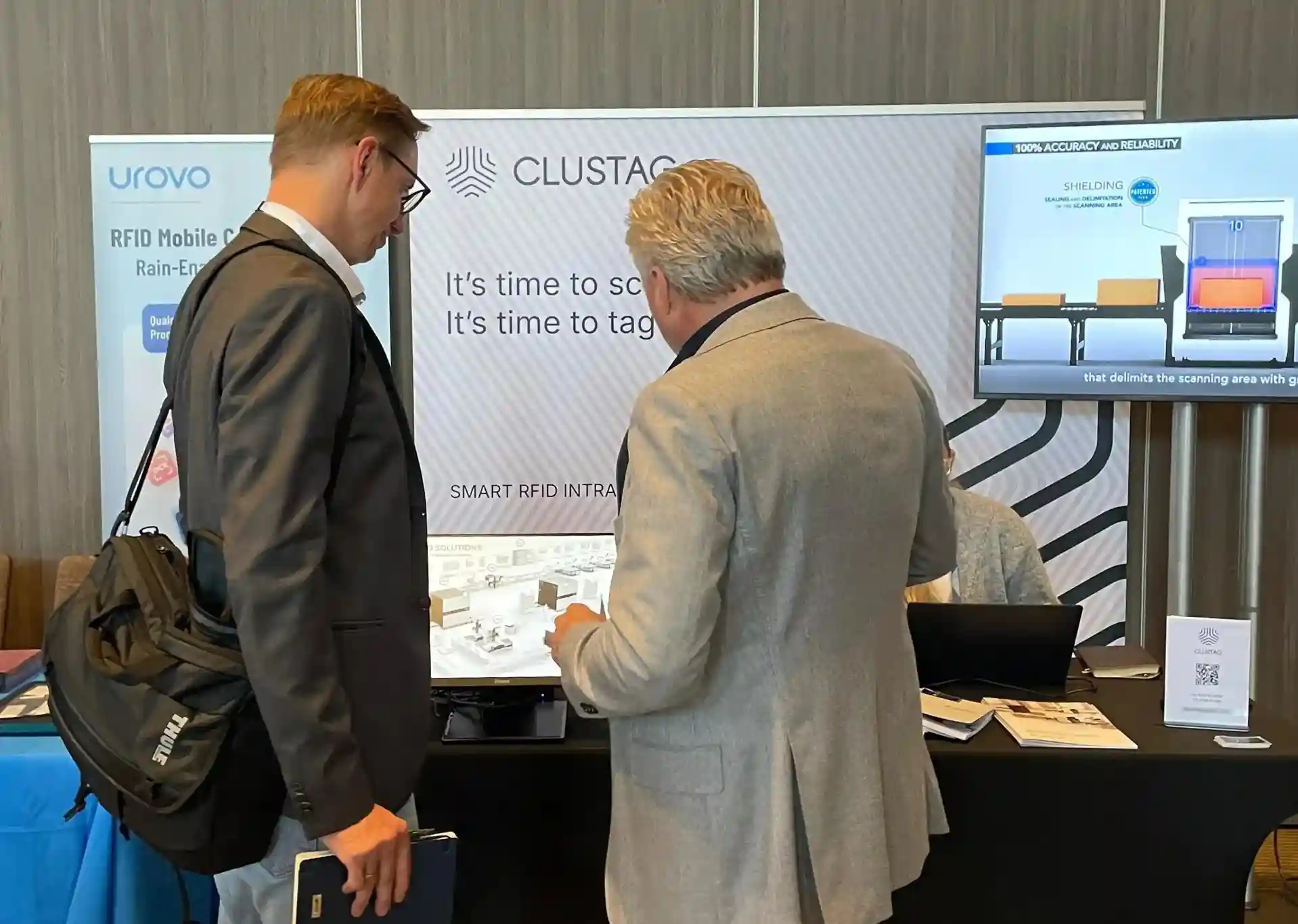
    We are proud to participate in RAIN in Action 2026 for the third consecutive year, reinforcing our role as a recognized Gold member within the RAIN Alliance ecosystem.

    Our presence in Valencia allows us to actively contribute to positioning Spain as a European reference while connecting with leading international stakeholders across retail and intralogistics.

    Furthermore, we have organized an exclusive invite-only networking event, designed to bring together top RFID and retail leaders in a curated environment. This creates valuable opportunities to share insights, discuss challenges, and build meaningful connections.

    Visit our booth

    Don’t forget to stop by our Table 5 during the coffee breaks. We are there to discuss your projects, answer your questions, and exchange ideas with industry leaders. Visit us and connect with our team.

    Join us at RAIN in Action 2026 in Madrid for a unique opportunity to connect, learn, and shape the future of RFID together.