
Category: Store Transfer

  • Handheld RFID vs SABI Station for Store-to-Store Transfers in Retail

    Handheld RFID vs SABI Station for Store-to-Store Transfers in Retail

    Handheld RFID vs SABI Station for store-to-store transfers in retail is no longer simply a technology comparison. As retailers handle higher transfer volumes, faster product rotations, and increasingly complex omnichannel operations, many are discovering that handheld readers alone are not always enough to maintain operational control.

    At the same time, inventory discrepancies between stores continue to generate stock inaccuracies, reconciliation efforts, and lost sales opportunities. As a result, more retailers are complementing handheld RFID readers with dedicated validation solutions such as SABI Station to achieve greater accuracy during transfer workflows.

    Inventory visibility is important. However, when transfer volumes increase, precision becomes the real competitive advantage.

    Why store-to-store transfers become a challenge

    Every transfer involves multiple steps, from preparing products for shipment to receiving them at the destination. Consequently, even a small validation error can create discrepancies between what was sent and what was received.

    Furthermore, as omnichannel strategies continue to grow, the volume of store-to-store transfers and store-to-warehouse transfers increases, placing additional pressure on store teams.

    The cost of transfer discrepancies

    When transfers are not properly controlled, retailers often face:

    • Inventory discrepancies between locations.
    • Time-consuming investigations and reconciliations.
    • Lost sales caused by inaccurate stock information.
    • Additional operational costs.
    • Reduced confidence in inventory data.

    Why manual validation creates risks

    Many retailers still rely on manual checks or barcode scans to validate transfer shipments. While these methods may work at low volumes, they become increasingly difficult to manage during seasonal peaks and large stock movements.

    Operational aspectManual processes and barcodesRFID-enabled transfers
    Product verificationItem-by-item scanningSimultaneous reading of multiple items
    Validation speedOperator dependentCompleted in seconds
    Discrepancy detectionUsually discovered after receivingImmediate
    Risk of human errorHighVery low
    Inventory visibilityPartialReal-time

    As a result, teams spend less time solving transfer issues and more time focusing on customer-facing activities.

    How RFID improves store-to-store transfers

    A reliable transfer process requires more than visibility. Retailers need complete traceability, automatic validation, and real-time inventory updates across the entire network.

    This is where RFID delivers significant value.

    Mass reading and immediate discrepancy detection

    Unlike barcode-based workflows, RFID identifies multiple products simultaneously without requiring line-of-sight scanning.

    Consequently, retailers can:

    • Validate entire transfer boxes in seconds.
    • Eliminate manual counting.
    • Detect missing or unexpected items immediately.
    • Improve operational efficiency.

    Real-time inventory visibility

    Every validated transfer automatically updates inventory records.

    Therefore, retailers gain visibility over:

    • Products in transit.
    • Products received.
    • Current stock levels.
    • Inventory movements between stores.

    For organizations looking to optimize these workflows, our Store-to-Store Transfer Solution helps automate validation and improve inventory accuracy.

    The role of handheld RFID readers

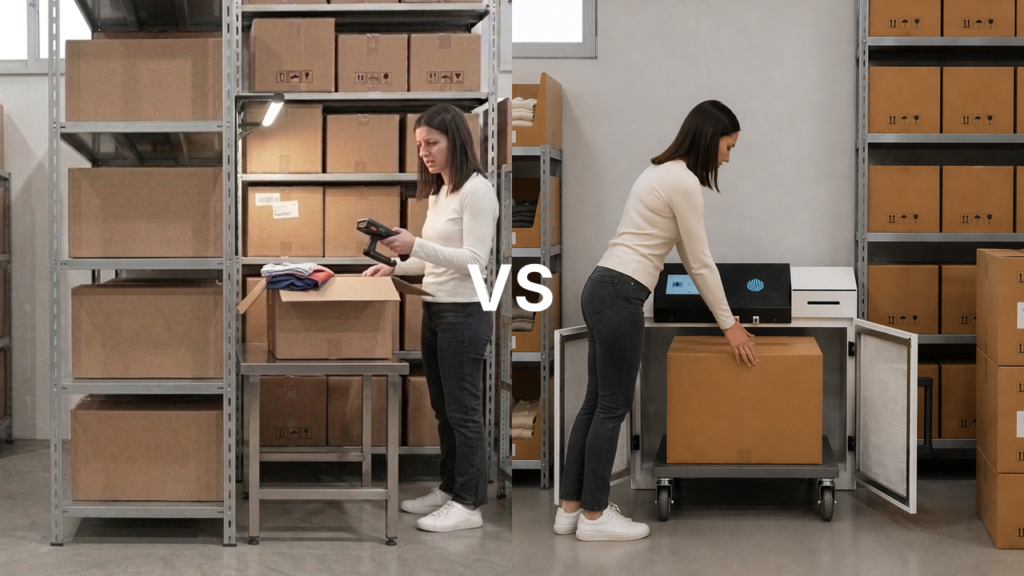
    Handheld RFID readers remain one of the most valuable tools available to retail teams. Their mobility allows employees to perform multiple operational tasks using a single device.

    What handheld readers do well

    Handheld RFID readers are particularly effective for:

    • Inventory counts.
    • Product searches.
    • Goods receiving.
    • Quick transfer validations.

    Furthermore, they provide flexibility and can support multiple RFID use cases throughout the store.

    Where handheld readers reach their limits

    However, challenges appear when transfer volumes increase or when products must be validated inside densely packed boxes.

    Typical issues include:

    • Unwanted reads from nearby products.
    • Repeated scans to confirm results.
    • Greater dependence on operator actions.
    • Reduced efficiency during seasonal peaks.

    Therefore, many retailers complement handheld readers with dedicated RFID validation stations.

    How SABI Station optimizes transfer validation

    To overcome these limitations, Clustag combines handheld RFID readers with controlled reading environments powered by RFID Shield Technology.

    SABI Station creates an isolated reading zone that minimizes interference and ensures highly accurate box validation.
    Handheld vs SABI station

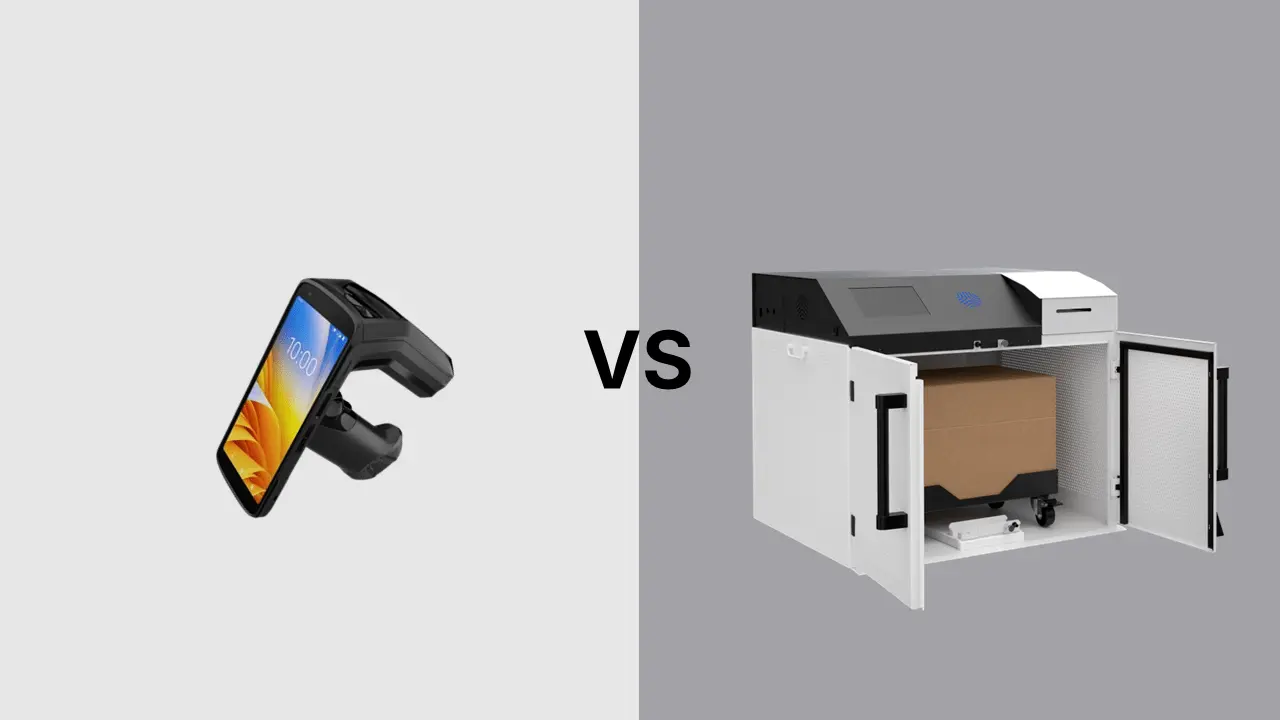
    Handheld RFID vs SABI Station

    The goal is not to replace handheld readers. Instead, both technologies fulfil different roles within a mature RFID strategy.

    CriteriaHandheld RFIDSABI Station
    Main purposeMobility and inventory tasksTransfer validation and shipment control
    Reading environmentOpenControlled with RFID Shield Technology
    Cross readsPossibleVirtually eliminated
    Full-box validationMore operator dependentAutomatic and controlled
    Validation speedVariableConsistent
    Best use caseInventory and item locationHigh-volume transfers and shipments

    Handheld readers provide flexibility. SABI Station provides the level of precision required when every transfer must be validated with confidence.

    Business impact of adopting SABI Station

    Adding a dedicated RFID validation station delivers benefits that extend beyond faster scanning.

    Retailers can achieve:

    • Significant reduction in transfer discrepancies.
    • Faster validation processes.
    • Greater operational consistency.
    • Higher productivity during seasonal transitions.
    • Lower costs associated with transfer errors.

    As a result, store teams can continue using handheld readers for inventory tasks while relying on SABI Station for high-volume transfer validation.

    Frequently asked questions about RFID store transfers

    Do all products need RFID tags?

    Yes. To achieve complete traceability and accurate transfer validation, products must carry RFID tags.

    Does SABI Station replace handheld readers?

    No. SABI Station complements handheld devices by providing greater accuracy and control during transfer validation.

    What advantage does RFID offer compared to barcodes?

    RFID reads multiple products simultaneously, reducing validation times and minimizing manual effort.

    Can RFID integrate with existing retail systems?

    Yes. RFID solutions can integrate with ERP, WMS, and central inventory platforms to keep stock information synchronized.

    Does store staff require technical training?

    No. Both handheld readers and SABI Station are designed to be intuitive and easy to use in day-to-day operations.

    Take your RFID transfers to the next level

    Retailers that have already adopted RFID have improved inventory visibility. The next step is improving transfer accuracy as operational volumes continue to grow.

    At Clustag, we combine RFID, RFID Shield Technology, and Zentup Data Intelligence to help retailers reduce discrepancies, improve inventory accuracy, and gain greater operational control.

    We invite you to visit our Customer Experience Center to test these solutions using your own products, or contact our team through our contact form to discover how we can help optimize your transfer operations.
  • Store To Warehouse Transfer As A Strategic Pillar Of Reverse Logistics

    Store To Warehouse Transfer As A Strategic Pillar Of Reverse Logistics

    Store to warehouse (STW) transfer plays a critical role in modern retail operations. As product lifecycles shorten and omnichannel complexity grows, retailers must return slow‑moving or non‑sellable inventory from stores back to central facilities with speed and accuracy.

    When these transfers rely on manual handling and fragmented validation, they quickly become a source of discrepancies, delays, and operational friction. With Clustag RFID Solutions, we turn this process into a controlled, traceable flow that protects margin and restores trust between stores and distribution centers.

    Reverse logistics only creates value when every item is validated automatically and inventory updates in real time across systems.

    Why Store to Warehouse Transfer Often Breaks Down at Store Level

    Traditional backstore processes were never designed to handle high‑volume returns efficiently. Manual consolidation, barcode scanning, and limited visibility create blind spots that affect both store teams and warehouse operations.

    During peak periods such as end‑of‑season transitions, these weaknesses become even more visible, slowing down reintegration into central stock and increasing operational costs.

    Structural challenges in backstore returns

    Across fashion and sporting goods retail, we consistently see the same issues:

    • Limited visibility once products leave the store
    • Manual consolidation of returned items with high error rates
    • Time‑consuming inbound reconciliation at the warehouse
    • Disputes caused by missing or misclassified items
    • Inventory blocked in stores without a clear return path

    Without automation and real‑time validation, returning stock to the warehouse becomes slow, costly, and difficult to scale.

    How RFID Transforms STW into a Traceable Flow

    With Clustag RFID Solutions, store to warehouse transfer shifts from a fragmented reverse process to a fully traceable, item-level flow. Each product is uniquely identified and tracked from the backstore to the warehouse dock, eliminating manual checks and reconciliation efforts.

    Bulk RFID reading allows teams to validate full cartons or pallets instantly, without opening boxes or scanning items individually. Zentup synchronizes every event with ERP, WMS, and OMS platforms, ensuring consistent inventory visibility throughout the flow.

    How the process works in practice

    In an RFID‑enabled environment, returns to the warehouse follow a predictable logic:

    • We identify return‑eligible items based on sales velocity or lifecycle rules
    • Store teams consolidate products in the backstore without manual scanning
    • We validate cartons automatically using RFID‑shielded stations
    • Outbound movements are confirmed in real time through RFID portal
    • We validate warehouse inbound through bulk RFID reading, without manual reconciliation.

    The result is a closed, auditable process with full item‑level traceability.

    Business Impact of Store to Warehouse Transfer powered by RFID

    When accurate, automated data capture supports reverse logistics, retailers can clearly measure both operational and financial impact.

    Operational challengeImpact with RAIN RFID enabled STW
    Inventory discrepanciesInventory accuracy above 98%
    Slow return processingUp to 70% faster processing
    Manual handling effort60–80% reduction
    Store–DC disputesDiscrepancy rate near zero
    Limited traceability100% item‑level visibility

    These results show that returning inventory to the warehouse is not just an operational necessity, but a margin‑recovery lever when executed with precision.

    Accurate item validation accelerates reintegration into central stock and reduces friction across the network.

    Why Clustag is Built for Scalable Reverse Logistics

    We approach store returns as a system‑level capability, not an isolated task. Through a co‑innovation model, we adapt each deployment to store layouts, operational constraints, and required throughput.

    Key enablers include:

    • Clustag RFID Solutions for automatic carton and pallet validation
    • RFID Shield Technology to eliminate stray‑reads
    • Zentup data intelligence for real‑time synchronization
    • Seamless integration with ERP, WMS, and OMS environments

    This combination ensures fast, precise, and scalable reverse logistics as volumes grow and demand patterns evolve.

    Turning Store to Warehouse Transfer into a Competitive Advantage

    Retailers that master returns from store to warehouse recover value faster, reduce markdown exposure, and maintain operational alignment between stores and distribution centers.

    At Clustag, we help retailers validate these benefits in real conditions. We invite you to visit our Customer Experience Center or contact our team to explore how RFID can transform your reverse logistics operations.

  • Store To Store Transfer As A Strategic Capability For Smarter Retail Operations

    Store To Store Transfer As A Strategic Capability For Smarter Retail Operations

    Store to Store Transfer (STS) is no longer a tactical workaround for inventory imbalances. It has become a strategic capability for retailers aiming to operate faster, leaner, and with full control at item level. When executed correctly, store to store transfer allows organizations to rebalance stock dynamically across the network, reduce stock-outs, and protect margins without relying on centralized redistribution flows. Retailers typically redistribute 10–18% of total inventory volume through store to store transfer, making STS a core operational lever rather than an exception.

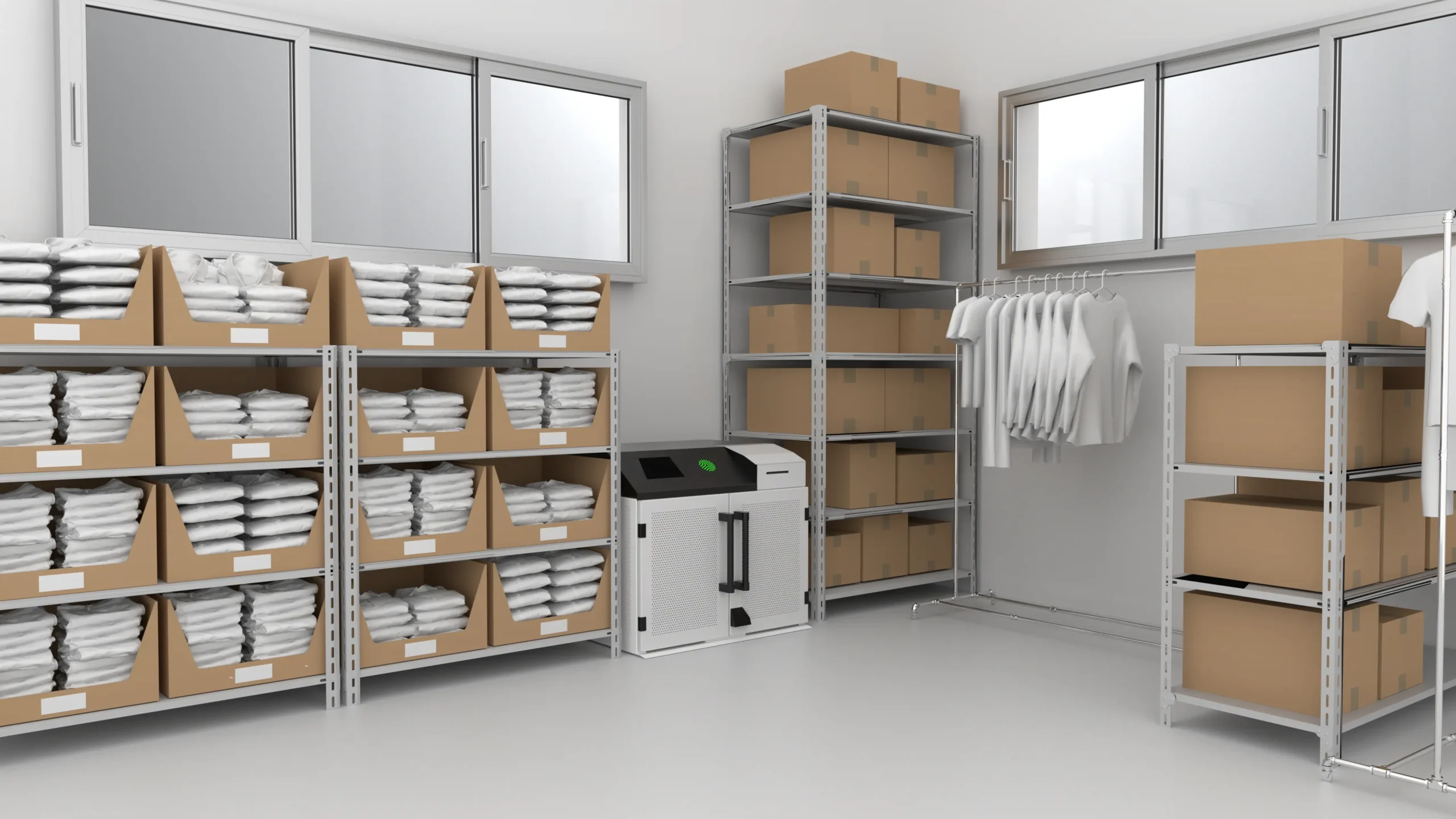
    In a context where demand volatility is the norm, the backstore plays a critical role. With the right Clustag RFID Solution, it evolves from a passive storage area into an active logistics node that enables accurate, scalable, and fully traceable store to transfer operations.

    Store to store transfer only works at scale when inventory data is trusted, real-time, and validated automatically at item level.

    Why Store to Store Transfer Fails in Traditional Backstore Operations

    Before RFID, STS transfer processes have typically been manual, reactive, and difficult to control. Compromised store-level inventory accuracy causes even well-designed allocation strategies to break down.

    Retailers commonly face structural backstore challenges that directly impact STS execution.

    Structural pain points limiting store to store transfer performance

    These issues are recurrent across fashion and sporting goods retail:

    • Phantom inventory at store level that leads to unreliable transfer decisions
    • Manual picking and shipping processes with high error rates
    • Lack of visibility for items in transit between stores
    • Excessive labor time spent on reconciliation and dispute resolution

    Without automation and real-time validation, STS becomes a cost center instead of a value driver.

    How RFID Transforms STS into a Data-Driven Process

    With Clustag RFID Solutions, store to store transfer shifts from a reactive correction mechanism to a proactive, intelligence-led flow. Each item is uniquely identified, and the backstore becomes a reliable, real-time stock pool that feeds transfer decisions with trusted data.

    This transformation is not only technological but also operational. RFID removes manual scanning, accelerates execution, and eliminates uncertainty at every step of the STS lifecycle.

    RFID-enabled STS in practice

    In an RFID-enabled environment, STS follows a predictable and scalable logic:

    • We continuously monitor inventory levels and sales velocity at store level.
    • The system automatically detects imbalances between stores.
    • We generate transfer proposals using real backstore inventory data.
    • Picking and outbound validation are executed automatically via RFID portals or shielded stations
    • Inbound validation at the receiving store occurs without manual scanning

    The result is a closed-loop STS process with full item-level traceability and real-time inventory synchronization across locations.

    Business Impact of STS Powered by RFID

    When accurate, automated data capture supports store‑to‑store transfers, organizations can clearly measure the operational and financial impact. The following table summarizes the typical outcomes observed when RFID is applied to STS scenarios.

    Operational challengeImpact with RFID-enabled store to transfer
    Inventory accuracy gapsInventory accuracy above 98%
    Frequent stock-outsStock-out reduction of up to 50%
    Manual handling effortManual handling time reduced by 70%
    Picking errorsPicking accuracy improved by 80%
    Excess markdownsMarkdown reduction of up to 30%

    These results demonstrate that STS is not just an operational fix, but a margin-protection mechanism when supported by the right technology.

    Accurate store to transfer execution directly translates into fewer markdowns, higher product availability, and lower operational friction.

    Why Clustag is Purpose-Built for Store to Store Transfer at Scale

    Clustag approaches STS as a system-level capability rather than a standalone use case. Through a co-innovation model, we adapt each deployment to the retailer’s layout, operational constraints, and throughput requirements.

    Key enablers include:

    • Clustag RFID Solutions for automatic validation of full boxes without manual scanning
    • RFID Shield Technology to eliminate cross-reads and ensure clean outbound confirmations
    • Seamless integration with ERP, WMS, and OMS ecosystems
    • Zentup data intelligence to turn item-level events into actionable transfer decisions

    This combination ensures that STS remains fast, accurate, and scalable as store networks grow and demand patterns evolve.

    Turning Store to Store Transfer into a Competitive Advantage

    Retailers that master store to store transfer gain a structural advantage. They respond faster to local demand, reduce dependency on safety stock, and unlock hidden inventory already present in the network.

    At Clustag, we help retailers validate these benefits in real operational conditions. We invite you to experience how STS can be executed with precision using your own products at our Customer Experience Center, or to contact our team to explore how RFID can reshape your backstore operations.